Van Nuys Airport · KVNY · Private Pilot Training

Private Pilot Maneuvers: How To Fly Every Checkride Maneuver

Private pilot maneuvers are the flying tasks in the FAA's Private Pilot ACS. They include normal, short-field and soft-field takeoffs and landings, the forward slip, the go-around, 45-degree steep turns, ground reference maneuvers, slow flight, power-off and power-on stalls, basic instrument flying and simulated emergencies. You learn each with an instructor, then fly it for the examiner on your checkride.

45°Steep-turn bank, held within 5°
±100 ftSteep-turn altitude tolerance
50–60Typical hours to checkride here, sim included
$349Two-hour lesson to fly them
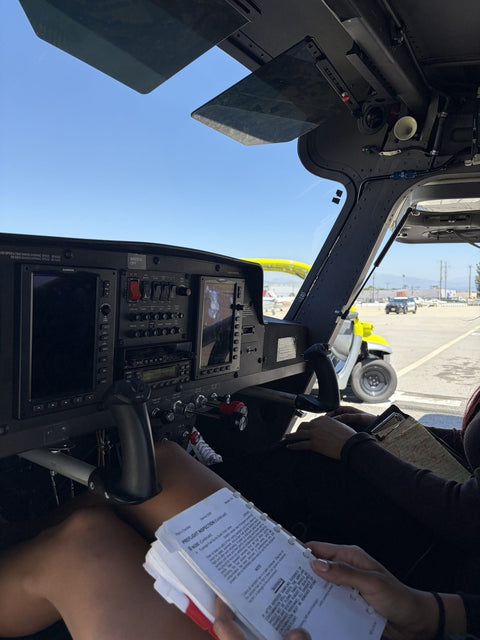
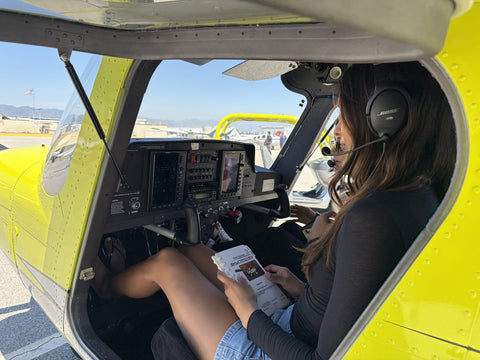
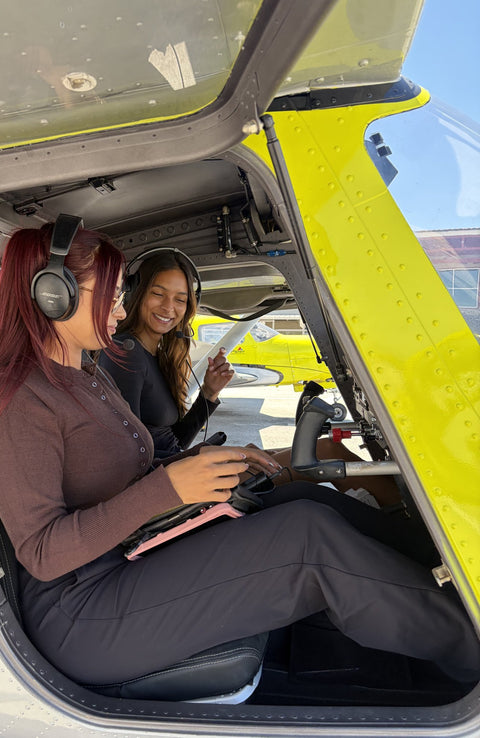
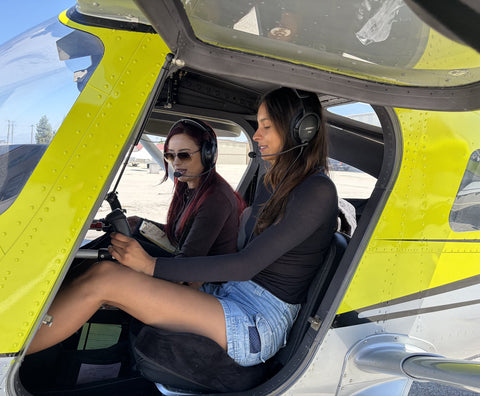
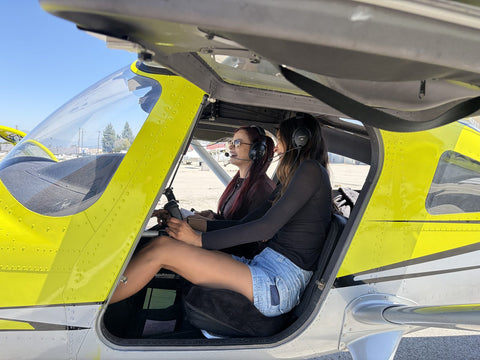
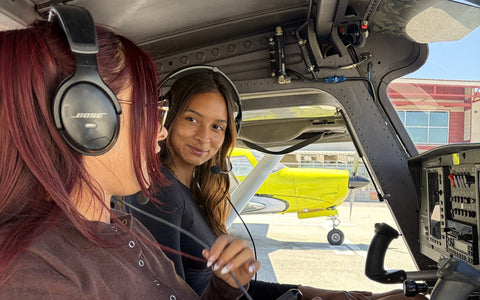
Instructor and student pilot side by side in a training airplane cockpit, both wearing headsets

We teach all of them from Van Nuys Airport inside our private pilot course. What follows is the instructor's version: what each maneuver is for, how it is flown, and the one standard that tells you whether you got it. The full tolerance tables are on our Private Pilot ACS page, and the commercial set (chandelles, lazy eights, eights on pylons) is on Commercial Pilot Maneuvers.

Nobody learns them in the order the ACS prints them. Several come before your first solo. 14 CFR 61.87(d) lists slow flight, stall entries with recovery at the first indication and from a full stall, ground reference maneuvers, slips to a landing and go-arounds as pre-solo training. The rest of that list is on our first solo page.

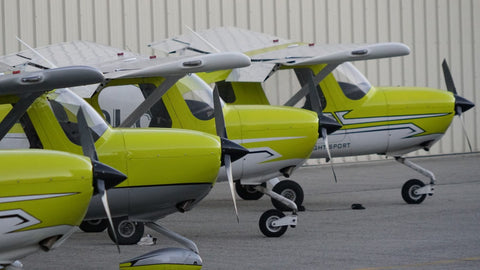
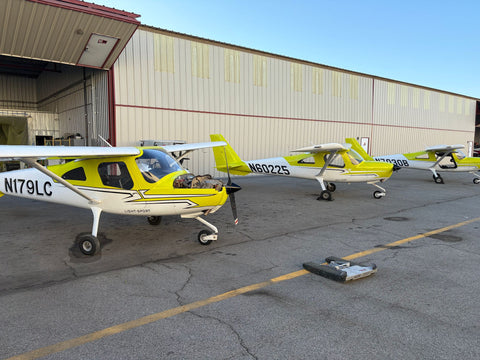
Noses and propellers of Cessna 162 Skycatcher trainers lined up outside a hangar at Van Nuys

What Counts As A Private Pilot Maneuver

The rule behind the checkride is 14 CFR 61.107(b)(1). It lists twelve areas of operation for a single-engine airplane, from preflight preparation to postflight procedures. The FAA's Private Pilot Airman Certification Standards, FAA-S-ACS-6C, in effect since 31 May 2024, turn those areas into lettered tasks with written standards. Navigation and night flying are flown too, but the maneuvers themselves sit in five areas.

Every task is written the same way. It opens with an objective, then lists knowledge, risk management and skill elements, each with a code: PA.V.A.S5, for example, is the steep turn's fifth skill, the line with the tolerances in it. The objective names all three, so the knowledge counts as much as the flying. A clean steep turn from someone who cannot explain load factor has not met it.

The Five Maneuver Areas Of The Private Pilot ACS
ACS Area Tasks For A Single-Engine Land Airplane Count
IV. Takeoffs, Landings And Go-Arounds Normal takeoff and climb; normal approach and landing; soft-field takeoff and climb; soft-field approach and landing; short-field takeoff and maximum performance climb; short-field approach and landing; forward slip to a landing; go-around or rejected landing 8
V. Performance And Ground Reference Maneuvers Steep turns; ground reference maneuvers 2
VII. Slow Flight And Stalls Maneuvering during slow flight; power-off stalls; power-on stalls; spin awareness 4
VIII. Basic Instrument Maneuvers Straight-and-level flight; constant airspeed climbs; constant airspeed descents; turns to headings; recovery from unusual flight attitudes; radio communications, navigation systems and radar services 6
IX. Emergency Operations Emergency descent; emergency approach and landing (simulated); systems and equipment malfunctions; emergency equipment and survival gear 4
Total Areas IV, V, VII, VIII and IX 24

Spin awareness (VII-D) is in the table, but you will not spin the airplane for it. The task asks you to recognize the setup for a spin, and the FAA's advisory circular on stall and spin training, AC 61-67C, says spin training is required only for flight instructor applicants. Most of the other tasks get flown many times before an examiner sees them, and the sections below take them area by area.

Takeoffs, Landings And Go-Arounds

Area IV holds eight of the 24 tasks, and it gets the most practice without anyone planning it, because every lesson starts with a takeoff and ends with a landing. Van Nuys gives you two very different runways to learn on: 16R/34L is 8,001 feet long and 16L/34R is 4,000 feet. A short-field landing means something different on each, which is the point. The technique has to come from picking a spot and hitting it, not from the length of the pavement.

The short-field approach is about arriving over an obstacle at a precise speed and touching down on a chosen spot. The soft-field landing is about keeping weight off the nosewheel on a surface that would grab it. Both Van Nuys runways are paved, so you fly it on pavement as if it were not. The forward slip (task M) loses altitude without gaining speed, which is exactly what you want when you are high on final.

The go-around (task N) is the one that keeps the other seven safe. We would rather see a student go around twice on a gusty afternoon than force one landing that was never going to work.

There is no separate crosswind task in ACS-6C; the titles are simply "Normal Takeoff and Climb" and "Normal Approach and Landing." The wind does not wait for a task, though. Full technique, with the crosswind component worked out, is in Crosswind Landings And Forward Slips, and the performance takeoffs and landings are in Short-Field And Soft-Field Landings. If you have not started yet, a two-hour lesson for $349 puts you in the left seat with an instructor, the airplane and the fuel included.

Steep Turns And Ground Reference Maneuvers

A private steep turn is a full 360-degree turn at about 45 degrees of bank, rolled out on the heading you started on, then flown the other way if the evaluator asks. ACS-6C task V-A sets the standard: hold your entry altitude within 100 feet, airspeed within 10 knots and bank within 5 degrees, and roll out within 10 degrees of the entry heading. Enter at the manufacturer's recommended speed or, if there is none, no faster than maneuvering speed. Our page on maneuvering speed explains where that ceiling comes from.

The hard part is arithmetic. In a level 45-degree turn the load factor is 1.41, according to the Airplane Flying Handbook (FAA-H-8083-3C, chapter 10). The wing has to make 41 percent more lift than in straight flight just to hold altitude. You get that lift with back pressure, pay for it with power, and hold a little opposite aileron against the overbanking tendency. A first attempt usually sinks early, before the back pressure catches up.

Ground reference maneuvers are flown low, generally 600 to 1,000 feet above the ground (the handbook's chapter 7 and the ACS give the same band), and they are really about wind. The rectangular course copies a traffic pattern. S-turns are matching half-circles either side of a straight road or line. Turns around a point hold a constant radius around one object. The wind pushes the ground track out of shape the whole time, and your bank angle and crab are how you push back: steepest bank where groundspeed is highest, shallowest heading into the wind. The full technique is in Steep Turns And Ground Reference Maneuvers.

Great flight school! The staff, and instructors are very knowledgeable, and helpful. I flew with Peyton he’s a great Instructor. I highly recommend booking a flight or consultation here if you’re interested in possible training or just looking to get an amazing view from the Sky!

★★★★★Jett R.Google ReviewRead More Reviews

Slow Flight And Stalls

Slow flight teaches you what the airplane feels like near the edge: soft controls, a high nose, a lot of power for not much speed. The Airplane Flying Handbook (chapter 5) describes it as flight at an airspeed where you keep control without setting off the stall warning. It matters because every takeoff and landing passes through that speed range.

A stall is not about speed. It happens when the wing exceeds its critical angle of attack, and the handbook says you can exceed it at any airspeed, attitude or power setting. The power-off stall rehearses the one you might meet on approach to land; the power-on stall rehearses the one in a nose-high climb after takeoff. Both recoveries start the same way, by lowering the nose to reduce the angle of attack. Then you level the wings, add power as needed and fly back to where you meant to be. The handbook recommends stalls that recover no lower than 1,500 feet above the ground in a single-engine airplane.

For how 1,500 feet compares with where business jets and airliners cruise, see How High Do Planes Fly.

A private pilot does not spin the airplane. Spin training is a flight instructor requirement under 14 CFR 61.183(i), and we teach it in the Diamond DA20 on our CFI spin endorsement course. Pilots who want upset and spin training outside the instructor track can read about upset recovery training. The detail on every task in the area, including the recovery sequence, is in Slow Flight And Stalls.

Nervous about stalls? Plenty of people are before the first one. Book a free consultation or call (818) 330-1318, and talk it through with someone who flies before you book a lesson.

Basic Instrument And Emergency Maneuvers

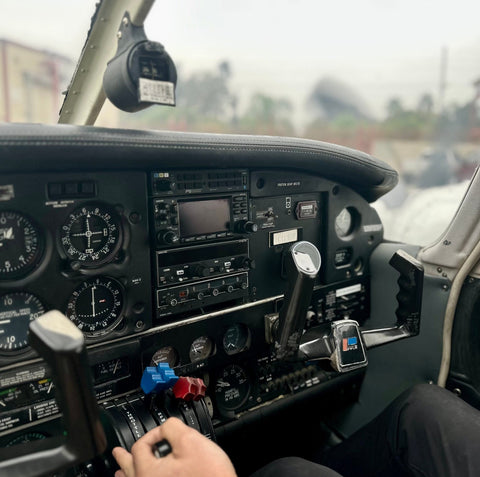
Even a VFR private pilot gets instrument training. 14 CFR 61.109(a)(3) requires 3 hours of flight training in a single-engine airplane solely by reference to instruments. The list covers straight and level flight, constant airspeed climbs and descents, turns to a heading, recovery from unusual flight attitudes, radio communications and the use of navigation systems and radar services. Set that list beside ACS Area VIII and you get the same six tasks. The goal is narrow: if you fly into cloud by accident, keep the airplane upright and turn back toward clear air.

Those 3 hours are usually flown with a view-limiting device that hides the windscreen, so the panel is all you can see while the instructor keeps watch outside. The options are compared in our guide to foggles and view-limiting devices. For pilots who go on to the instrument rating, the scan, approach charts and holds are covered in our instrument flying skills guide.

Area IX is emergency operations: an emergency descent, a simulated emergency approach and landing, systems and equipment malfunctions, and emergency equipment and survival gear. Simulated engine failures start before solo as well, since 61.87(d) lists approaches to a landing area with simulated engine malfunctions. The first few times, almost everyone is slow to pick a field. Practice is what makes the choice quick.

Where We Practice Them, And In What

The air work is flown out over the Simi Valley / Santa Susana practice area, in one of three trainers, with the simulator alongside. We do not think one airplane suits every student, so here is the honest difference between them. If you would like to sit in one before choosing, a 60-minute discovery flight in the Warrior is $229, and it is credited in full toward training if you enroll within 24 hours.

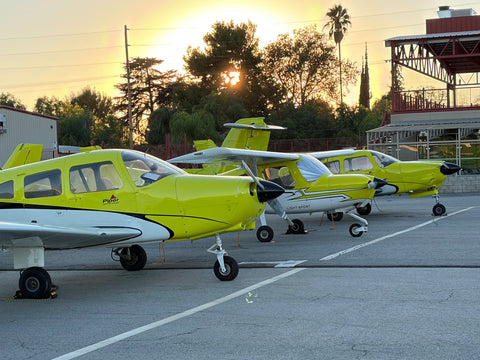
Row of yellow Cessna 162 Skycatcher trainers lined up on the ramp at Van Nuys Airport

The Cessna 162 Skycatcher

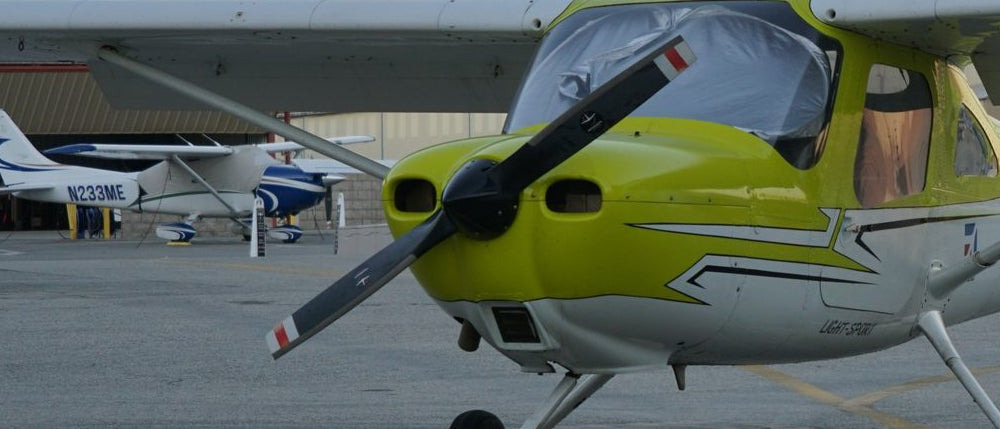
Six on the line: N60225, N7030B, N6039M, N179LC, N5208V and N52049. A two-seat high wing with a 100 hp Continental O-200-D, a 118-knot cruise and Garmin G300 glass. We think the high wing makes turns around a point easier to learn, because the lowered wing does not hide the point. $179 an hour inside a package, $269 retail, fuel included. More on the Cessna 162.

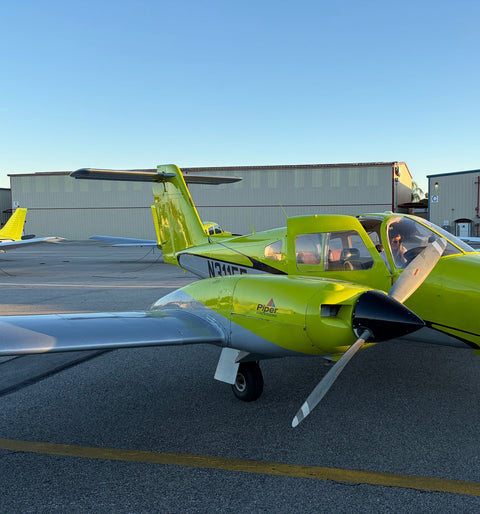
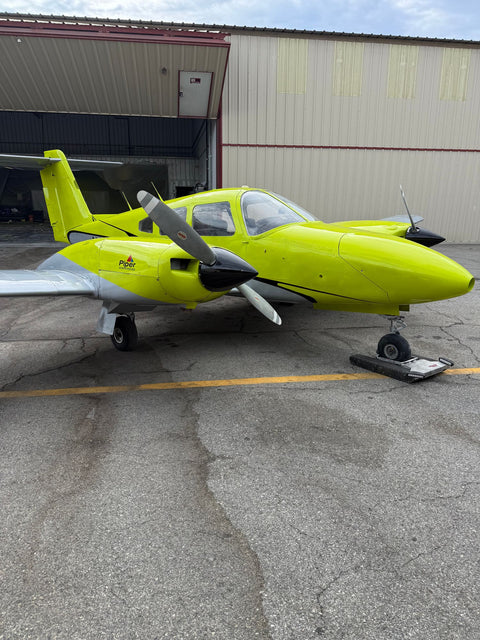
Yellow Piper Warrior N3034Q parked on the Van Nuys ramp under a cloudy sky

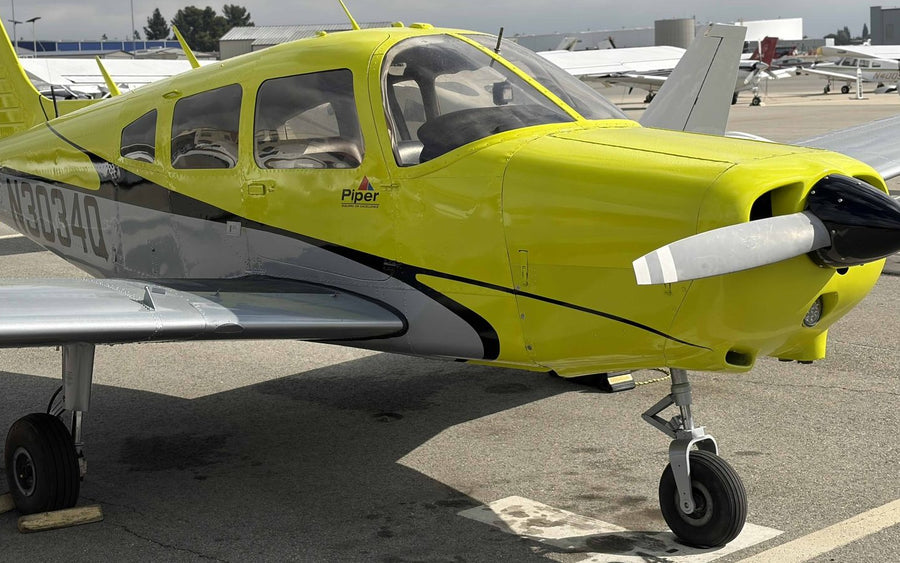
The Piper Warrior

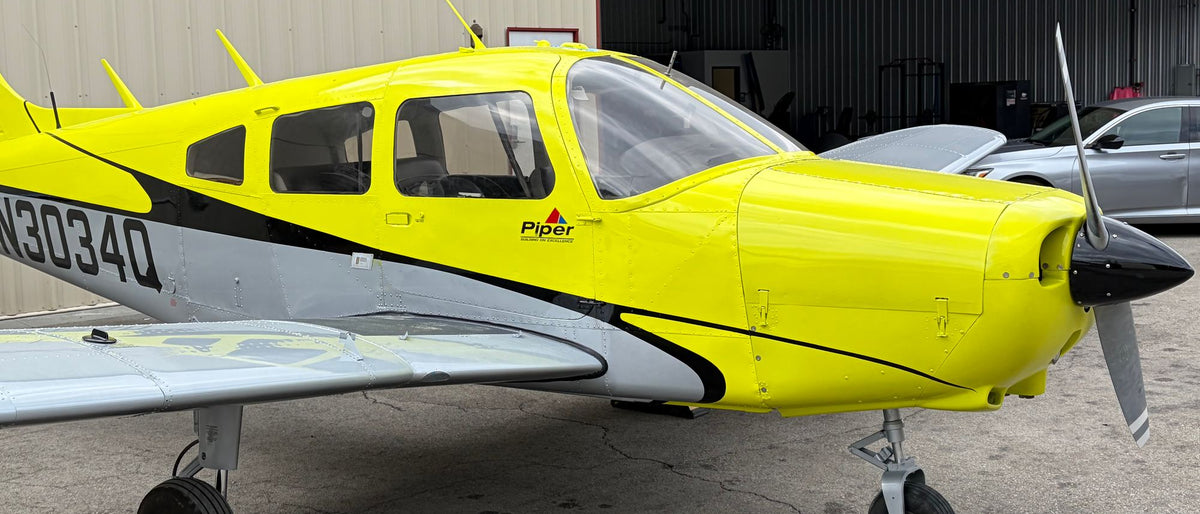
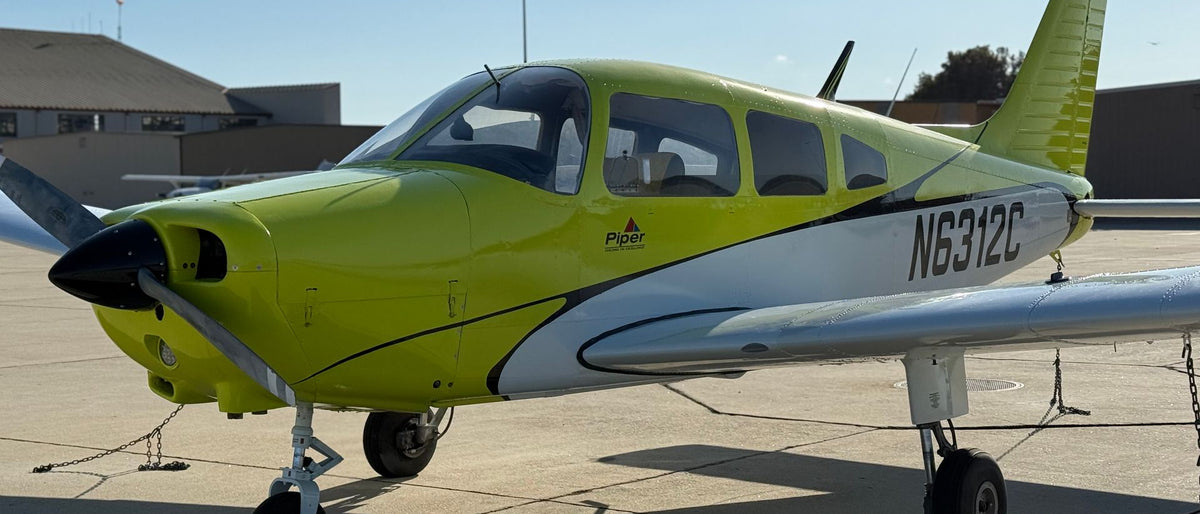
Two of them, N3034Q and N6312C. The PA-28-161 has four seats, a low wing, 160 hp and a cruise of about 128 knots, and it is IFR-equipped, which helps once you reach the instrument hours. In a steep turn the low wing sits between you and the ground, so you learn to fly it by the horizon. The same rates as the 162: $179 package, $269 retail. More on the Warrior.

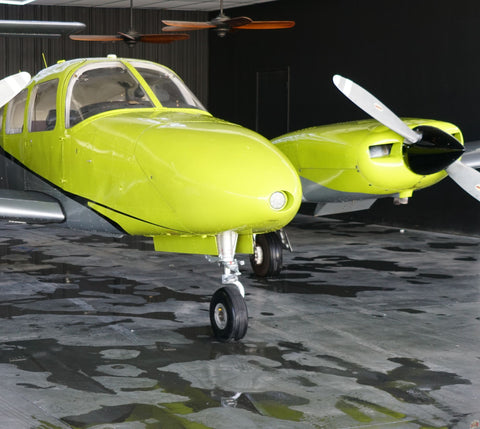
Diamond DA20-C1 trainer in the hangar, bubble canopy and propeller seen from the front

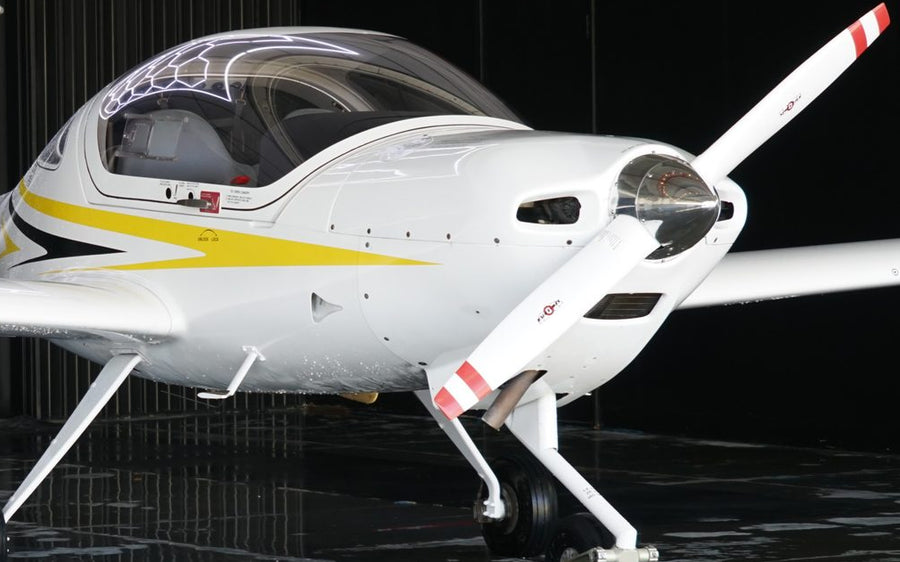
The Diamond DA20-C1

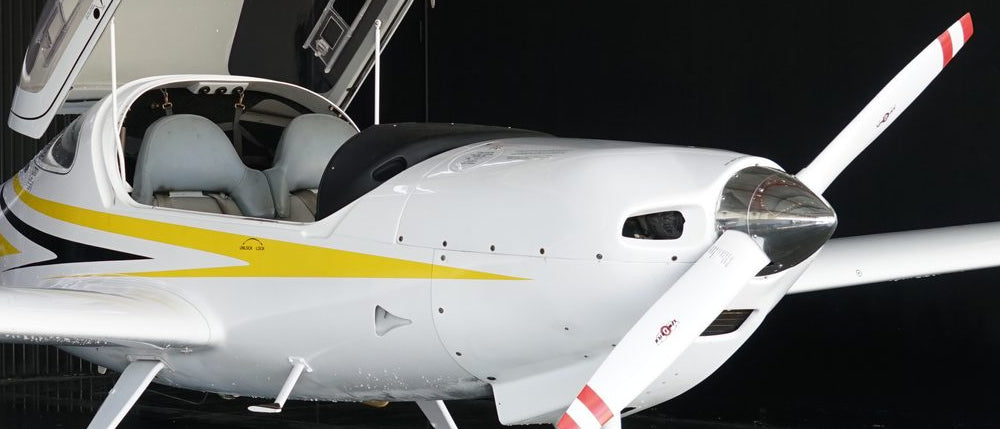
N306EF and N308EF. Two seats, a low wing, a bubble canopy and a stick instead of a yoke, with a 125 hp IO-240 and a Garmin 430. It is certificated in the utility category and is the airplane we use for spin training. We like the canopy for steep turns, because the horizon stays in view all the way round. $229 an hour in a package, $329 retail. More on the DA20.

A student at the controls of the red Redbird MCX full-motion flight simulator

The Redbird MCX Simulator

A full-motion Redbird MCX, FAA-approved as an advanced aviation training device, with single- and multi-engine profiles. You can rehearse a procedure in it, such as the order of a stall recovery or the instrument scan, before you pay for the same practice in an airplane. $120 an hour in a package, $200 retail. How much of its time counts toward the private certificate depends on the rule and the device, so read simulator hours that count first. More on the simulator.

Van Nuys Airport · Los Angeles

Unbeatable Location

Van Nuys (KVNY): Class D beneath the Burbank Class C, just north of the Los Angeles Class B, 300+ flyable days, the coast thirteen miles away.

KVNY · Van Nuys · Los AngelesSchematic · Not For Navigation
Schematic chart of Van Nuys Airport (KVNY) and the airspace around it: the Van Nuys Class D, the Burbank Class C, the LAX Class B shelves and the Simi Valley practice area. Not for navigation. 405101118 Simi Valley Santa Clarita San Fernando Glendale Pasadena Calabasas Santa Monica Thousand Oaks Hollywood San Fernando Valley Santa Monica Mountains Pacific Ocean Van Nuys Class D Burbank Class C LAX Class B KVNY · Van Nuys KBUR · Burbank KWHP · Whiteman LAX Practice Area 2 3 4 5 6 7 8 9 10 11 PA
  • Class B
  • Class C
  • Class D
  • Practice Area
  • Typical Route
Fly Them Yourself

Book A Lesson Or A First Flight

Two-hour lessons from $349, or a 60-minute discovery flight at $229. Both are credited 100% toward training if you enroll within 24 hours.

Piper Warrior N3034Q, front quarter, beside an open hangar at Van Nuys Airport
PIPER WARRIOR · 160 HP · LOW WING
The Classic 60–120 Min

Discovery Flight For One

Credited in full toward your training if you enroll within 24 hours.

One seat, one instructor, no audience. You take the controls once we are clear of the Van Nuys pattern, and your instructor signs the time into your logbook if you bring one.

  • Hands-on stick time
  • Pre-flight briefing and walk-around
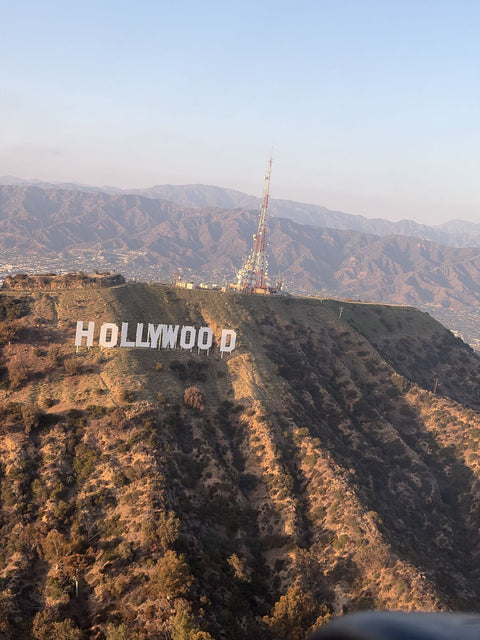
  • Hollywood Sign and downtown
  • One-on-one with an FAA-certified instructor
  • Bring your logbook, we sign it

Flight Length

$229all-in · one flyer · 60 minutes

Book For One

Weight limit 180 lb for the person flying.

Or gift it →
Piper Warrior N6312C, a four-seat low-wing trainer, parked on a sunny ramp
PIPER WARRIOR · FOUR SEATS
★ Most Popular 60–120 Min

Discovery Flight For Two Over Downtown

Logged as dual instruction toward the 40-hour minimum for a private license.

One of you flies while the other rides on the intercom and ends up as the photographer. The route runs past the Hollywood Sign and around the downtown towers.

  • Two seats in the Piper Warrior
  • Headsets for both of you
  • Hollywood Sign and the downtown towers
  • Hands-on flying for one of you
  • Pre-flight briefing and walk-around

Flight Length

$299all-in · two seats · 60 minutes

Book For Two

Weight limit 360 lb combined.

Or gift it →
Cessna 162 Skycatcher trainer seen nose first on the Van Nuys ramp at sunset
CESSNA 162 · OR PIPER WARRIOR
Day One 2 Hours

Two-Hour Beginner Flying Lesson

Credited in full toward your training if you enroll within 24 hours.

Half an hour on the ground learning what the yoke, the pedals and the throttle do, then about seventy minutes in the air over Simi Valley with your instructor beside you.

  • 30-minute ground lesson first
  • About 70 minutes at the controls
  • Simi Valley and the Santa Susana Mountains
  • Cessna 162 or Piper Warrior
  • Debrief and a signed logbook entry

Lesson Length

$349all-in · one student · 2 hours

Book The Lesson

Weight limit 180 lb for the person flying.

Or gift it →
Diamond DA20 with its bubble canopy raised, showing the side-by-side cockpit
DIAMOND DA20-C1 · 125 HP · STICK
The Stick 2 Hours

Two-Hour Beginner Flying Lesson In The Diamond DA20

A stick instead of a yoke, and a canopy you can see straight out of.

Lighter on the controls than the Cessna, and quicker to show you when your feet are lazy on the rudder. A good first lesson if you already think you want the certificate.

  • Diamond DA20-C1, two seats
  • Stick and bubble canopy
  • 125 hp Continental IO-240
  • 30-minute ground lesson first
  • About 70 minutes at the controls

Lesson Length

$549all-in · one student · 2 hours

Book The DA20

Weight limit 200 lb for the person flying.

Or gift it →

How A Maneuvers Lesson Runs

A maneuvers lesson has the same four parts whatever is on the plan. What changes from one lesson to the next is how much of the talking you do.

Student pilot with the door open reading a checklist on her lap in a Cessna 162
Step 1 of 4

Brief It On The Ground

Before anyone touches the airplane, your instructor goes through the maneuvers on the plan. That means the entry, the standard, what usually goes wrong and how the two of you will hand the controls back and forth. On a stall day, you say the recovery out loud before engine start.

Pilot in sunglasses beside the cabin and cowling of a yellow Piper Warrior on the ramp
Step 2 of 4

Preflight The Airplane

You do the walk-around with the checklist. On a maneuvers day, look harder at what the maneuvers load: the control surfaces and their hinges, the stall warning, the seats and belts. Then the taxi, and the run-up at Charlie.

Flight instructor briefing a student pilot in the cockpit before a training flight
Step 3 of 4

Fly The Maneuvers Together

Over the practice area, clearing turns come first, every time; the ACS lists clearing the area as the first skill in both Area V tasks. A new maneuver usually starts with a demonstration. Then you fly it, and fly it again. A good maneuvers lesson has fewer maneuvers than you expect and more repetitions.

Instructor and student side by side in a training airplane cockpit, both in headsets
Step 4 of 4

Debrief On The Ramp

Back on the ground, you go through what was inside the standard and what was not. Your instructor logs the flight and the training, and the plan for the next lesson starts from what you just flew.

Included Every Time

What A $229 Discovery Flight Includes

$229 · All-In 60 Min Flight Time

Every discovery flight leaves our ramp at Van Nuys Airport (KVNY) with an FAA-certificated flight instructor, and it is credited in full toward training if you enroll within 24 hours.

40 HrsFAA MinimumTotal flight time for the private certificate, 14 CFR 61.109(a)
50–60Typical Hours HereOur students' total at checkride, simulator included, 2023–2026, approximate
2–4 MoTypical TimelineFirst lesson to checkride for most of our students
95%+First-Try PassesOur private checkride results, 2023–2026

How Long It Takes To Get Checkride-Ready

The FAA minimum for a private certificate in a single-engine airplane is 40 hours of flight time, including 20 hours of training with an instructor and 10 hours of solo, under 14 CFR 61.109(a). None of the students in our study finished at 40. Across more than 50 of our students who passed the private checkride from 2023 to 2026, the typical total was 50 to 60 hours, simulator included, with a range of 42 to 80. The typical time from first lesson to checkride was 2 to 4 months.

The main reason students took longer was schedule. The fastest finished in under four weeks, flying five to seven days a week; the slowest flew about once a week and took six to nine months. Maneuvers fade between lessons, and a steep turn you flew well on a Tuesday comes back ragged ten days later. These figures are approximate, from our own records. The method is on what our private pilot students actually paid, and the price side is on private pilot license cost.

Two habits shorten the timeline, and neither costs anything. Chair-fly each maneuver the night before, saying every step out loud with your hands on imaginary controls. And fly at least twice a week if your life allows it; the gap between lessons is where the hours go.

If your weeks are already full, book a free consultation and we will build a plan around the days you can actually fly.

Pick A Rating

Every Hour And Every Dollar, Course By Course

The private pilot course is where every maneuver on this page is taught. Each course is priced all-in, with the airplane, simulator, instruction and ground hours listed.

Questions About Private Pilot Maneuvers

How Many Maneuvers Are On The Private Pilot Checkride?

ACS-6C lists 24 tasks for a single-engine land airplane in the five maneuver areas. For ground reference work, the evaluator selects at least one of the three maneuvers, so you prepare the rectangular course, S-turns and turns around a point.

What Are The Steep Turn Standards?

About 45 degrees of bank held within 5 degrees, altitude within 100 feet, airspeed within 10 knots, and a rollout within 10 degrees of the entry heading. The commercial version in FAA-S-ACS-7B asks for about 50 degrees with the same tolerances.

Do Private Pilots Have To Do Spins?

No. Task VII-D is spin awareness, not a spin. 14 CFR 61.183(i) requires spin training for flight instructor applicants, in an airplane certificated for spins. Ours is the $2,000 spin training course in the utility-category DA20: 3 hours in the airplane, 2 hours in the full-motion simulator, plus classroom instruction.

Can I Practice Maneuvers In The Simulator?

Yes. The Redbird MCX is a full-motion, FAA-approved advanced aviation training device, and you can book it as a $249 two-hour simulator lesson or a $189 one-hour simulator experience. Credit toward the private certificate is limited and depends on how the device is approved, so check simulator hours that count before planning around it.

Which Of Your Airplanes Is Best For Learning Maneuvers?

None is best for everyone, and our students split about evenly across the Cessna 162, the Warrior and the DA20. The 162 has 100 hp and glass, the Warrior has four seats and 160 hp, and the DA20 is the one with a stick. A $349 lesson flies the 162 or the Warrior, and the DA20 lesson is $549.

How Many Hours Does It Take To Be Checkride-Ready?

The FAA minimum is 40, and our students typically reach the checkride at 50 to 60 hours, simulator included. Within the 40, 14 CFR 61.109(a)(4) requires 3 hours of training with an instructor in preparation for the practical test, flown within the 2 calendar months before the test.

Do I Need To Know Any Maneuvers Before My First Lesson?

No. A first lesson assumes nothing, and our beginner flying lessons page explains what happens on one. Lessons can be booked from 9 AM to 5 PM, seven days a week.

Fly Your First Maneuvers At Van Nuys

A two-hour lesson is $349 with the airplane, fuel and instructor included, or start with a 60-minute discovery flight for $229. Want a training plan first? The consultation is free. 7900 Balboa Blvd, Van Nuys Airport, open seven days, 9 AM to 9 PM.

Free rescheduling up to 24 hours before, and if the weather says no, you do not pay.