
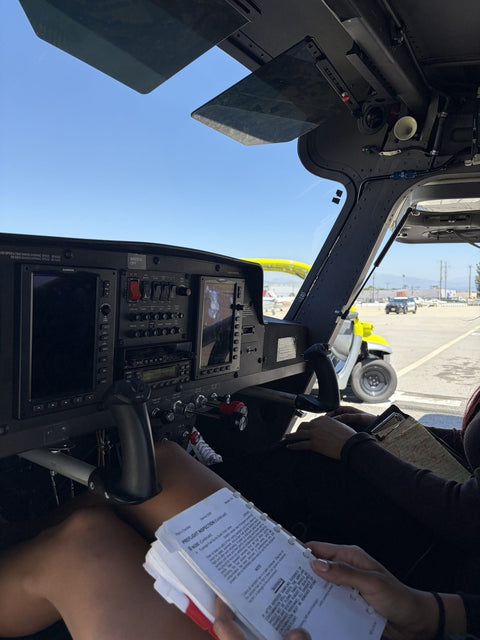
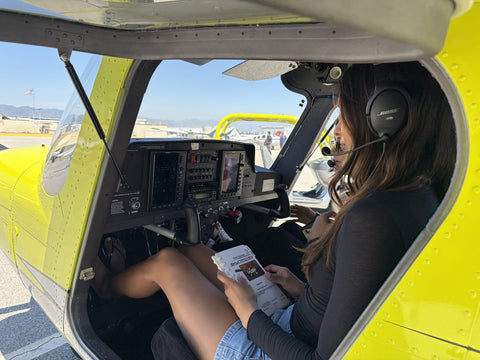
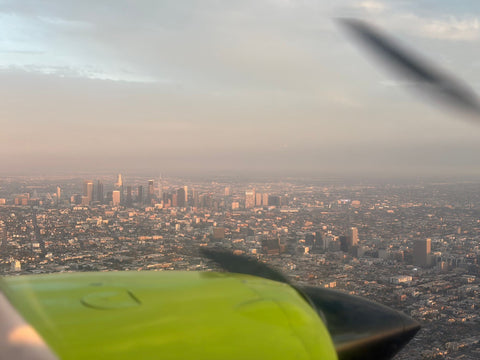


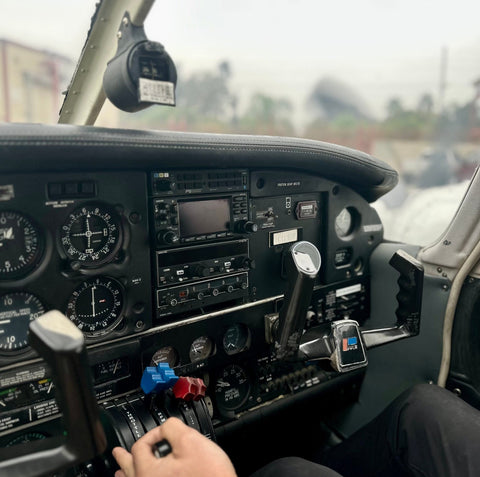



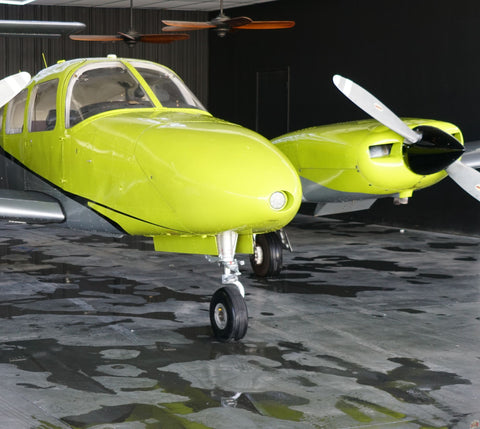

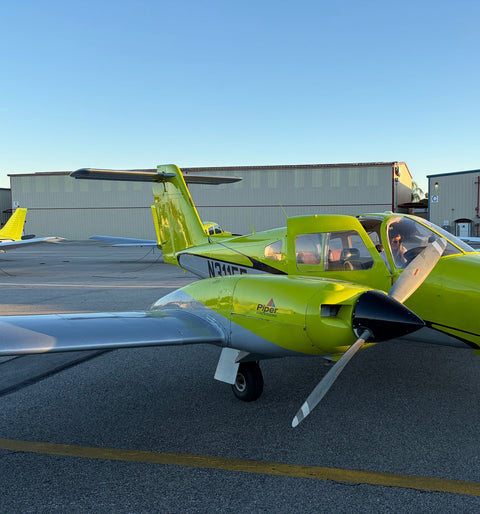


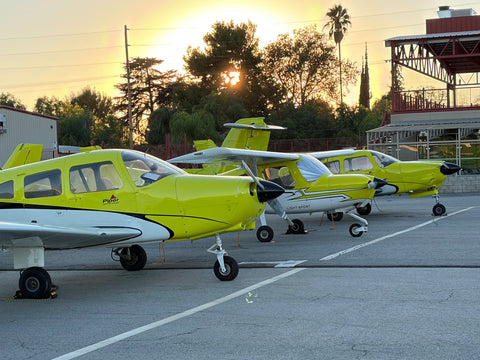











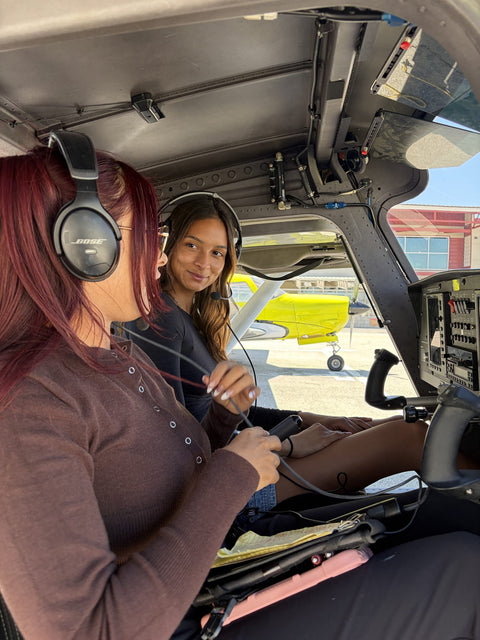
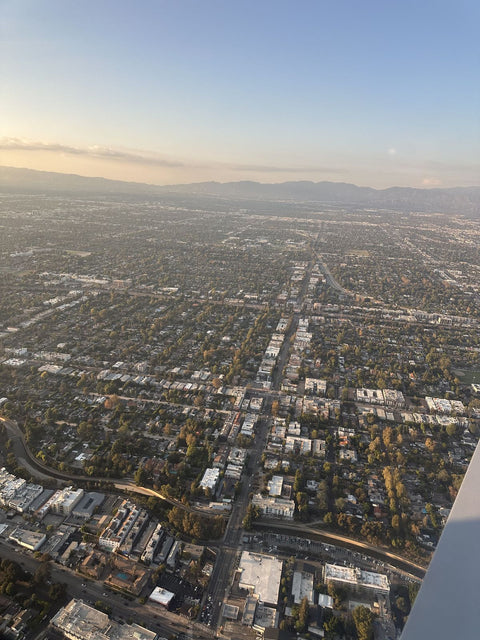
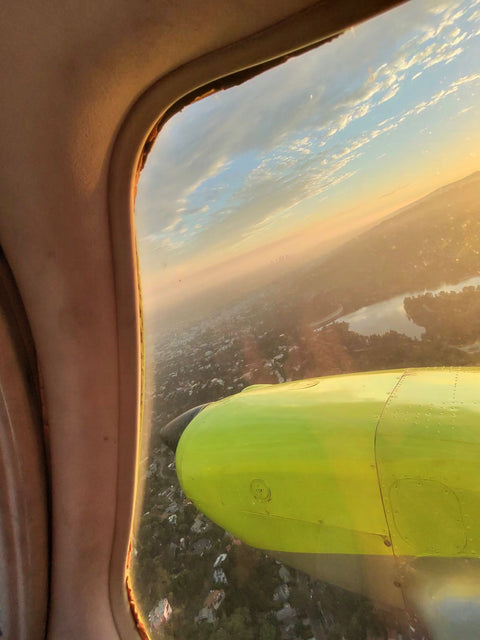

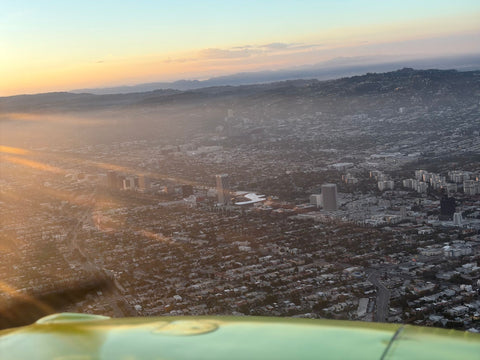

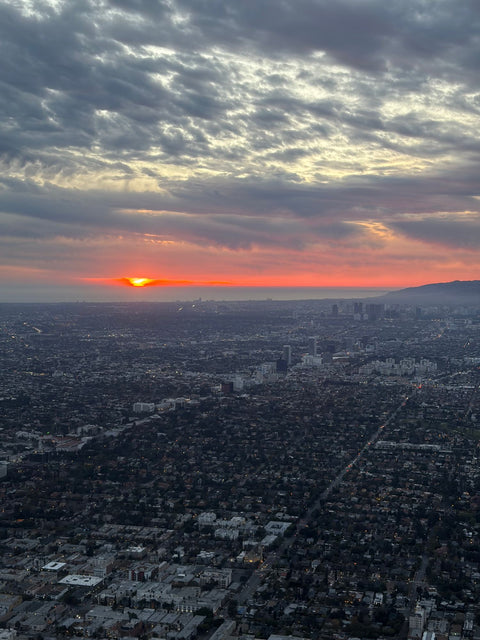

We are a flight school at Van Nuys Airport, and certified flight instructors are the people who do the actual work here. If you are looking at flight instructor vacancies in Los Angeles, this is what the job involves here and how to apply. This page describes what a CFI job at a busy Los Angeles field really involves, what the economics of instructing look like honestly, what we look for, and how to talk to us — plus a wider look at the flight instructor job market in Los Angeles for anyone still deciding whether to become a CFI at all. For what the rest of the profession pays, from instructing through corporate and airline flying, see how much do pilots make. For what is actually documented about instructor pay specifically — and what is not — see flight instructor salary. For the hour requirement every instructing job is measured against in the end, see the 1,500 hour rule and the restricted ATP.
If you are here because you want the certificate rather than the job, start with our flight instructor (CFI) course in Los Angeles. What working as a certified flight instructor in Los Angeles actually involves week to week has a page of its own. If you want to know who we are before you read further, see about You Fly LA.
Quick Answer: Most new CFIs are hired by flight schools, where instructing is how commercial pilots build toward the 1,500 hours an airline requires. You need a commercial certificate with an instrument rating and a flight instructor certificate; the CFII and MEI add instrument and multi-engine students and more hours a month. We hire instructors at Van Nuys, including our own graduates, and our Airline Pilot Career Program includes a guaranteed paid CFI job at $48,000 a year.
Call Or Text (818) 330-1318 Book A Free Consultation
To talk to us about instructing: call (818) 330-1318, 9:00 AM to 9:00 PM, seven days a week, or use our contact page. We are at 7900 Balboa Blvd, Main Terminal Unit 108, Van Nuys, CA 91406.

What A CFI Job At A Busy Van Nuys School Actually Involves
Van Nuys is not a quiet field. Los Angeles World Airports reports it averaging over 217,000 takeoffs and landings a year and describes it as one of the world's busiest general aviation airports. It has two parallel runways — 16R/34L at roughly 8,000 feet and 16L/34R at roughly 4,000 feet — a control tower, and Class D airspace sitting directly beneath the Burbank Class C, just north of the Los Angeles Class B.
That environment shapes the job. Here is what a day looks like in practice.
The Shape Of A Working Day
Most instructing days at a Los Angeles school run in two blocks: early morning, before the heat and before the traffic, and late afternoon into evening. The middle of the day is quieter in summer and busier in winter. A typical block is a pre-flight briefing, one to two hours in the airplane, and a debrief — with a scheduling gap that you either fill with ground instruction, a simulator session, or paperwork.
Some concrete realities of the role:
- You will talk on the radio constantly. Every taxi, every departure, every pattern entry is a controller transaction. Instructors who come from quiet uncontrolled fields find the first two weeks at Van Nuys demanding and then find they have permanently better radio habits.
- The Burbank Class C shelf is always overhead. Teaching a student to fly here means teaching vertical airspace discipline on every single flight. You will read the Terminal Area Chart with students until they can do it without you.
- You will sequence with jets. Business aviation is a large share of Van Nuys traffic. Wake turbulence separation, hold-short discipline and clear readbacks are not classroom topics here, they are Tuesday.
- Practice areas are close. The Santa Susana and Simi Hills are minutes from the field, which means more air work per hour flown and less time on transit.
- Weather is workable almost every day. Southern California gives you a very high number of flyable days. The constraints are the marine layer on summer mornings and Santa Ana winds in autumn and winter — both of which are teaching opportunities as much as cancellations.
- You are also a scheduler, a record-keeper and a communicator. Endorsements, logbook entries, 8710 forms and IACRA submissions, stage-check coordination, and honest progress conversations with students who are plateauing. The flying is maybe 60% of the job.
A Real Working Day, Hour By Hour
Abstractions about "a busy environment" are less useful than a schedule. This is what a full instructing day at Van Nuys actually looks like in, say, June, when the marine layer is the governing fact of every morning.
| Time | What You Are Doing | What It Demands Of You |
|---|---|---|
| 06:45 | Pull the TAF and the field observation before your first student texts you | Deciding early whether the layer will burn off by 09:00 or hold to noon |
| 07:15 | First student arrives; ground brief while the ceiling is still down | Turning a weather delay into a lesson rather than a cancellation |
| 08:30 | Preflight, taxi, run-up, pattern work on 16R or 34L | Continuous radio work; hold-short discipline with jet traffic |
| 10:00 | Debrief, logbook, endorsements, schedule the next two lessons | Record-keeping that survives an FAA look and a stage check |
| 10:30 | Second student: air work in the practice areas toward the Santa Susanas | Vertical awareness under the Burbank Class C shelf on every climb |
| 12:30 | Gap. Ground instruction, a simulator session, or the paperwork you owe | Filling the gap productively is most of the difference between instructors |
| 15:00 | Third student: cross-country planning, then the leg itself | Summer density altitude briefed properly, not mentioned in passing |
| 18:00 | Fourth student: evening lesson, working adult, often night currency later in the year | Teaching well when you are tired is the actual skill |
| 20:30 | Last debrief, secure the aircraft, squawks written up | The squawk you do not write is the one that grounds tomorrow |
Two things stand out from that shape. First, the day has holes in it, and how you use them decides both your income and your sanity. Second, the flying is a minority of the hours. An instructor who counts only Hobbs time will feel underpaid at any rate; one who understands that briefing, debriefing and record-keeping are the job will not be surprised by it.
Who You Will Teach
Our students span the full range: discovery-flight passengers who have never touched a control yoke, teenagers on our teen program, working adults building a private pilot certificate two evenings a week, instrument and commercial students, and international students. In Los Angeles specifically you will teach a wider range of ages, first languages and professional backgrounds than at most fields in the country. Instructors who enjoy that variety do well here; instructors who want a single homogeneous ab initio pipeline usually do not.
You will also fly discovery flights. Some instructors regard these as a lesser task. They are not — a discovery flight is the single most consequential hour in the whole business, because it decides whether someone becomes a student pilot at all. The instructors who are best at them are the ones who treat the passenger as a future colleague rather than a ride.

The Honest Economics Of Flight Instructing
Most people take a CFI job for two reasons at once: they like teaching, and they need the hours. Both are legitimate. Here is the arithmetic, stated plainly.
The 1,500-Hour Picture
An unrestricted airline transport pilot certificate with an airplane multiengine class rating requires 1,500 hours of total time as a pilot under 14 CFR 61.159, along with specific sub-minimums — including 500 hours of cross-country flight time, 100 hours of night flight time, 75 hours of instrument flight time, and 250 hours as pilot in command. The total number is the one everyone quotes; the sub-minimums are the ones that actually catch people out. A CFI who has flown 1,400 hours of local pattern work and has 90 hours of cross-country is not close to an ATP.
Restricted ATP Reductions Under 14 CFR 61.160
14 CFR 61.160 allows reduced total-time minimums for a restricted-privileges ATP certificate:
| Route | Minimum total time | Regulation |
|---|---|---|
| U.S. military pilot or former military pilot | 750 hours | 61.160(a) |
| Bachelor's degree with an aviation major (approved institution) | 1,000 hours | 61.160(b) |
| Associate's degree with an aviation major (approved institution) | 1,250 hours | 61.160(c) |
| Standard route, no reduction | 1,500 hours | 61.160(f) |
The full experience breakdown behind those totals — what the 1,500 hours must actually consist of, and what each reduction does and does not change — is set out on our page on the 1,500 hour rule and the restricted ATP.
Two points that matter and are routinely misunderstood. First, the degree reductions require the degree to be from an institution whose aviation program is specifically authorized by the FAA — a general aviation-adjacent degree does not qualify. Second, a restricted ATP is issued at a minimum age of 21 rather than the 23 required for an unrestricted certificate, and it carries operational limitations until you meet the full requirements. Verify your own eligibility against the current regulation and with the institution itself before planning a career around it.
CFI, Then CFII, Then MEI — And Why The Order Matters
"Flight instructor" is not one certificate. It is an initial certificate plus two additional instrument and multi-engine instructor ratings, and which of them you hold determines what work you can be given, which is another way of saying it determines how many hours a month you log.
| Certificate Or Rating | What It Lets You Teach | What It Does For Your Logbook | Typical Sequence |
|---|---|---|---|
| CFI (initial) | Primary training toward the private and commercial certificates in single-engine airplanes, plus flight reviews and the endorsements that go with them | Dual given, plus a high proportion of local and pattern time | First. Everything else is an add-on to it. |
| CFII | Instrument instruction — approaches, holds, IFR cross-countries, instrument proficiency checks | Instrument time and, importantly, cross-country time that primary work does not generate | Second, and usually soon after. This is the one that fixes the sub-minimum problem. |
| MEI | Multi-engine instruction in twins | Multi-engine time, which is the scarcest and most competitive kind in a logbook | Third. Fewest students, highest value per hour flown. |
The practical reading of that table is that a CFI-only instructor is working with one hand tied behind their back. Primary instruction generates dual given and local time in abundance and cross-country and instrument time hardly at all — and cross-country and instrument time are precisely the sub-minimums in 14 CFR 61.159 that strand people at 1,400 hours. A CFII who takes instrument students is building the hours that are hardest to buy, while being paid to do it.
MEI is the third step and the one with the least volume behind it. Fewer students train for a multi-engine rating than for anything else, so MEI work is intermittent at most schools. What it does produce is multi-engine time, which is the entry on an airline application that everybody is short of. If you hold it, say so early in any conversation with a school.
We run all three as a single program — CFI, CFII and MEI — at $15,400, and the practical reason to do them together rather than in sequence over three years is exactly the hour-building arithmetic above. What that course covers is set out on our flight instructor (CFI) course in Los Angeles page. The week-to-week reality of the work itself is on certified flight instructor in Los Angeles.
How The Hours Actually Accumulate
The number everyone quotes is the total. The table below is the part that decides whether you get there on schedule: which kind of instructing produces which kind of hour. It is descriptive, not a promise — how much of each you fly depends entirely on the school, your ratings and your students.
| Work You Are Given | Requires | Builds Well | Builds Poorly Or Not At All |
|---|---|---|---|
| Primary and pattern instruction | CFI | Total time, dual given, day landings | Cross-country, night, instrument |
| Cross-country dual with private students | CFI | Total time, cross-country | Instrument, multi-engine |
| Night instruction and night currency | CFI | Night time — the sub-minimum most often left behind | Instrument, multi-engine |
| Instrument instruction and IPCs | CFII | Instrument, cross-country, actual IMC when the layer is in | Multi-engine |
| Multi-engine instruction | MEI | Multi-engine time, which almost nothing else builds | Volume — there is simply less of this work |
| Commercial students building time | CFI, often CFII | Cross-country and complex or technically advanced time | Nothing much; this is among the best work available |
| Discovery flights | CFI | Total time, and the school's entire pipeline | Everything else — they are short by design |
Read the fourth column rather than the third. Almost every instructor who arrives at 1,400 hours and discovers they cannot sit an ATP checkride got there by flying only the first row of that table for two years. The fix is not to fly more; it is to fly differently, deliberately, from month one. Our page on time building in Los Angeles sets out the cross-country legs from Van Nuys that clear the 50 nautical mile threshold, which is the single most useful planning tool an instructor here has.
What That Means For How You Choose A CFI Job
If your goal is 1,500 hours (or 1,000, or 1,250), then the variable that matters most is hours flown per month, and the second is what kind of hours. Ask any school you are considering:
- How many hours a month do your instructors actually log, at the low end and the high end?
- How many students would I be assigned, and how frequently do they fly?
- What proportion of the flying is primary pattern work versus cross-country?
- Is there instrument instruction available to me, and do I need a CFII to get it?
- Are there opportunities that build night and cross-country time specifically?
- How is instructor pay structured — per flight hour, per Hobbs hour, per duty hour, or salaried?
That last one is where most disappointments come from. A rate that sounds good per flight hour can be poor per hour of your actual life if you spend three hours at the airport for every 1.2 on the Hobbs. Ask about hours at the airport, not hours in the airplane, at every school you talk to — including this one.
The Limits On How Much You Can Teach
14 CFR 61.195(a) limits a flight instructor to 8 hours of flight training in any 24 consecutive hours. That is a real constraint on how fast you can build time, and it is also a safety rule worth respecting rather than working around. Fatigue in an instructor is more dangerous than fatigue in a student, because the instructor is the safety margin.
What We Look For
Beyond the certificates, these are the things that make an instructor good here specifically.
- A current CFI certificate (14 CFR 61.183), with a commercial pilot certificate and instrument rating behind it. CFII and MEI are genuinely useful to us. So is a Cirrus background, given our fleet.
- Comfort in busy Class D under a Class C shelf. If you do not have it yet, you can learn it — but you must want to. An instructor who is uncomfortable on the radio transmits that discomfort to every student they fly with.
- Teaching instinct, not just knowledge. The best instructors we have seen are the ones who can tell the difference between a student who does not understand something and a student who understands it but cannot yet do it. Those two problems have completely different fixes.
- Reliability over charisma. Showing up, on time, briefed, with the aircraft booked and the weather checked, is 80% of being good at this job.
- Honesty with students about money and time. We would rather tell a student they need six more hours than sell them a false finish line. If that instinct is not natural to you, this is not the right school.
- English language proficiency as required by 14 CFR 61.183(b), and eligibility to work in the United States.
Prior instructing experience is welcome and not required. Newly certificated CFIs are a normal and healthy part of any flight school — including the ones who trained with us. What we care about is whether you can be trusted alone with someone else's first solo.
- Commercial pilot certificate with an instrument rating
- Current flight instructor certificate
- CFII rating
- MEI rating
- Current FAA medical certificate
- Logbook totals ready: total, PIC, cross-country, night, instrument and dual given
- Available evenings and weekends
- Eligible to work in the United States
What We Offer
Stated plainly, and limited to what is verifiable from our own operation:
- Students year-round. Southern California weather and a seven-days-a-week operation (9:00 AM to 9:00 PM) mean the flying does not stop for a season.
- Flexible scheduling. Instructors here work early mornings, evenings and weekends as well as the middle of the day, which suits people building time and people fitting instructing around other flying.
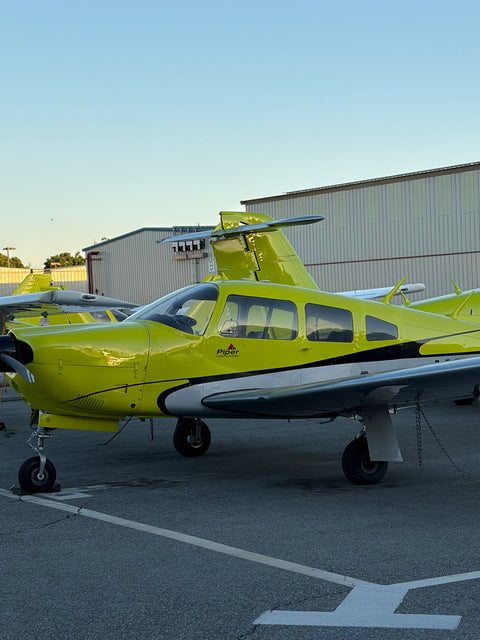
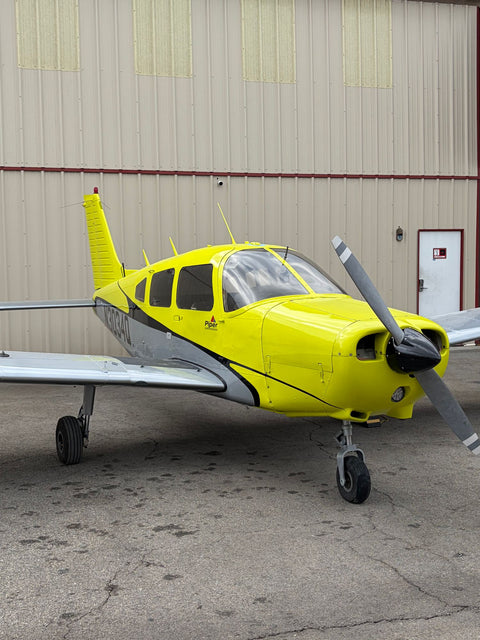
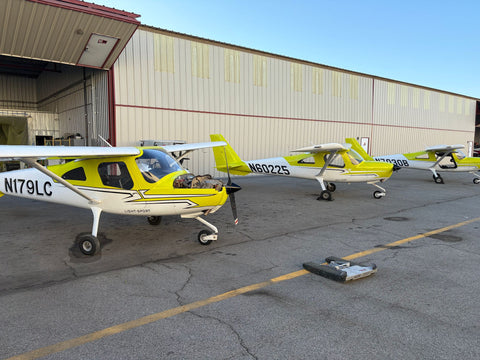
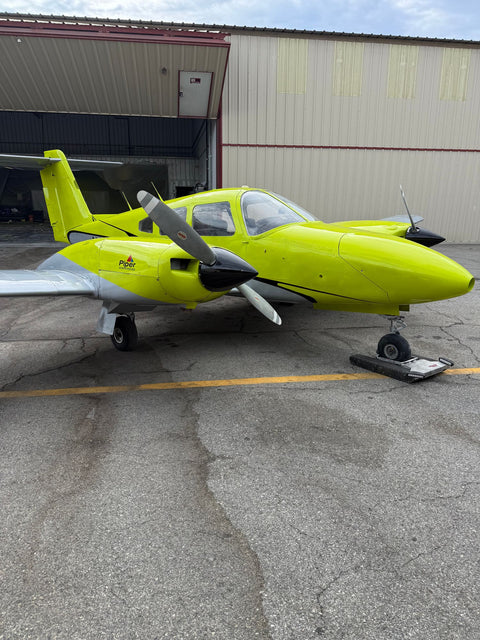
- A modern, varied fleet. Piper Warrior PA-28-161, Diamond DA20-C1, Cessna 162 Skycatcher, Piper Arrow, Cirrus SR22 Turbo, and Piper Seminole twins. See the airplanes you'll fly. A varied fleet means varied instruction, which means better hours and a broader logbook.
- A full-motion simulator on site. Useful for teaching instrument procedures efficiently and for working with a student who has plateaued. See our full-motion flight simulator.
- A field that makes you a better pilot. Two parallel runways, a control tower, and the Burbank Class C shelf overhead. Instructing at Van Nuys is itself a qualification. Practically, that means your students learn to hold short with a Gulfstream in the sequence, to read a Terminal Area Chart before every climb, and to talk to a controller who is busy — habits that do not have to be retrofitted later. See flight training at Van Nuys and Van Nuys Airport.
Pay rates, benefits, employment classification and current headcount are set by the owner and are discussed directly with candidates. We have deliberately not published numbers here rather than publish something we cannot stand behind. Ask us on the call and you will get a straight answer.
The one exception is written into our Airline Pilot Career Program: its graduates are guaranteed a paid CFI job with us at $48,000 a year while they build toward 1,500 hours.
How To Apply
There is no elaborate process. Call (818) 330-1318 between 9:00 AM and 9:00 PM, seven days a week, and ask to speak to us about instructing, or send your details through our contact page.
What to have ready:
- Your certificates and ratings, with dates — commercial, instrument, CFI, CFII, MEI as applicable.
- Total time, PIC time, cross-country, night, instrument and dual given.
- Your current medical certificate class and date.
- Any make and model experience relevant to our fleet, particularly Piper, Diamond, Cessna and Cirrus.
- Your realistic weekly availability, including whether you can work weekends and evenings.
- What you want out of the next 18 months — we would rather know you are building toward an airline than pretend otherwise.
We would rather have a short honest conversation than an elaborate application. If we are not hiring at the moment you call, we will tell you that directly rather than leave a résumé in a drawer.
How To Judge A Flight School As An Instructor, Not As A Student
You have almost certainly evaluated a flight school before — as a customer. The criteria are different on this side of the desk, and some of the things that impressed you as a student are irrelevant to you as staff.
What Stops Mattering
A shiny lobby, a glass panel in the training fleet, a marketing budget. None of these tell you how many hours a month you will fly. A school can have all three and still schedule you badly.
What Starts Mattering
- Aircraft availability, not aircraft quality. The relevant question is how often an aircraft is unavailable when a student is booked. A grounded airplane is a canceled lesson, and a canceled lesson is an hour you do not log. Ask what the maintenance turnaround looks like and whether there is a spare of the same type.
- Dispatch and scheduling. Who assigns students to instructors, and on what basis? A school where the schedule is managed will keep you flying; one where instructors compete for students informally will not.
- Student density and retention. Lots of enrolled students matters less than students who fly two or three times a week. A hundred students who fly monthly is a worse job than thirty who fly twice a week.
- Whether you can get instrument work. This is the question that determines your logbook's shape. If the school's instrument students are all assigned to two senior CFIIs, the CFII you are about to spend money on will not earn its keep there.
- The fleet's range. A school with only trainers gives you only trainer time. A fleet with complex, technically advanced and multi-engine aircraft gives you a broader logbook. Ours runs the Piper Warrior PA-28-161, Diamond DA20-C1, Cessna 162 Skycatcher, Piper Arrow, Cirrus SR22 Turbo, and Piper Seminole twins — see the airplanes you'll fly.
- How the school handles weather. Ask what happens to a canceled lesson: is it rebooked the same week, and is there a simulator to move it into? Our weather and cancellation policy is published, which is itself the point — you can read it before you ever call.
- Whether the school trains its own instructors. A school that runs a CFI course knows what a new instructor needs and has a standard to hand you. A school that only hires finished CFIs is usually improvising.
- What the school charges students for your time. This is public information and you should look at it. We charge $110 an hour for instruction and $110 an hour for ground, with aircraft from $179 an hour and the simulator at $120. That is the school's rate to the student and it is not instructor compensation — but the ratio between what a school charges and what it pays is a fact worth understanding before any conversation about terms. Our page on flight instructor salary sets out what is and is not documented about CFI earnings.
The One Question That Sorts Schools Fastest
Ask: how many hours a month do your instructors log, at the low end and the high end, and how many of those are instrument and cross-country? A school that answers with two specific numbers and a breakdown is telling you they track it. A school that answers with an adjective is telling you they do not.
Instructing Part Time Versus Full Time
Not every instructing job is a full-time one, and the two are different jobs rather than different amounts of the same job.
Part Time
Part-time instructing suits people who already have an income and want the certificate to work for them — pilots with another flying job, people keeping their hand in, career changers instructing evenings and weekends while they finish something else. Southern California is unusually good for it, because a school open 9:00 AM to 9:00 PM, seven days a week can give you evening and weekend blocks that a nine-to-five field cannot. Working adults are the students who want those slots, so the demand and the availability line up.
The trade is that hour building is slow, and the shape of the hours is narrow. Evening and weekend work skews toward primary instruction with the same handful of students, which builds total time and very little else. If you are instructing part time and you still intend to reach an ATP, be deliberate about night and cross-country from the first month, because part time is where the sub-minimums quietly go missing.
Full Time
Full-time instructing is the standard route to 1,500 hours and it is a genuine job, not a stepping stone you do casually. It also has a ceiling written into the regulations: 14 CFR 61.195(a) limits a flight instructor to 8 hours of flight training in any 24 consecutive hours, which caps how fast anyone can build time no matter how many students they have.
The realistic constraints on a full-time instructor are weather, aircraft availability and student reliability — in that order at most fields, and in a different order here, because Southern California removes the first one for much of the year. That is the actual reason Los Angeles is an hour-building destination, and it is the reason turnover is high. Both facts are in your favor as a candidate.
Which To Choose
If you need 1,500 hours and you need them on a schedule, instruct full time and take every instrument and cross-country hour you can get. If you have an income and you want to teach, part time is a real and honorable version of the job, and there is a permanent shortage of instructors who can work the evening slots that working students actually need. Tell us which one you are on the call; it changes the conversation entirely.
The Ladder Above A Line Instructor
Most CFI jobs are line-instructor jobs. Above them sit three positions the regulations actually name, and it is worth knowing they exist before you take a job — partly because they are a career, and partly because the answers tell you how a school is organized.
What A Part 141 Employer Requires Of You
If a school runs FAA-approved courses under Part 141, working there changes your paperwork rather than your flying:
- Your certificate must cover the course. 14 CFR 141.33(a)(3) requires each instructor used for ground or flight training to hold a flight instructor certificate, ground instructor certificate, or commercial pilot certificate with a lighter-than-air rating, as appropriate, with ratings for the approved course and any aircraft used in it.
- You are checked before you are given students. Under 14 CFR 141.85(a)(2) the chief instructor has to see that every instructor passes an initial proficiency check before being assigned instructing duties on an approved course, and a recurrent proficiency check every 12 calendar months after the month the initial check was accomplished.
- Your students get checked by somebody else. Stage checks and end-of-course tests run under 14 CFR 141.85, and under 14 CFR 141.37(c) a check instructor may not conduct a stage check or end-of-course test for a student they taught or recommended.
None of that is a burden worth avoiding. It is a reasonable description of what a well-run training department does, and plenty of Part 61 schools — this one included — do the same thing voluntarily.
The Three Senior Positions
| Position | Private Pilot Course | Commercial Or Instructor Course | Regulation |
|---|---|---|---|
| Assistant chief instructor | 500 hours PIC, plus 1 year and 250 hours instructing or 500 hours instructing | 1,000 hours PIC, plus 1½ years and 500 hours instructing or 750 hours instructing | 141.36(b), 141.36(d) |
| Chief instructor | 1,000 hours PIC, plus 2 years and 500 hours instructing or 1,000 hours instructing | 2,000 hours PIC, plus 3 years and 1,000 hours instructing or 1,500 hours instructing | 141.35(b), 141.35(d) |
| Check instructor | No flight-hour minimum of its own. Requires a knowledge test given by the chief instructor, a proficiency test, written designation by the chief instructor, and approval by the responsible Flight Standards office. A school may only designate one once it has at least 10 enrolled students. | 141.37, 141.33(d)(2) | |
Figures from Title 14 of the Code of Federal Regulations, Part 141, eCFR title issue date 10 September 2026. A chief instructor is designated per approved course rather than per school, so the same person can be qualified to run the private course and not the commercial one. What the role involves day to day, and the responsibilities that come with it under 14 CFR 141.85, is set out on our page on the chief flying instructor.
Two practical notes for a job-seeking CFI. First, these thresholds explain why senior instructor roles are scarce: 2,000 hours pilot in command and three years of instructing is well past the point at which most instructors leave for an airline. Second, 14 CFR 141.87 gives a Part 141 school only 60 days to operate without a chief instructor before it must cease operations and surrender its certificate — which is why those vacancies get filled quickly and why a school that has lost one is worth asking about.
At a Part 61 school none of this is required, and the titles are what the school makes of them. The role still appears in Part 61 in one place: 14 CFR 61.197(b)(2)(ii) lets an instructor establish the recent experience needed to keep the certificate current by having served, within the preceding 24 calendar months, as a company check pilot, chief flight instructor, company check airman, or flight instructor in a Part 121 or 135 operation.
The Flight Instructor Job Market In Los Angeles
A broader, honest view for anyone weighing this as a career step — whether or not it is with us.
Why Los Angeles Is A Strong Place To Instruct
Los Angeles has one of the densest concentrations of general aviation airports in the country: Van Nuys, Santa Monica, Long Beach, Torrance, Whiteman, El Monte, Camarillo, plus Burbank for Class C exposure. That density means a large number of flight schools, a large student population, and — critically — genuine mobility. An instructor who is unhappy at one school in LA can usually find another without moving. That is not true in most of the country.
The weather compounds it. A high number of flyable days per year means an instructor here can build hours materially faster than one in a region with a real winter. That is the single biggest reason LA is an hour-building destination.
Why The Market Churns
The flip side: because LA is an hour-building destination, instructor turnover is high everywhere. Most CFIs are here for 12 to 24 months and then move to a regional airline, a charter operator or a corporate flight department. Schools know this. The good ones plan for it — structured handovers, shared student records, stage checks by a second instructor — and the bad ones treat every departure as a crisis.
As a candidate, this cuts in your favor: schools are hiring more or less continuously. It also means you should not accept poor treatment on the theory that the job is scarce. It is not. The demand behind that sits inside a wider picture — see what the pilot shortage means for hiring.
The Things Nobody Tells New CFIs
- Your income is weather-dependent and student-dependent. A week of June Gloom or a student who goes on vacation for a month affects you directly under most pay structures. Build a financial buffer before you start.
- The first 100 hours of instructing are the hardest flying you will ever do. You are managing an airplane, a student, a radio, and your own nerves simultaneously. It gets dramatically easier.
- Teaching makes you a much better pilot. Almost every instructor says the same thing: they did not truly understand slow flight, stalls or crosswind landings until they had to explain them thirty times.
- Cross-country and night time do not accumulate by accident. Plan for them deliberately or you will hit 1,400 hours short on the sub-minimums in 61.159.
- Your reputation in a metro this size is small-town-sized. Every chief instructor at every LA field knows the others. How you leave a school matters as much as how you arrive.
How To Become A Flight Instructor In The First Place
If you do not hold a CFI certificate yet, the path is well defined.
- Private pilot certificate — 14 CFR 61.109. See private pilot license in Los Angeles.
- Instrument rating — 14 CFR 61.65. See instrument rating in Los Angeles.
- Commercial pilot certificate — 14 CFR 61.129, and a prerequisite for the CFI under 61.183(c). See commercial pilot license in Los Angeles. Our commercial program is $15,400.
- CFI certificate — 14 CFR 61.183. This requires the fundamentals of instructing knowledge test, the flight instructor knowledge test for the category and class, spin training and an endorsement under 61.183(i), and a practical test in which you teach the examiner. It is widely regarded as the hardest checkride in general aviation, because you are examined on your ability to explain, not merely to perform. See our CFI course in Los Angeles.
- Add CFII and MEI if you want instrument and multi-engine instructing work — both materially improve your employability and your hour-building rate. Our multi-engine rating is $5,100 over seven days.
If your goal is the airlines rather than instructing for its own sake, our Airline Pilot Career Program runs approximately nine months at $84,000 and takes a student from zero through the certificates and ratings needed to begin building time.

Frequently Asked Questions
Are You Hiring Flight Instructors Right Now?
Hiring status changes, so the honest answer is to call and ask. Phone (818) 330-1318 between 9:00 AM and 9:00 PM, seven days a week, or use our contact page. If we are not hiring when you call, we will say so directly rather than hold your details indefinitely.
What Certificates Do I Need For A Flight Instructor Job?
A current CFI certificate under 14 CFR 61.183, which requires a commercial pilot certificate and an instrument rating first. CFII and MEI significantly broaden the work available to you. You must also meet the English language proficiency requirement in 14 CFR 61.183(b) and be eligible to work in the United States.
How Many Hours Do I Need Before An Airline Will Hire Me?
1,500 hours of total time for an unrestricted ATP under 14 CFR 61.159, including 500 hours cross-country, 100 hours night, 75 hours instrument and 250 hours pilot in command. 14 CFR 61.160 allows a restricted ATP at 1,000 hours with a qualifying bachelor's degree in aviation, 1,250 hours with a qualifying associate's degree, or 750 hours for military pilots.
How Long Does It Take To Build 1,500 Hours Instructing?
It depends entirely on how much you fly, which depends on your school, the season and your students. In Los Angeles the flyable-day count is high, which is why the metro is a well-known hour-building destination. Ask any prospective employer what their instructors actually log per month, at both the low and high end, before you accept a job.
Do You Hire Newly Certificated CFIs With No Instructing Experience?
Prior instructing experience is welcome but not required. New CFIs are a normal part of any healthy flight school. What matters is whether you can be trusted with a student's first solo, and that is assessed in person rather than on paper.
What Is It Like Instructing At Van Nuys Specifically?
Busy and demanding in a way that makes you better. Van Nuys averages over 217,000 operations a year, has two parallel runways and a control tower, and sits in Class D directly beneath the Burbank Class C, just north of the Los Angeles Class B. You will teach radio discipline, sequencing with business jets and vertical airspace awareness on every flight.
How Many Hours A Day Can A Flight Instructor Legally Teach?
14 CFR 61.195(a) limits a flight instructor to 8 hours of flight training in any 24 consecutive hours. That is a hard regulatory ceiling on how quickly you can build time as an instructor, and it exists for good reason.
I Want To Become A CFI But I Do Not Have My Commercial Yet. Where Do I Start?
The sequence is private pilot (14 CFR 61.109), instrument rating (61.65), commercial pilot certificate (61.129), then the CFI (61.183). We run all of these at Van Nuys. Start with our CFI course page for the full path, or call (818) 330-1318 for a plan built around your current hours.
Should I Get My CFII And MEI, Or Just The CFI?
Get all three if you can. A CFI-only instructor is largely confined to primary instruction, which builds total time and very little cross-country, night or instrument time — and those are the sub-minimums in 14 CFR 61.159 that strand people at 1,400 hours. A CFII is paid to build exactly the hours that are hardest to accumulate, and an MEI builds multi-engine time that almost nothing else in general aviation produces.
Can I Work As A Flight Instructor Part Time?
Yes, and a school open 9:00 AM to 9:00 PM seven days a week has evening and weekend demand from working students that suits it. The trade is that part-time work skews toward primary instruction, so total time accumulates but cross-country, night and instrument time do not. If you still intend to reach an ATP, plan those hours deliberately from your first month rather than discovering the gap later.
What Does A Part 141 School Require Of Me That A Part 61 School Does Not?
Under 14 CFR 141.85(a)(2) you must pass an initial proficiency check before you are assigned instructing duties on an approved course, and a recurrent proficiency check every 12 calendar months after the month the initial check was accomplished. 14 CFR 141.33(a)(3) also requires your certificate to carry the ratings for the approved course and for any aircraft used in it.
How Do I Become A Chief Instructor?
At a Part 141 pilot school the requirements are in 14 CFR 141.35: a commercial or airline transport pilot certificate with a current flight instructor certificate, the pilot-in-command recency of 14 CFR 61.57, a knowledge test and a proficiency test, plus 1,000 hours pilot in command for a private pilot course or 2,000 hours pilot in command for a commercial or instructor course. At a Part 61 school there is no FAA designation and the title is what the school makes of it.
Where Do New CFIs Get Hired?
Mostly at flight schools, because that is where students need instructors and where a new CFI can log hours every week. Part 61 and Part 141 schools and university programs all hire instructors, and a school that flies seven days a week in good weather gives you the most hours a month. Ask each one how many hours its instructors actually log.
How Much Do Flight Instructors Get Paid At You Fly LA?
Pay, benefits and classification are discussed directly with candidates, and we do not publish a general rate. The exception is our Airline Pilot Career Program, whose graduates are guaranteed a paid CFI job with us at $48,000 a year.
Related Pages
- Flight Instructor (CFI) Course In Los Angeles — how to earn the certificate before you look for the job.
- Commercial Pilot License In Los Angeles — the prerequisite for the CFI.
- Airline Pilot Career Program — zero to career-ready in approximately nine months.
- Flight Training At Van Nuys Airport — the field you would be teaching at.
- The 1,500 Hour Rule And The Restricted ATP — the requirement every instructing job is measured against.
- Time Building In Los Angeles — cross-country legs from KVNY that clear the 50 NM threshold.
- Chief Flying Instructor — the senior role above a line CFI, and what Part 141 requires of it.
- Flight Instructor Salary — what is documented about CFI pay, and what is not.
- Meet Your Flight Instructors — the people you would be working alongside.
- About You Fly LA — who we are and how we operate.
Talk To Us
If you instruct, or you are about to, we would rather have a real conversation than an exchange of documents. Call (818) 330-1318, 9:00 AM to 9:00 PM, seven days a week, or reach us through the contact page. We are at 7900 Balboa Blvd, Main Terminal Unit 108, Van Nuys, CA 91406, at Van Nuys Airport — and if you would rather see the operation before you talk terms, come and stand on the ramp for twenty minutes. That tells you more than we can.
Call Or Text (818) 330-1318 Book A Free Consultation Book A Discovery Flight · $229
Sources: 14 CFR 61.159, 61.160 and 61.183, Title 14 of the Code of Federal Regulations on ecfr.gov, checked September 23, 2026.