






















Spec Readout6 tails
- Engine
- Continental O-200-D · 100 hp
- Seats
- 2 · high wing
- Panel
- Garmin G300 glass
- Rate
- $179/hr · package, fuel incl.
- Stand-Out
- Light-sport and glass-panel
Your First Hour
Start Here
Book A Discovery FlightYou Fly The Airplane. From $229.
Sixty minutes over Los Angeles from Van Nuys Airport, with an FAA-certificated instructor beside you.
Programs & Prices
Start Here
Book A ConsultationGo Professional
Book A ConsultationWork Out The Cost
Book A ConsultationFree In-Person Consultation
Come and see the hangar first. No aircraft, no pressure.
Read Before You Fly
Costs, Explained
Read The Flight LogGetting Started
Read The Flight LogThe Airline Route
Read The Flight LogPilot Guides
What it costs, how long it takes and every step to the airlines, explained plainly.
Twenty Airplanes
Aircraft
Fly The Cirrus SR22Simulator
Fly The Cirrus SR22Glass Cockpit. Parachute. Leather. From $499.
Fly the Cirrus SR22 Turbo on a discovery flight, or train in it as an upgrade on any aircraft hour.
The School
The School
Meet The InstructorsTwenty Airplanes. Seven Days A Week.
Train at Van Nuys Airport with FAA-certificated instructors, a full-motion simulator and our own fleet.
Book Online
Bring Someone Along
Discovery flights for one or two, gift certificates and a free consultation, with instant text and email confirmation.
Where Students Come From
San Fernando Valley
See All Service AreasWestside & Coast
See All Service Areas7900 Balboa Blvd, Main Terminal Unit 108
Van Nuys Airport, in the middle of the San Fernando Valley. Students drive in from across Los Angeles.

Our Fleet · Van Nuys Airport (VNY)
Six Aircraft Types, From First Flight To Twin Engine
Two-seat and four-seat trainers, a Diamond approved for spin training, a complex Arrow, a twin-engine Seminole and a turbocharged Cirrus, each matched to a step of your training.
Talk to an instructor — calls 9 AM–9 PM, 7 days
Aircraft Types
06
Two seats to twin engine
Aircraft From
$179/hr
Package rate, fuel included
Instructor
$110/hr
Ground lessons $110/hr
Discovery Flight
$229
From, 60 minutes
Simulator
MCX
Redbird full-motion
The Hangar
Hover, focus or tap a postcard to read its spec readout. Add two or three to compare them side by side.
2 of 3 selected
Compare Now
Spec Readout6 tails
Spec Readout2 tails
Four-Seat Primary & Instrument Trainer
The classic four-seat trainer for private, instrument and commercial training.
Spec Readout2 tails
Sporty Two-Seat Trainer
Stick control, bubble canopy and the one approved for spin training.

Spec Readout1 tail
Complex Commercial Trainer
Retractable gear and a constant-speed prop: where commercial training gets real.
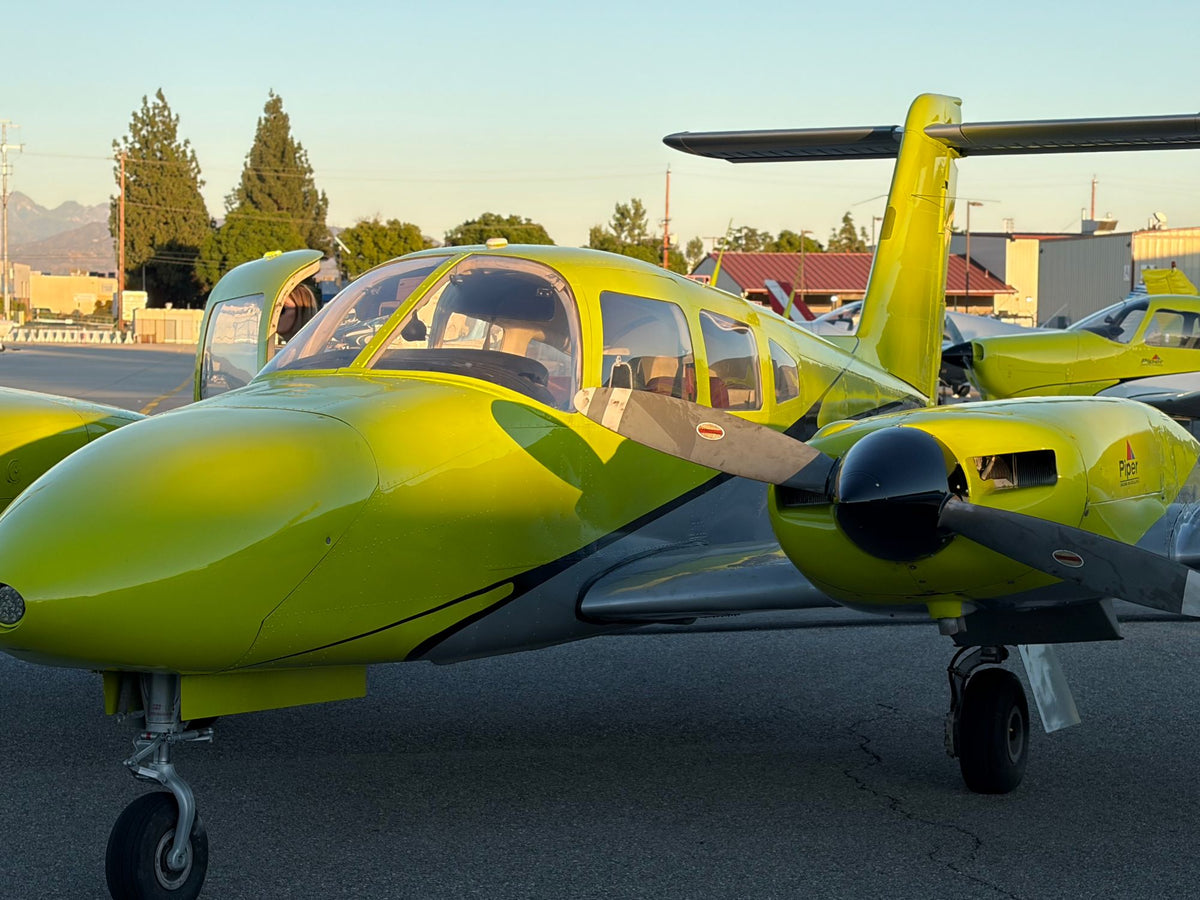
Spec Readout1 tail
Twin-Engine Trainer
Two counter-rotating engines and the multi-engine rating in seven days.

Spec Readout1 tail
Premium Turbocharged Tourer
Glass cockpit, leather seats and a whole-airframe parachute.
Compare
Pick two or three aircraft. The panel lines them up spec by spec, with rates and the courses each one is used for.
2 of 3 · add a third or compare now

Light-Sport Trainer
Cessna 162 Skycatcher

Four-Seat Primary & Instrument Trainer
Piper Warrior PA-28-161

Sporty Two-Seat Trainer
Diamond DA20-C1

Complex Commercial Trainer
Piper Arrow PA-28R

Twin-Engine Trainer
Piper Seminole PA-44-180

Premium Turbocharged Tourer
Cirrus SR22 Turbo
Still deciding? Tell an instructor what you want to fly and they will match you to the right airplane.
Call (818) 330-1318 Book A Free ConsultationThe Training Ladder
From a first flight in a trainer to a twin and a turbocharged Cirrus. Click a step to move the marker and see the airplane and course for it.
 Piper Warrior
Step 01 Of 6
Piper Warrior
A discovery flight with an instructor, usually in the Piper Warrior.
Piper Warrior N3034QStep 02 Of 6
Piper Warrior · Cessna 162 · Diamond DA20
Private pilot packages fly the Piper Warrior and the Cessna 162. The Diamond DA20 is an upgrade on any hour.
 Piper Warrior N6312C
Step 03 Of 6
Piper Warrior N6312C + Redbird MCX
N6312C is our main instrument trainer, paired with the Redbird MCX full-motion simulator.
Piper Arrow N316EFStep 04 Of 6
Piper Arrow N316EF
Your complex time happens in the Arrow: retractable gear and a constant-speed prop.
 Piper Seminole N311EF
Step 05 Of 6
Piper Seminole N311EF
Two counter-rotating engines, and the rating in seven days.
 Cirrus SR22 Turbo N422SN
Step 06 Of 6
Cirrus SR22 Turbo N422SN
Glass cockpit, a whole-airframe parachute and a turbocharged engine. Add it to any training hour.

Fly It On The Ground First
FAA-approved AATD, indoors, no weight limit. Practice procedures and instrument work before you take them into the airplane.
In A Package
$120/hr
Experience
$189
Weight Limit
None
Gallery
Filter by aircraft and click any photo to enlarge it.
Full Specs & Guide
A discovery flight is a real flying lesson in a real training airplane, so it is reasonable to want to know what you will be sitting in. This page covers the aircraft we use for discovery flights at Van Nuys, what each one is actually like from the left seat, and how the weight limits work — because that is the one thing worth checking before you book rather than after.
It is also the reference for the whole training fleet. Six aircraft types and two simulators fly out of Van Nuys with us, from a two-seat Cessna 162 Skycatcher at $179 an hour inside a course package to a Cirrus SR22 Turbo at $579, with the twin-engine Piper Seminole flown as part of the $5,100 multi-engine package and the Piper Arrow as part of the $15,400 commercial course. Every hourly rate we publish is a package rate for training inside a course, and all of them are wet, meaning fuel is included. The complete price list, including courses and instruction, is on flight school rates at Van Nuys.
| Aircraft | Tail Numbers | Engine And Cruise | Avionics | Seats | Package $/Hr |
|---|---|---|---|---|---|
| Cessna 162 Skycatcher | N60225, N7030B, N6039M, N179LC, N5208V, N52049 | 100 hp Continental O-200-D, 118 kt | Garmin G300 glass | 2, high wing | $179 |
| Piper Warrior PA-28-161 | N3034Q, N6312C | 160 hp Lycoming, about 128 kt | IFR-equipped | 4, low wing | $179 |
| Diamond DA20-C1 | N306EF, N308EF | 125 hp Continental IO-240 | Garmin 430 | 2, stick, bubble canopy | $229 |
| Piper Arrow PA-28R | N316EF | 200 hp Lycoming IO-360, about 135 kt | Garmin 430, retractable gear, constant-speed propeller | 4 | Part of the $15,400 commercial course |
| Piper Seminole PA-44-180 | N311EF | Two 180 hp counter-rotating engines, 162 kt | Garmin 430 | 4 | Part of the $5,100 multi-engine package |
| Cirrus SR22 Turbo | N422SN | 310 hp turbocharged, 215 kt, certified to FL250 | Cirrus Perspective glass, CAPS parachute | 4 | $579 |
| Redbird MCX full-motion simulator | — | FAA-approved AATD, single- and multi-engine profiles | Reconfigurable glass and analogue panels | 2 | $120 |
| Redbird TD2 desktop trainer | — | Procedures training device | Desktop panel and controls | 1 | Free with packages |
Fleet depth matters more than most people expect. Identical trainers of the same type mean a maintenance event is almost never a canceled lesson, and holding a twice-weekly rhythm is the single strongest predictor of finishing a certificate near the hours in your package rather than well past them. Service ceilings for most of the fleet, and how high we actually fly, are on our page on how high planes fly.
One Quick Check Before You Book: weight limits are 180 lb per person and 360 lb combined in the Piper Warrior, 200 lb per person and 400 lb combined in the Cirrus SR22, and there is no weight limit at all in the full-motion simulator. These are aircraft certification limits set by the manufacturer, not preferences. If you are anywhere near one, call (818) 330-1318 before you book and we will find the flight that works for you.
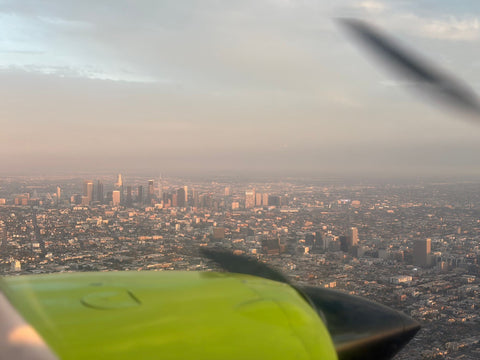
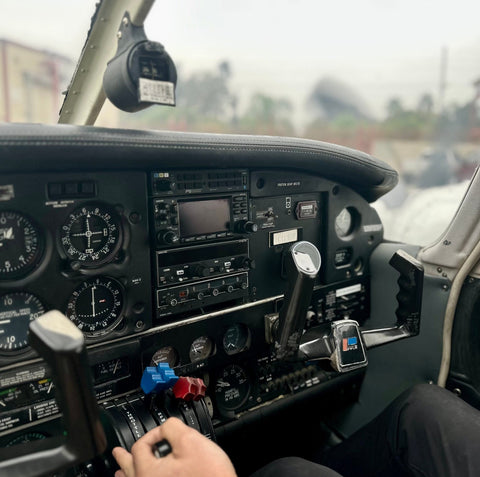
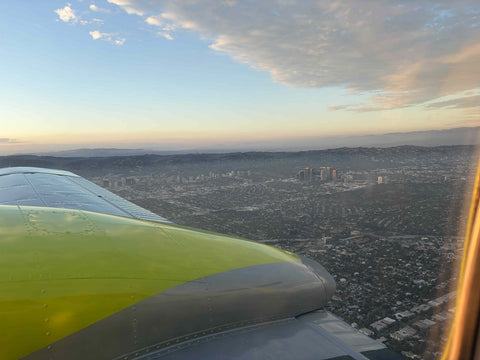
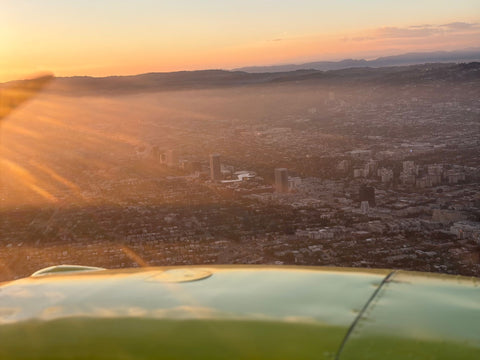
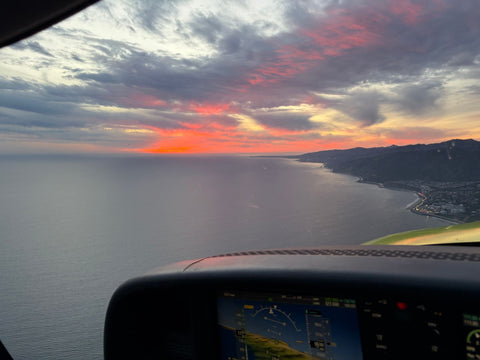
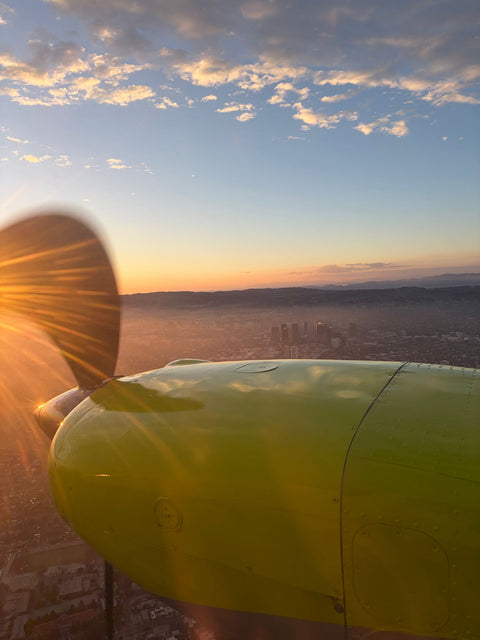
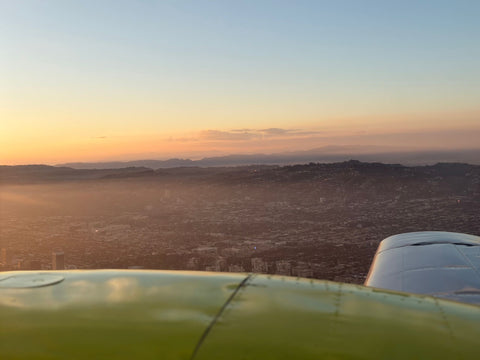
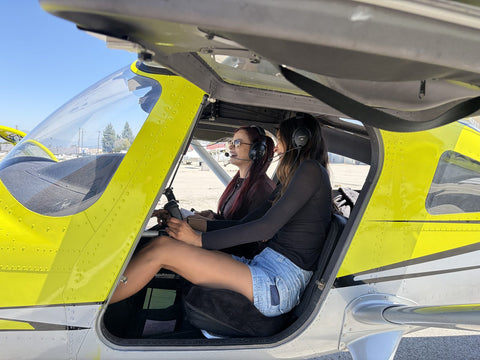
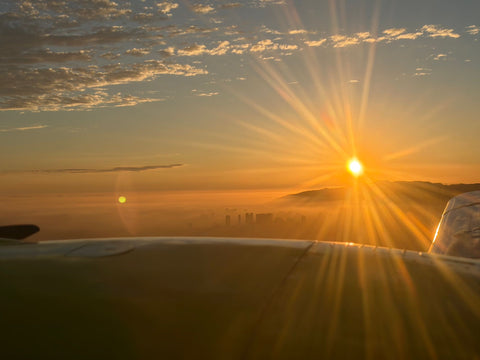
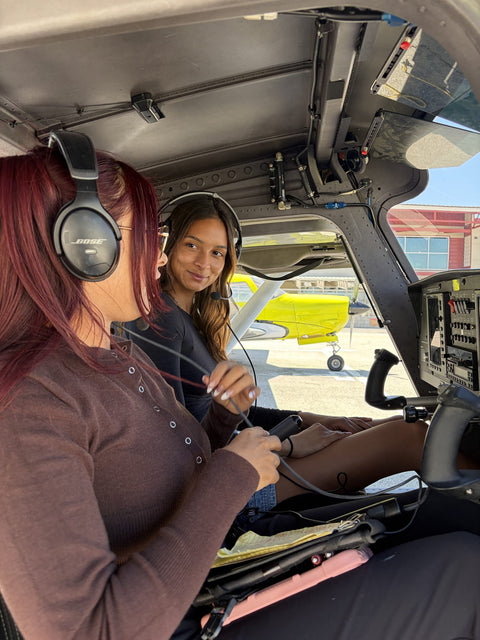
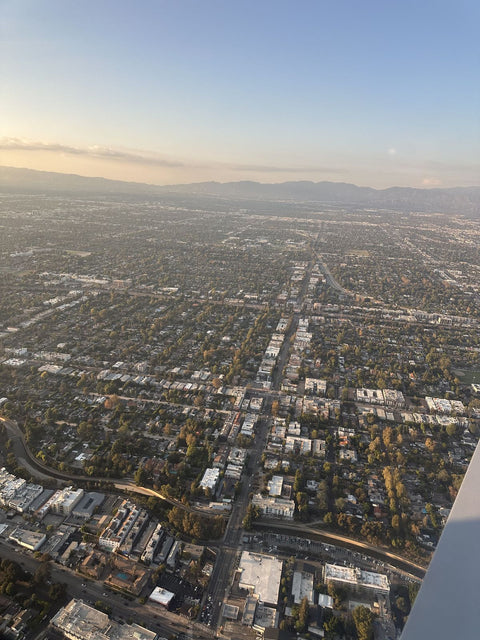
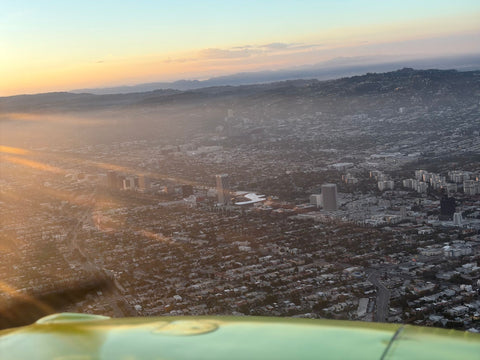
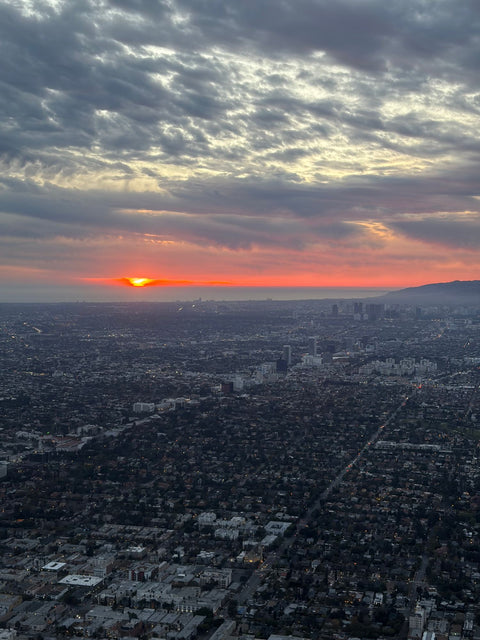
Most people's mental picture of an airplane is an airliner: a tube with small windows, thirty rows back from anything interesting, and the flying done by somebody behind a locked door. A training airplane is the opposite of all of that. You sit in the front, shoulder to shoulder with your instructor, with glass on three sides and the ground clearly visible below and ahead. At two thousand feet over the San Fernando Valley you can pick out individual streets.
They are also simpler than people expect. There is a yoke or a stick, rudder pedals, a throttle, a trim wheel and about six instruments that matter. Your instructor will explain all of it at the briefing in about five minutes, and that briefing is the point at which most first-timers stop being nervous — not because they have been reassured, but because the airplane has stopped being mysterious.
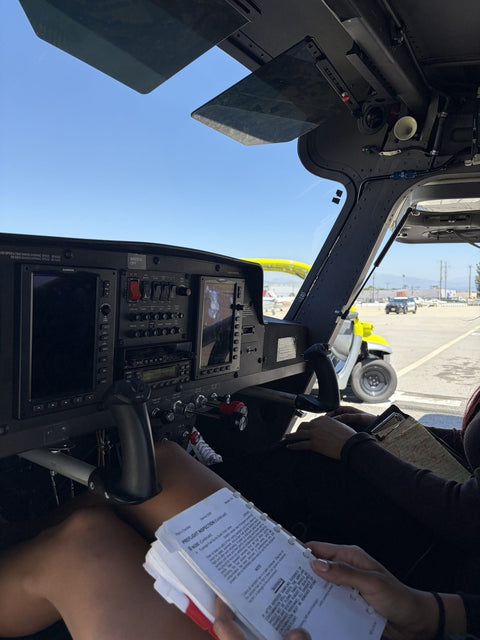
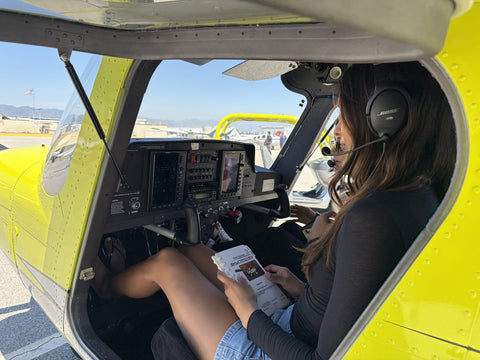
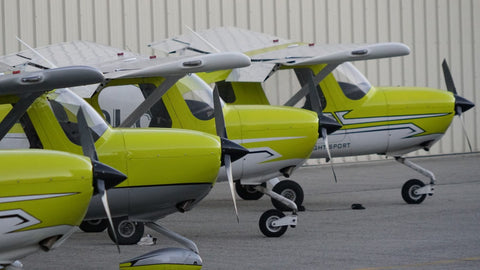
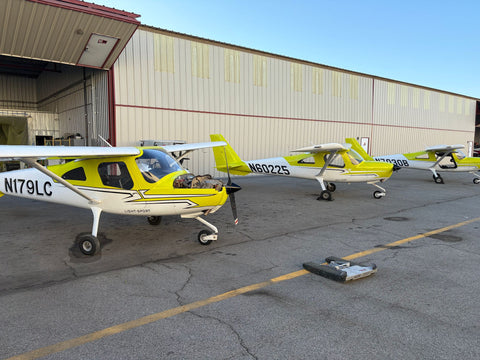
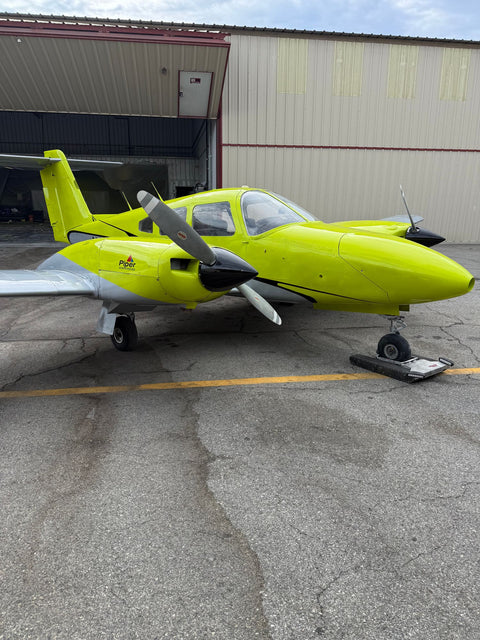
Registered N60225, N7030B, N6039M, N179LC, N5208V and N52049, the Skycatchers are the backbone of the fleet. It is a two-seat, high-wing light sport airplane with a 100-horsepower Continental O-200-D, a Garmin G300 glass panel and a cruise of about 118 knots. High wing means an uninterrupted view down over the Valley, and a glass panel means students learn on the kind of display they will meet in almost every modern aircraft.
| Item | Value |
|---|---|
| Tail numbers | N60225, N7030B, N6039M, N179LC, N5208V, N52049 |
| Seats | 2, high wing |
| Engine | Continental O-200-D, 100 hp |
| Typical cruise | 118 kt |
| Avionics | Garmin G300 glass |
| Used for | Sport Pilot, Private Pilot |
| Rates, wet | $179 per hour, package rate |
Light, honest and easy to land. It is the cheapest hour in the fleet and the aircraft behind the Sport Pilot course, and it is the type you can almost always get a slot in. Two seats means it is a solo-flyer's airplane rather than one to bring somebody along in. Full specifications are on our Cessna 162 Skycatcher guide, and each airframe has its own page: N60225, N7030B, N6039M, N179LC, N5208V and N52049.
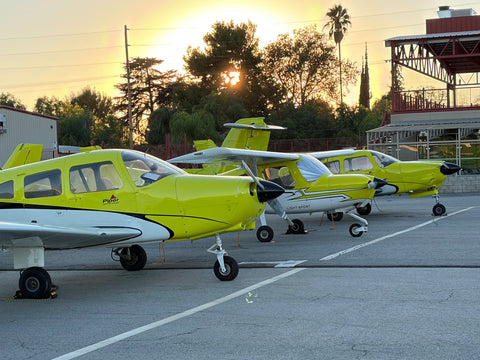
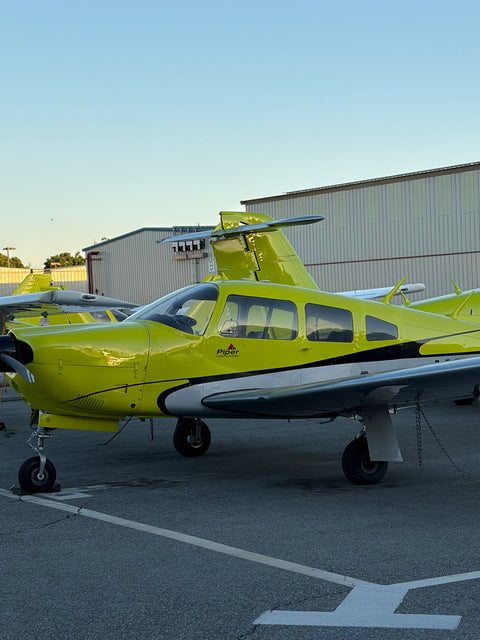
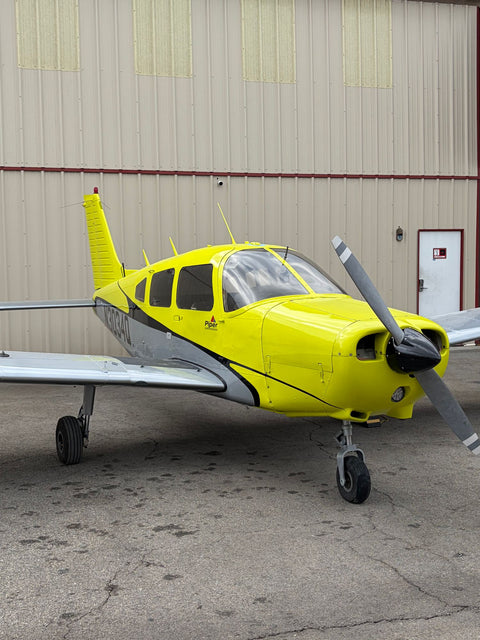
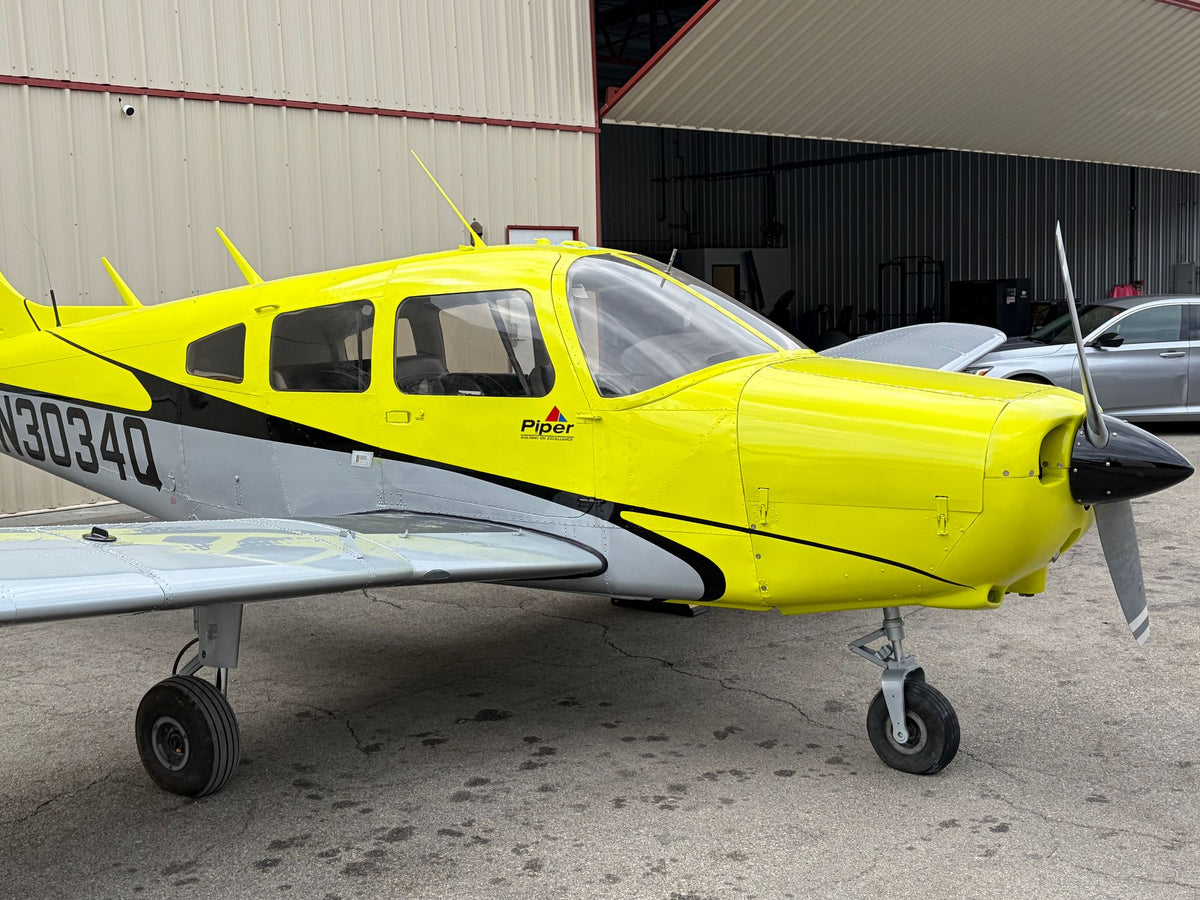
The Warrior is normally the airplane behind our standard discovery flights , and it is one of the most widely used training aircraft ever built. It is a four-seat, low-wing single with fixed tricycle gear and a 160-horsepower Lycoming engine — deliberately unexciting, extremely forgiving, and stable enough that it will more or less fly straight while you work out what your hands are doing. Ours are N3034Q and N6312C, both IFR-equipped, and both are $179 an hour inside a package.
The four seats are the practical reason we use it. A four-seat cabin is what makes the Discovery Flight For Two possible: one of you flies from the left seat while the other rides along on the intercom, hearing every word of the instruction and the tower.
| Item | Typical Value |
|---|---|
| Tail numbers | N3034Q, N6312C |
| Seats | 4 |
| Engine | Lycoming O-320, 160 hp |
| Propeller | Fixed pitch, two blade |
| Wingspan | 35 ft 0 in |
| Maximum gross weight | 2,325 lb |
| Usable fuel | 48 US gallons, 100LL avgas |
| Typical cruise | Approximately 115 to 128 KTAS |
| Rate of climb, sea level | Approximately 650 to 710 fpm |
| Stall speed, landing configuration | Approximately 44 KIAS |
| Landing gear | Fixed tricycle |
| Rates, wet | $179 per hour, package rate |
Heavier on the controls than the two-seaters and correspondingly steadier. It is not a quick airplane and it is not trying to be — at cruise you have time to look out of the window, which on a flight over Los Angeles is precisely the point. The low wing gives you a clean view into a turn, and the single door and wing walk mean you climb onto the wing to get in, which is the first small moment where flying stops being abstract.
Full specifications, speeds and performance figures are on our Piper Warrior PA-28-161 reference page, and the individual airframes are covered on N3034Q and N6312C.
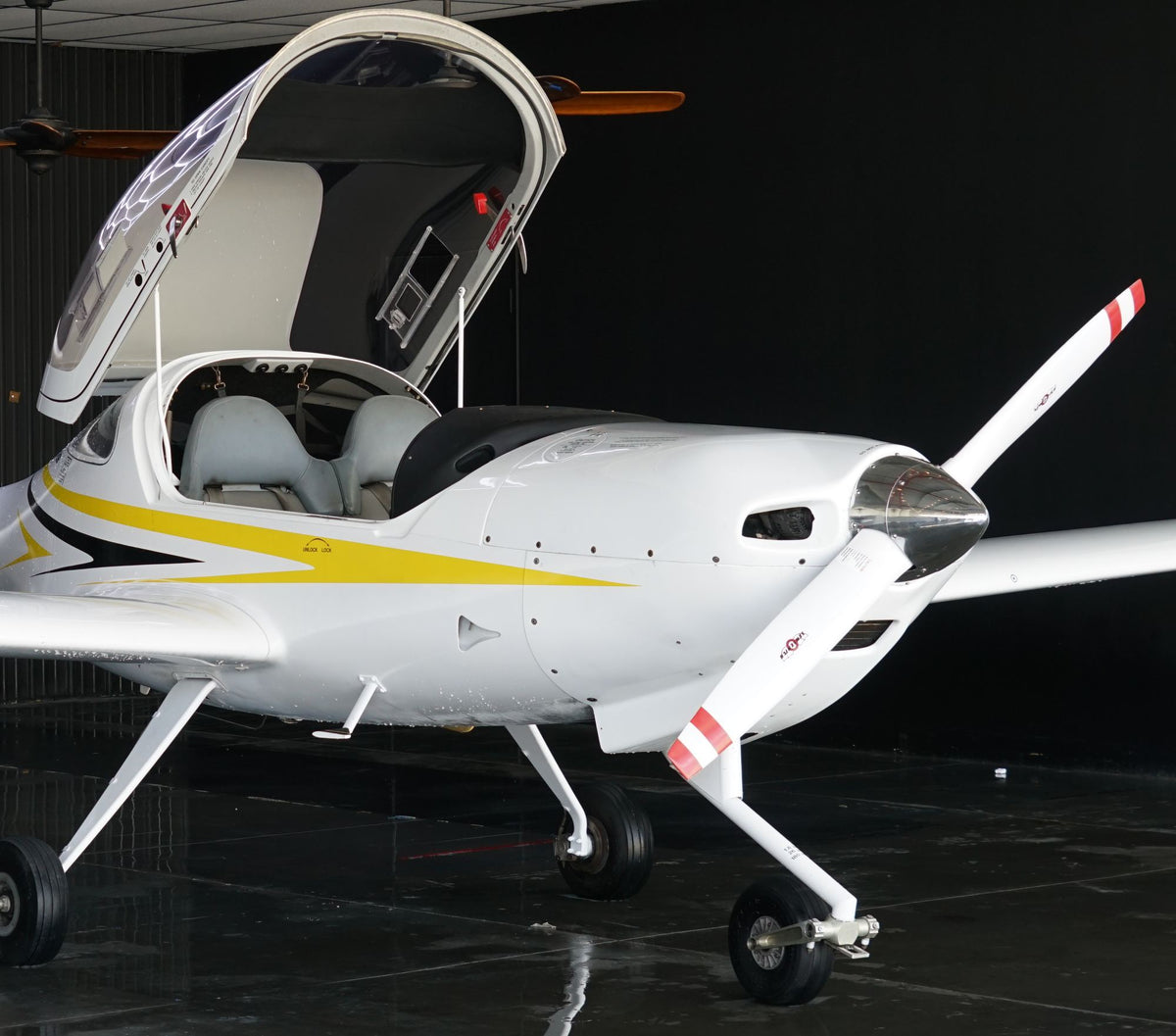
The DA20 is the sporty one. It is a two-seat composite aircraft with a bubble canopy, a control stick rather than a yoke, and visibility that is genuinely startling the first time you sit in it — there is glass over your head and out to both sides, and the view is closer to a fighter than to a family car. The Continental IO-240 produces 125 horsepower, and because the airframe is light it climbs better than the number suggests. Ours are N306EF and N308EF, both with a Garmin 430, at $229 an hour inside a package.
It is also certificated in the utility category, which is why it is the airplane we use for spin training and for the spin endorsement a CFI candidate needs under 14 CFR 61.183(i).
| Item | Typical Value |
|---|---|
| Tail numbers | N306EF, N308EF |
| Seats | 2, side by side |
| Engine | Continental IO-240-B, 125 hp |
| Wingspan | 35 ft 8 in |
| Maximum gross weight | 1,764 lb |
| Usable fuel | Approximately 24 US gallons, 100LL avgas |
| Cruise, 75% power | Approximately 138 KTAS |
| Fuel burn, 65% power | Approximately 4.8 gph |
| Rate of climb, sea level | Approximately 1,000 fpm |
| Service ceiling | Approximately 13,100 ft |
| Landing gear | Fixed tricycle, castering nosewheel |
| Avionics | Garmin 430 |
| Rates, wet | $229 per hour, package rate |
Light, responsive and immediate. The stick moves with your fingertips rather than your arms, and small inputs produce visible results, which some people find delightful and others find like being handed a sports car on day one. It seats two, so it is a solo-flyer's airplane — if you want somebody along for the ride, the Warrior or the Cirrus SR22 is the answer.
Full specifications are on the Diamond DA20-C1 reference page, and the individual airframes on N306EF and N308EF.
N316EF is the only complex aircraft on the ramp: retractable landing gear, a constant-speed propeller and a fuel-injected 200-horsepower Lycoming IO-360 turning about 135 knots, with a Garmin 430 in the panel. It looks like a Warrior and flies noticeably faster, and it exists to teach the two habits that separate a basic trainer from everything above it — managing propeller pitch as a separate control, and managing landing gear as something that can be forgotten.
| Item | Value |
|---|---|
| Tail number | N316EF |
| Seats | 4, low wing |
| Engine | Lycoming IO-360, 200 hp, fuel injected |
| Propeller | Two-blade constant speed |
| Landing gear | Retractable tricycle |
| Typical cruise | About 135 kt |
| Avionics | Garmin 430 |
| Used for | Commercial pilot complex time, complex endorsement at $999 |
| Cost | Part of the $15,400 commercial course |
Familiar and then quicker. The cockpit, the door and the wing walk are pure Cherokee, but 200 horsepower and a clean airframe mean it accelerates away from you if you are slow to reduce power, and the approach needs planning a fixed-gear trainer forgives. It is the airplane in which most pilots build their gear-check flow. Full specifications and the POH guide are on the Piper Arrow PA-28R page, and the airframe itself on N316EF.
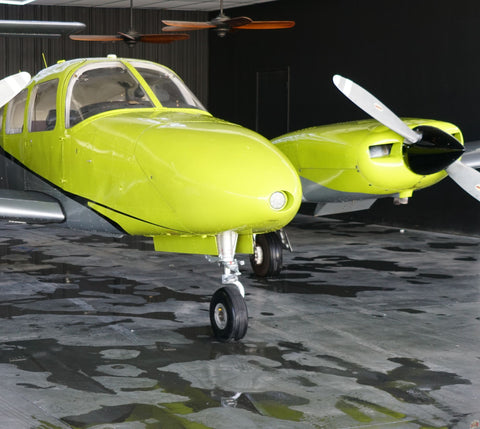
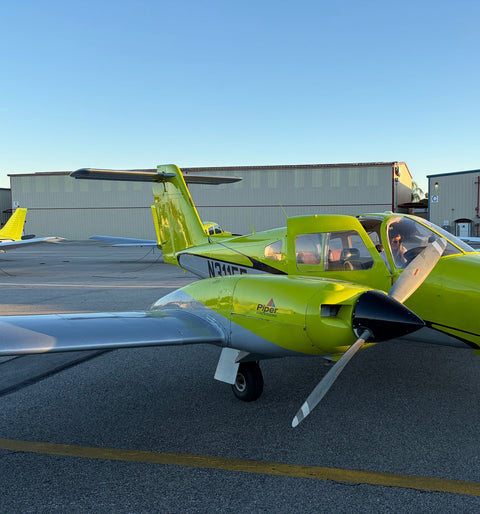
Our twin is N311EF, with two 180-horsepower counter-rotating engines, a Garmin 430 and 162 knots in the cruise. Counter-rotating propellers mean there is no critical engine, which is why the Seminole has been the standard American multi-engine trainer for decades. It is the airplane behind our seven-day multi-engine rating at $5,100, behind MEI training, and behind the multi-engine discovery flight.
| Item | Value |
|---|---|
| Tail number | N311EF |
| Seats | 4 |
| Engines | Two 180 hp, counter-rotating |
| Typical cruise | 162 kt |
| Avionics | Garmin 430 |
| Used for | Multi-engine rating, MEI, multi-engine discovery flights |
| Cost | Part of the $5,100 multi-engine package |
Stable, well mannered and a genuine step up in workload. Two of everything means two of every check, and the training is less about handling than about decision-making when one engine stops. Because the propellers turn in opposite directions, the asymmetric case is the same whichever engine fails. Specifications are on the Piper Seminole page, and the airframe on N311EF.
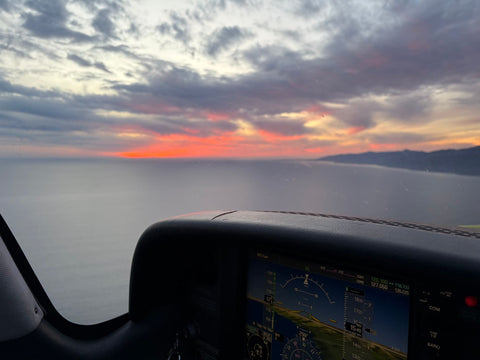
The luxury discovery flight is flown in the Cirrus SR22. Ours is N422SN, a turbocharged SR22 producing 310 horsepower, cruising at 215 knots and certificated to FL250, with Cirrus Perspective glass, side-yoke controls, air conditioning and leather seats — and a whole-airframe parachute built into the structure rather than strapped to the occupants. The Cirrus Airframe Parachute System, CAPS, is standard equipment, and it is the single feature that changes how nervous passengers feel about the airplane.
The SR22 is the larger, more powerful airplane in the Cirrus SR line. That extra performance is the practical difference on a sixty-minute flight: the coast stops being a turnaround point and becomes somewhere you arrive with time in hand. Book it at Luxury Cirrus SR22 Discovery Flight: $499 for 60 minutes, or $599 with a passenger. It is also the airplane behind the high-performance endorsement under 14 CFR 61.31(f) at $1,799 and behind Cirrus private pilot training, added to any package at +$400 per hour.
| Item | Value |
|---|---|
| Tail number | N422SN |
| Seats | 4, 5 in later configurations |
| Engine | 310 hp turbocharged |
| Typical cruise | 215 kt, certificated to FL250 |
| Wingspan | Approximately 38 ft 4 in |
| Propeller | Constant speed |
| Panel | Cirrus Perspective glass flight deck |
| Emergency system | CAPS whole-airframe parachute, standard |
| Landing gear | Fixed tricycle |
| Fuel grade | 100LL avgas |
| Weight limit on our flights | 200 lb per person, 400 lb combined |
| Rates, wet | $579 per hour, package rate |
Quieter, smoother and noticeably more comfortable than a traditional trainer. The side-yoke sits by your left hand rather than in front of your chest, the panel shows you a moving map and a synthetic horizon rather than a row of round dials, and the air conditioning matters more than you would think on a Valley afternoon in August. It is the flight to pick for a birthday, an anniversary or a proposal.
For the airframe, the panel and the CAPS system in detail, read our Cirrus SR22 reference and the Cirrus SR20 page, which covers the design features the whole family shares. The airframe itself is on N422SN.
Not every first hour has to happen in the air. Our Full-Motion Flight Simulator Experience is an hour on a moving platform with an instructor beside you, indoors on the field. It is a genuine simulator on a motion base rather than a desktop program with a joystick, with dual controls and a real instrument panel.
The machine is a Redbird MCX, an FAA-approved advanced aviation training device with both single- and multi-engine profiles, and the regulations let you count real hours in it: up to 50 creditable hours toward a Commercial certificate, and 20 of the 40 hours of instrument dual required for an instrument rating. Inside a course package it is $120 an hour.
It has three specific advantages over an airplane, and they are the reason people choose it deliberately rather than as a consolation prize:
For an anxious first-timer it is a far better opening hour than an airplane, because nothing about it is irreversible and you can stop at any moment. $189 for the hour.
Alongside the full-motion machine we keep a Redbird TD2 desktop procedures trainer. It is not a substitute for either an airplane or the MCX, and it is not sold as an experience. It is where you rehearse flows, checklists, radio calls and instrument procedures until they are automatic, which makes the expensive hours count for more. It is free with course packages.

| Flight | Normally Flown In | Length | Price |
|---|---|---|---|
| Discovery Flight In Los Angeles | Normally a Piper Warrior or a Diamond DA20 | 60 min, one person | $229 |
| Discovery Flight For Two Over Downtown Los Angeles | Normally a four-seat Piper Warrior | 60 min, two people | $299 |
| Malibu Coast Discovery Flight For Two | Normally a four-seat Piper Warrior | 90 min, two people | $399 |
| Luxury Cirrus SR22 Discovery Flight | The Cirrus SR22 | 60 min, one person (two with a passenger) | $499 ($599 with a passenger) |
| Full-Motion Simulator Experience | The Redbird MCX, indoors on the field | 60 min, on the field | $189 |
Treat the middle column as what usually happens rather than a guarantee. The aircraft for your flight is confirmed on the day, and it can change for maintenance, weather or scheduling reasons — what does not change is that a two-person flight needs an airplane with a seat for your passenger.
If a specific airplane matters to you — and for a proposal or a birthday it often does — call (818) 330-1318 when you book rather than after, and we will tell you exactly what is available on your date. A particular aircraft is much easier to hold with a phone call than a click.
The limits are not arbitrary and they are not about comfort. Every aircraft has a maximum gross weight and a permitted range for its center of gravity, both set by the manufacturer and certificated by the FAA. Before every flight, your instructor works out what the airplane weighs with you, your passenger, the fuel and the baggage in it, and where that weight sits fore and aft. If either number falls outside the envelope, the airplane does not fly. That calculation is done on the ground, which is also why you cannot swap seats in the air on a two-person flight.
So: 180 lb per person and 360 lb combined in the Warrior; 200 lb and 400 lb combined in the Cirrus SR22; no limit in the simulator. If you are close, ring us. We would far rather have that conversation on the phone than at the door, and there is almost always a flight that works.
Aircraft used for flight instruction are held to a higher inspection standard than privately owned airplanes — a 100-hour inspection under FAR 91.409(b) in addition to the annual. Every flight also begins with a full pre-flight walk-around, which you will do alongside your instructor: fuel quantity and color, oil, control surfaces, tires, the pitot tube. You are not watching a performance; you are learning the routine every pilot repeats before every flight for the rest of their flying life.
Each airplane we fly, and a few that pilots ask about, has its own reference page: specifications, weights, typical V-speeds and performance, what the Pilot's Operating Handbook contains, where to get the official manual, and what the airplane is actually like to fly. They are written for students, licensed pilots and owners as much as for first-time flyers.
Each aircraft in the fleet has its own page covering that airframe: its equipment, its rates and what it is used for. If you want to know what you will be flying rather than what type you will be flying, start here.
Every one of these pages says the same thing about handbooks, and it bears repeating here: the official, current POH issued for a specific tail number is the only legal authority for operating that aircraft. The reference pages are a study aid and a way to compare airplanes before you fly them.
Skycatcher, Warrior, Diamond, Arrow, Seminole, Cirrus or the simulator — every one of them starts with you in the left seat. From $189. Call (818) 330-1318, 9 AM to 9 PM, seven days a week.
Book A Discovery Flight →Next: What To Expect On Your Discovery Flight, Flying Out Of Van Nuys Airport, or the Discovery Flight FAQ. Buying for someone else? A You Fly LA gift card lets them choose the airplane and the date themselves.

Come See The Fleet
Book a free consultation, sit in the airplanes and ask anything. Or call now and talk it through.
Discovery Flight
$229 from
Rather talk first? Call (818) 330-1318
Usually the Piper Warrior. Tell us when you book, or call (818) 330-1318 and we will set it up. Want something special? The Luxury Cirrus Discovery Flight starts at $499, and the Multi-Engine Discovery Flight For Two in the Seminole is $499 / $599.
$179/hr package rate with fuel included in the Cessna 162 and the Piper Warrior. The Diamond DA20 is $229/hr ($179 + $50) and the Cirrus SR22 Turbo is $579/hr ($179 + $400). The Arrow and the Seminole are flown inside the Commercial ($15,400) and Multi-Engine ($5,100) courses. Instructor and ground time are $110/hr each.
Piper Warrior: 180 lb per person and 360 lb combined on our flights. Cirrus SR22 Turbo: 200 lb per person and 400 lb combined. Multi-engine discovery in the Seminole: 200 lb per passenger and 550 lb combined. The Redbird simulator has no weight limit. Close to a limit? Call and we will run the numbers with you.
Yes. Book a free consultation, walk the fleet with an instructor and ask anything. Consultations run 10 AM – 7 PM daily at 7900 Balboa Blvd, Main Terminal Unit 108, Van Nuys.
Yes: a Redbird MCX full-motion simulator, an FAA-approved AATD. It is $120/hr in a package, or $189 for a simulator experience, and it has no weight limit.
Tell us a little about you and we'll get you cleared for takeoff.
Thanks — we've received your request. A You Fly LA flight advisor will reach out shortly to get you started.
Back To The SiteTell us how to reach you and what you want to fly. We answer 7 days a week, 9:00 AM to 9:00 PM.
Message Received
Thanks — we have your details. Someone from You Fly LA will get back to you shortly, usually the same day.
Back To The Site