
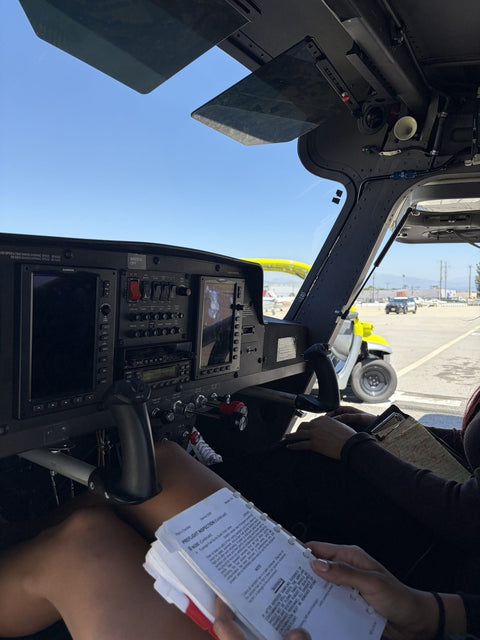
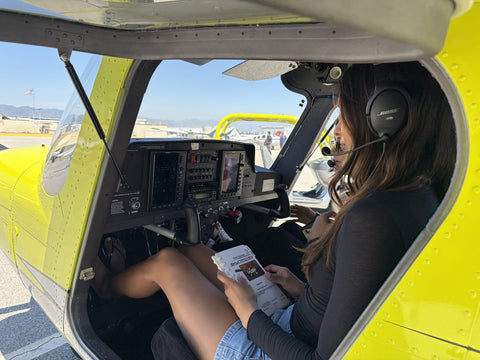
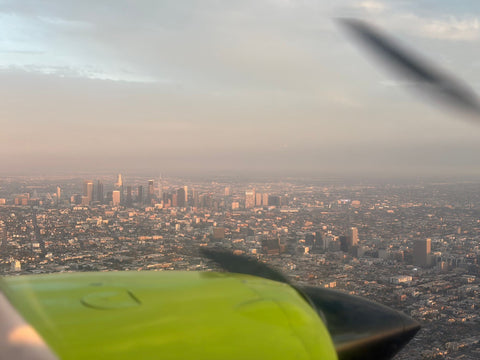








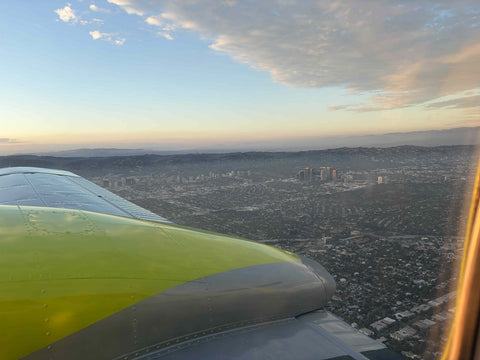





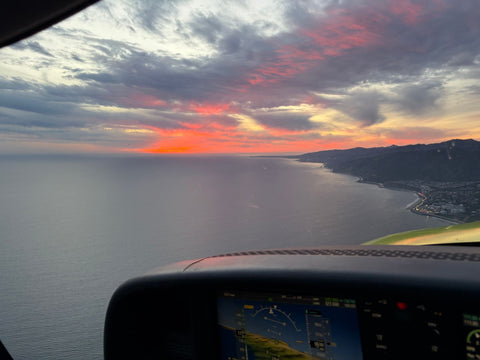


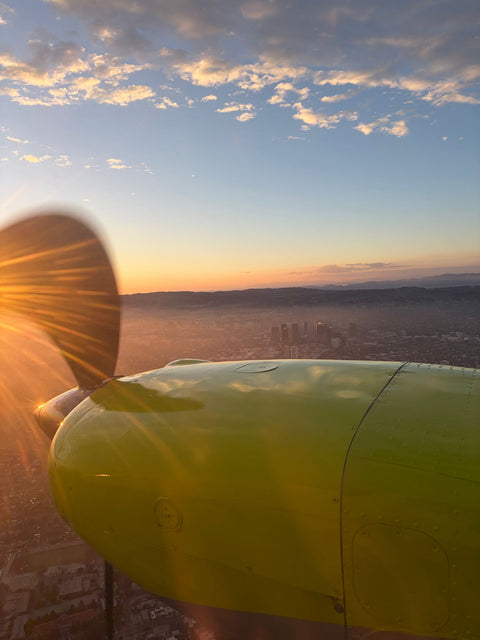
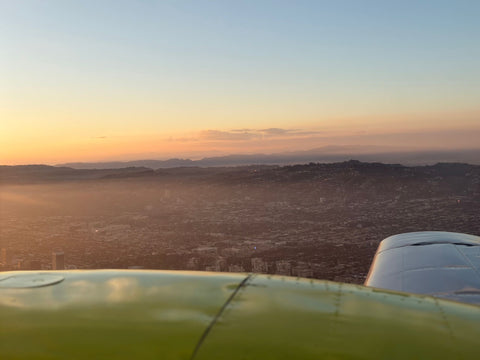











Courses Flown In The Piper Seminole
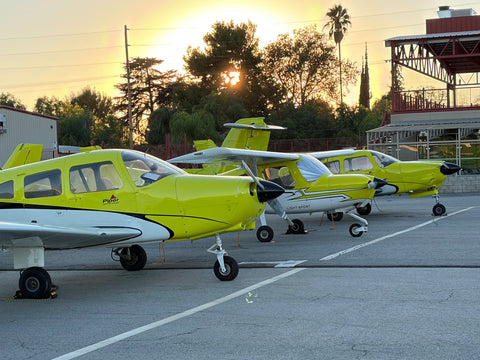
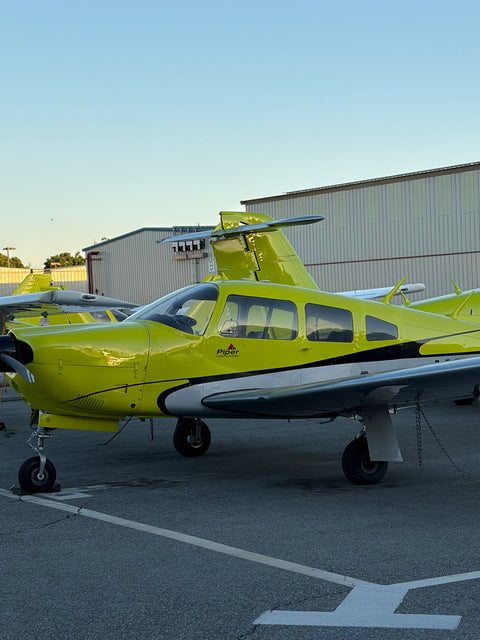
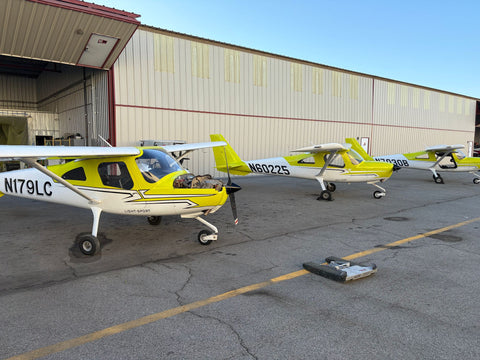
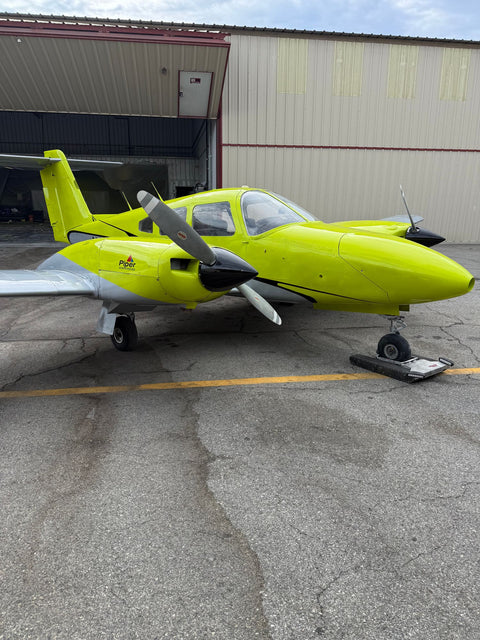
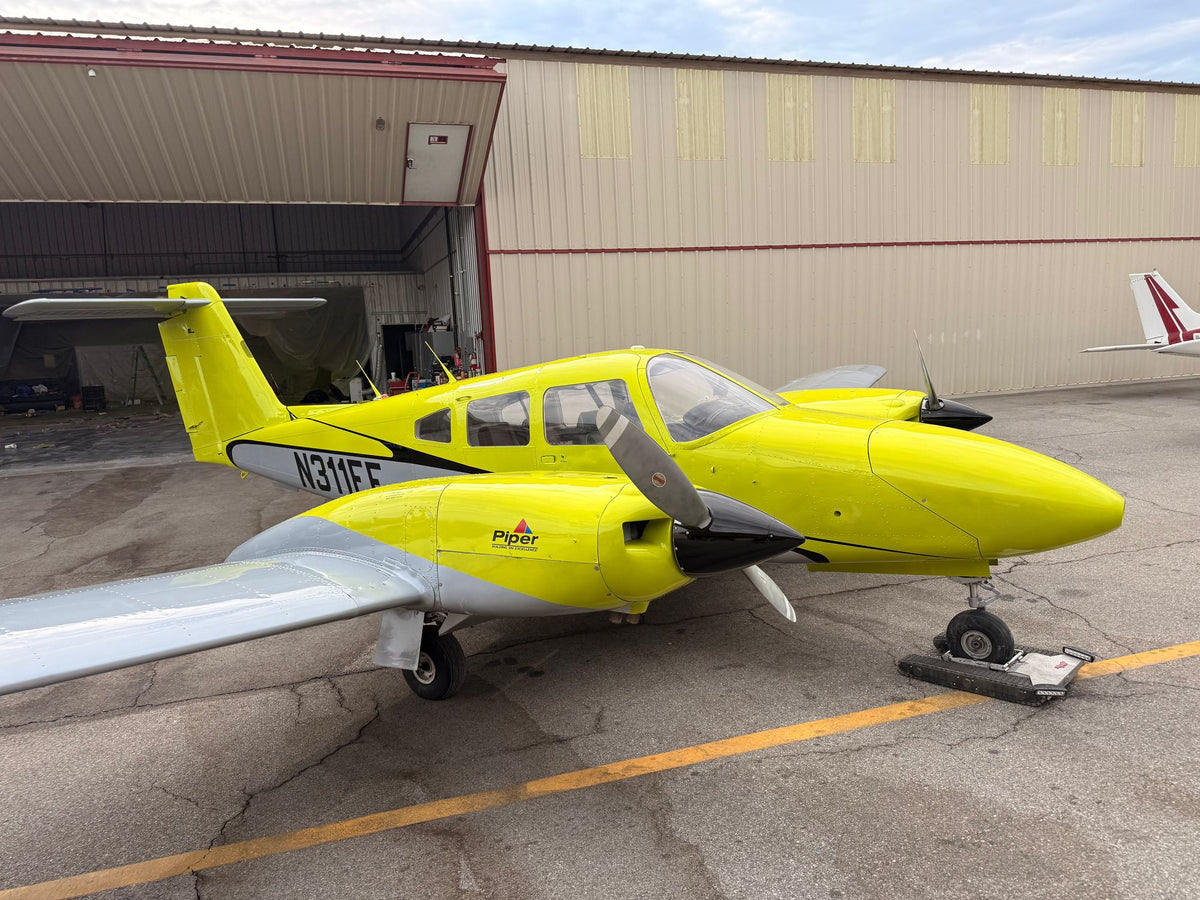
The Piper Seminole is the four-seat, counter-rotating light twin that the multi-engine rating at Van Nuys is flown in — a $5,100, seven-day course. It is the only twin on this ramp, so it is also the airplane behind multi-engine time building and any multi-engine work inside a professional sequence.
You Fly LA operates from 7900 Balboa Blvd, Main Terminal Unit 108, on the field at Van Nuys Airport (KVNY), 9 AM to 9 PM, seven days. Instruction is $110 per hour and ground instruction is $110 per hour. The Seminole has no separate hourly rate: it is part of the $5,100 multi-engine package.
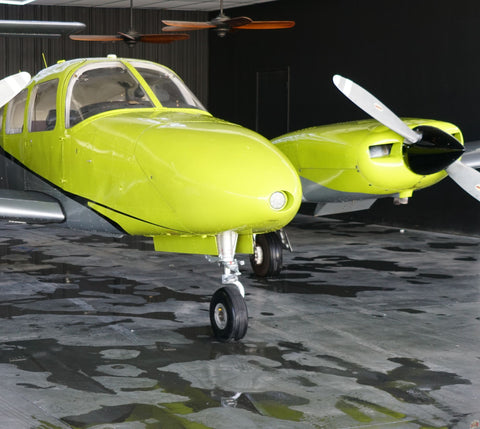
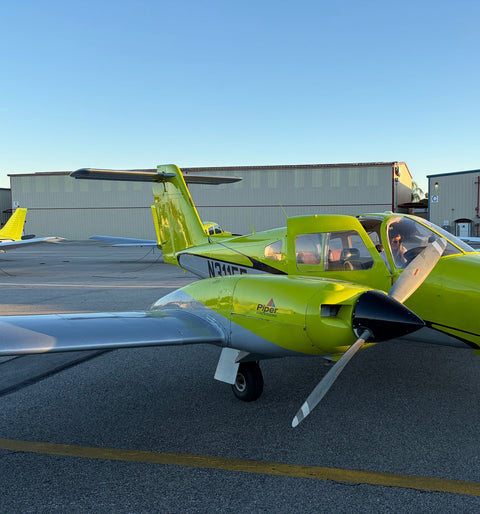
What The PA-44-180 Seminole Is
The type designation is PA-44-180, and it is the number you will see on the data plate, in the handbook and on every maintenance record. Piper's own naming is simply "Seminole"; the PA-44 is the model family and the 180 is the horsepower of each engine.
The European Union Aviation Safety Agency type-certificate data sheet for the type, EASA.IM.A.232, Issue 03 of 10 February 2017, describes it in one sentence: a twin-engine reciprocating, all-metal, four-place, unpressurized, low-wing airplane with retractable tricycle landing gear. That same data sheet records the FAA as the state-of-design authority and the original type certificate date as 10 March 1978.
What that description does not convey is why the airplane exists. In the late 1970s American flight schools needed a twin that behaved predictably enough for a student to be taken to the edge of controllability on purpose, several times a lesson, without the airplane punishing a slow reaction. Piper's answer was to take the wing and the general layout of the PA-28 family the school already owned, hang two 180-horsepower four-cylinder Lycomings on it, and make the propellers turn in opposite directions. It worked, and the Seminole has been the default American multi-engine trainer ever since.
Where The Seminole Sits In The Piper Twin Line
Three designations matter when you are reading a logbook, an advertisement or a maintenance entry.
PA-44-180 (Seminole) is the normally aspirated airplane, and it is what almost everyone means by "Seminole". Production ran from 1979 to 1982, stopped, and resumed in 1995; it is still in production today. EASA.IM.A.232 splits it by serial number: airframes 44-7995001 through 44-8195026 are the first production run, and 4495001 through 4495013 plus 4496001 and up are the second.
PA-44-180T (Turbo Seminole) is a separate section of the same type certificate, with turbocharged engines. It is rare, and it is not the airplane flown here.
Seminole DX is Piper's announced diesel variant, powered by a DeltaHawk engine and described on Piper's own materials as launching in 2027. It is listed here only because people searching "Seminole specs" now find both, and the two are not interchangeable.
The practical point for a pilot is that a PA-44-180 built in 1980 and one built last year share a type certificate, a wing and a set of limitations, but not a panel, not an engine part number and not an empty weight. Which brings us to the specifications.
Airframe, Engines And Propellers
Two Lycoming four-cylinder engines, each rated at 180 horsepower at 2,700 rpm. EASA.IM.A.232 lists them by serial-number block: airframes 44-7995001 through 44-8195026 carry a Lycoming O-360-E1A6D on the left and an LO-360-E1A6D on the right, and airframes 4495001 through 4495013 and 4496001 and up carry an O-360-A1H6 on the left and an LO-360-A1H6 on the right. Piper's current published specification for the airplane it builds today lists two fuel-injected Lycoming IO-360-B1G6 engines, flat-rated at 180 horsepower each.
The letter that matters is the L. An LO-360 is a left-hand-rotation engine. The two engines turn opposite ways, the thrust lines stay symmetrical whichever one fails, and the Seminole therefore has no critical engine — the single most important thing about the airplane from a training point of view, and the reason it is a gentler teacher than a conventional twin. The multi-engine rating page works through the four aerodynamic factors that create a critical engine on airplanes that have one.
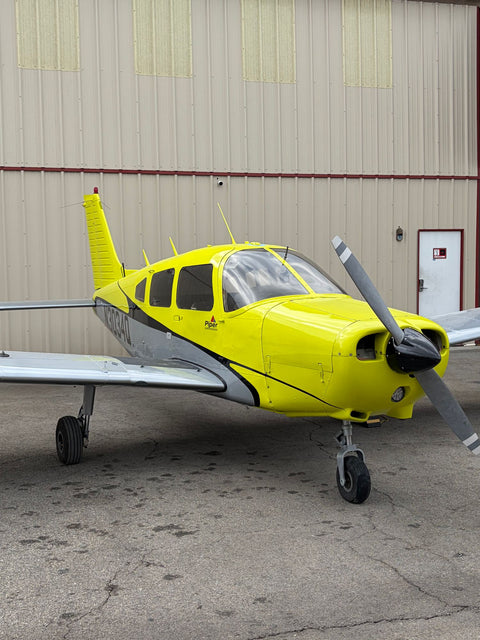
The propellers are Hartzell two-blade, constant speed and full feathering. Feathering is what makes an engine failure survivable rather than merely dramatic: turning the blades edge-on to the airflow removes most of the drag of the dead engine. EASA.IM.A.232 gives the diameter as not over 74.0 inches and not under 72.0 inches for the standard installation. Piper's current specification lists a Hartzell Scimitar two-blade, constant speed, full feathering propeller.
Dimensions, Weights And Capacities
Figures below are the published type-design and manufacturer figures. The empty weight and useful load of the specific airplane you fly come from its own weight and balance record, not from this table, and on a twenty-year-old training twin the difference is easily a hundred pounds.
| Item | Published Value | Source |
|---|---|---|
| Seats | 4 — minimum flight crew 1, maximum passenger seating 3 | EASA.IM.A.232 |
| Wingspan | 38 ft 6 in (11.75 m) | EASA.IM.A.232; Piper |
| Length | 27 ft 7 in on Piper's current specification; 27 ft 6 in (8.41 m) on the type-certificate data sheet and Piper's 2017 brochure | Piper; EASA.IM.A.232 |
| Height | 8 ft 6 in on Piper's current specification; 8 ft 5 in (2.59 m) on the type-certificate data sheet and Piper's 2017 brochure | Piper; EASA.IM.A.232 |
| Wing area | 184 sq ft (17.08 m²) | EASA.IM.A.232 |
| Engines | Two Lycoming four-cylinder, 180 hp each at 2,700 rpm. O-360-E1A6D / LO-360-E1A6D, O-360-A1H6 / LO-360-A1H6, or IO-360-B1G6 depending on serial number and model year | EASA.IM.A.232; Piper |
| Propellers | Hartzell two-blade, constant speed, full feathering, counter-rotating | EASA.IM.A.232; Piper |
| Maximum ramp weight | 3,816 lb (1,731 kg) | EASA.IM.A.232; Piper |
| Maximum takeoff weight | 3,800 lb (1,724 kg) | EASA.IM.A.232; Piper |
| Maximum landing weight | 3,800 lb (1,724 kg) | EASA.IM.A.232 |
| Standard empty weight | 2,354 lb on Piper's current specification | Piper 2026 trainer brochure |
| Standard useful load | 1,462 lb on Piper's current specification; 1,191 lb on Piper's 2017 brochure for the then-current airplane | Piper 2026 and 2017 trainer brochures |
| Fuel | 110 US gal total, 108 US gal usable, in two nacelle tanks | EASA.IM.A.232; Piper |
| Fuel grade | 100 / 100LL minimum grade aviation gasoline | EASA.IM.A.232 |
| Oil, per engine | Maximum 6 quarts on the first production run, 8 quarts on later airframes; minimum 2 quarts | EASA.IM.A.232 |
| Maximum baggage | 200 lb at station +142.8 | EASA.IM.A.232 |
| Landing gear | Retractable tricycle. Moment change due to retraction +819 in-lb | EASA.IM.A.232 |
| Tires | Nose 5.00×5, 6 ply; main 6.00×6, 8 ply | EASA.IM.A.232 |
| Approved operations | VFR day and night, IFR day and night | EASA.IM.A.232 |
Useful load is where the model-year spread shows most clearly, and it is the figure to check before you plan a cross-country. With 108 usable gallons aboard — roughly 648 pounds of avgas — even a well-equipped Seminole is not carrying four adults and bags. Most multi-engine training is flown with partial fuel for exactly that reason.
Published Airspeed Limitations And V-Speeds
Verify every figure against the POH for your aircraft before flight. Handbooks are issued by serial-number range and revision, and installed supplements can change limitations for the systems they cover. The book aboard the airplane you are flying, at its current revision, is the only authority. Nothing on this page is approved data.
The speeds below are the airspeed limitations recorded in EASA type-certificate data sheet EASA.IM.A.232 for the PA-44-180, in knots indicated airspeed.
| Speed | Published Value (KIAS) | What It Means |
|---|---|---|
| VMC — minimum control speed | 56 | Below this, full rudder will not hold direction with the critical engine inoperative. The defining number of the airplane. |
| VNE — never exceed | 202 | The red line. Not to be exceeded in any operation. |
| VNO — maximum structural cruising | 169 | Top of the green arc. Above this, smooth air only and then with caution. |
| VA — maneuvering, at 3,800 lb | 135 | Full or abrupt control movement above this may overstress the airframe. |
| VA — maneuvering, at 2,700 lb | 112 | VA falls as weight falls. Flying light does not make the airframe stronger. |
| VFE — maximum flap extended | 111 | Top of the white arc. |
| VLO — maximum gear operating, extension | 140 | Fastest speed at which the gear may be selected down. |
| VLO — maximum gear operating, retraction | 109 | Notably lower than the extension figure, which catches pilots out on a fast climb-out. |
| VLE — maximum gear extended | 140 | Fastest speed at which the airplane may be flown with the gear down and locked. |
Two speeds on that list do not appear on a single-engine trainer at all. VMC exists only because there are two engines, and the gap between VLO retraction and VLO extension exists only because the gear folds. Between them they are most of what makes a twin a different license.
Typical Performance Figures
Performance figures are manufacturer's published numbers for a new airplane at standard conditions, and they are the ceiling rather than the expectation. Your aircraft's actual numbers come from Section 5 of its own handbook.
| Figure | Published Value | Source |
|---|---|---|
| Maximum cruise speed | 162 ktas | Piper 2026 and 2017 trainer brochures |
| Maximum range | 940 nm on Piper's current specification; 700 nm with 45-minute reserve on the 2017 brochure | Piper 2026 and 2017 trainer brochures |
| Service ceiling, both engines | 15,000 ft | Piper 2017 trainer brochure |
| Service ceiling, single engine | 3,800 ft | Piper 2017 trainer brochure |
| Takeoff distance, ground roll | 1,100 ft | Piper 2017 trainer brochure |
| Takeoff distance over a 50 ft obstacle | 2,200 ft | Piper 2026 and 2017 trainer brochures |
| Landing distance, ground roll | 770 ft | Piper 2017 trainer brochure |
| Landing distance over a 50 ft obstacle | 1,650 ft on Piper's current specification; 1,490 ft on the 2017 brochure | Piper 2026 and 2017 trainer brochures |
| Maximum operating altitude | No limitation specified on the type-certificate data sheet | EASA.IM.A.232 |
Thinking about the multi-engine rating? Tell us your certificate, your total time and whether you already hold an instrument rating, and you will get a straight answer on aircraft availability and how the seven days are actually scheduled.
Call (818) 330-1318 Multi-Engine Rating — $5,100
Vmc, Density Altitude And Why Both Matter At Van Nuys
Look again at the single-engine service ceiling: 3,800 feet on Piper's published figure for a new airplane at maximum weight in standard conditions. Van Nuys Airport sits at roughly 800 feet above sea level. On a July afternoon in the San Fernando Valley with the temperature in the high nineties, density altitude at the field routinely climbs well above 3,000 feet, and the terrain north and east of the Valley goes up from there.
That is not a scare story, it is arithmetic, and it is the reason multi-engine training in Los Angeles is worth doing in Los Angeles. A light twin with one engine feathered is not a two-engine airplane with power in reserve — it is an underpowered single dragging a dead nacelle, and the second engine buys you time and options rather than immunity. Students who learn that on a hot day out of a Class D field beneath the Burbank Class C tend not to forget it.
The other number to sit with is VMC at 56 KIAS. It is published at the conditions that make it worst — most rearward permitted center of gravity, maximum weight, critical engine windmilling, up to five degrees of bank into the operating engine — and it moves in real flight. Because the Seminole has counter-rotating propellers there is no critical engine to nominate, but the speed still exists and the airplane will still roll toward the dead engine below it. Everything else about multi-engine flying is built around staying on the right side of that number.
What The POH Contains
Piper's Pilot's Operating Handbook for the PA-44-180 is issued by report number against serial-number ranges: EASA.IM.A.232 lists report VB-860 for airframes 44-7995001 through 44-8195026, VB-1380 for 4495001 through 4495013, and VB-1616 for later airplanes. All of them follow the standard nine-section GAMA layout.
Section 1 — General
Three-view drawing, dimensions, engine and propeller data, fuel and oil specifications, and the definitions and abbreviations used throughout. This is where the airplane is described rather than operated.
Section 2 — Limitations
The legally binding part. Airspeed limitations and markings, powerplant limitations, weight and center-of-gravity limits, approved maneuvers, placards. VMC, VLO and VLE live here.
Section 3 — Emergency Procedures
In a twin this section is the reason the rating exists. Engine failure during takeoff ground roll, engine failure after lift-off with the gear still down, engine failure in flight, securing a failed engine, feathering, air start, one-engine-inoperative landing and go-around, and the gear emergency extension.
Section 4 — Normal Procedures
Preflight, starting, taxi, run-up including the propeller feathering check, takeoff, climb, cruise, descent, landing and shutdown, with the speeds each is flown at.
Section 5 — Performance
The charts: takeoff and landing distance, accelerate-stop and accelerate-go, climb performance on both engines and on one, cruise power settings and fuel flow. Every number here assumes a new airplane flown to the book by a test pilot.
Section 6 — Weight And Balance
The airplane's own equipment list, its as-weighed empty weight and moment, and the loading graphs. This section is specific to the airframe and is the reason a downloaded handbook cannot be used for real planning.
Section 7 — Systems Description
Airframe, flight controls, landing gear and its hydraulic system, powerplants and propeller governors, fuel system and crossfeed, electrical, vacuum, pitot-static, heating and ventilation, and the stall warning. On a twin this is long, and it is where the multi-engine oral examination lives.
Section 8 — Handling, Servicing And Maintenance
Ground handling, towing, jacking, tire pressures, servicing intervals, cleaning and care.
Section 9 — Supplements
FAA-approved supplements for installed optional equipment — avionics, autopilot, air conditioning. A supplement can change a limitation in Section 2 for the system it covers, which is why a handbook missing its supplements is incomplete.
Why POH Figures Are Aircraft-Specific
Every figure on this page must be confirmed against the Pilot's Operating Handbook for the individual airplane before flight. That is not a disclaimer bolted on for form: handbooks are issued by serial-number range, revised over time and amended by supplements, and the weight and balance section is unique to the tail number. Two Seminoles parked next to each other can have different empty weights, different useful loads, different avionics limitations and different placards. The manufacturer's published specification describes a new airplane in standard conditions; your handbook describes yours.
Where To Get The Official Manual
Current Piper handbooks and revisions are obtained from Piper Aircraft's technical publications service or an authorized Piper service center, ordered against the airplane's serial number. We do not host or distribute them. An uncontrolled PDF found online carries no revision status, is frequently the wrong serial-number block, and is a study aid at best — the handbook issued for that tail number, with its revisions current and its supplements attached, is the authority for flight.
What It Is Like To Fly
Heavier on the controls than a Warrior and noticeably more deliberate, without ever feeling like a big airplane. Visibility over the nose is good, the sight picture is familiar to anyone who has flown a low-wing Piper, and in cruise it is a quiet, stable IFR platform that trims out and stays where you put it.
Where it changes character is on one engine. Shut one down and the airplane immediately tells you which foot is working: the yaw is unmistakable, the climb rate collapses, and the workload triples because you are now flying, identifying, verifying, feathering and navigating at the same time. Done at 4,000 feet over the Santa Susana Mountains with an instructor beside you, that is a manageable and genuinely useful experience. It is also why nobody gets a multi-engine rating by reading about it.
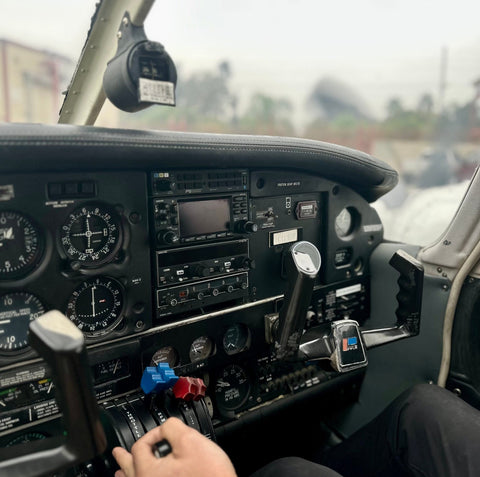
The gear and the propellers add the rest of the workload. Two blue levers, two throttles, two mixtures, a gear handle with real consequences, and a checklist discipline that does not tolerate improvisation. Most students find the first two lessons overwhelming and the fourth one comfortable, which is roughly the shape the seven-day course is built around.
Piper Seminole FAQ
What Engines Does The Piper Seminole Have?
Two Lycoming four-cylinder engines of 180 horsepower each at 2,700 rpm. EASA type-certificate data sheet EASA.IM.A.232 lists O-360-E1A6D and LO-360-E1A6D for airframes 44-7995001 through 44-8195026, and O-360-A1H6 and LO-360-A1H6 for airframes 4495001 through 4495013 and 4496001 and up. Piper's current published specification lists two fuel-injected IO-360-B1G6 engines. The L prefix denotes the left-hand-rotation engine on the right wing.
Does The Piper Seminole Have A Critical Engine?
No. The propellers counter-rotate, so the thrust line stays symmetrical whichever engine fails and neither one is more adverse than the other. That is the main reason the Seminole is the most common multi-engine trainer in the United States. The concept still has to be taught, because most twins a pilot flies afterwards do have a critical engine.
What Is The Piper Seminole's Minimum Control Speed?
EASA type-certificate data sheet EASA.IM.A.232 gives the minimum control speed, Vmc, for the PA-44-180 as 56 KIAS. It is a certification figure established at the worst permitted combination of weight, center of gravity and configuration, and the actual speed in flight varies with those conditions. Confirm the figure and its conditions in Section 2 of the handbook for your aircraft.
What Is The Seminole's Maximum Takeoff Weight?
3,800 pounds, with a maximum ramp weight of 3,816 pounds and a maximum landing weight of 3,800 pounds, as published in EASA type-certificate data sheet EASA.IM.A.232 and in Piper's own current specification. Usable fuel is 108 US gallons in two nacelle tanks, so useful load, not seats, is the real limit on what the airplane carries.
How Much Does The Multi-Engine Rating Cost At Van Nuys?
The multi-engine rating at You Fly LA is $5,100 and is scheduled over seven days. The examiner's fee is separate. Full detail, including what 14 CFR 61.63 requires and how the checkride is structured, is on the multi-engine rating page.
What Does It Cost To Fly The Seminole?
The Seminole has no separate hourly rate: it is part of the $5,100 multi-engine package. The single-engine aircraft are $179 per hour, the Diamond DA20 is $229 per hour and the Cirrus is $579 per hour; an instructor is $110 per hour. To talk through checkouts and currency, call or text (818) 330-1318.
Where Can I Get A Piper Seminole POH?
From Piper Aircraft's technical publications service or an authorized Piper service center, ordered against the airplane's serial number. We do not host or distribute it. An uncontrolled PDF found online carries no revision status and is a study aid at best; the handbook issued for that tail number, with its revisions current, is the authority for flight.
Fly The Seminole At Van Nuys
The Seminole is the airplane behind the $5,100 multi-engine rating, and multi-engine time is what makes a logbook competitive for the airline pilot career program. If you are building hours toward the airlines, time building in Los Angeles explains where twin time fits and where it does not. Pilots stepping up from a single usually come to it after the commercial certificate, and if the step you actually need is a logbook signature rather than a rating, complex and high-performance endorsements covers that ground.
You can compare it against the rest of the airframes on the airplanes you'll fly, read the single-engine Piper it shares a wing lineage with on the Piper Warrior PA-28-161 page, and see what a checkout involves at this field on aircraft rental at Van Nuys Airport.
Book A Discovery Flight — $229 Book A Free Consultation Call (818) 330-1318
Not a certificated pilot yet? Start with a discovery flight at $229 for 60 minutes, flown from the left seat and logged as dual instruction. No tax, no booking fee — $229 is the total.
You Fly LA · 7900 Balboa Blvd, Main Terminal Unit 108, Van Nuys, CA 91406 · Van Nuys Airport (KVNY) · Open 9 AM – 9 PM, seven days.
