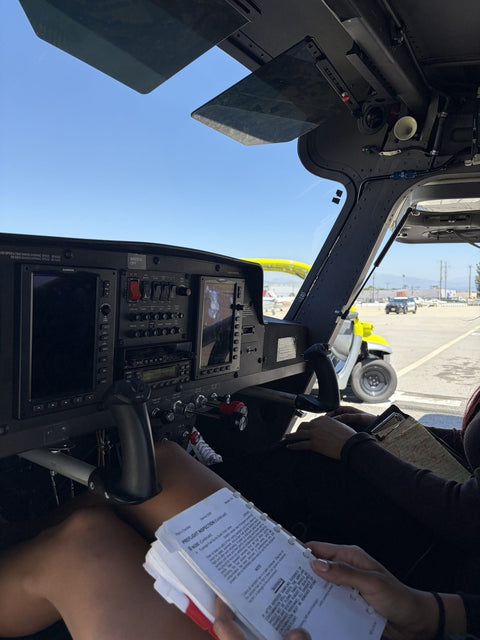
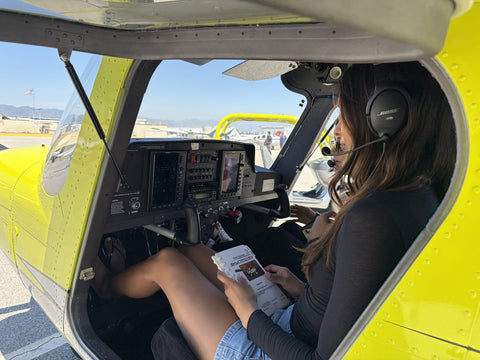
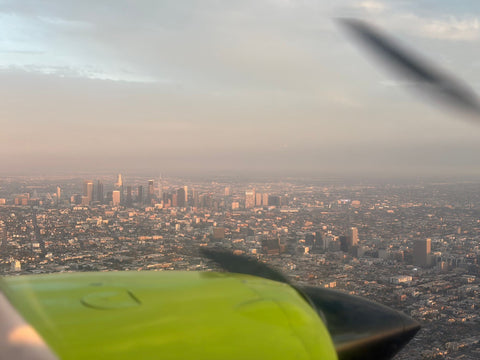
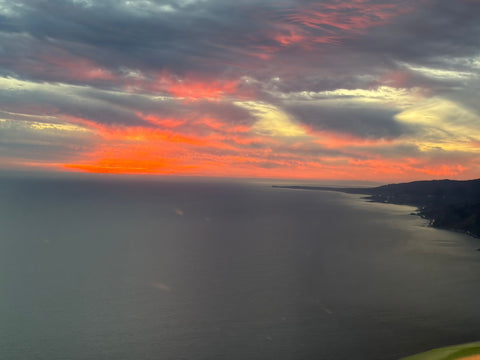
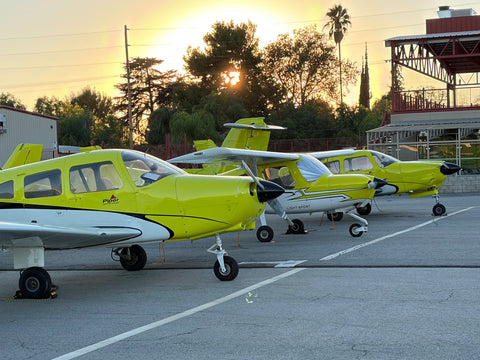
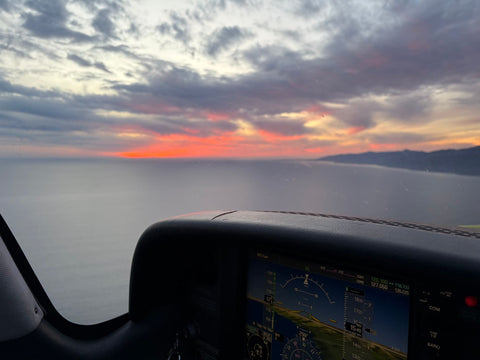
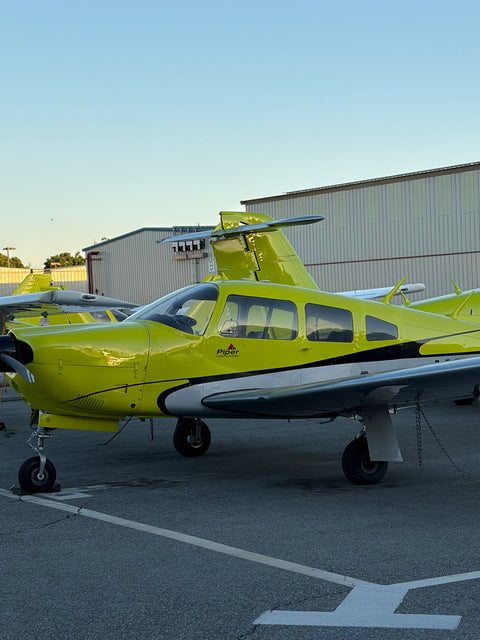
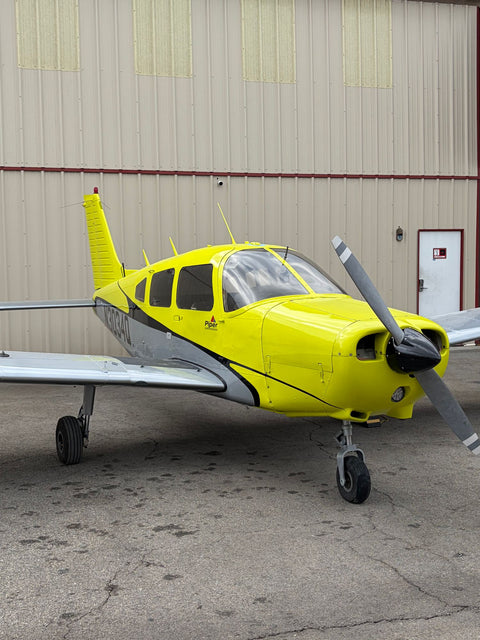
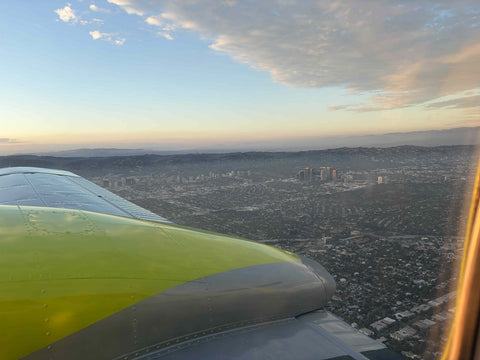
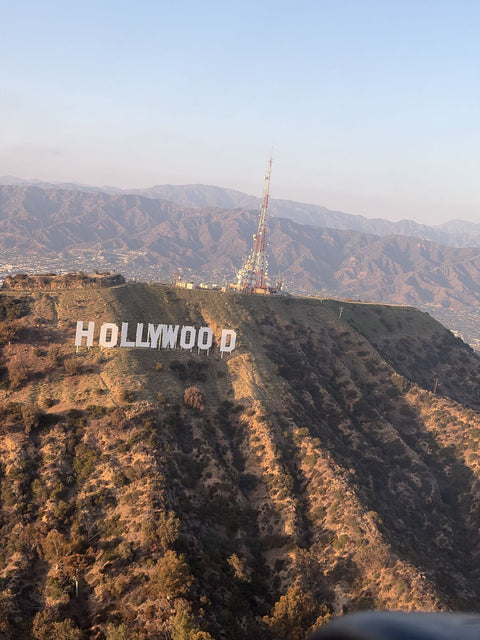
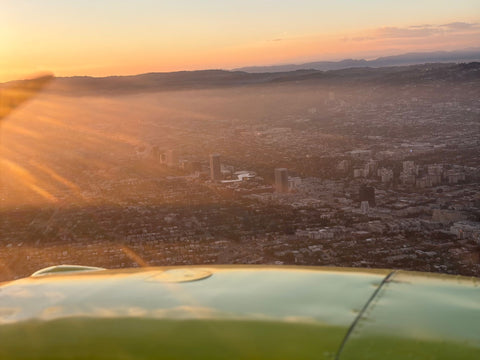
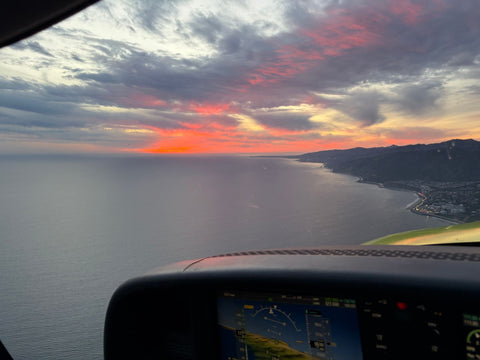
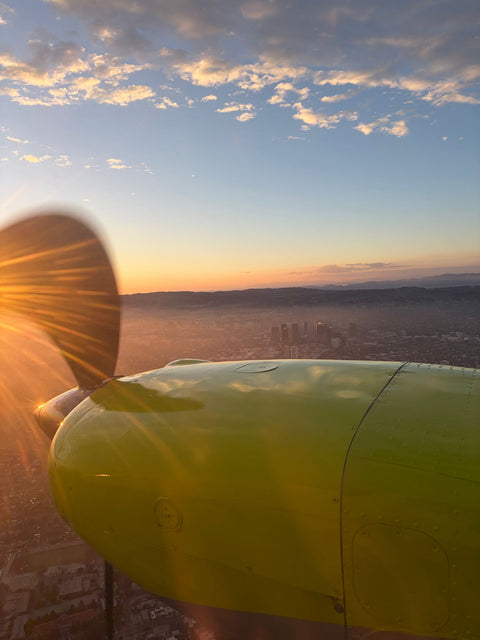
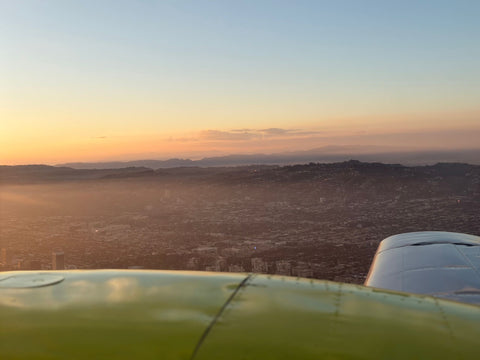
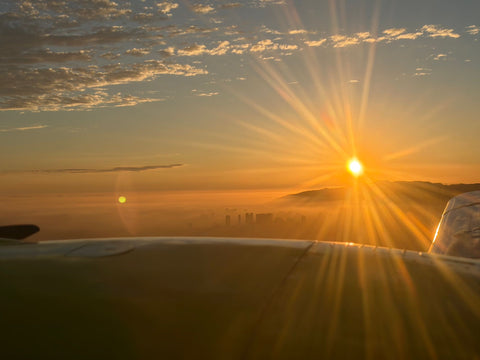
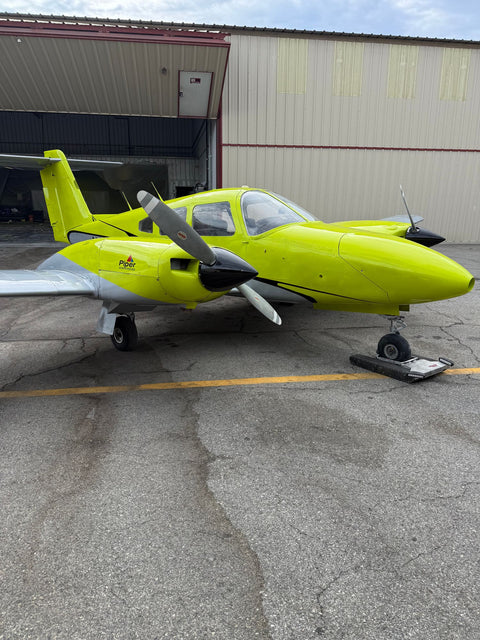
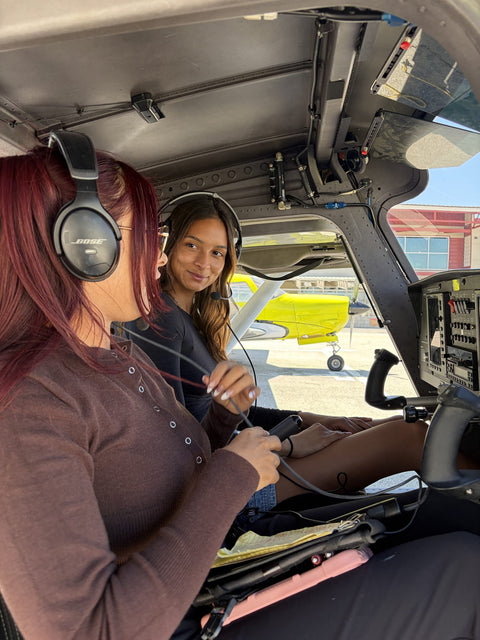
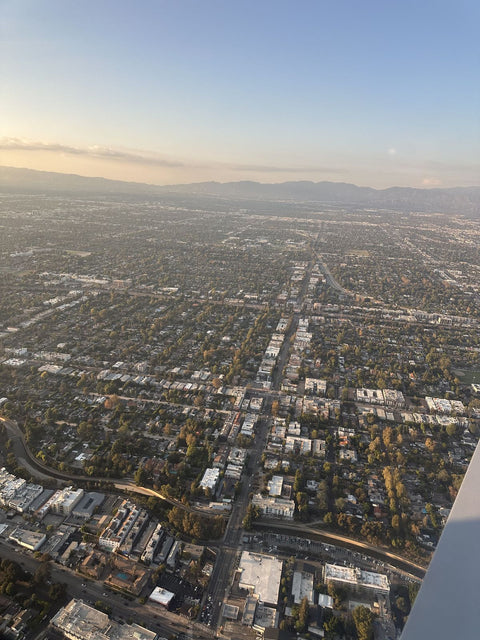
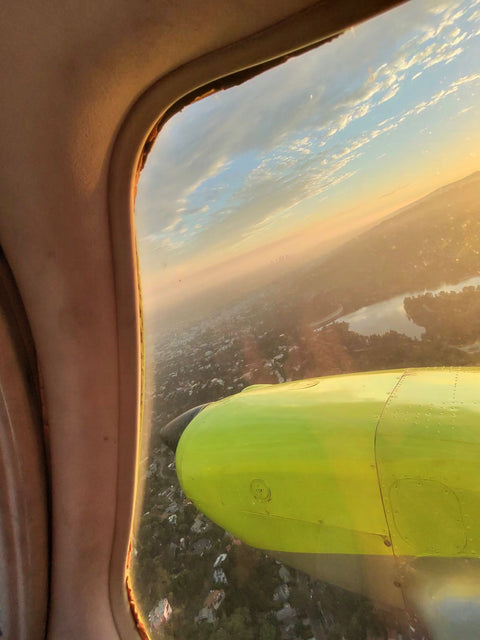
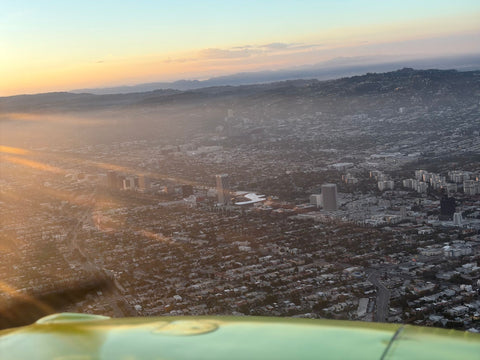
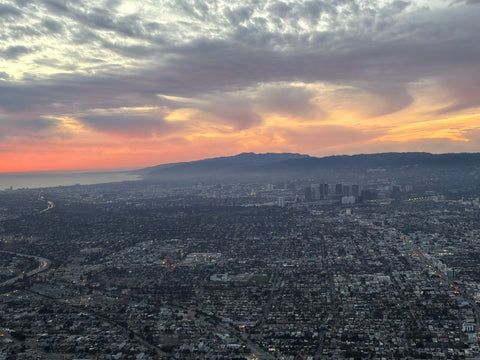
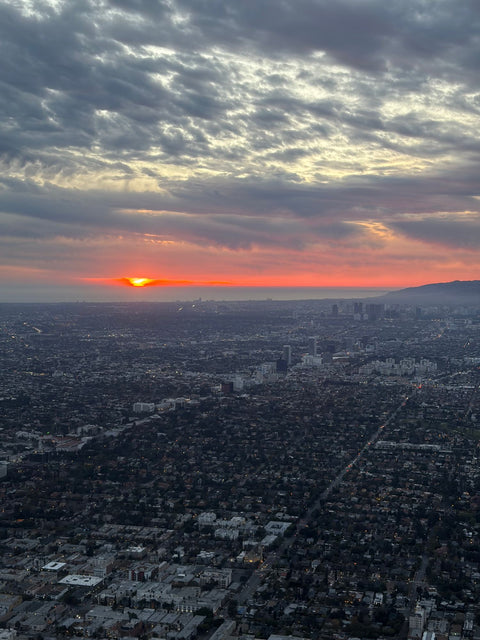
Aerial sunset over West Los Angeles with the Century City towers, the Santa Monica Mountains and the ocean

Van Nuys Airport · Los Angeles

Private Pilot License In Los Angeles

Three fixed-price packages at Van Nuys Airport, from $10,400. Choose one, upgrade any aircraft hour to the Diamond or the Cirrus, and see your total before you enroll.

Books and training materials included · $2,500 down, then monthly

Limited-Time Offer

$500 Off Every Private Pilot Package

Standard, Comprehensive or Premium: every package is $500 less when you enroll by October 31. Same hours, same aircraft, same instructors.

Flew a discovery flight with us? Enroll within 24 hours of it and 100% of what you paid is credited toward your package.

Offer Ends In

--Days --Hours --Minutes --Seconds

Ends October 31 · 11:59 PM Pacific

Packages & Prices

Three Packages, One Syllabus

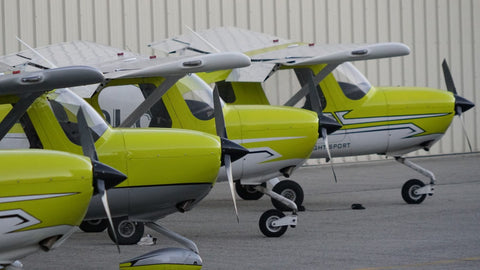
Every package flies the Cessna 162 Skycatcher and the Piper Warrior at the standard rate, with books and training materials included. The difference is how many hours you buy up front.

Save $500

Standard

Built around the FAA 40-hour minimum, for students who can fly two or three times a week.

$10,400Was $10,900

40 Hours Logged

Single-Engine Aircraft
38 hrs$179/hr
Full-Motion Simulator
2 hrs$120/hr
Dual Instruction · Aircraft & Sim
30 hrs$110/hr
Ground School & Briefings
3 hrs$110/hr
  • Books and training materials included
  • Cessna 162 Skycatcher or Piper Warrior at the standard rate
  • Discovery flight credited in full if you enroll within 24 hours

Payment Plan$2,500 down + 4 × $1,975/mo

Most PopularSave $500

Comprehensive

Built around 60 hours, the number most students actually fly, priced in from day one.

$15,400Was $15,900

60 Hours Logged

Single-Engine Aircraft
55 hrs$179/hr
Full-Motion Simulator
5 hrs$120/hr
Dual Instruction · Aircraft & Sim
50 hrs$110/hr
Ground School & Briefings
10 hrs$110/hr
  • Books and training materials included
  • Cessna 162 Skycatcher or Piper Warrior at the standard rate
  • Discovery flight credited in full if you enroll within 24 hours

Payment Plan$2,500 down + 6 × $2,150/mo

Most Flight TimeSave $500

Premium

The most flight, simulator and ground time of the three before your checkride.

$22,000Was $22,500

80 Hours Logged

Single-Engine Aircraft
70 hrs$179/hr
Full-Motion Simulator
10 hrs$120/hr
Dual Instruction · Aircraft & Sim
60 hrs$110/hr
Ground School & Briefings
20 hrs$110/hr
  • Books and training materials included
  • Cessna 162 Skycatcher or Piper Warrior at the standard rate
  • Discovery flight credited in full if you enroll within 24 hours

Payment Plan$2,500 down + 10 × $1,950/mo

Need more hours than your package? You keep flying at the published rates, about $289 an hour dual and $179 an hour solo, with no penalty rate.

Flight Cost Calculator

See What Your Total Will Look Like

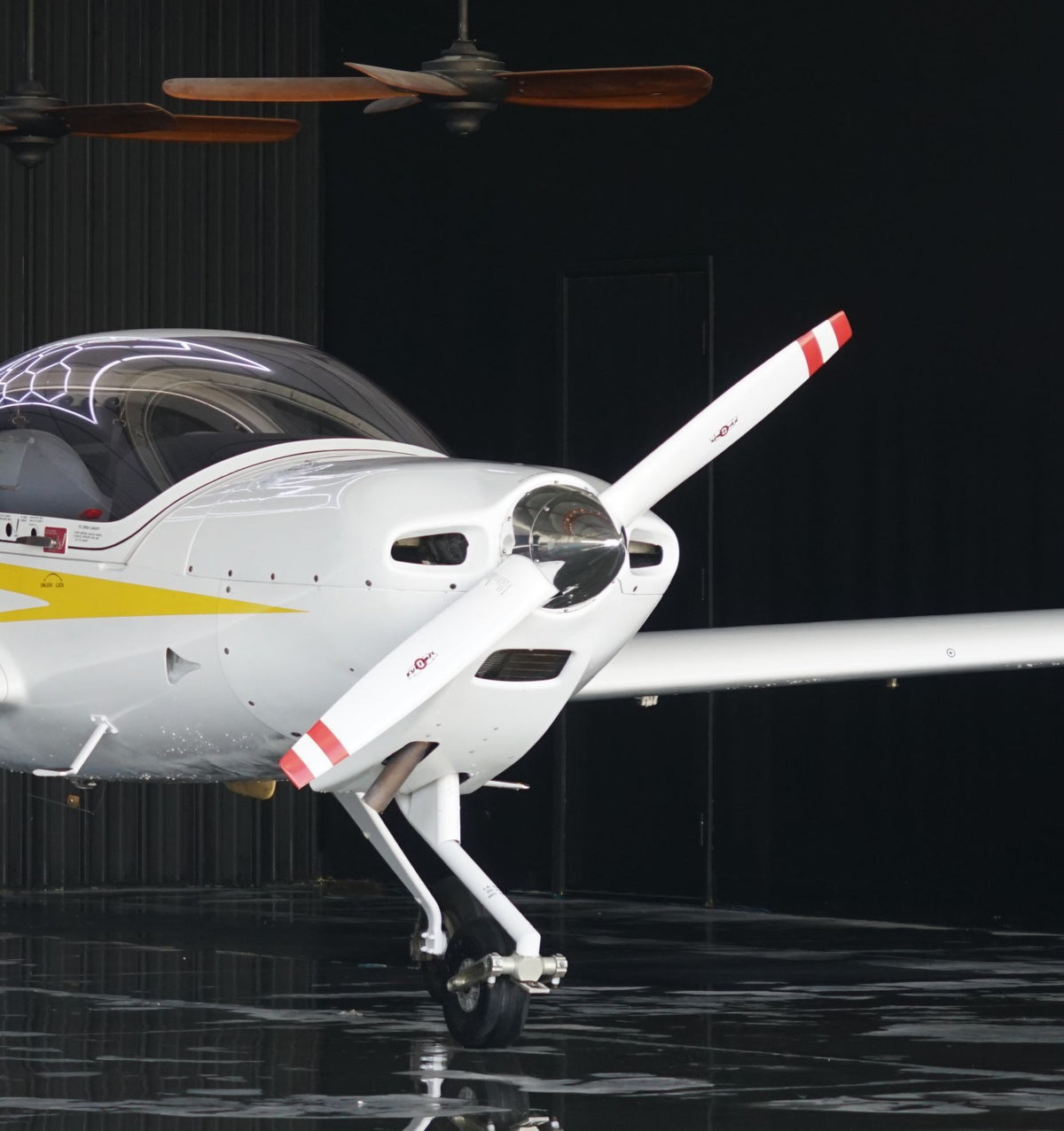
This is a flight calculator to figure out what your total cost is going to look like. Upgrade any aircraft hour of your package to the Diamond DA20-C1 for +$50 an hour or the Cirrus SR22 Turbo for +$400 an hour, as many or as few hours as you like.

Your Package

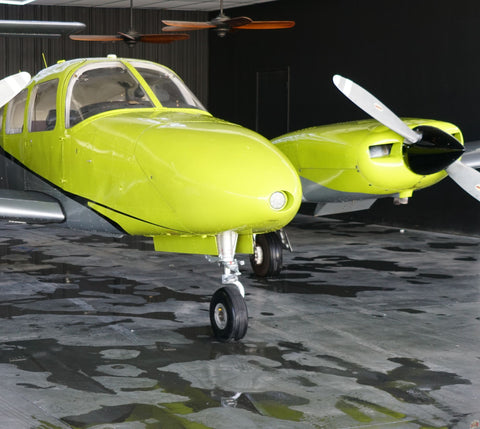
Front-quarter view of a white Diamond DA20 trainer with yellow stripes and a red-tipped propeller in a dark hangar

+$50 / hr

Diamond DA20-C1

Composite Two-Seater · Bubble Canopy · 138 kt

A light, responsive two-seat trainer with a full bubble canopy for excellent visibility.

0 hrs × $50 = $0

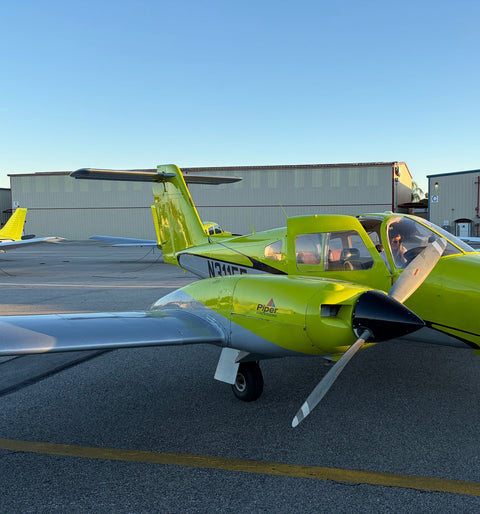
Front-quarter view of a yellow Cirrus SR22 with its doors open and propeller in front of a tan hangar

+$400 / hr

Cirrus SR22 Turbo

Premium Glass · CAPS · 215 kt

A glass cockpit and a whole-airframe parachute; many students fly it for cross-country and advanced work.

0 hrs × $400 = $0

Each Diamond hour adds $50 and each Cirrus hour adds $400 to the package price: ten Cirrus hours add $4,000.

Package prices are fixed and include books and materials. Upgrade hours replace standard aircraft hours inside your package; the rest fly the Cessna 162 or Piper Warrior at the standard rate. The FAA medical, knowledge test and examiner fees are paid separately.

Hours Breakdown

Where Every Hour Goes

All three packages on one scale, so the difference is easy to see. Switch packages and the bars follow.

Standard

$10,400 · 40 Hours Logged

Logged Flight Time

  • Single-Engine Aircraft 38 hrs Cessna 162 Skycatcher or Piper Warrior, $179/hr
  • Full-Motion Simulator 2 hrs FAA-approved, never canceled by weather, $120/hr

Instruction

  • Dual Instruction · Aircraft & Sim 30 hrs Given in the aircraft and simulator hours above
  • Ground School & Briefings 3 hrs One-on-one, before and after your flights

Comprehensive

$15,400 · 60 Hours Logged

Logged Flight Time

  • Single-Engine Aircraft 55 hrs Cessna 162 Skycatcher or Piper Warrior, $179/hr
  • Full-Motion Simulator 5 hrs FAA-approved, never canceled by weather, $120/hr

Instruction

  • Dual Instruction · Aircraft & Sim 50 hrs Given in the aircraft and simulator hours above
  • Ground School & Briefings 10 hrs One-on-one, before and after your flights

Premium

$22,000 · 80 Hours Logged

Logged Flight Time

  • Single-Engine Aircraft 70 hrs Cessna 162 Skycatcher or Piper Warrior, $179/hr
  • Full-Motion Simulator 10 hrs FAA-approved, never canceled by weather, $120/hr

Instruction

  • Dual Instruction · Aircraft & Sim 60 hrs Given in the aircraft and simulator hours above
  • Ground School & Briefings 20 hrs One-on-one, before and after your flights

One scale for every bar: 0–70 hrs

The FAA minimum for the certificate is 40 hours; most students finish between 55 and 70. A package locks the hourly rate for every hour inside it.

Your Timeline

From First Lesson To Checkride

At two to three lessons a week, most students in Los Angeles reach the checkride in three to five months, logging 55 to 70 hours. Tap a stage.

  1. Stage 1 / 4Week 1Hour 1

    Your First Lesson

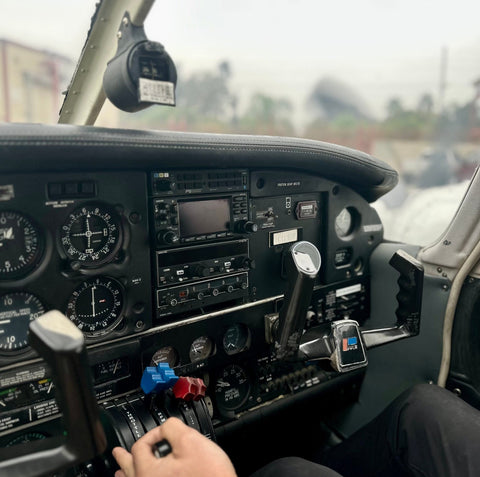
    Your first hour is in the left seat, talking to the Van Nuys tower from lesson one. Start with a $229 discovery flight: it is logged as dual instruction and credited in full if you enroll within 24 hours.

    • Controls, instruments and the traffic pattern
    • Radio work with the control tower from day one
    • Bring a government-issued photo ID
  2. Stage 2 / 4Weeks 6–8Hours 15–25

    First Solo

    Presolo: straight and level, climbs, descents, slow flight, stalls and, above all, takeoffs and landings until they are consistent. It ends with your first flight alone.

    • Third-class FAA medical before you solo
    • Student pilot certificate through IACRA
    • Presolo written exam with your instructor
  3. Stage 3 / 4Months 2–3Hours 25–45

    Written Exam & Cross-Countries

    You learn to go places: navigation, weather, flight planning and Southern California airspace. Dual cross-countries first, then solo, including the long 150-nautical-mile solo.

    • FAA knowledge test: 60 questions, 70% to pass
    • Night flying, including a cross-country over 100 nautical miles
    • Solo cross-country of 150 nautical miles with three full-stop landings
  4. Stage 4 / 4Months 3–5Hours 55–70

    Checkride

    Everything polished to Airman Certification Standards: short and soft fields, steep turns, stalls and emergencies. After a mock checkride with your instructor, it is one day with an FAA examiner: the oral, then the flight.

    • Three hours of checkride prep in the final two months
    • Oral exam of two to three hours
    • Flight portion of 1.5 to 2 hours

1 / 4

Once a week, the same certificate usually takes nine to fourteen months. Flying five or six days a week, it fits into four to eight weeks: see Accelerated below.

Good To Know

The Details, In Four Taps

What The FAA Requires

16Minimum Age To Solo
17Minimum Age For The Certificate
40 hrFAA Minimum Flight Time
70%To Pass The Written Test

There is no minimum age to start lessons. You need a third-class medical and a student pilot certificate before your first solo, so it is worth getting both early.

  • Read, speak, write and understand English
  • FAA third-class medical, or BasicMed once you hold a certificate
  • Student pilot certificate, applied for through IACRA
  • TSA clearance first if you are not a US citizen: we file the paperwork
  • At least 20 hours dual and 10 hours solo inside the 40
Private Pilot Requirements

The Full-Motion Simulator

$120/hrPackage Rate
2 · 5 · 10Hours In Each Package
$189A Single 60-Min Session
9–9Open 7 Days

An FAA-approved full-motion simulator on the field at Van Nuys, flown with an instructor beside you. It is where procedures, radio work and emergencies are practiced most efficiently, and the weather never cancels it.

  • Simulator hours are included in every package
  • Time counts toward your certificate within the FAA limits; your instructor logs it
  • No weight limit
  • Between lessons it keeps procedures and radio work sharp
The Simulator

Accelerated Training

4–8 WkStart To Checkride
5–6Flying Days A Week
40–45 hrTypical Finish
Week 4Written Test Passed

The same syllabus, FAA minimums and package prices, packed into a few weeks. Flying most days means less forgetting between lessons, which is why accelerated students tend to finish closer to the minimum.

  • Medical and student pilot certificate in hand by day one
  • Ground study every evening
  • We do not run housing: a furnished monthly rental near the airport is the usual answer
  • Eight weeks is the same plan at four flying days a week
Accelerated Flight Training

Paying For It

$2,500Down On Every Package
4 × $1,975Standard, Monthly
6 × $2,150Comprehensive, Monthly
10 × $1,950Premium, Monthly

Every package starts at $2,500 down, then a few fixed monthly payments that add up to the package price. Training loans and scholarships can be combined with any plan, and pay-as-you-go remains an option.

  • Pay as you go: $179 aircraft plus $110 instructor per hour
  • Training loans from lenders, priced on your own credit
  • Scholarships from AOPA, the EAA Ray Aviation Scholarship and Women In Aviation International
  • The package locks the hourly rate for every hour inside it
Flight Training Financing

Google Reviews

What Our Flyers Say

  • Marion W.

    Google · Sep 2026

    Amazing experience with Alex, we flew in the Cirrus ! We went for sunset and it was the most gorgeous experience ever. The view were breathtaking taking !!

    You Fly LA · VNY
  • Fabrice H.

    Google · Sep 2026

    Amazing flight with Alex, we were on the most beautiful and iconic place in LA grants to him! Los Angeles is more beautiful from the sky so take this discovery flight it’s one of the best experience of my life !

    You Fly LA · VNY
  • Jett R.

    Google · Sep 2026

    Great flight school! The staff, and instructors are very knowledgeable, and helpful. I flew with Peyton he’s a great Instructor. I highly recommend booking a flight or consultation here if you’re interested in possible training or just looking to get an amazing view from the Sky!

    You Fly LA · VNY
  • Tzvi S.

    Google · Sep 2026

    Was incredible!! discovery flight highly recommended!! Ralph was super nice and helpful. Best views of LA!

    You Fly LA · VNY
  • Alissa L.

    Google · Sep 2026

    Nice instructor, nice experience overall with our discovery flight.

    You Fly LA · VNY
  • Constantine P.

    Google · Sep 2026

    It was an amazing flight! Amazing experience! Thanks Alex for taking us around and give us to enjoy and try flying by myself. I am sure I’ll come back for study.

    You Fly LA · VNY
  • Olha T.

    Google · Sep 2026

    The best, it was wonderful, the best gift, you have absolutely to do it.

    You Fly LA · VNY
  • Tielle L.

    Google · Sep 2026

    Amazing experience! Highly recommend. I flew with Alex and he was extremely professional and knowledgeable. The entire experience was exceptional.

    You Fly LA · VNY
  • Kayla M.

    Google · Sep 2026

    Great experience overall! The instructors are knowledgeable, supportive, and genuinely care about their students. I really appreciated the quality of training and professionalism. Highly recommend!

    You Fly LA · VNY
  • Harman S.

    Google · Sep 2026

    Amazing experience with Blake.

    You Fly LA · VNY
  • Joseph A.

    Google · Sep 2026

    Very efficient, professional, and friendly staff & group flight instructors! Definitely recommend!

    You Fly LA · VNY
  • Adam S.

    Google · Sep 2026

    Awesome flight experience over LA! The instructions are awesome and the way they conduct the flights out of Van Nuys are very professional and informative. Awesome time!

    You Fly LA · VNY
  • Brayan M.

    Google · Sep 2026

    Estoy muy emocionado muy buen servicio y buena atención al cliente y un precio demasiado cómodo 10/10

    You Fly LA · VNY
  • Sandra L.

    Google · Sep 2026

    Very nice owner! It was a very nice flight. Can’t forget the planes, very beautiful! I really recommend it!

    You Fly LA · VNY
  • Noah Y.

    Google · Sep 2026

    Amazing experience and fantastic instructors! Can’t ask for a better way to spend an afternoon!

    You Fly LA · VNY

Reviews as posted on Google, newest first.

Questions

Private Pilot License: Your Questions

Still unsure? Call (818) 330-1318, 9 AM to 9 PM, seven days a week.

All Questions

There is no minimum age to start taking lessons. You must be 16 to fly solo and 17 to be issued the private pilot certificate. Plenty of people start at 15 and time their solo for their sixteenth birthday.

Not for your first few lessons, but you need at least a third-class medical before you can solo, so it is worth getting it early. If there is anything in your medical history you are unsure about, sort it out before you spend money on training rather than after.

The FAA minimum is 40. Most people finish somewhere between 55 and 75. Flying two or three times a week rather than once a week is the biggest single factor in landing at the low end of that range.

Our packages are $10,400 (Standard, 40 hours), $15,400 (Comprehensive, 60 hours) and $22,000 (Premium, 80 hours), with books and training materials included. On top of the package, budget roughly $1,300 to $1,500 for the FAA medical, the knowledge test, the examiner's fee and a headset.

Yes. Every package starts at $2,500 down, then fixed monthly payments: four of $1,975 on the Standard, six of $2,150 on the Comprehensive and ten of $1,950 on the Premium. Training loans and scholarships can be combined with any of them.

Yes, hour by hour on any package: the Diamond DA20-C1 is $50 an hour more and the Cirrus SR22 Turbo $400 an hour more than the standard aircraft rate. The Flight Cost Calculator on this page shows your total.

Yes. If you enroll within 24 hours of your discovery flight, 100% of what you paid for it is credited toward your package, and the logged hour counts toward the 40-hour minimum in 14 CFR 61.109.

You keep training at the published hourly rates: about $289 an hour dual ($179 aircraft plus $110 instructor) and $179 an hour solo, with no renegotiation and no penalty rate. If you already know you will fly once a week, the Comprehensive package is usually the cheaper choice.

Yes. Flying five or six days a week, a private pilot license fits into four to eight weeks, with the same FAA requirements and the same package prices. You need your medical and student pilot certificate in hand on day one, and evenings free for ground study.

Yes. We are open 9 AM to 9 PM, seven days a week, and training is scheduled one-on-one, so you pick times that fit your work.

Part 61 is flexible and has a 40-hour minimum. Part 141 is an FAA-approved structured syllabus with a 35-hour minimum and stricter record-keeping. Most students finish in similar total time either way. Part 141 matters most for international students on M-1 visas.

Yes to both. Night flying is part of private pilot training itself, so there is no separate night rating. To carry passengers you need three takeoffs and landings in the preceding 90 days, and those must be to a full stop at night if you are flying passengers at night.

You receive a notice of disapproval listing the specific tasks you did not meet standards on. You do additional training on those items, get a new endorsement, and retake only the failed portions. It is common and it is not the end of anything.

Van Nuys Airport · Open 7 Days

Start With One Hour In The Air

Sixty minutes in the left seat over Los Angeles for $229. It is logged toward your certificate and credited in full if you enroll within 24 hours.

Open 7 Days9:00 AM – 9:00 PM

What Comes Next

The Ladder After Your License

Most private pilots add the instrument rating next. For a career, the path continues to commercial, multi-engine and the instructor ratings. Tap a step to add up the published course prices.

  1. You Are Here

    Private Pilot

    $10,400

    3–5 months at 2–3 lessons a week

    The Standard package, 40 hours logged.

    See The Packages
  2. Next

    Instrument Rating

    $11,700

    ~6–8 weeks

    Fly in cloud: 20 of the 40 dual hours in the simulator.

    Instrument Rating
  3. Then

    Commercial Pilot

    $15,400

    130 program hours

    Get paid to fly: complex and high-performance aircraft.

    Commercial Pilot
  4. Then

    Multi-Engine Rating

    $5,100

    7 days

    Start Monday, checkride that weekend, in the Piper Seminole.

    Multi-Engine
  5. Then

    CFI, CFII & MEI

    $15,400

    ~4 weeks

    All three flight instructor ratings in one program.

    Flight Instructor

Published Course Prices On This Path

$0

Course prices only. The commercial certificate also needs 250 total hours, and the FAA medical, knowledge tests and examiner fees are paid separately.

Or All Of It

Airline Pilot Career Program

$84,000

About 9 months · fixed, all-in

Zero to CFI, 260 logged hours and a guaranteed paid CFI job.

The Full Guide

Private Pilot Training In Detail

FAA requirements, how training is structured, the written exam and checkride, costs and timelines, all in one article.

The private pilot license is the certificate that turns you from a passenger into a pilot. It lets you fly an airplane yourself, day or night, carry passengers, and go anywhere in the country under visual flight rules. In Los Angeles it is also one of the most rewarding things you can learn, because the airspace here is among the busiest and most interesting in the world, and because the flying is spectacular in every direction.

If you are still deciding which certificate to start with, our guide to learning to fly in Los Angeles walks through every step from the first lesson to the checkride.

This guide covers what the license is, what the FAA requires, how training is structured, what the written exam and checkride involve, what it costs, and how long it realistically takes in Los Angeles.

How We Fit In: You Fly LA sells discovery flights — the introductory flight where you sit in the left seat and fly the airplane yourself, with an instructor beside you. We also run the full private pilot course, from that first hour to the checkride. The FAA issues your certificate, not the school; our job is to train you to the standard and prepare you for the practical test. Our instructors and aircraft are based on the Van Nuys ramp. A discovery flight is the honest first step either way — it is how you find out whether you actually like flying before committing money to a course.

What The Private Pilot License Lets You Do

A private pilot certificate with an airplane single-engine land rating gives you broad privileges. You can act as pilot in command of an airplane you are rated and current in, fly day or night, carry passengers, and fly cross-country to any airport in the United States, or internationally with the right paperwork. You can rent airplanes from flight schools and clubs once you have completed their checkout.

There are real limits, and they matter. A private pilot may not fly for compensation or hire. You may share the operating expenses of a flight with your passengers on a pro-rata basis, but you cannot be paid to fly. You are limited to visual meteorological conditions unless you go on and add an instrument rating, which is the single most useful thing most private pilots add, particularly in a marine-layer city like Los Angeles. And you are restricted to the category and class you trained in until you add another, such as a multi-engine rating. The practical difference between those two ways of flying is explained in VFR vs IFR.

FAA Requirements For The Private Pilot Certificate

The eligibility requirements are set out in 14 CFR 61.103 and the aeronautical experience in 61.109. In plain language, here is what you need. A checklist version of the same rules sits on our page covering what the FAA requires for a private pilot license.

FAA Private Pilot Certificate Requirements Under Part 61
Requirement Detail
Minimum age to solo 16
Minimum age for the certificate 17
Language Read, speak, write and understand English
Medical At least a third-class FAA medical certificate, or BasicMed once you hold a certificate
Student pilot certificate Required before your first solo, applied for through IACRA
Total flight time 40 hours minimum under Part 61
Dual instruction 20 hours minimum with an instructor
Solo flight 10 hours minimum, including 5 hours of solo cross-country
Cross-country dual 3 hours, including one flight over 100 nautical miles total distance
Night training 3 hours, including 10 takeoffs and landings and one cross-country over 100 nautical miles
Instrument training 3 hours of control and maneuvering solely by reference to instruments
Checkride preparation 3 hours within the 2 calendar months before the practical test
Solo cross-country One flight of at least 150 nautical miles with full-stop landings at three points, one leg over 50 nautical miles
Knowledge test FAA Private Pilot Airplane written, 60 questions, 70% to pass

The 40-hour figure is a legal minimum, not a realistic average. The national average sits closer to 60 to 75 hours, and in the busy Los Angeles basin budgeting 55 to 70 hours is sensible. Anyone advertising a guaranteed 40-hour finish is quoting a regulation, not a plan.

How Private Pilot Training Is Structured

A well-run private pilot course is built on a syllabus and runs in three phases. Each lesson typically pairs a one-on-one preflight briefing, the flight itself, and a debrief, so a two-hour flight is really a three-hour block of your day.

Phase One: Presolo

You learn to control the airplane. Straight and level, climbs, descents, turns, slow flight, stalls, ground reference maneuvers, and above all takeoffs and landings, over and over. You learn radio work, which in the Los Angeles area means talking to a control tower from your first lesson. You cover the presolo written exam and the airplane's systems and limitations. This phase ends with your first solo, usually somewhere between 15 and 25 hours depending on how often you fly. Before that solo you need the piece of paper that goes with it, which we cover in the FAA student pilot certificate.

Phase Two: Cross-Country

You learn to go places. Navigation by pilotage, dead reckoning, VOR and GPS. Weather interpretation and go/no-go decisions. Flight planning and filing. Airspace, which in Southern California is genuinely complex — Class B over Los Angeles International, Class C and D fields everywhere, special flight rules corridors, and terrain on three sides. Night flying. You fly dual cross-countries, then repeat them solo, including the long 150-nautical-mile solo that most students remember as the highlight of their training.

Phase Three: Checkride Preparation

You polish everything to Airman Certification Standards tolerances. Short and soft field takeoffs and landings, power-on and power-off stalls, steep turns, emergency procedures, simulated engine failures, diversions, lost procedures, and hood work. Your instructor flies a mock checkride with you before signing you off.

Maneuvers And Subjects You Will Cover

  • Preflight inspection, weight and balance, and performance planning
  • Normal, crosswind, short field and soft field takeoffs and landings
  • Slow flight, power-on stalls, power-off stalls and stall recognition
  • Steep turns and ground reference maneuvers
  • Emergency descents, engine failure procedures and forced landings
  • Cross-country flight planning and filing FAA flight plans
  • Radio communications, airspace and airport operations
  • Weather theory, weather products and aeronautical decision-making
  • Basic attitude instrument flying and unusual attitude recovery
  • Federal Aviation Regulations, publications and airworthiness

The Written Exam And The Checkride

The FAA knowledge test is 60 multiple-choice questions in 2 hours, and you need 70 percent. You take it at an approved testing center after an endorsement from your instructor or from an approved home-study or ground school course. Most people study for it using a written-test prep course alongside their flying, and pass it somewhere in the middle of training. Take it before you get deep into checkride prep — the results report tells your examiner which subject areas to probe on the oral.

We have written that exam up on its own page. The private pilot written exam: what to expect covers the 60 questions and the 70 percent pass mark, the test fee, the endorsement you need before you can sit it, what the subject areas actually contain, and how to study for it without wasting months.

The practical test, universally called the checkride, is one day with an FAA-designated pilot examiner. The oral is typically two to three hours covering regulations, systems, weather, airspace, performance, and a cross-country flight you planned in advance. The flight portion runs 1.5 to 2 hours against Airman Certification Standards tolerances. Pass both and you walk away a private pilot the same afternoon.

How Long It Takes And What It Costs

Pace is the single biggest driver of both time and cost. Students who fly two or three times a week finish in about three to five months. Students who fly once a week take a year or more and typically log significantly more hours, because each lesson spends its first half re-learning what was lost since the last one. Frequency is cheaper than it looks.

You will also see accelerated programs advertised, some promising a private certificate in about two weeks. These are real, but they demand the written exam passed in advance, two weeks entirely clear, and tolerance for weather delays. They suit people with a hard deadline more than working adults.

Private Pilot Budget: Course Price And Third-Party Fees
Item What To Budget
You Fly LA private pilot course From $10,400
FAA third-class medical exam Roughly $120–$200
Knowledge test fee Roughly $175
Designated pilot examiner fee Roughly $800–$1,000
Headset, books, charts, iPad app Roughly $500–$1,500
You Fly LA discovery flight (first step) $229 for one, $299 for two

On the question of flight lessons cost per hour: quoted hourly rates in Los Angeles usually separate the airplane from the instructor, so an advertised aircraft rate is not the whole picture. Add the instructor's hourly rate, and remember that instructor time includes the briefing and debrief, not just the airplane's engine running. A package price like our own private pilot course is generally easier to compare and easier to plan against. We publish a full breakdown of what flight school costs.

If you are looking for cheap private pilot training, the cheapest route is not the cheapest hourly rate. It is flying frequently, preparing on the ground rather than paying an instructor to teach you what you could have read, passing the written early, and using a flight simulator where it is permitted.

The line-by-line version of that arithmetic is on our private pilot license cost breakdown: every item priced separately, why the FAA's 40 hours becomes 55 to 70 in practice, and the fees that sit outside any school's package price. If the question is calendar time rather than money, how long becoming a pilot actually takes converts those hours into months.

How Long Does It Take To Get A Private Pilot License?

Count in calendar months, not just hours. The FAA sets no time limit on private pilot training under 14 CFR 61.109 — only the 40-hour minimum — so the answer depends almost entirely on how often you fly. At two to three lessons a week, most students in Los Angeles reach their first solo in about six to eight weeks and the checkride in three to five months, logging 55 to 70 hours along the way. At one lesson a week, the same certificate typically takes nine to fourteen months, partly because skills fade between lessons and partly because weather and aircraft maintenance cancel a larger share of a thin schedule. The knowledge test result is valid for 24 calendar months, so passing it early never hurts. The one thing that reliably shortens the timeline is booking the next lesson before you leave the airport.

Start With One Hour At The Controls

Before you spend anything on a course, spend an hour flying the airplane yourself over Los Angeles. You will know very quickly whether this is for you.

Book A Discovery Flight →

Learning To Fly In Los Angeles And At Van Nuys

Van Nuys Airport (KVNY) is one of the busiest general aviation airports in the world. Training here is harder than at a sleepy uncontrolled field, and that is the point: you talk to a control tower from lesson one and operate near Class B airspace. Southern California also gives you flyable days most of the year, so your pace stays steady. Read more on our Van Nuys Airport page and our flight training at Van Nuys page.

The Airplanes You Will Train In

Most primary training in Los Angeles happens in four-seat single-engine airplanes. The Piper Warrior PA-28-161 is a stable, forgiving low-wing trainer that is very common at Van Nuys. The Diamond DA20-C1 is a light, responsive two-seat trainer with excellent visibility. The Cirrus SR22T is a modern glass-cockpit airplane with a whole-airframe parachute that many students use for cross-country and advanced work. Our airplanes page covers what we fly on discovery flights.

What Comes After The Private Pilot License

For most people the next step is the instrument rating, which lets you fly in cloud and in the low visibility that a coastal city produces regularly. If you are aiming at aviation as a career, the sequence continues through the commercial pilot license, the multi-engine rating, and the flight instructor certificates, which is how most pilots build the 1,500 hours the airlines require. The whole path is laid out on our airline pilot career program page. International students should start with our flight training for international students guide, because the TSA clearance has to be in hand before training begins. If you have never seen a spin, our stall and spin training in a spin-approved Diamond DA20-C1 is a useful addition after the checkride.

Frequently Asked Questions

How Old Do I Have To Be To Start Flight Training?

There is no minimum age to start taking lessons. You must be 16 to fly solo and 17 to be issued the private pilot certificate. Plenty of people start at 15 and time their solo for their sixteenth birthday.

Do I Need A Medical Certificate Before My First Lesson?

Not for your first few lessons, but you need at least a third-class medical before you can solo, so it is worth getting it early. If there is anything in your medical history you are unsure about, sort it out before you spend money on training rather than after.

How Many Hours Does A Private Pilot License Really Take?

The FAA minimum is 40. Most people finish somewhere between 55 and 75. Flying two or three times a week rather than once a week is the biggest single factor in landing at the low end of that range.

How Much Does A Private Pilot License Cost In Los Angeles?

Our private pilot course starts at $10,400. On top of the course you should budget for the medical, the knowledge test fee, the examiner's fee, and your own headset and materials. Total out-the-door cost for most people lands in the low to mid teens.

Can I Get A Private Pilot License In 14 Days?

Accelerated courses of roughly two weeks do exist and people do complete them. They require the written exam passed in advance, full-time availability, and tolerance for weather delays. For most people with a job, training two or three times a week over a few months is more realistic and no more expensive overall.

Can I Rent Airplanes Once I Have My License?

Yes. Flight schools and clubs rent to certificated pilots after a checkout in the specific make and model, plus a current medical, a flight review within the last 24 calendar months, and whatever insurance minimums the operator sets.

Can I Do Flight Training On Weekends?

Yes. Flight schools at Van Nuys operate seven days a week and training is scheduled one-on-one, so you pick times that fit your work. You Fly LA's own discovery flights run 10 AM to 7 PM, seven days a week.

What Is The Difference Between Part 61 And Part 141?

Part 61 is flexible and has a 40-hour minimum. Part 141 is an FAA-approved structured syllabus with a 35-hour minimum and stricter record-keeping. Most students finish in similar total time either way. Part 141 matters most for international students on M-1 visas.

Can I Carry Passengers And Fly At Night?

Yes to both. Night flying is part of private pilot training itself, so there is no separate night rating. To carry passengers you need three takeoffs and landings in the preceding 90 days, and those must be to a full stop at night if you are flying passengers at night.

Does A Discovery Flight Count Toward My Hours?

If the flight is conducted by a certificated flight instructor and logged as dual instruction, the time counts toward your certificate. Start a logbook and put that first hour on page one.

What Happens If I Fail The Checkride?

You receive a notice of disapproval listing the specific tasks you did not meet standards on. You do additional training on those items, get a new endorsement, and retake only the failed portions. It is common and it is not the end of anything.

Ready To Enroll? You Fly LA runs the private pilot course at Van Nuys Airport, from $10,400. We can get you in the air this week on a discovery flight so you know it is worth it first. Call us at (818) 330-1318, 9 AM to 9 PM, seven days a week. We are at Van Nuys Airport, 7900 Balboa Blvd, Main Terminal Unit 108, Van Nuys, CA 91406.

Your First Hour In The Left Seat

Sixty minutes over Los Angeles with an instructor beside you and the controls in your hands. $229 for one person, $299 for two.

Book A Discovery Flight →