














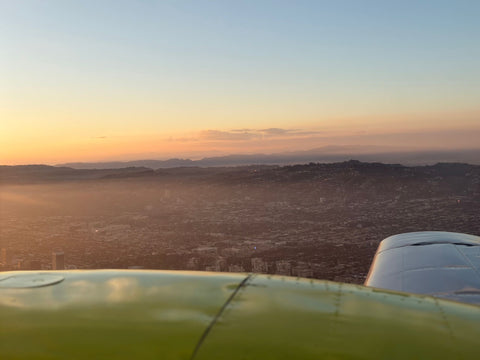




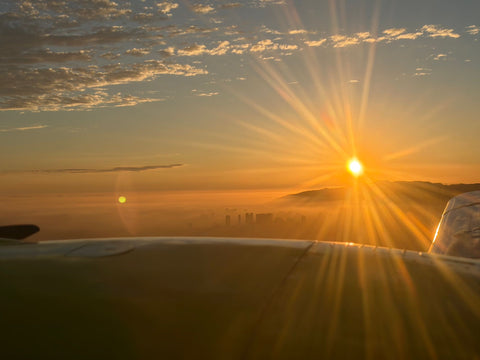

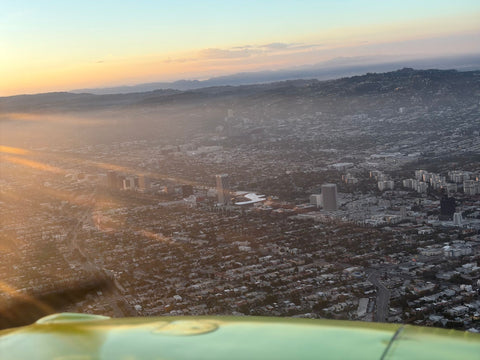



Upset training covers the moments when an airplane ends up somewhere its pilot did not intend: too steep, too slow, nose too high or too low. The part of it that general aviation pilots most need to have felt is the stall and the spin, because that is where loss of control starts in light airplanes. At Van Nuys we teach exactly that part, in a Diamond DA20-C1 approved for intentional spins. To be clear about scope from the start: this is a stall and spin course, not an aerobatic or all-attitude upset course, and we do not run one of those.
Quick Answer: Our Spin Training course is $2,000 and includes 3 hours in the spin-approved Diamond DA20-C1, 2 hours in the Redbird MCX full-motion simulator and classroom instruction, typically over two or three days. Flight instructor candidates finish with the 14 CFR 61.183(i)(1) spin endorsement; private and commercial pilots take the same training for stall and spin awareness.
Book A Free Consultation Call Or Text (818) 330-1318
Who This Training Is For
- Flight instructor candidates. The regulation requires a spin endorsement for an airplane instructor certificate, and we train candidates from any school, not only our own students.
- Private and commercial pilots who have never seen a full stall break, an incipient spin or a developed one. Most pilots trained in airplanes that are placarded against intentional spins, so they know the recovery only from a book.
- Returning pilots who want their stall recognition sharpened before carrying passengers again, or alongside a flight review.
If what you want is recovery from inverted flight or other all-attitude maneuvers, you need an aerobatic-category airplane and an aerobatic instructor, which we do not offer. If you are not a CFI candidate and want spin awareness rather than the full endorsement syllabus, call us and we will talk through a shorter version built on the same course.
What Happens On The Day
The course runs in the same order for everyone, from the ground up. Step through it below.
-
Classroom: The Aerodynamics
Why a wing stalls at its critical angle of attack rather than at a particular airspeed, why a spin needs both a stalled wing and yaw, the regulation, the recovery procedure in the airplane's flight manual and, for instructor candidates, the lesson plan you will teach from.
-
Simulator: See It Before You Feel It
Two hours in the Redbird MCX full-motion simulator, where entries and badly handled recoveries can be flown, frozen mid-maneuver and discussed, without spending altitude or aircraft time.
-
Briefing And Preflight
Weight and balance inside the DA20's utility-category limits, the altitude floor for every recovery, the signal for handing over control, and what the airplane will do at each stage.
-
Climb To The Practice Area
Away from the city and clear of airport surface areas, well above 1,500 feet above the ground and in good visibility, with clearing turns before each maneuver.
-
Stalls And Incipient Spins
Power-off and power-on stalls, then stalls with deliberate uncoordinated rudder so you feel how the airplane starts to depart, recovered in the first turn.
-
Developed Spins And Recovery
Full spins entered deliberately and recovered using the manufacturer's procedure, until the recovery inputs are automatic and in the right order.
-
Debrief And Endorsement
A whiteboard debrief of why the airplane did what it did. Instructor candidates finish by demonstrating and narrating from the right seat; the endorsement is given when you meet the standard, not when the hours run out.
Upsets Vs Spins
The FAA's upset training guidance, Advisory Circular 120-111, defines an airplane upset as unintentionally exceeding the parameters of normal flight: pitch more than 25 degrees nose up or 10 degrees nose down, bank more than 45 degrees, or airspeed inappropriate for the conditions within those limits. A spin is one specific upset: an aggravated stall in which one wing is more deeply stalled than the other, and the airplane rolls, yaws and descends in autorotation.
The reason to train the second is that it teaches you to prevent the first. A spin cannot start without a stalled wing and yaw, and in light airplanes the classic setup is low, slow and uncoordinated: a skidding turn from base to final, a distracted go-around, a turn back to the runway after an engine failure. Once you have felt how little crossed rudder it takes to make an airplane depart at a speed that looked safe, you fly those turns differently. The course also covers the spiral dive, which can look similar but is not stalled, with airspeed building fast, and needs a different recovery.
The Aircraft
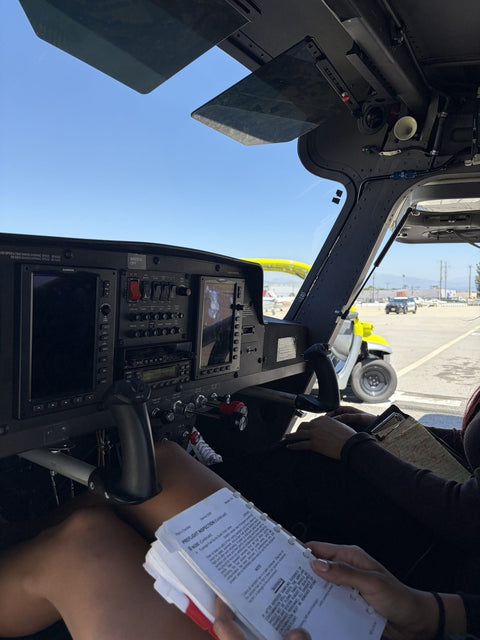
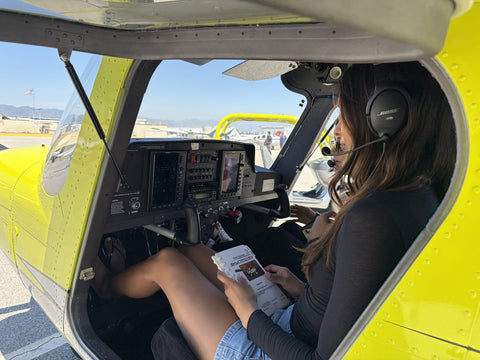
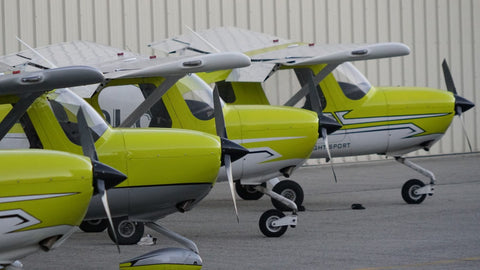
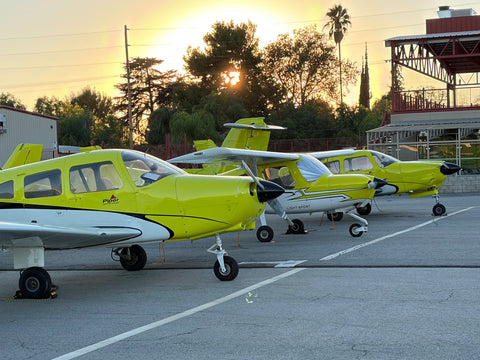
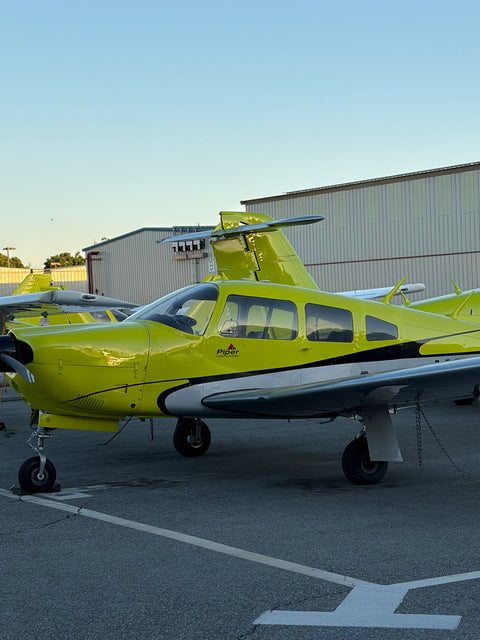
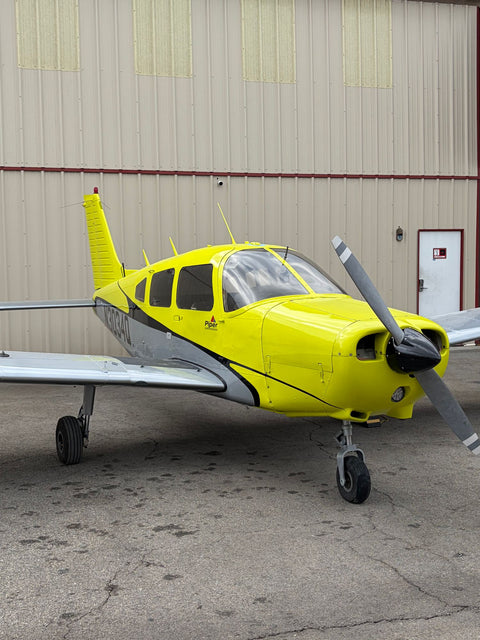
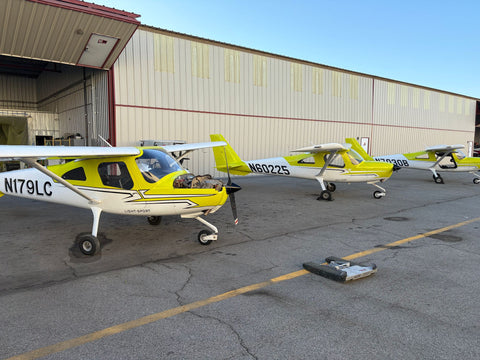
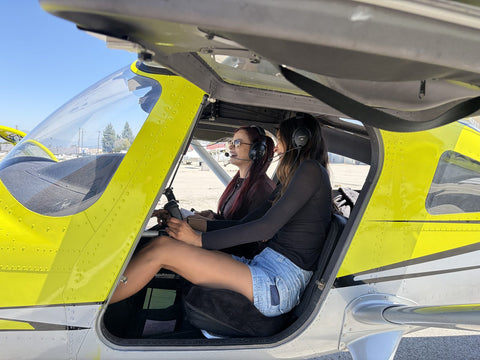
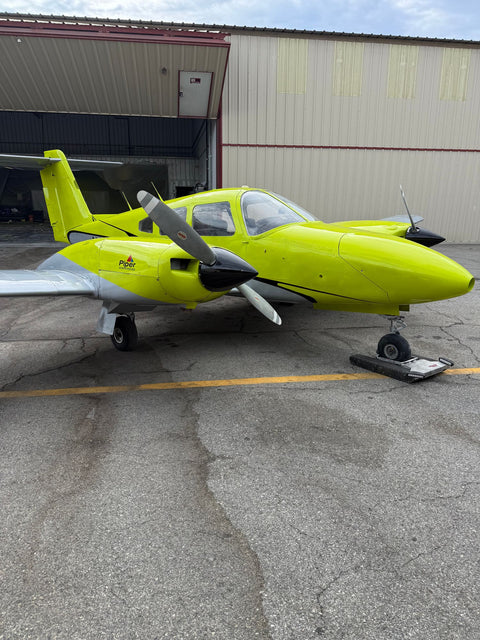
The Diamond DA20-C1 is operated in the utility category and approved for intentional spins. That matters because FAA Advisory Circular 61-67C notes that normal-category airplanes are placarded against intentional spins and have been tested for no more than a one-turn or three-second spin, so their behavior beyond that is unknown. It is also a good airplane to learn in: a bubble canopy that shows the rotation against the horizon, side-by-side seats so the instructor can see your hands and feet, a center stick, and predictable entry and recovery behavior. Always confirm an airplane's spin approval and recovery procedure in its own flight manual.
Book A Free Consultation See The Spin Training Course · $2,000
The CFI Spin Endorsement
14 CFR 61.183(i)(1) requires every airplane or glider flight instructor applicant to have a logbook endorsement stating they are competent and possess instructional proficiency in stall awareness, spin entry, spins and spin recovery, after flight training in an aircraft certificated for spins. Under 61.183(i)(2) the examiner may accept that endorsement instead of a spin on the practical test, unless the test is a retest after a failure in those areas, in which case the spin is tested in the airplane. The regulation's detail, and how it fits the rest of the CFI requirements, is on our CFI spin endorsement page and the flight instructor course.
Cost And Booking
| Item | Detail |
|---|---|
| Price | $2,000 |
| Aircraft | 3 hours in the Diamond DA20-C1, utility category, approved for intentional spins |
| Simulator | 2 hours in the Redbird MCX full-motion simulator |
| Ground | Classroom instruction included |
| Outcome | The 61.183(i)(1) endorsement on satisfactory completion, for instructor candidates |
| Length | Typically two or three days |
| Extra aircraft time | DA20-C1 at $229 per hour plus $110 per hour for the instructor |
| Bring | Pilot certificate, medical and logbook |
The course is booked on the spin training course page or by phone. Our instructors schedule it around the rest of your training, and if you want more DA20 time afterwards, aircraft rental at Van Nuys explains checkouts.
Frequently Asked Questions
Will I Get Motion Sick?
Some people do; spins involve fast rotation and changing G. The course builds up from stalls, sessions are short, and the flight ends whenever you say so. Eat a light meal beforehand and tell your instructor at the first sign of discomfort.
Do We Wear Parachutes?
Not on the endorsement course. 14 CFR 91.307(c) requires parachutes for maneuvers beyond 60 degrees of bank or 30 degrees of pitch with a passenger aboard, but 91.307(d) excepts spins required by the regulations for any certificate or rating when given by a certificated flight instructor. Spin flights outside the endorsement course are treated as outside that exception, so everyone aboard wears an approved parachute.
What Weather Do We Need?
Good visual conditions with a clear horizon and cloud well above the practice altitude. 14 CFR 91.303 also bars aerobatic flight below 1,500 feet above the surface, over congested areas, in airport surface areas, within 4 nautical miles of the centerline of a federal airway and in less than 3 miles of flight visibility, and our own margins are wider.
Is This An Aerobatic Course?
No. It is a stall and spin awareness course flown within the DA20-C1's utility-category approval. There are no loops, rolls or inverted flight.
Do I Have To Be A CFI Candidate?
No. Private and commercial pilots take it for stall and spin awareness. Call us and we will match the course to what you want from it.
How Long Does It Take?
Typically two or three days: the classroom session, two simulator hours and three flights. It can be spread out around a work schedule.
Book A Free Consultation Call Or Text (818) 330-1318
Sources: 14 CFR 61.183(i); 14 CFR 91.303 (aerobatic flight); 14 CFR 91.307(c) and (d) (parachutes); FAA Chief Counsel legal interpretation on parachute requirements under 14 CFR 91.307 (October 2017); FAA Advisory Circular 120-111, Upset Prevention And Recovery Training (Change 1, editorial update 3); FAA Advisory Circular 61-67C, Stall And Spin Awareness Training (Change 2); FAA Airplane Flying Handbook (FAA-H-8083-3C), Chapter 5, Maintaining Aircraft Control: Upset Prevention And Recovery Training.