






















Flight instructor training, the course that makes you a certified flight instructor, is the single most transformative step in a pilot's development, and for most professional pilots it is also the practical answer to the hardest problem in aviation: how to build 1,500 hours when nobody will hire you until you have them. Instructing is the job that pays you to fly while you get there.
To see where the instructor certificates sit in the full sequence, start with our guide to learning to fly in Los Angeles.
This guide covers what the CFI certificate is, the three instructor ratings and how they differ, the FAA requirements, what the notoriously demanding CFI course involves, the written exams and the initial checkride, what it costs in Los Angeles, and what the job is actually like.
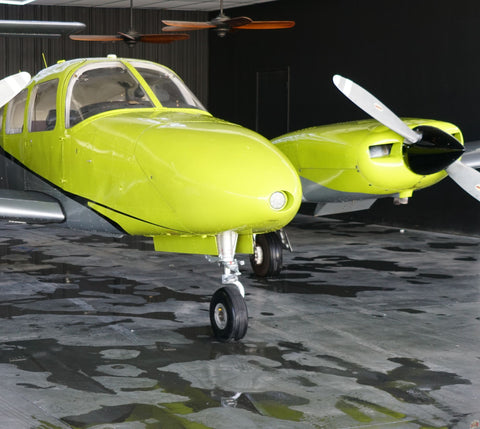
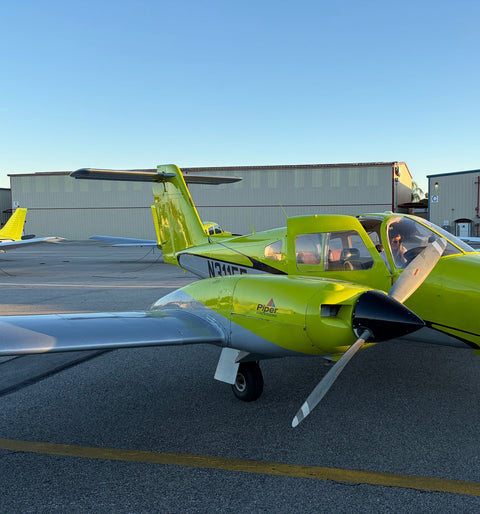
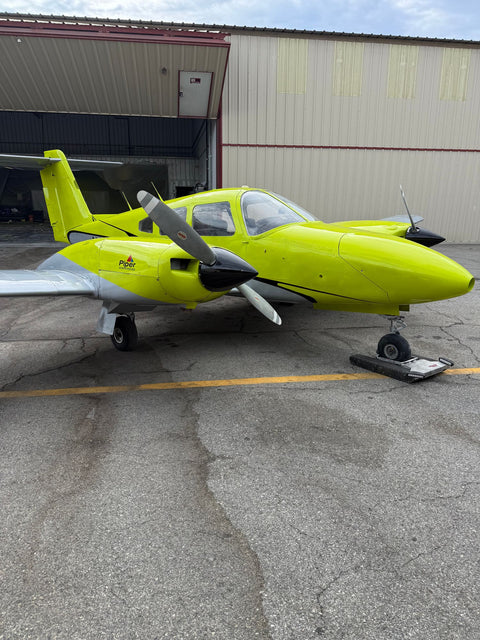
Quick Answer: To start flight instructor training you must be at least 18 and hold a commercial pilot certificate with an instrument rating (14 CFR 61.183); along the way you pass the Fundamentals of Instructing and Flight Instructor Airplane knowledge tests, earn a spin endorsement and pass the CFI checkride. Our program covers the CFI, CFII and MEI together in about four weeks for $15,400, with 20 hours in single-engine aircraft, 8 in the multi-engine Piper Seminole and time in the full-motion simulator. For the MEI you need commercial multi-engine privileges as well.
Book A Free Consultation Call Or Text (818) 330-1318
How We Fit In: You Fly LA sells discovery flights — the introductory flight where you fly the airplane yourself — and we run certificate and rating courses at Van Nuys Airport. The FAA issues the certificate at the end of each course, not the school. Our flight instructor course covers the CFI, the CFII and the MEI together for $15,400, taught from our own ramp at 7900 Balboa Blvd, Main Terminal Unit 108.
The Three Instructor Ratings
| Rating | What It Lets You Teach |
|---|---|
| CFI — Certified Flight Instructor (Airplane Single-Engine) | Student, sport, recreational and private pilots; commercial applicants; flight reviews and endorsements in single-engine airplanes |
| CFII — Certified Flight Instructor Instrument | Instrument rating applicants and instrument proficiency checks |
| MEI — Multi-Engine Instructor | Multi-engine ratings and multi-engine training |
The initial CFI is by far the hardest. It is the only checkride where you must demonstrate that you can teach, not merely that you can fly, and it carries the highest first-attempt failure rate of any FAA practical test. Once you have it, CFII and MEI are add-on checkrides that are considerably shorter, because you have already proven the fundamentals of instructing. Most career-track pilots do all three, often within a few months, because a school can use you across every program.
FAA Requirements To Become A Flight Instructor
| Requirement | Detail |
|---|---|
| Minimum age | 18 |
| Prerequisite certificate | Commercial pilot certificate (or ATP) with the appropriate category and class rating |
| Instrument rating | Required for a CFI with an airplane rating |
| Medical | Not required to hold a CFI certificate; to act as pilot in command while instructing you need at least a third-class medical under 14 CFR 61.23(a)(3)(ii) |
| Knowledge tests | Fundamentals of Instructing (FOI) and the Flight Instructor Airplane knowledge test |
| Spin training | A logbook endorsement for spin entry, spins and recovery in an airplane approved for spins |
| Training | Ground and flight training on the fundamentals of instructing and all required areas of operation, from the right seat |
| Practical test | Initial CFI checkride, often with an FAA inspector or a designated examiner |
| Certificate validity | Valid for 24 calendar months; renewed by activity, a refresher course, or examiner activity |
What The CFI Course Actually Involves
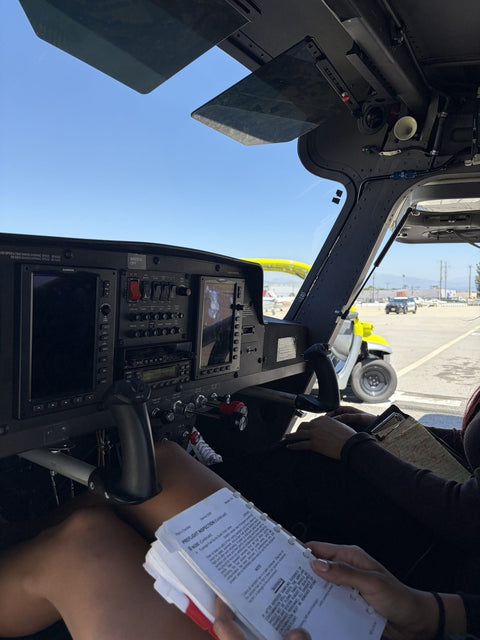
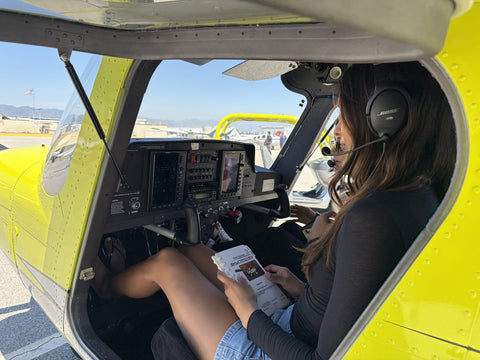
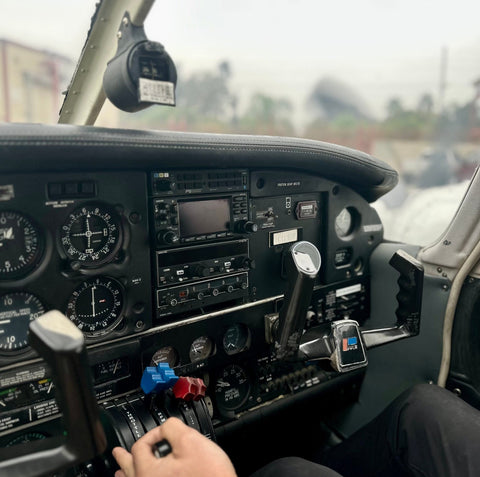
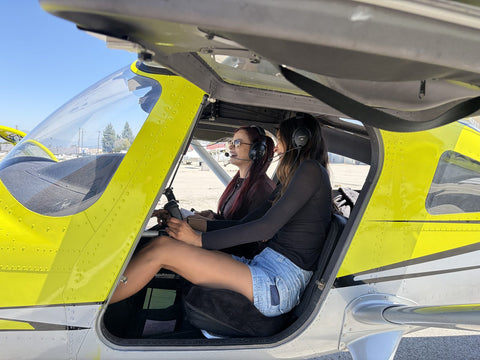
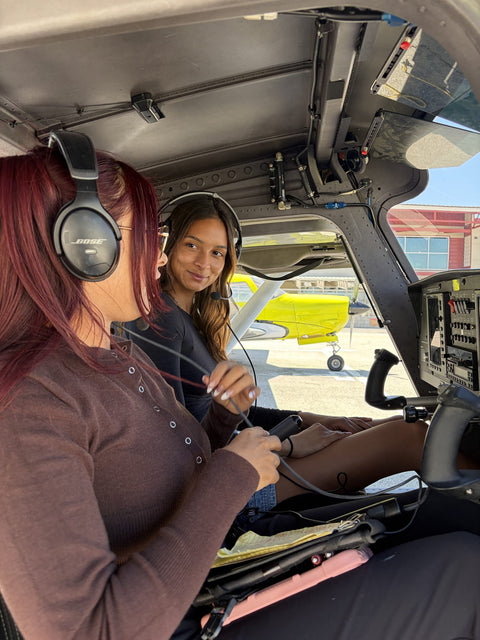
A CFI course is unlike anything before it. You already know how to fly. What you now have to learn is how to teach flying while flying, from the right seat, narrating everything you do, watching a student's hands, and being ready to take control the moment it stops being safe.
Fundamentals Of Instructing
The FOI is genuine educational theory: the learning process, human behavior and motivation, the elements of effective teaching, teaching methods, critique and evaluation, instructor responsibilities and professionalism, and risk management. It has its own knowledge test. It feels academic and it is the foundation for everything else — the checkride will keep coming back to it.
Lesson Plans And Ground Instruction
You build a complete set of lesson plans covering every area of operation you are authorized to teach, and you learn to deliver them. Expect to teach ground lessons repeatedly to your instructor, who will play the role of a confused student and interrupt with questions. Being able to explain a lazy eight, or why the critical engine is the critical engine, clearly and from first principles is the entire skill.
Flying From The Right Seat
Every sight picture you have built over 250 hours changes. Landings feel wrong, the picture over the nose is offset, and your left hand now flies while your right hand works the throttle. You relearn every maneuver from the right seat to commercial standards while talking continuously, which is harder than it sounds. You also learn to recognize and correct common student errors, and to demonstrate maneuvers deliberately badly so a student can see the error.
Spin Training And Endorsements
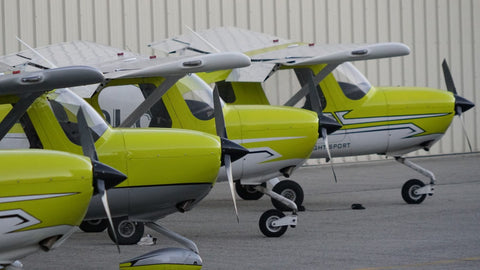
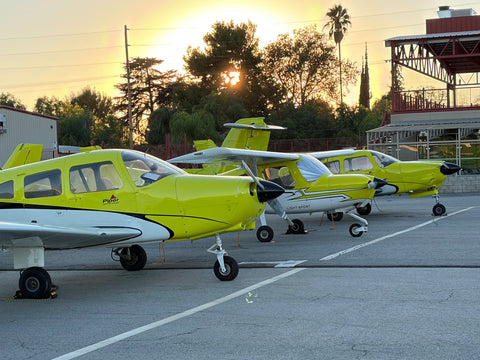
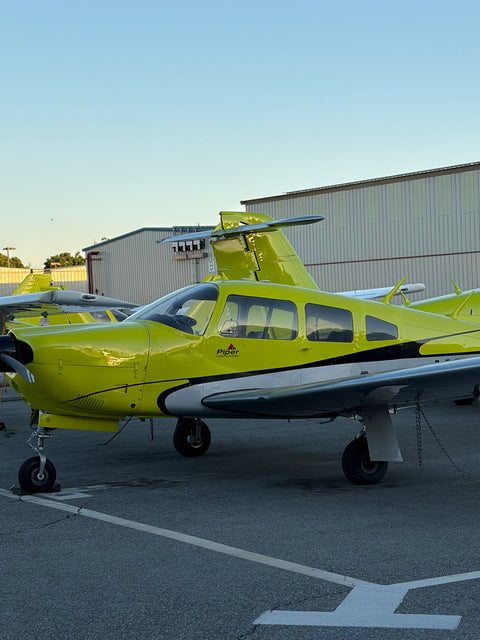
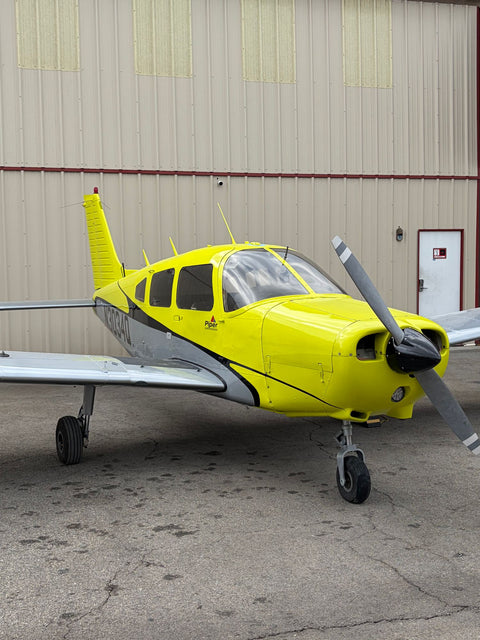
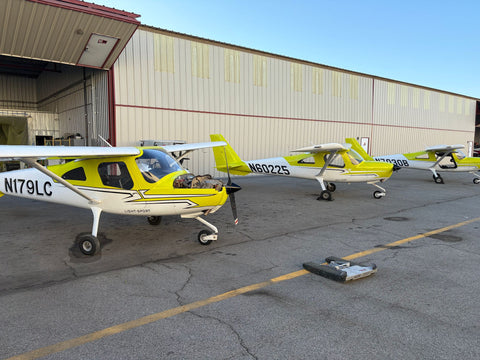
You must receive spin entry, spin and spin recovery training and an endorsement in an airplane approved for spins — typically a Cessna 152 or an aerobatic-capable trainer. Ours is flown in the Diamond DA20-C1, operated in the utility category for spins, through our spin training course. Pilots who are not instructor candidates can take the same spin training at Van Nuys. You also learn the endorsement system: which endorsements you may give, what wording the FAA expects, what solo endorsements require, and the record-keeping obligations that come with them.
Part 61 Or Part 141: How The Course Itself Is Run
A CFI course can be delivered two ways, and the difference affects your paperwork rather than your flying. Under Part 61 the syllabus is your instructor's and the FAA checks the result at the practical test. Under Part 141 the course itself is FAA-approved, the school holds a pilot school certificate, and your progress is measured against approved stage checks and an end-of-course test.
Three consequences are worth knowing before you choose:
- A Part 141 course has a designated chief instructor behind it. 14 CFR 141.33(b) requires a school to designate a chief instructor for each approved training course, and 14 CFR 141.35 sets the experience that person must hold — for a flight instructor course, 2,000 hours pilot in command and 1,500 hours of instructing experience, or three years and 1,000 hours. What that role involves is set out on our page on the chief flying instructor.
- Someone other than your instructor checks you. Stage checks and the end-of-course test are run under 14 CFR 141.85, and under 14 CFR 141.37(c) a check instructor may not check a student they taught or recommended. Good Part 61 schools do the same thing voluntarily — ours does — but only Part 141 requires it.
- A Part 141 school's certificate depends on its pass rate. 14 CFR 141.5(d) requires an 80 percent or higher first-attempt pass rate on knowledge tests, practical tests and end-of-course tests, and 141.5(e) requires at least 10 graduates. That is a real accountability mechanism, and it is a fair question to ask any school whichever part it trains under.
You Fly LA trains under Part 61, with a written syllabus, defined lessons and stage checks flown by a second instructor. The wider comparison, and which suits which kind of student, is in our article on Part 61 versus Part 141 flight school.
The Written Exams And The Initial CFI Checkride
There are two knowledge tests. The Fundamentals of Instructing is 50 questions covering learning and teaching theory. The Flight Instructor Airplane test is 100 questions covering aeronautical knowledge from an instructor's perspective. Both need 70 percent, and both should be passed before the flight training gets intense.
The initial CFI checkride is long — commonly six to eight hours in total. The oral alone can run four hours and is conducted as though you were teaching the examiner: they pick topics from your lesson plans and ask you to teach them, then push on the edges of your knowledge. The flight portion has you demonstrate maneuvers from the right seat while explaining them, and analyze errors the examiner deliberately introduces. Preparation is the whole game. It is normal for the initial CFI to require a second attempt, and it is not a mark against you.
Are You Ready For Flight Instructor Training?
Tick what is already true. The more of this you bring on day one, the more of the four weeks goes on teaching rather than catching up.
- You hold a commercial pilot certificate with an airplane single-engine rating.
- You hold an instrument rating.
- For the MEI, you also hold commercial multi-engine privileges.
- You have at least 15 hours as pilot in command in the category and class you will teach in (14 CFR 61.183).
- You hold at least a third-class medical certificate.
- You have passed, or booked, the Fundamentals of Instructing knowledge test.
- You have passed, or booked, the Flight Instructor Airplane knowledge test.
- You hold the spin endorsement, or have a date to get it.
- You can fly the commercial maneuvers to standard from the right seat while explaining them.
Everything Begins With One Flight
The instructor certificate is the last step of a long road that starts with sitting in the left seat for the first time. Sixty minutes over Los Angeles.
Book A Discovery Flight · $229How Long It Takes And What It Costs
Accelerated CFI courses typically run three to five weeks of full-time work, and many schools run all three ratings — CFI, CFII and MEI — as one intensive block. Part-time students spread it over two to four months. Either way the ground work dominates: you will spend far more hours building and rehearsing lesson plans than you will spend in the airplane.
| Item | What To Budget |
|---|---|
| You Fly LA flight instructor course — CFI, CFII and MEI | $15,400 |
| Fundamentals of Instructing knowledge test | Roughly $175 |
| Flight Instructor Airplane knowledge test | Roughly $175 |
| Designated pilot examiner fee, initial CFI | Roughly $1,000–$1,500 |
| Spin training endorsement | Required under 14 CFR 61.183(i); our standalone spin training course is $2,000, so ask at the consultation how it fits your program |
| Elapsed time, full time | About 4 weeks for all three ratings |
Prerequisites cost more than the course. You cannot start until you hold a commercial certificate and an instrument rating. At our published prices that is $10,400 for the Private Pilot standard 40-hour course, $11,700 for the Instrument Rating and $15,400 for the Commercial Pilot course — $37,500 from zero, plus the $5,100 multi-engine rating the MEI builds on, for $42,600 before the instructor course begins. The line-by-line picture is on what flight school costs in Los Angeles, and the complete zero-to-instructor sequence is on our airline pilot career program page.
If you have not yet built the commercial certificate that sits underneath all of this, our statewide guide to commercial pilot training across California sets out the 250-hour rule under 14 CFR 61.129, the complex and technically advanced aircraft time you need, and how the career ladder runs from a commercial certificate through instructing to an airline.
What The Flight Instructor Job Is Really Like
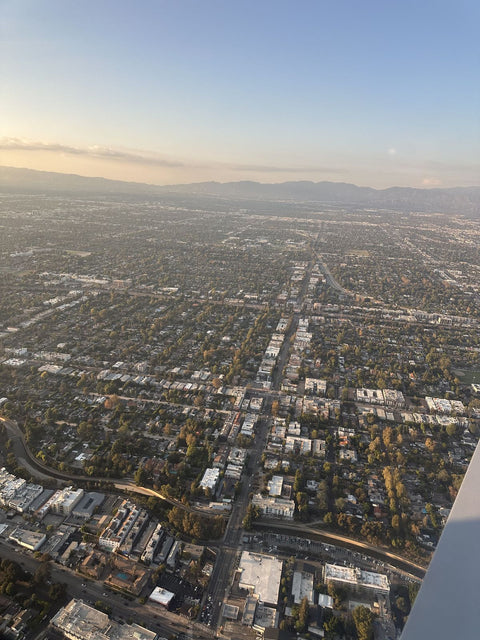
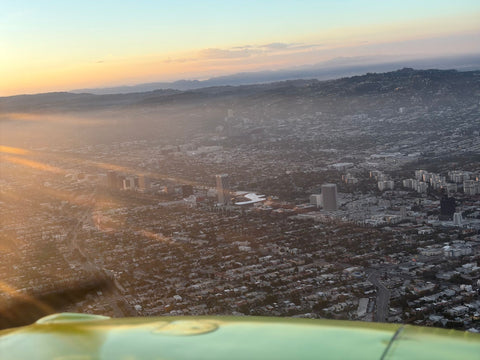
Full-time flight instructors in a busy market typically log 60 to 100 hours of flight time per month, plus ground instruction on top. At that rate the 1,500 hours an ATP requires takes roughly 12 to 20 months from the day you start instructing, depending on how much time you already have and how consistently the weather and the schedule cooperate. Los Angeles is a good market for this: flying weather most of the year and steady demand. Our page on certified flight instructor training in Los Angeles goes through the local market in more detail, and airline pilot salary covers what the job pays once the hours are behind you.
The work is genuinely demanding. You are responsible for someone else's safety in an airplane they are learning to control. You will fly a lot of traffic patterns. Days start early, and paperwork and endorsements follow you home. In exchange you become a far better pilot than you were — teaching a subject forces a depth of understanding that simply flying never does — and almost every airline captain in the country came through this door.
Pay in Southern California is normally hourly, based on instruction given rather than hours on site, and rises with experience and with the CFII and MEI add-ons, which let a school use you across instrument and multi-engine programs. One distinction matters more than any other here: the hourly rate a school charges a student for instruction — $110 an hour at You Fly LA — is the school's price to the customer, not the instructor's compensation. The two get conflated constantly, and what is actually known and not known about instructor earnings is set out on our page on flight instructor salary. If you are considering instructing as a career step, ask any prospective employer about aircraft availability, how many students you would be assigned, and whether ground instruction is paid — those three answers determine your actual monthly income far more than the headline rate.
For the version of that conversation written from our side of the desk, see flight instructor jobs in Los Angeles: what a CFI position on this ramp involves week to week, the honest arithmetic of hour building, and how to apply.
After The CFI: Where The Certificate Can Take You
The instructor certificate is not only a way to reach 1,500 hours. It is the entry point to a ladder that some pilots stay on deliberately.
At an FAA-approved Part 141 pilot school the recognized senior positions are assistant chief instructor, chief instructor and check instructor. 14 CFR 141.36(b) puts the assistant chief threshold on a private pilot course at 500 hours pilot in command plus 500 hours of instructing experience, or one year and 250 hours; 14 CFR 141.35(b) doubles that for the chief instructor on the same course, and 141.35(d) raises it to 2,000 hours pilot in command for a commercial or instructor course. Check instructor has no hour minimum of its own but requires a written designation by the chief instructor and approval by the responsible Flight Standards office under 14 CFR 141.37(b). Our page on the chief flying instructor sets out each position and what it is responsible for.
Even at a Part 61 school the senior role carries weight in the regulations: under 14 CFR 61.197(b)(2)(ii) a flight instructor can establish the recent experience needed to keep the certificate current by having served, within the preceding 24 calendar months, as a company check pilot, chief flight instructor, company check airman, or flight instructor in a Part 121 or 135 operation.
Frequently Asked Questions
What Do I Need Before I Can Start A CFI Course?
A commercial pilot certificate with an airplane rating and an instrument rating. See our commercial pilot license guide and instrument rating guide for the steps before this one.
How Long Does It Take To Become A Flight Instructor?
The CFI course itself is three to five weeks full time, or two to four months part time. Getting to the prerequisites — private, instrument, commercial — typically takes 12 to 24 months from zero.
How Much Does A CFI Course Cost In Los Angeles?
Our flight instructor course, covering the CFI, the CFII and the MEI, is $15,400. Add the two knowledge test fees and roughly $1,000 to $1,500 for the initial CFI examiner.
Why Is The Initial CFI Checkride So Hard?
Because it tests teaching, not flying. You must explain any topic clearly enough that a beginner would understand, from the right seat, under pressure, for hours. It is the only FAA practical test that works this way, and it has the highest failure rate.
Do I Need A Medical Certificate To Be A Flight Instructor?
Not to hold the certificate. But you need a medical to act as pilot in command, and instructors almost always are, so in practice you need at least a third-class medical, which is what 14 CFR 61.23(a)(3)(ii) requires of an instructor acting as pilot in command.
What Is The Difference Between CFI, CFII And MEI?
CFI lets you teach primary and commercial flying in single-engine airplanes. CFII adds instrument instruction. MEI adds multi-engine instruction. The initial CFI is the hard one; the other two are shorter add-on checkrides.
Do I Need Spin Training?
Yes. You need a logbook endorsement for spin entry, spins and spin recovery in an airplane approved for intentional spins. The checkride does not require you to spin, but the endorsement is required to be eligible.
How Many Hours Do Flight Instructors Fly Per Month?
Full-time instructors in a busy market typically log 60 to 100 hours a month of flight instruction, plus ground time. That puts most instructors at 1,500 hours in roughly 12 to 20 months.
Do I Have To Instruct To Reach 1,500 Hours?
No, but it is the most common route because it pays. Alternatives include banner towing, aerial survey, pipeline patrol, skydive operations and traffic watch. Instructing generally builds hours faster and is the strongest signal to a future employer.
How Long Is A CFI Certificate Valid?
24 calendar months. You renew it by meeting an activity requirement, completing a flight instructor refresher course, passing a practical test, or serving as an examiner. Renewal is routine.
Can I Instruct Part Time?
Yes, and many instructors do while holding another job. Building hours takes proportionally longer, but the certificate does not expire faster for part-time instructors.
Is It Worth Getting CFII And MEI?
For most career-track instructors, yes. They make you employable across every program a school runs, which directly increases how many hours you fly per month, and they usually raise your hourly rate.
Do I Need A Part 141 Course To Get A CFI Certificate?
No. The FAA issues the flight instructor certificate on the strength of the knowledge tests and the practical test, whichever part you trained under. A Part 141 course is FAA-approved and comes with a designated chief instructor under 14 CFR 141.33(b) and stage checks under 14 CFR 141.85; a Part 61 course is built around the same requirements without the approved-course paperwork.
What Comes After The CFI Certificate?
The CFII and the MEI first, then volume. Beyond that, the recognized senior positions at a Part 141 school are assistant chief instructor at 500 hours pilot in command on a private pilot course under 14 CFR 141.36(b), chief instructor at 1,000 hours under 141.35(b), and 2,000 hours for a commercial or instructor course under 141.35(d).
What Does Flight Instructor Training Include At Van Nuys?
Our program covers the CFI, CFII and MEI in about four weeks for $15,400: 20 hours in single-engine aircraft, 8 hours in the multi-engine Piper Seminole, full-motion simulator time and 30 hours of flight instruction, with ground school built around twelve eight-hour ground days.
Is There A Job After The Flight Instructor Course?
Graduates of our flight instructor program get a review for an instructor position with us when they finish. On our Airline Pilot Career Program the paid instructor job is guaranteed, at $48,000 a year, while you build hours toward the airlines.
Ready To Enroll? Our flight instructor course at Van Nuys covers the CFI, the CFII and the MEI for $15,400. You Fly LA is at Van Nuys Airport, 7900 Balboa Blvd, Main Terminal Unit 108, Van Nuys, CA 91406, open 9 AM to 9 PM seven days a week. Call (818) 330-1318 or book a consultation.
Book A Free Consultation Call Or Text (818) 330-1318
Sixty Minutes In The Left Seat
$229 for one person, $299 for two. Van Nuys Airport, seven days a week, 9 AM to 9 PM.
Book A Discovery Flight · $229Sources: 14 CFR 61.23(a)(3)(ii) (medical certificate for flight instructors acting as pilot in command) and 14 CFR 61.183 (flight instructor eligibility, including the spin endorsement in paragraph (i)), Title 14 of the Code of Federal Regulations on ecfr.gov, checked September 23, 2026.