








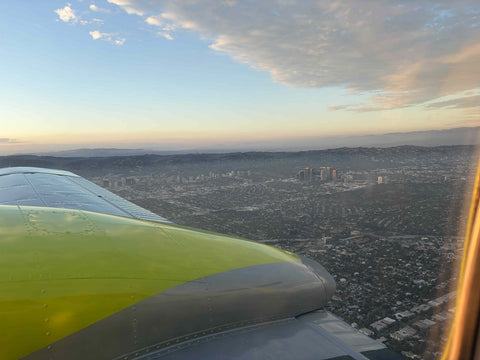

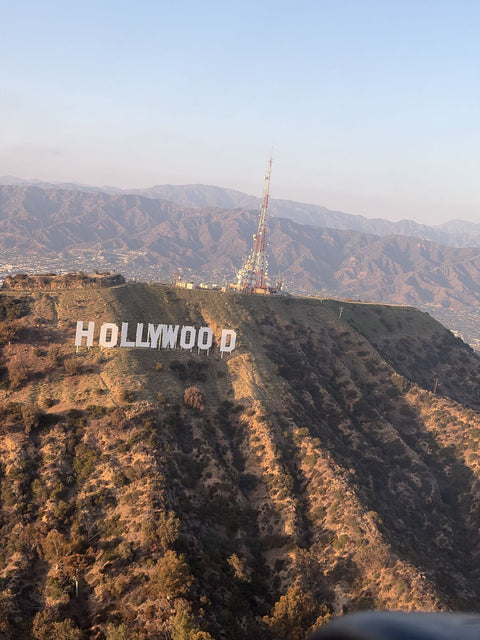


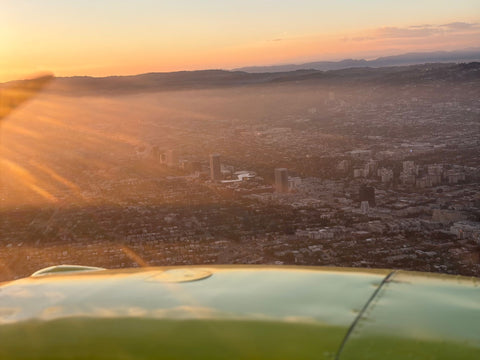
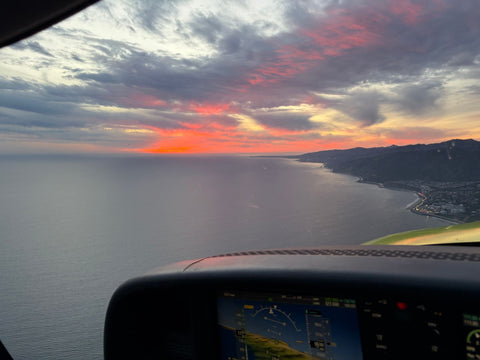


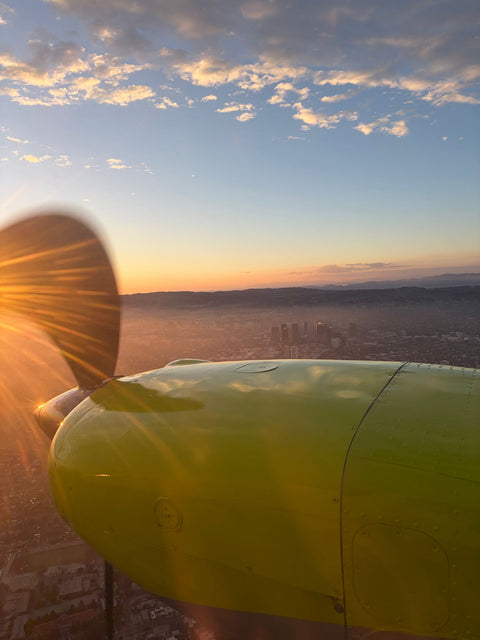
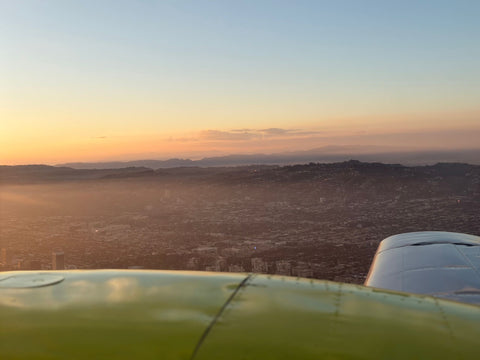




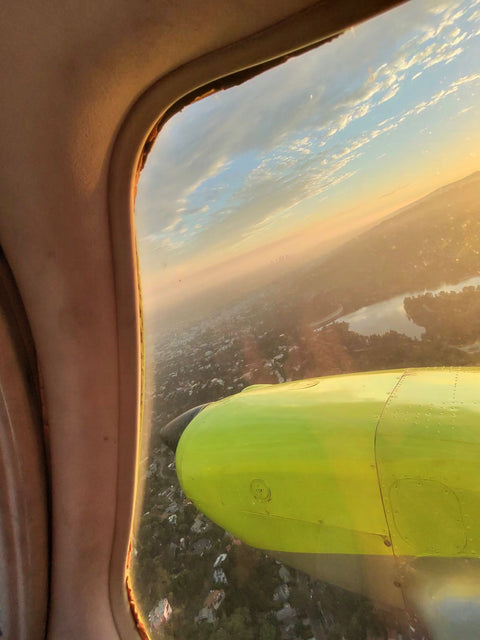

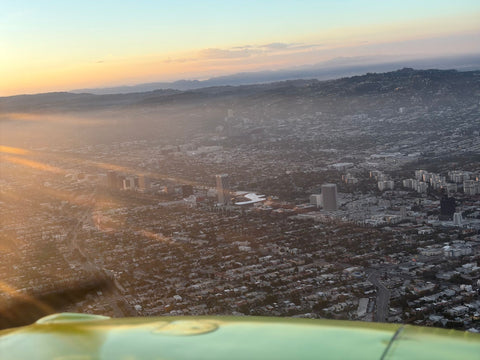
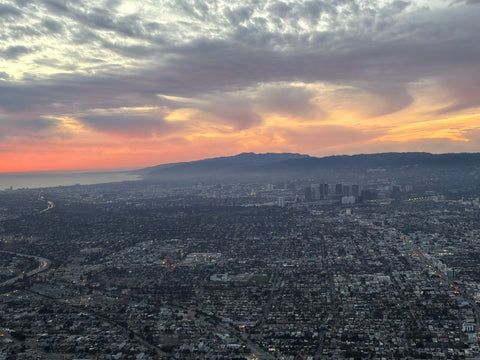
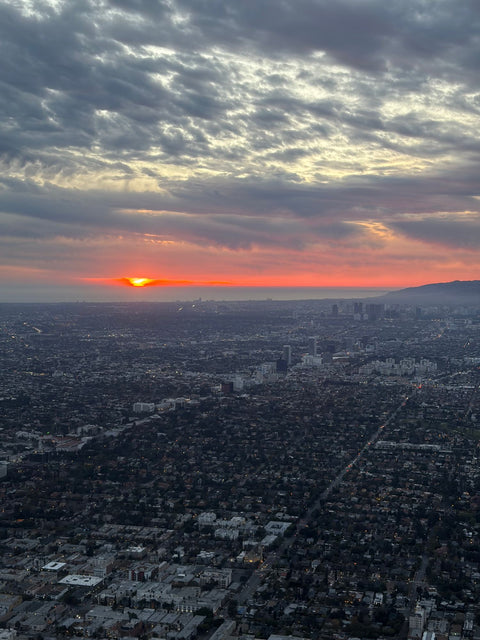

Woodland Hills residents learn to fly at Van Nuys Airport, about nine miles east, and at two lessons a week a private pilot certificate takes most people five to eight months. The one thing that shapes training more than anything else out here is heat, so this page starts with what summer does to a light airplane and how to schedule around it, then covers the first lesson, the practice areas and what each stage costs.
We are You Fly LA at 7900 Balboa Blvd, Main Terminal Unit 108. The full route from zero to certificate is on our pillar page, learn to fly in Los Angeles. For the drive, the routes and the local detail, see flight school near Woodland Hills. Want to try it before you commit? Book a discovery flight from Woodland Hills.

Heat Is The West Valley's Training Constraint
According to the NOAA 1991–2020 climate normals for Van Nuys Airport, station USW00023130, the mean daily maximum temperature is 91.2 degrees Fahrenheit in July and 93.1 in August. The west end of the Valley routinely runs hotter than the airport does. Nothing about that stops you flying, but it changes two things that matter.
The first is aircraft performance. Air density falls as temperature rises, and the airplane behaves as though it were at a higher altitude. At Van Nuys, with a field elevation of 802 feet, a 95-degree afternoon puts density altitude at roughly 3,400 feet, and above 100 degrees it passes 3,700. A light trainer at 3,700 feet of density altitude takes longer to accelerate, uses more runway and climbs noticeably worse, particularly with two adults and full fuel. Learning to calculate that before you fly is part of the syllabus, not an inconvenience.
The second is comfort and learning. Afternoon heating over the Valley produces thermals and mechanical turbulence off the surrounding hills. It is not dangerous and it is tiring, and a student trying to hold altitude within fifty feet in a bumpy afternoon learns less per hour than the same student at seven in the morning in glassy air.
The answer is straightforward. In summer, fly early. The 6:30 and 7:00 slots are the best training air of the day, the pattern is quiet, and you drive east on the 101 before the traffic builds. In winter, when the mean daily maximum at Van Nuys is 67.4 degrees in December and 68.2 in January, the middle of the day is perfectly good and often the smoothest window of all.
Which Airplane You Learn In, And Why It Matters Here
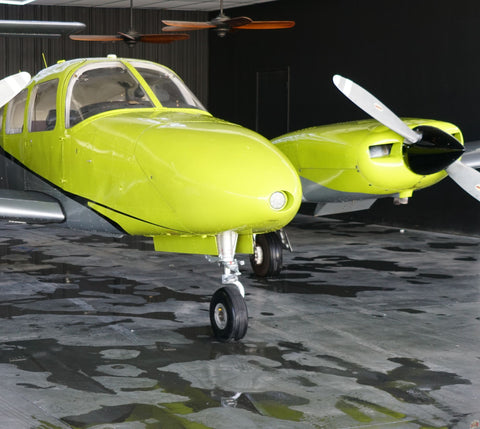
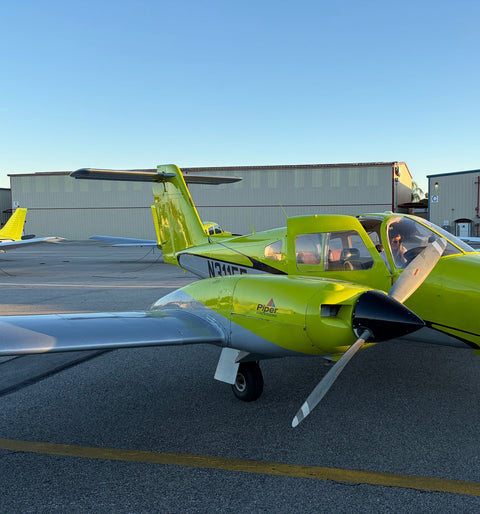
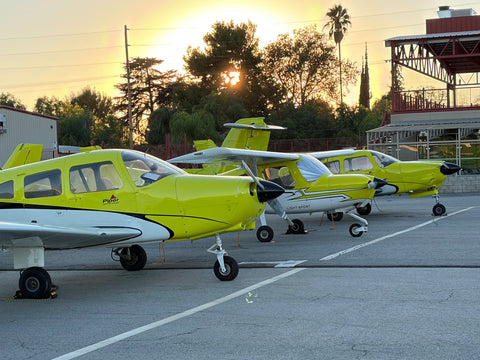
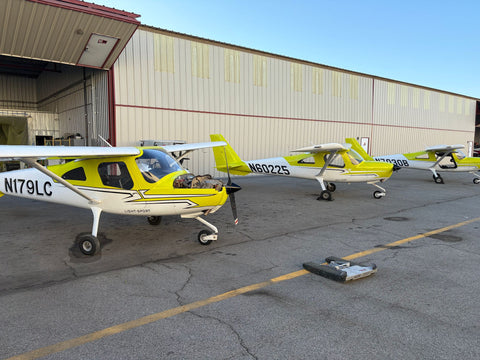
We operate six aircraft types, and the choice matters more in a hot climate than in a cool one.
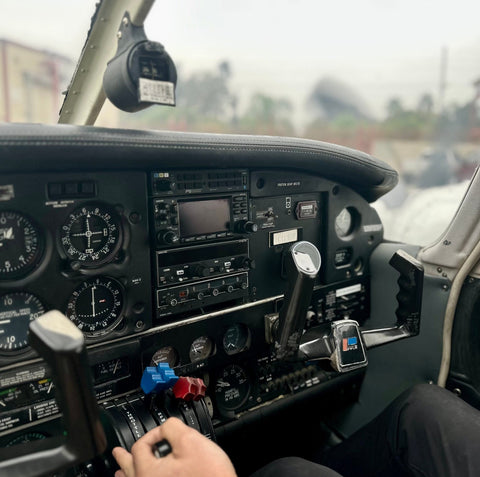
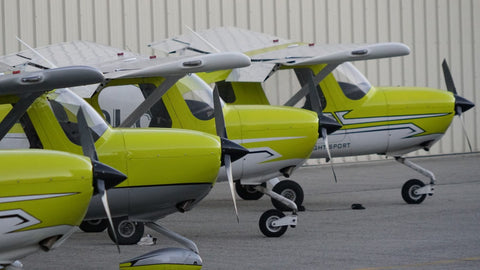
The Cessna 162 Skycatcher is a two-seat high-wing trainer with a 100-horsepower Continental engine and a Garmin G300 glass panel. It is light, honest and cheap to run, it is the airplane behind the $8,400 Sport Pilot course, and its high wing gives shade on the ramp, which is not a trivial consideration in August.
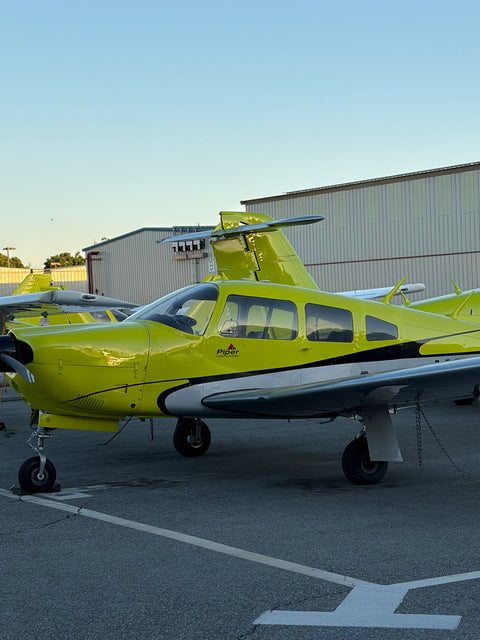
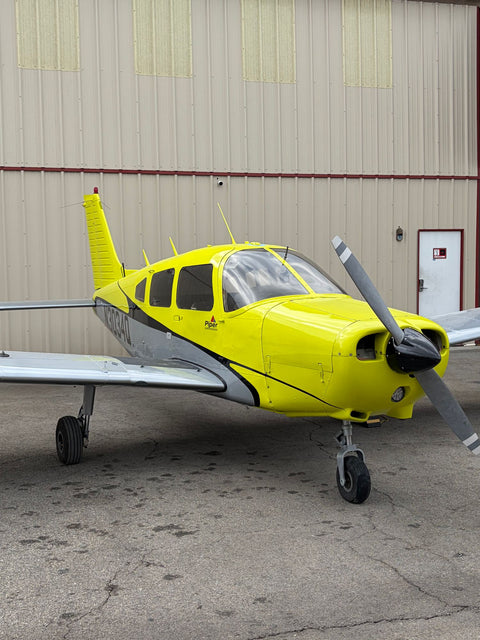
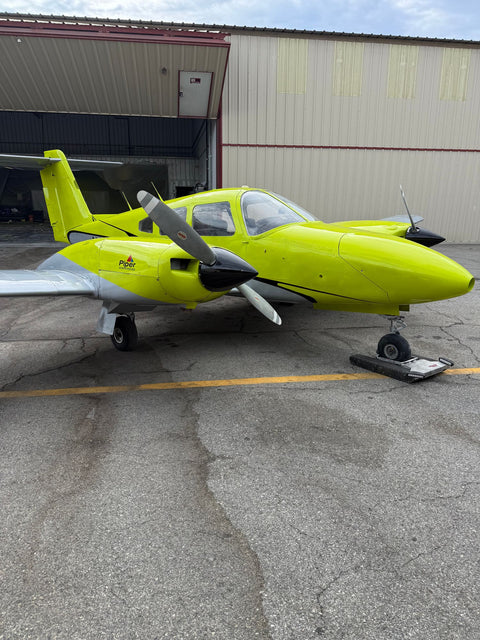
The Piper Warrior PA-28-161 is a four-seat low-wing trainer with a 160-horsepower Lycoming and IFR equipment. It carries more, it is steadier in turbulence, and it is the airplane most private pilot students here use. It is also the one you will continue into instrument training in.
The Diamond DA20-C1 is a two-seat composite airplane with a stick and a bubble canopy, and it is the one people fall in love with. It is a $229 package rate rather than $179, and it is certificated in the utility category, which is why it is also our spin training airplane.
Your instructor will match the airplane to your size, your goals and the day's conditions. Weight limits apply for safety and are checked honestly rather than fudged.
What Your First Lesson Contains
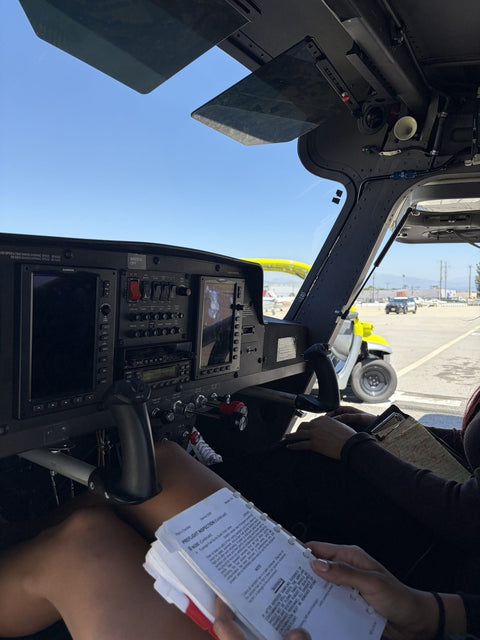
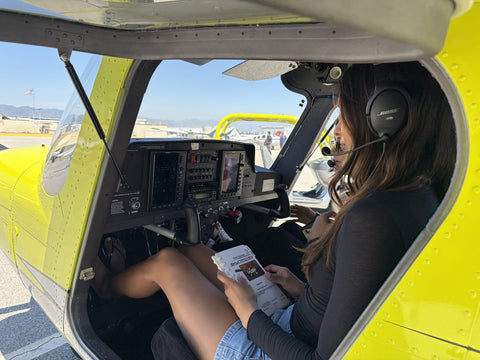
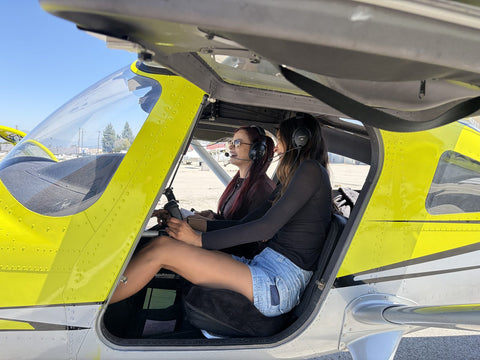
Allow three hours at the airport per hour in the air. The first half hour is a briefing at a table, with your instructor drawing the lesson and telling you what each maneuver should feel like. Then the walkaround: fuel quantity and quality, oil, control surfaces, tires, brakes, lights, propeller. In summer this is also when you check that the airplane has not been sitting in the sun with the cabin closed.
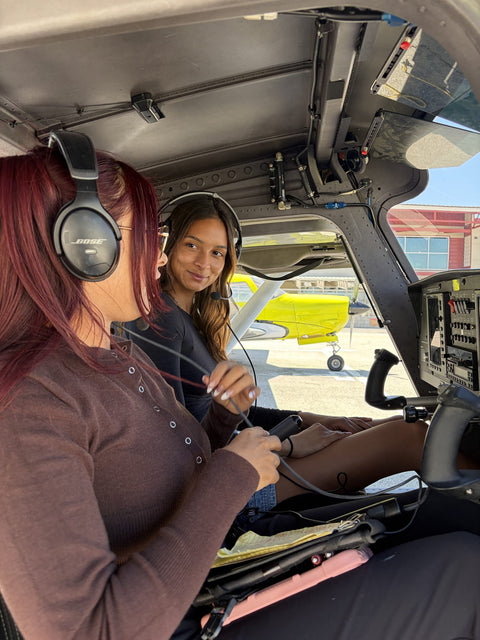
You take the left seat and taxi the airplane yourself using the rudder pedals. Your instructor works the radio on flight one and narrates it, because Van Nuys is a Class D tower beneath the Burbank Class C, just north of the Los Angeles Class B, and the frequency is busy from the first call.
In the air you fly straight and level, turns, climbs and descents, which is the foundation of everything that follows. You fly the approach back; your instructor flies or shares the landing. Then a debrief and your first logbook entry.

Woodland Hills Is The Closest Neighborhood To The Practice Areas
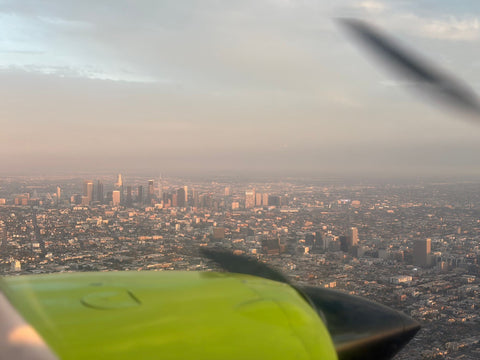
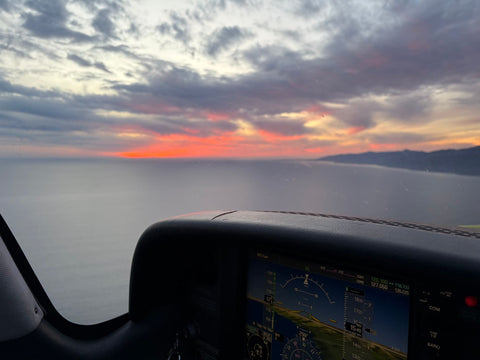
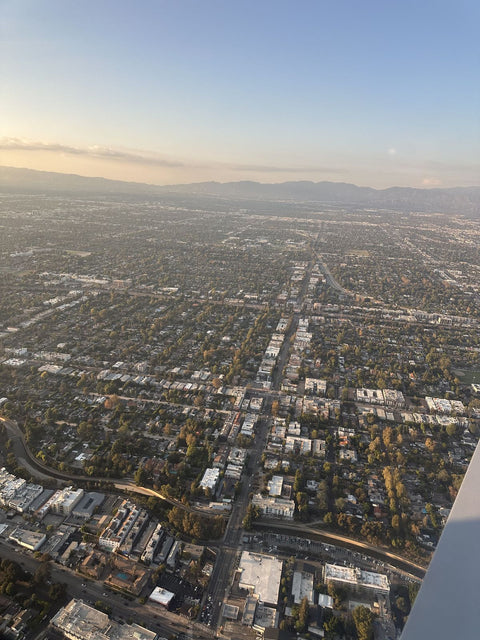
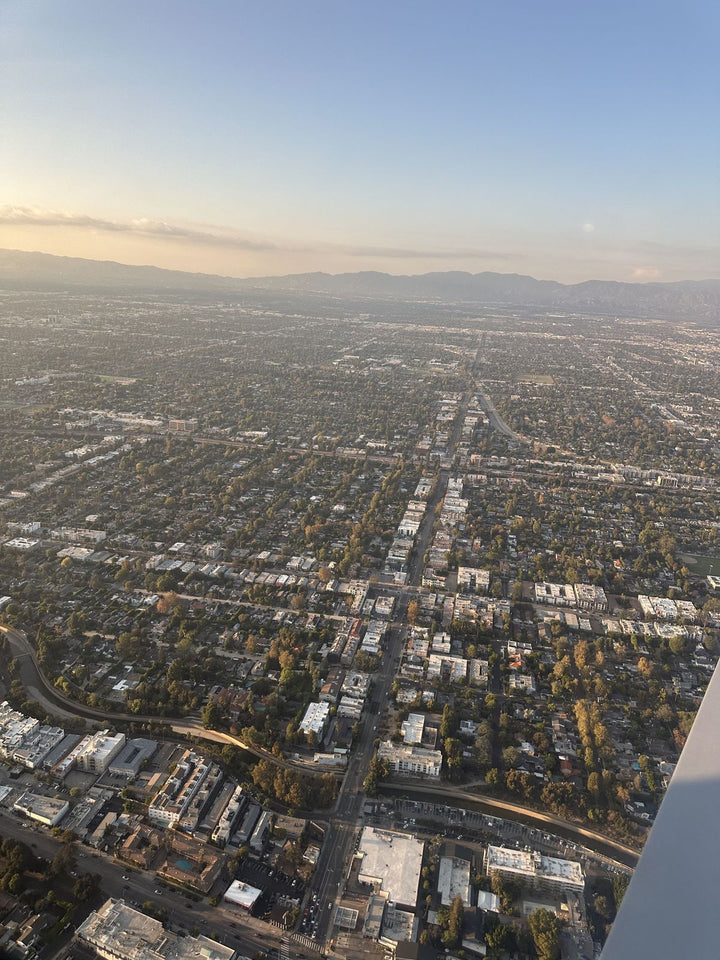
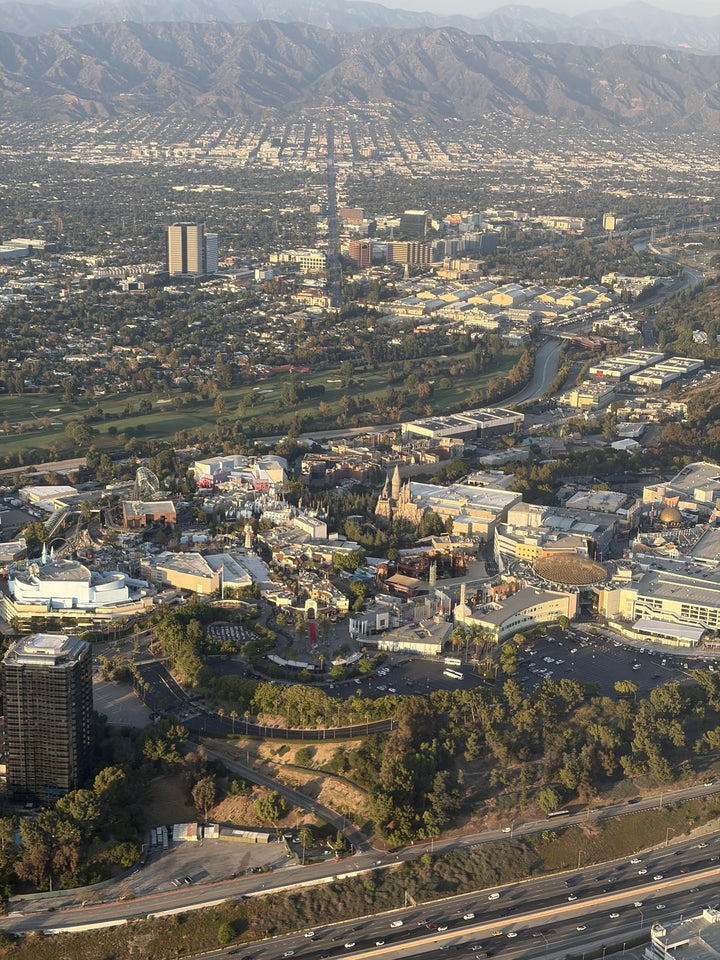
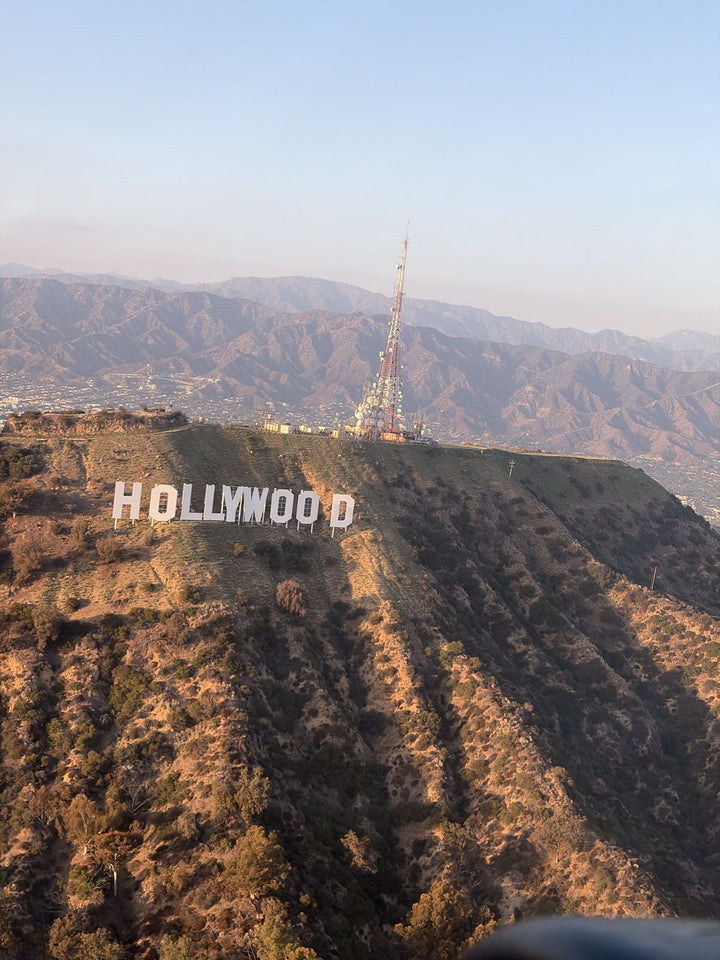
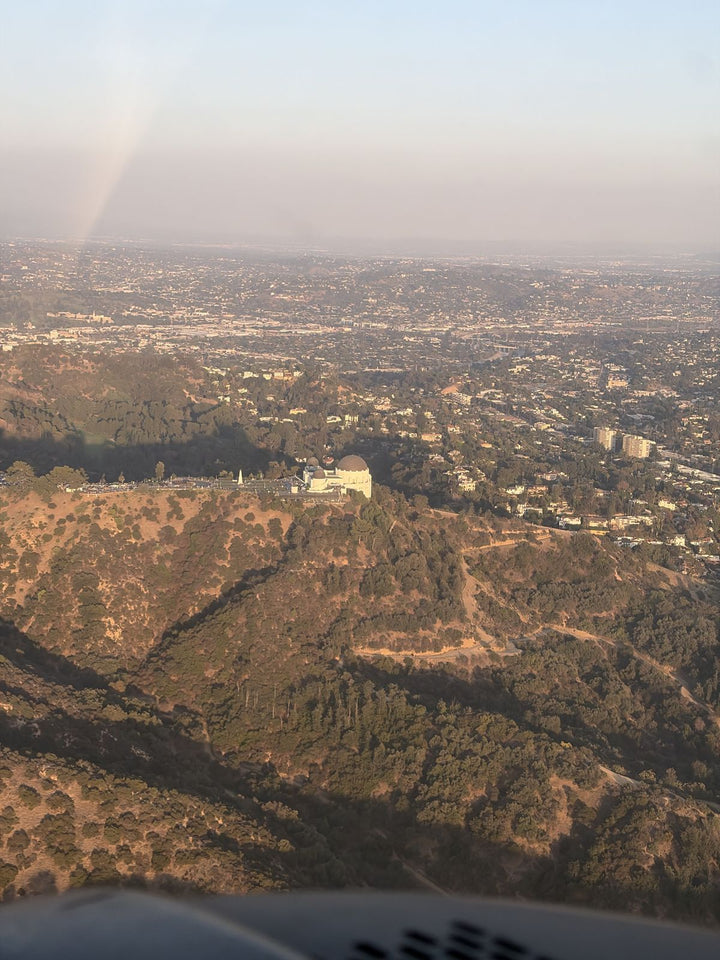
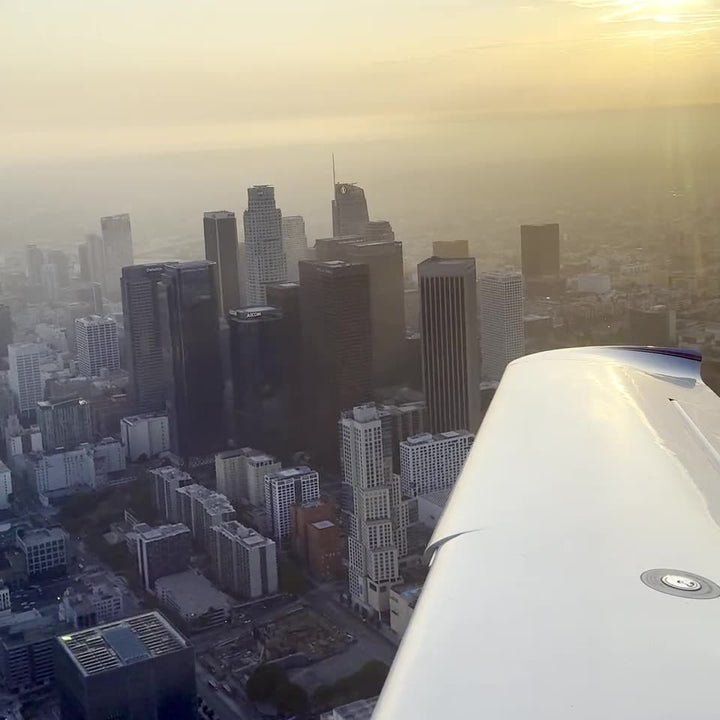
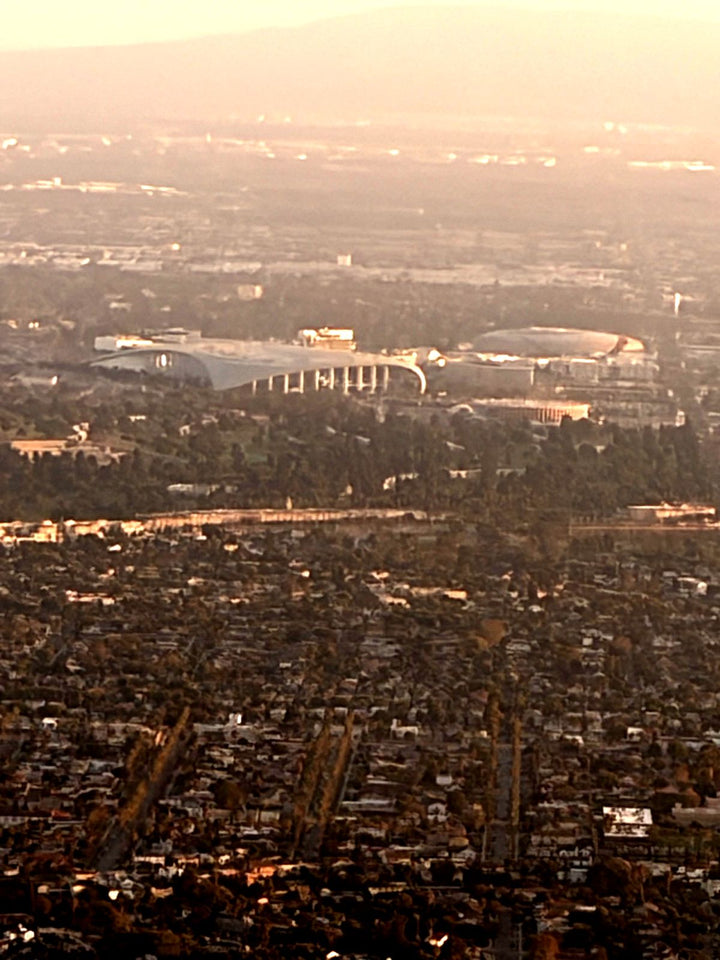
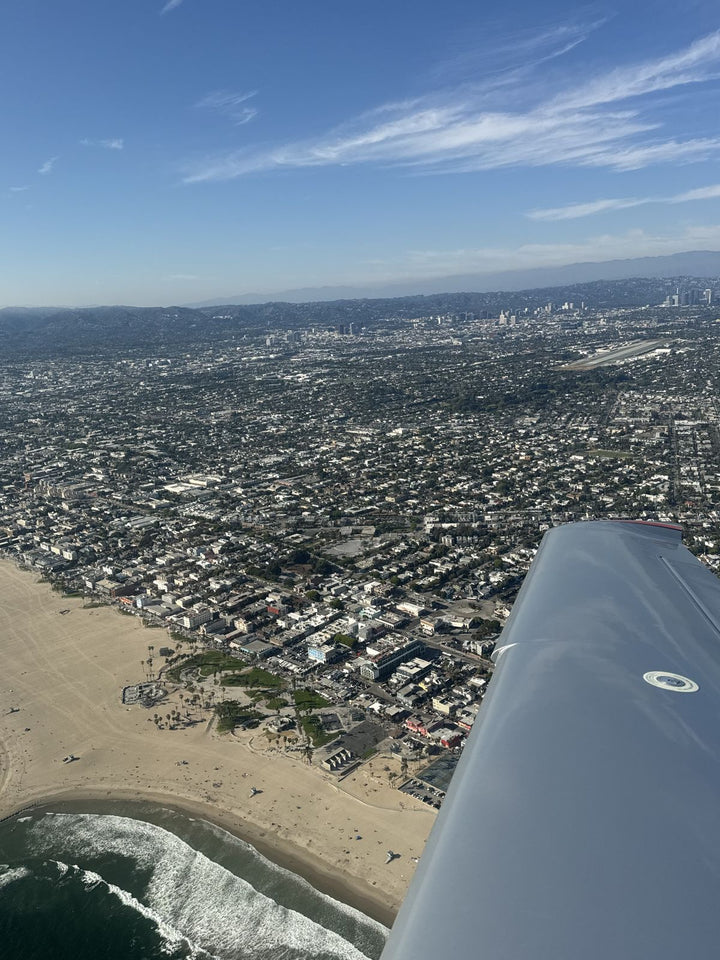
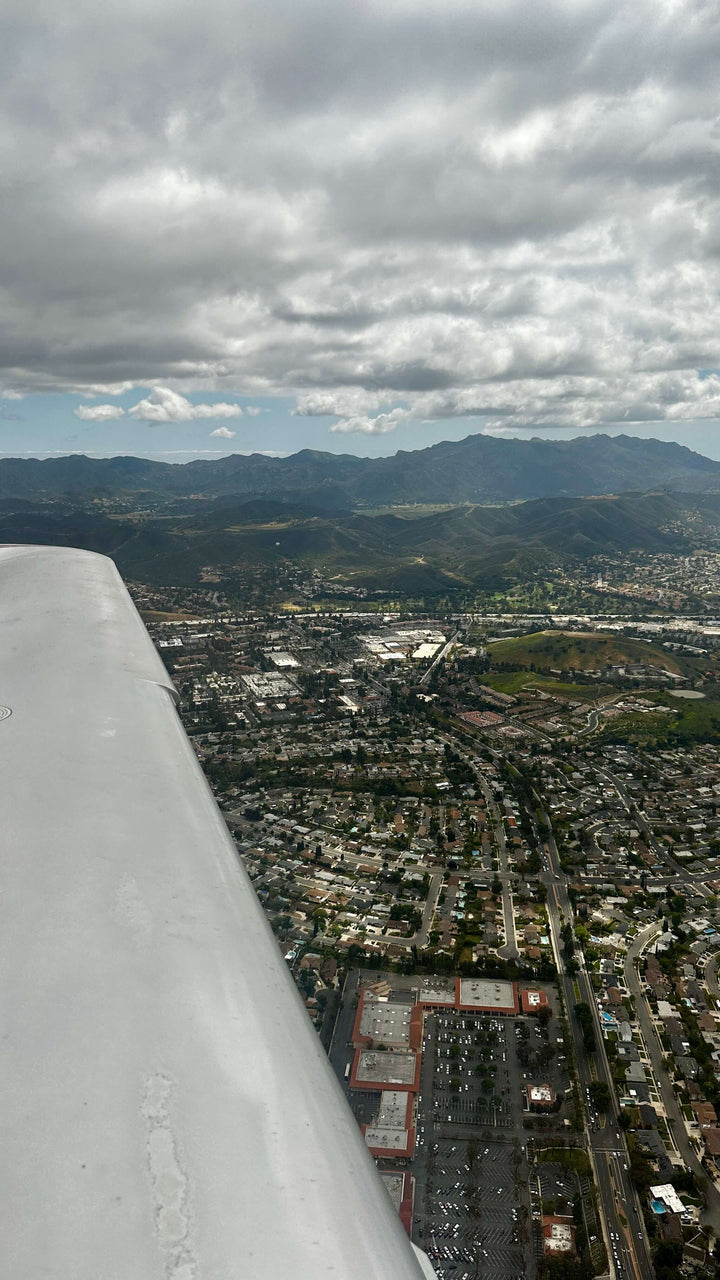
Airwork from Van Nuys mostly happens north and west of the field, over open ground toward Chatsworth, the Santa Susana hills and the northern rim of the Valley, about eight to twelve minutes after takeoff. That area is almost directly over and beyond Woodland Hills, which means the ground you learn to read from three thousand feet is ground you already know: the 101 running west toward Calabasas, Topanga Canyon climbing south into the Santa Monica Mountains, Pierce College's fields, and the Santa Susana ridge line behind Chatsworth.
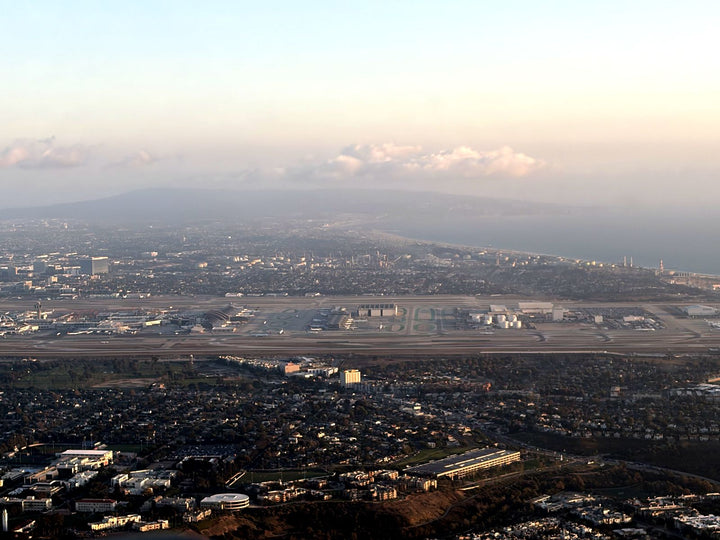
Pattern work happens at Van Nuys itself, where two parallel runways mean light trainers usually use 16L/34R at 4,013 feet while the business jets use the 8,001-foot parallel. Your landings are not queued behind a jet departure.
The other thing the west Valley gives you is easy first cross-countries. Camarillo is a short hop west over the Conejo grade, Santa Barbara is under an hour up the coast, and Oxnard and Santa Paula are both comfortable first legs. Your 150-nautical-mile solo cross-country under 14 CFR 61.109 has several sensible routings from here.
A Calendar That Fits The West Valley
The FAA minimum is 40 hours under 14 CFR 61.109. Twice-weekly students generally finish in the mid-fifties to mid-sixties of hours; students who fly every other week commonly pass eighty, because each lesson begins with twenty minutes of rebuilding what has faded. At $179 an hour for the airplane inside a package and $110 an hour for the instructor, twenty surplus hours is more than five thousand dollars.
Two slots a week, one weekday early and one weekend morning, is the pattern that works. Add roughly two hours of ground study for every hour flown.
The Milestones In Order
First solo, usually between 15 and 25 hours. 14 CFR 61.87 requires a pre-solo knowledge test covering the applicable sections of parts 61 and 91, the airspace at your airport and the aircraft's limitations, with your instructor reviewing every wrong answer; logged training on the listed maneuvers; and a logbook endorsement for that make and model from an instructor who has flown with you within the previous 90 days.
Cross-country, night and instrument time. 14 CFR 61.109 requires 40 hours total including 20 dual and 10 solo, three hours of cross-country training, three hours of night training including a flight over 100 nautical miles and ten takeoffs and landings, three hours of instrument training, and a 150-nautical-mile solo cross-country.
The written exam, 60 questions and about two hours at a PSI testing center, roughly $175.
The checkride, an oral and a flight with a designated pilot examiner whose fee runs roughly $800 to $1,000 in Southern California.
What It Costs
| Item | Price |
|---|---|
| Discovery flight, 60 / 90 / 120 minutes | $229 / $299 / $399 |
| Sport Pilot course, Cessna 162 | $8,400 |
| Private Pilot course, Standard | $10,400 |
| Private Pilot course, Comprehensive | $15,400 |
| Aircraft, package rate inside a course, per hour | $179 |
| Diamond DA20-C1, package rate, per hour | $229 |
| Flight or ground instruction, per hour | $110 |
| FAA knowledge test at a PSI center | About $175 |
| Designated examiner fee for the checkride | Roughly $800 to $1,000 |
Books and materials are included in course prices. Payment is interest-free direct installments over up to twelve months, typically $2,500 down and four payments of $1,975 on the Standard course, or Stratus Financial over a longer term with a soft credit check.
Related Reading
- Learn to fly in Los Angeles — the complete process with prices.
- Flight school near Woodland Hills — the drive and the local detail.
- Flyable days at Van Nuys — the climate data behind the early-morning advice.
- The airplanes you will fly — all six types and what each is for.
- Learn to fly in Calabasas — the same process from the far west.
- Van Nuys versus Camarillo — the west Valley alternative compared.
- Service areas around Van Nuys — drive times from every neighborhood we serve, on one page.
Learning To Fly In Woodland Hills FAQ
Can You Learn To Fly In Woodland Hills?
There is no airfield in Woodland Hills, so lessons happen at Van Nuys Airport about nine miles east. That is the nearest field with a training fleet.
Is It Too Hot To Fly In Summer?
No, but afternoons are worse than mornings. NOAA 1991–2020 normals give Van Nuys a mean daily maximum of 91.2 degrees in July and 93.1 in August, and afternoon heating brings turbulence. Fly at 6:30 or 7:00 and the air is smooth.
What Is Density Altitude And Why Does It Matter?
It is the altitude the airplane thinks it is at once temperature is accounted for. At Van Nuys, 802 feet above sea level, a 95-degree afternoon gives roughly 3,400 feet of density altitude and above 100 degrees it passes 3,700. Takeoff runs lengthen and climb performance drops, which is why the calculation is part of your training.
Which Airplane Will I Learn In?
Usually the Piper Warrior for a private pilot course or the Cessna 162 Skycatcher for sport pilot. The Diamond DA20-C1 is available at a higher package rate. Your instructor matches the airplane to your size, goals and the day.
Where Are The Practice Areas?
North and west of Van Nuys over open ground toward Chatsworth and the Santa Susana hills, eight to twelve minutes after takeoff, which is effectively over and beyond Woodland Hills. Landings and pattern work happen at Van Nuys.
How Long Does It Take?
Five to eight months flying twice a week, and typically 55 to 70 hours against the 40-hour minimum in 14 CFR 61.109.
Where Would My Solo Cross-Country Go?
There are several sensible routings from Van Nuys for the 150-nautical-mile solo cross-country required by 14 CFR 61.109, with Camarillo, Oxnard, Santa Paula and Santa Barbara all straightforward first legs to the west.
Do I Need A Medical Certificate To Start?
No. It is required before your first solo. Book the exam with an Aviation Medical Examiner during your first month of training.
Book An Early Morning
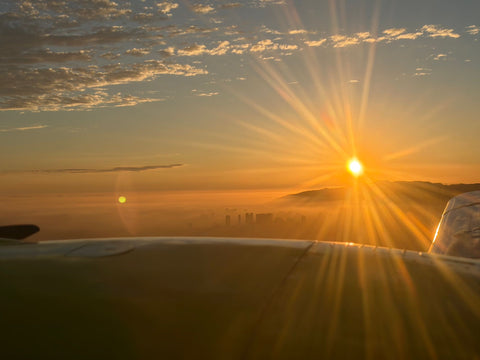
The best advertisement for learning to fly out here is a 7 AM flight in July, when the Valley is still cool and the air is completely smooth. A discovery flight is $229 for sixty minutes, flown from the left seat with an instructor beside you, logged as dual instruction, and credited in full toward a course if you enroll within twenty-four hours. If you would rather plan the calendar and the budget first, book a free consultation. Call (818) 330-1318 any day between 9 AM and 9 PM. We are at 7900 Balboa Blvd, Main Terminal Unit 108, Van Nuys, CA 91406.