



















What Flight Training In Los Angeles Actually Costs
You Fly LA is a flight training school in Los Angeles, based at Van Nuys Airport (KVNY), 7900 Balboa Blvd, Main Terminal Unit 108, Van Nuys, Los Angeles, CA 91406. Flight training in Los Angeles starts here at $229 for a 60-minute discovery flight and runs to a fixed-price Private Pilot certificate at $10,400. Every price on this page is the total you pay — no tax, no booking fee, no fuel surcharge. We are open seven days a week, 9 AM to 9 PM.
Most flight schools in Los Angeles will not tell you a number until you come in for a tour. We publish ours. Pick a program below, book the slot online, and fly. If you would rather talk it through with a human first, the in-person consultation is free and takes about 30 minutes.
Book A Discovery Flight — $229 Book A Free Consultation Call (818) 330-1318
Every Program, Every Price
| Program | What It Covers | Fixed Price |
|---|---|---|
| Sport Pilot | Lightest, fastest path to flying yourself — 20 flight hours is the FAA minimum | $8,400 |
| Private Pilot — Standard | 40 flight hours, the FAA Part 61 minimum | $10,400 |
| Private Pilot — Comprehensive | 60 flight hours, the realistic budget for most students | $15,400 |
| Private Pilot — Premium | 80 flight hours, maximum cushion, no surprises | $22,000 |
| Instrument Rating | Fly in cloud and low visibility under IFR | $11,700 |
| Commercial Pilot | Get paid to fly — 250 total hours is the FAA minimum | $15,400 |
| Multi-Engine Rating | Piper Seminole, seven-day accelerated course | $5,100 |
| Flight Instructor | CFI, CFII and MEI in one package | $15,400 |
| Airline Pilot Career | Zero experience to 260 hours and an airline-ready résumé | $84,000 |
| Teens Pilot Course | Ages 10–15, structured introduction to flying | $4,200 |
| Discovery Flight | 60 / 90 / 120 minutes, you fly, one passenger seat | $229 / $299 / $399 |
| Full-Motion Simulator | 60 minutes in the Redbird, loggable toward your rating | $189 |
| In-Person Consultation | Sit down with an instructor, build your plan | $0 |
Those prices include the aircraft, the instructor, the fuel and the ground instruction that goes with each lesson. They are not deposits and they are not "starting at" figures. Our products are not taxable and carry no booking fee, so the number you see at checkout is the number that leaves your account.
If you want the full breakdown of what drives the number up or down — checkride fees, the written exam, headsets, medicals — read our full breakdown of what flight school costs in Los Angeles.
Our Published Hourly Rates
| Item | Rate Per Hour |
|---|---|
| Aircraft (standard trainer) | $179 |
| Diamond DA20-C1 | $229 |
| Cirrus | $579 package |
| Certified flight instructor | $110 |
| Ground instruction | $110 |
| Full-motion simulator | $120 |
Every aircraft rate above is a package rate. Rated pilots staying current or due a flight review can call or text (818) 330-1318 to talk through checkouts and currency, and the aircraft are described on aircraft rental at Van Nuys. For a student going after a first certificate, paying hour by hour is almost always the more expensive road — and here is the arithmetic that proves it.
Fixed Price Versus The Hourly Meter
The FAA Part 61 minimum for a Private Pilot certificate is 40 flight hours. Bill that at our own published rates and you get 40 hours of aircraft at $179 plus 40 hours of instructor at $110 — $289 an hour, $11,560 total — before a single hour of ground instruction, before the written exam, before the checkride. Our fixed-price Standard Private Pilot program is $10,400. The fixed price is lower than the meter at the theoretical minimum, and the gap widens with every hour past it.
That matters because almost nobody finishes at exactly 40 hours. Weather cancels a lesson and you fly a review the next time out. The airplane goes into maintenance and you sit for ten days. Your instructor moves to an airline and the next one wants to see your landings before signing you off for solo. Every one of those events adds hours. On an hourly meter, every one of those hours is revenue for the school. Under a fixed price, they are the school's problem, not yours.
That is the whole point of the structure. A fixed-price flight training program aligns the school's interest with the student's: we get paid the same whether you take 40 hours or 55, so we have every reason to schedule you tightly, keep the airplanes flying and get you to a checkride. Choose the Standard, Comprehensive or Premium tier based on how much cushion you want; the Comprehensive 60-hour program at $15,400 is the honest middle for a student flying two or three times a week around a job.
If you want to move faster than that, the accelerated flight training track compresses the same syllabus into consecutive days. And if you are weighing the regulatory structure itself, our breakdown of Part 61 versus Part 141 flight school explains why Part 61's 40-hour minimum and flexible syllabus beat Part 141's 35-hour minimum for anyone training around a job.
Flight Training Los Angeles, CA: Schedules And Availability
The field is open and staffed 9 AM to 9 PM, seven days a week, all year. That is deliberate: in a city where the 405 decides what is possible on a Tuesday, a school that closes at five is a school you fly twice a month.
What that means in practice for anyone booking flight training in Los Angeles, CA:
- Evening slots are real slots. Lessons run until the last one lands, so a weekday flight after work is an ordinary booking rather than a favor.
- Weekends are full training days, not a Saturday-morning-only operation.
- You book it yourself, online. Open the schedule at 10 PM on a Sunday and take Tuesday morning. No phone tag during business hours, which is the quiet reason students fly less often than they intend to.
- Book about a week ahead for the popular slots — 7 AM and Saturday morning are what everyone in Los Angeles wants. Midweek and evening availability is usually much shorter notice.
- Two lessons a week is the target, and it is the single biggest thing you control. At that pace a Private Pilot certificate is roughly a five-month project; at one lesson a week it is closer to a year, because a slice of every lesson goes on re-learning the last one.
If a lesson is scrubbed for weather or maintenance, our published weather and cancellation policy sets out in writing what happens to your slot. If you want the timeline compressed rather than spread out, accelerated flight training in Los Angeles runs the same syllabus on consecutive days.
Why Van Nuys Is The Best Airport In Los Angeles To Learn At
Airport choice shapes the pilot you become. Van Nuys Airport is one of the busiest general aviation airports in the world, and training here gives you four things a quiet outlying field cannot.
Real tower operations from lesson one. KVNY is Class D with a control tower and two parallel runways. You will be talking to ground, tower and SoCal Approach on your first flight and every flight after it. Students who learn at untowered fields have to add that skill later, usually while nervous. You will already have it.
The LAX Class B shelf just to the south. The Los Angeles Class B airspace stacks up just south of the Valley, so you learn to fly precisely under a shelf, watch your altitude, and request clearances rather than avoiding the busiest airspace in the region. That is the single most useful habit an LA-trained pilot carries into the rest of their flying.
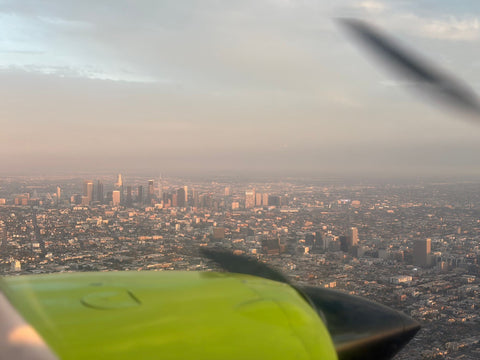
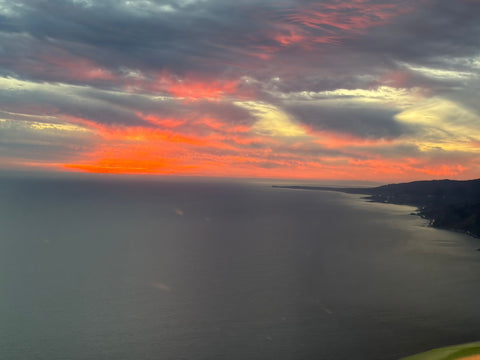
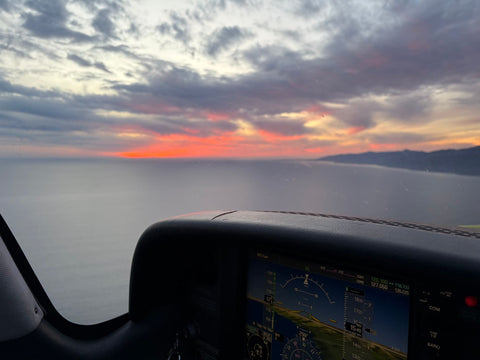
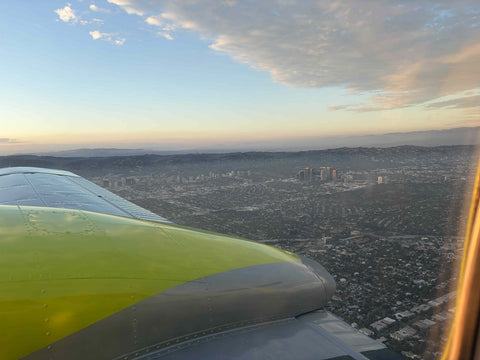
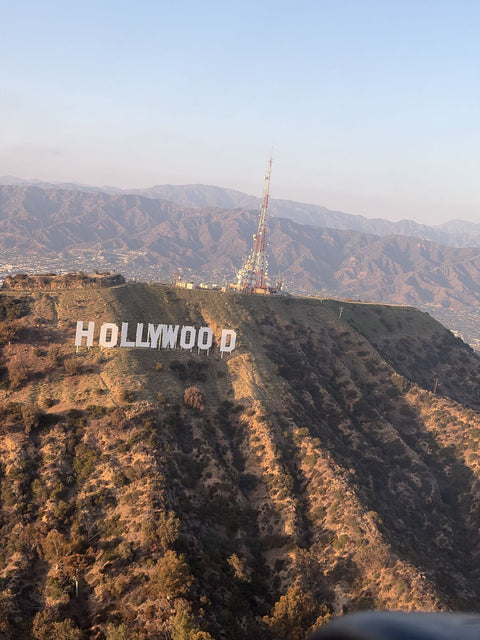
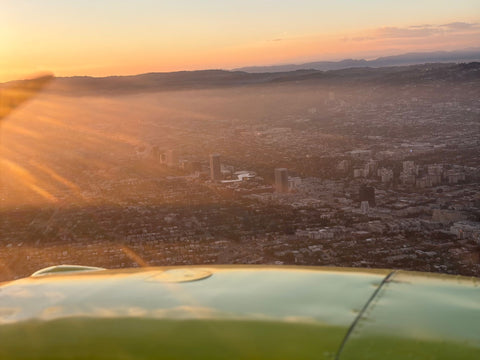
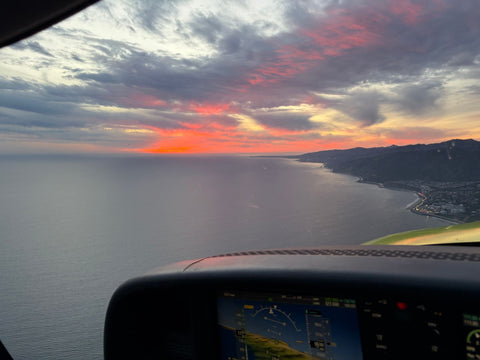
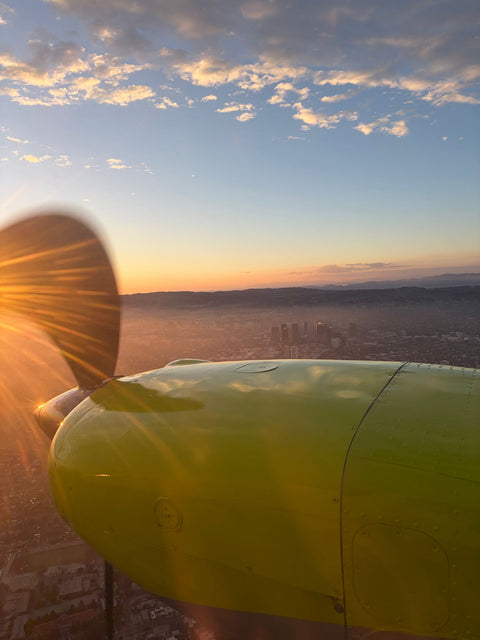
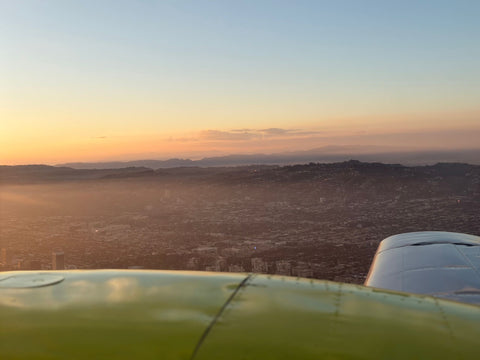
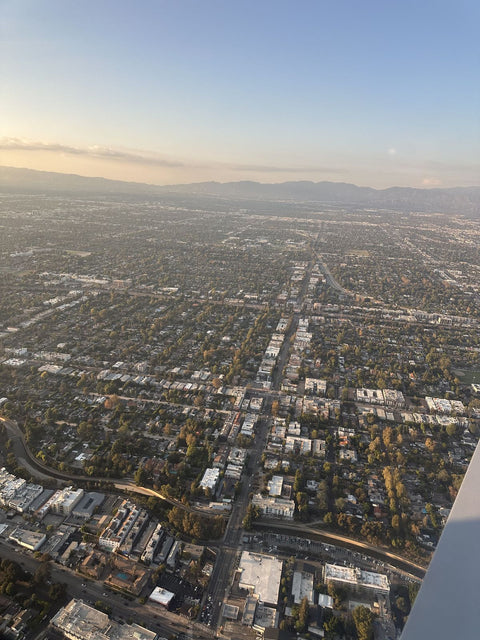
Terrain and coastline within fifteen minutes. Off the departure end you have the Santa Monica Mountains, the Santa Susanas and the high desert north of the 14. Turn the other way and you are over Malibu and the Pacific in about fifteen minutes. Mountain flying, coastal navigation, pilotage over city landmarks and true cross-country work all start within a short hop of the pattern.
Better than 300 VFR days a year. Southern California's weather is the reason so many pilots are made here. The May-to-June marine layer is the one seasonal complication — coastal stratus that usually burns off by late morning — and the Valley sits far enough inland that we often launch while the beach airports are still IFR. Summer afternoons bring the opposite problem: Valley heat pushes density altitude well above the roughly 800-foot field elevation, so we schedule performance-sensitive lessons early. Our published weather and cancellation policy spells out exactly what happens when a lesson gets scrubbed.
Getting here is straightforward. We are off the 405 at Roscoe, minutes from the 101 and the 118. Off-peak that is roughly 15 minutes from Sherman Oaks or Woodland Hills, about 20 from Burbank or Calabasas, and 25 to 30 from Santa Clarita on the 5 or the 118.
The Airplanes You Will Actually Fly
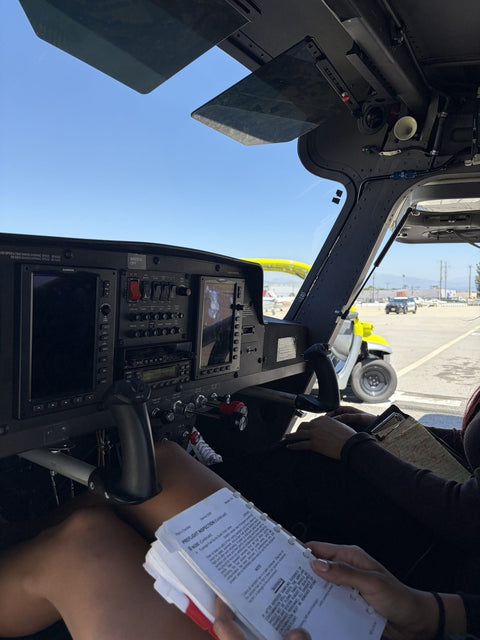
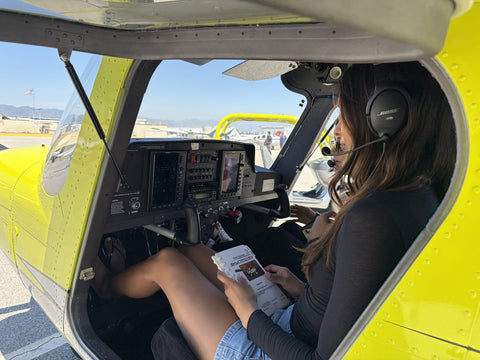
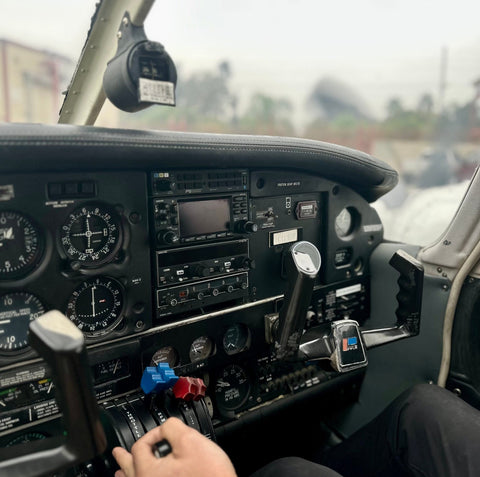
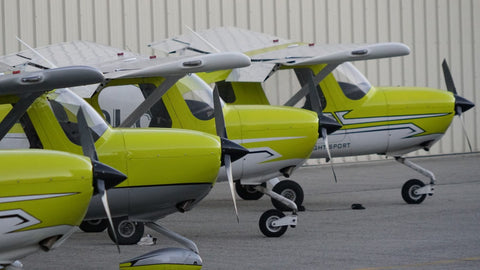
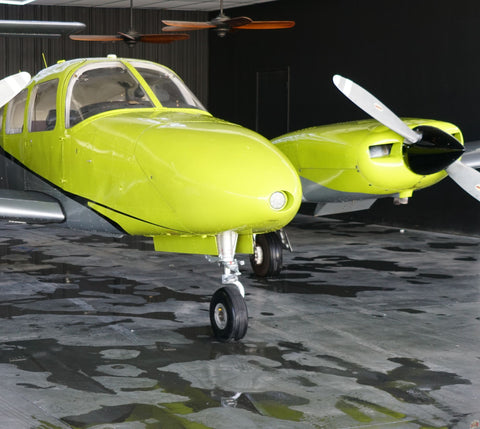
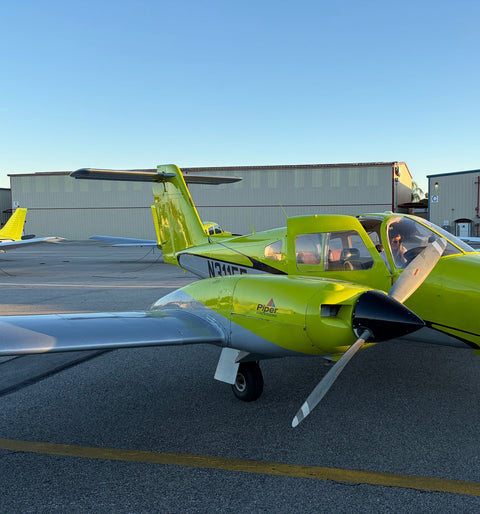
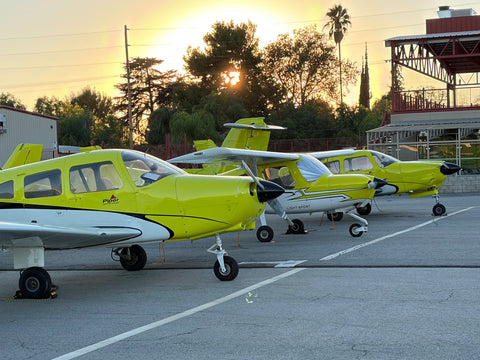
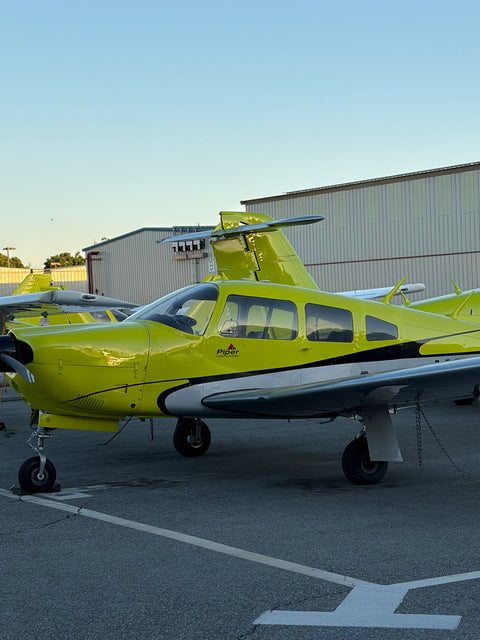
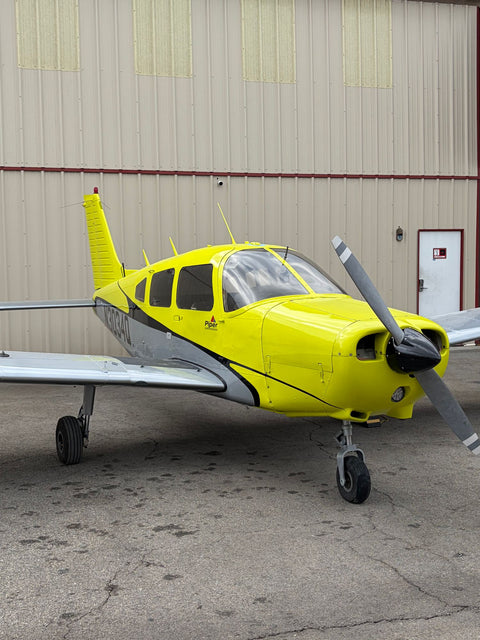
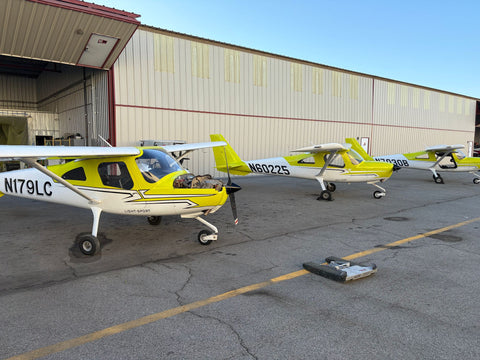
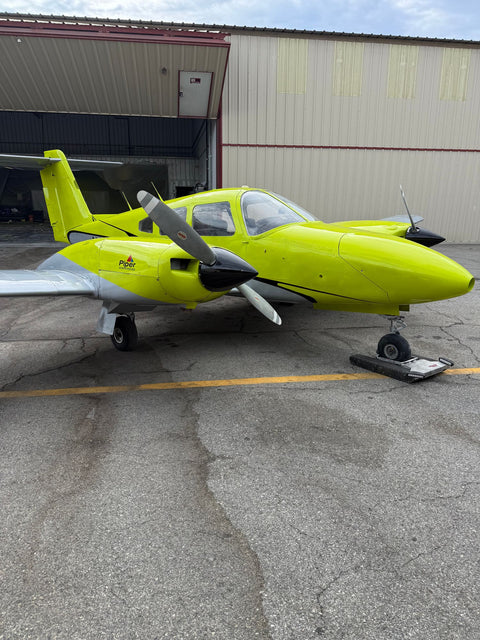
Our fleet covers six aircraft types on one ramp at Van Nuys, all on the same schedule and all bookable online. Primary training happens in the Piper Warrior PA-28-161, a forgiving, stable low-wing trainer, and the Diamond DA20-C1, with a bubble canopy and the best visibility on the ramp. The Cessna 162 Skycatcher serves sport and light training. The Piper Arrow covers complex and commercial work, and the Piper Seminole is the twin for your multi-engine rating.
Above that sits the glass: our Cirrus SR22T, N422SN, with a whole-airframe parachute and a full glass panel. Want to train in the Cirrus SR22 Turbo? Add it to any package at +$400 per hour, for as many hours as you choose, or transition into one after your certificate. Our Redbird full-motion simulator handles instrument procedures, emergencies and cross-country planning at $120 an hour, which is the cheapest way to buy proficiency anywhere in this building.
Two practical limits worth knowing before you book: the Warrior is limited to 180 lb per person and 360 lb combined, the Cirrus to 200 lb per person and 400 lb combined.
Financing, Medicals And Paperwork
You do not have to write one check. We work with aviation lenders who finance training in stages, and our flight training financing page lays out the options and what lenders look at. Many students finance the Private Pilot certificate and pay cash for the ratings that follow, once they know the schedule works for them.
Before your first solo you will need an FAA medical certificate and a student pilot certificate. The medical comes from an Aviation Medical Examiner; the student pilot certificate is a free online application, and we walk you through it on our IACRA student pilot certificate guide. Neither is a hurdle for most people, and neither has to be done before your first lesson.
How To Start This Week
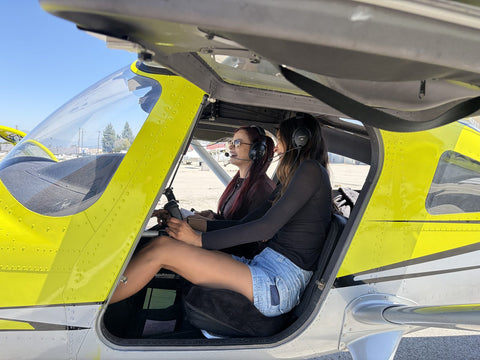
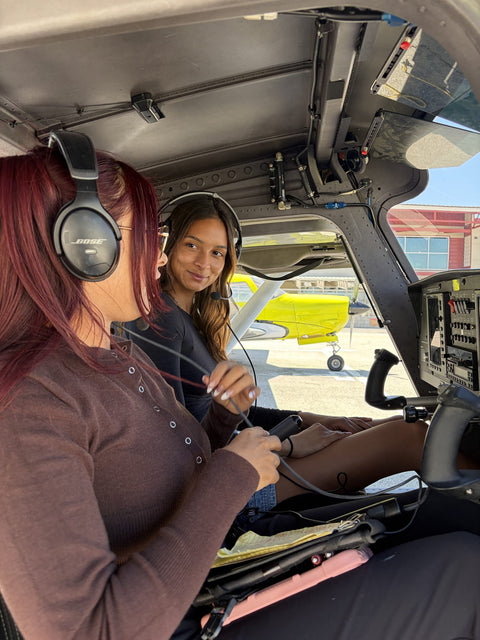
There are two front doors. Take a discovery flight — you fly the airplane from the left seat with an instructor beside you, 60 minutes for $229, no tax and no booking fee, so $229 is the total — and that hour logs toward your certificate. Or book the free in-person consultation, sit down with an instructor, look at the fleet and the schedule, and leave with a written plan and a start date.
From there the path is the one every pilot follows: pre-solo work in the pattern, first solo, cross-country flying, the written exam, the checkride. Where you go next is up to you — the Private Pilot license, then an instrument rating, a commercial certificate, or the whole sequence inside the airline pilot career program at $84,000 for zero-to-260-hours.
Frequently Asked Questions
How Much Does Flight Training In Los Angeles Cost?
At You Fly LA, a fixed-price Private Pilot certificate is $10,400 for the 40-hour Standard program, $15,400 for the 60-hour Comprehensive program and $22,000 for the 80-hour Premium program. A Sport Pilot certificate is $8,400 and an Instrument Rating is $11,700. A 60-minute discovery flight is $229 with no tax and no booking fee.
How Long Does It Take To Get A Private Pilot License In Los Angeles?
The FAA minimum under Part 61 is 40 flight hours. Students flying two or three times a week typically finish in three to six months; students flying once a week take longer, because skills decay between lessons and time gets spent on review. Flying consecutive days on the accelerated track is the fastest route.
Do I Need A Medical Certificate Before My First Flight Lesson?
No. You need an FAA medical certificate and a student pilot certificate before your first solo, not before your first lesson. You can start flight training immediately and handle both while you are working through pre-solo training.
What Is The Difference Between Fixed-Price And Hourly Flight Training?
Hourly training bills you for every hour of aircraft and instructor time, so weather cancellations, maintenance delays and instructor turnover all add cost to you. Fixed-price training locks the total in advance, so those risks sit with the school. At our published rates, 40 hours of aircraft at $179 plus instructor at $110 would bill $11,560 — more than the $10,400 fixed-price Standard program.
Can I Fly If I Am Not A US Citizen?
Yes. Non-US citizens training toward a Private, Instrument or Commercial certificate must be approved through the TSA Flight Training Security Program before training begins. We handle that process regularly.
Is There A Weight Limit For Flight Training?
The Piper Warrior is limited to 180 lb per person and 360 lb combined. The Cirrus is limited to 200 lb per person and 400 lb combined.
Where Is You Fly LA Located?
7900 Balboa Blvd, Main Terminal Unit 108, Van Nuys, CA 91406, at Van Nuys Airport (KVNY). We are open 9 AM to 9 PM, seven days a week, and you can reach us at (818) 330-1318.
Start Your Flight Training In Los Angeles
Fixed prices, six aircraft types on one ramp, Class D tower operations and Class B airspace just to the south, seven days a week at Van Nuys. Book the flight, or call and ask us anything first.
Book A Discovery Flight — $229 Book A Free Consultation Call (818) 330-1318