



















You Fly LA is a flight school at Van Nuys Airport in Los Angeles, and flying lessons here start at $229 for 60 minutes — no tax, no booking fee, so $229 is the total. The part most people do not expect is this: you fly the airplane. You sit in the left seat, your hands are on the controls, and a certificated flight instructor sits beside you with a second set of controls. It is a lesson, not a ride.
Quick Answer: Flying classes in Los Angeles at You Fly LA are private, one-to-one flying lessons from Van Nuys Airport: one instructor, one student, one airplane, and you fly it from the left seat. A first 60-minute lesson is $229 in total, needs no experience and no medical certificate, and the time is logged toward a pilot certificate. If you keep going, two or three lessons a week is the pace that keeps each lesson building on the last.
This page is written for people who have never done this before. No jargon, no assumptions, no acronyms we do not explain. If you are wondering whether a beginner really gets to touch the controls on day one, this is the plain-English answer. If you are searching closer to home, flying lessons near me has the drive times.
What A Flying Lesson Actually Is
A first flying lesson — the industry calls it a discovery flight — is a real instructional flight in a real airplane with a real instructor. It is logged. If you later decide to train for a certificate, the time you fly on that first lesson counts toward it. Nothing about it is a simulation or a sightseeing charter.
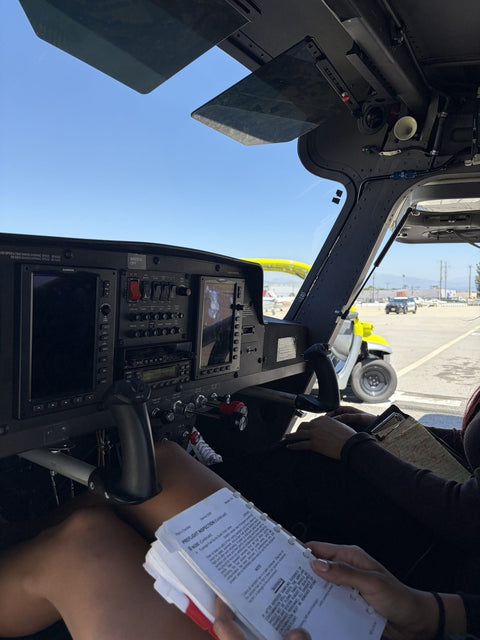
A typical 60-minute lesson runs like this. You arrive about fifteen minutes early, meet your instructor, and sit down for a short briefing: where you are going, what you will do with the controls, and what the instructor will handle. Then you walk out to the airplane together and do the preflight inspection — fuel, oil, control surfaces, tires. You get in, the instructor starts the engine and talks to the tower, and you taxi out. Once the wheels are off the ground and you are a few hundred feet up, the instructor hands you the controls. You do the turns. You climb, you level off, you descend. The instructor takes the airplane back for the landing, or talks you through it with hands lightly following on their side.
Afterward you sit down for five or ten minutes and go through what happened. If you want to keep going, that conversation turns into a plan. If you just wanted to see what it feels like, you go home having flown an airplane. Both outcomes are completely normal. Read more about what a discovery flight is and what to expect on the day.
Yes — You Fly It Yourself
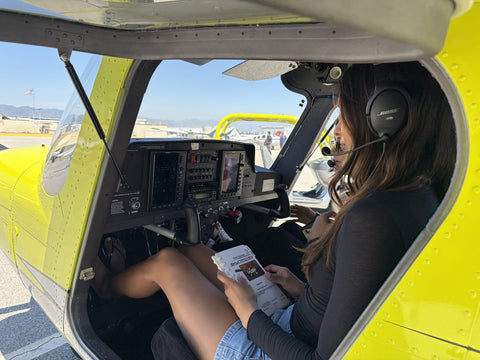
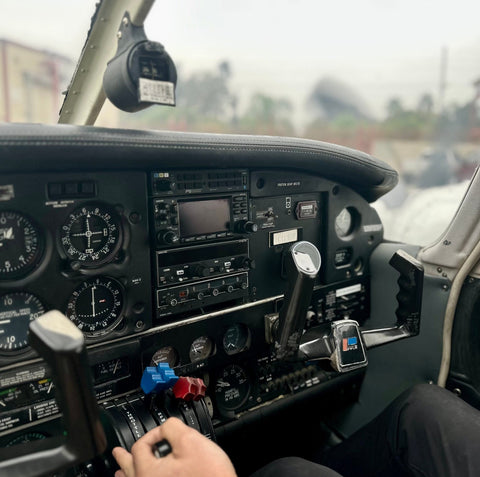
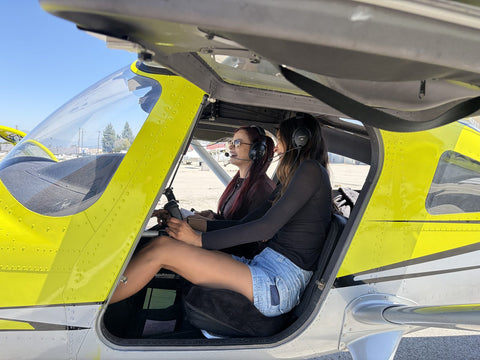
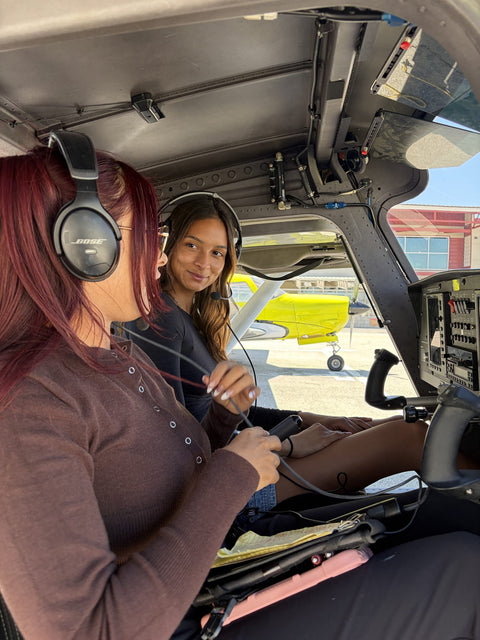
This is the single most misunderstood thing about flying lessons, so it is worth being blunt. You are not a passenger. You are not in the back. You are in the left seat, which is the pilot's seat, and for most of the airplane's time in the air the controls are yours.
Training airplanes have dual controls: two yokes (or sticks), two sets of rudder pedals, two throttles. The instructor can take over instantly at any moment, and will, for takeoff and landing on a first lesson and any time the situation calls for it. That safety net is what lets a person with zero experience fly a real airplane on their first day. It is also why you can safely be given far more control than you would expect.
In a 60-minute lesson you can reasonably expect to hand-fly climbs, level flight, medium-banked turns in both directions, and descents. Many people also get to try slow flight and a gentle turn onto a heading their instructor picks. You will not be perfect at any of it. Nobody is. That is the point of a lesson.
What You See On A Los Angeles Flying Lesson
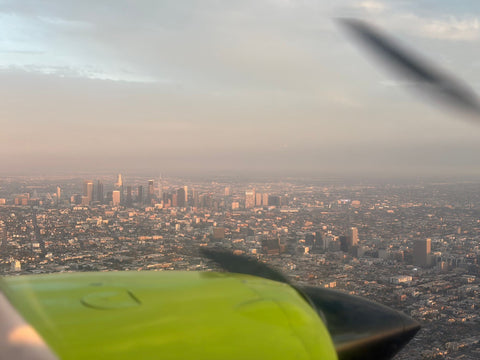
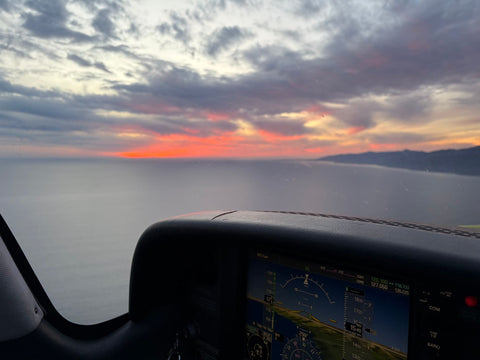
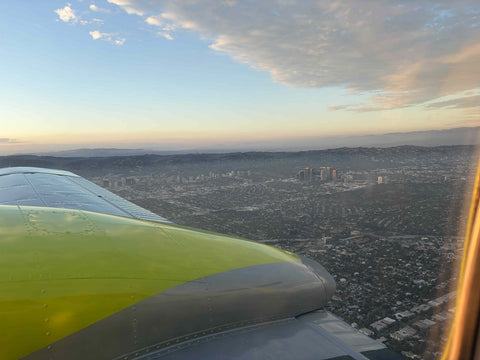
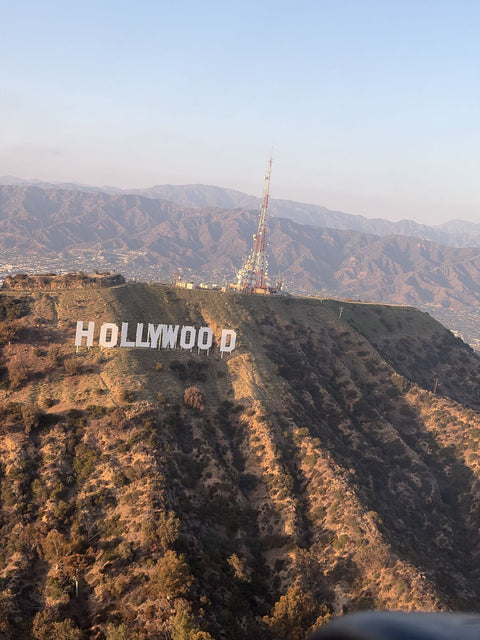
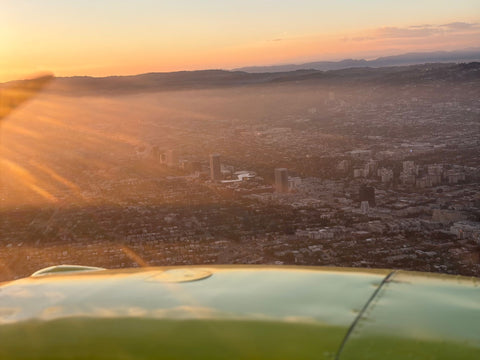
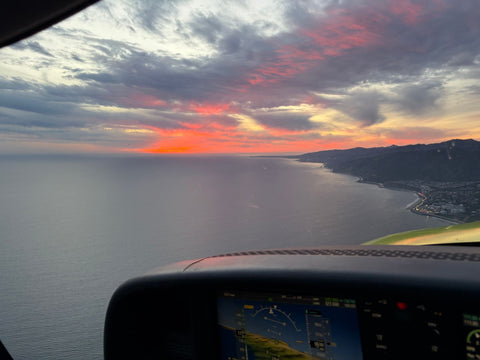
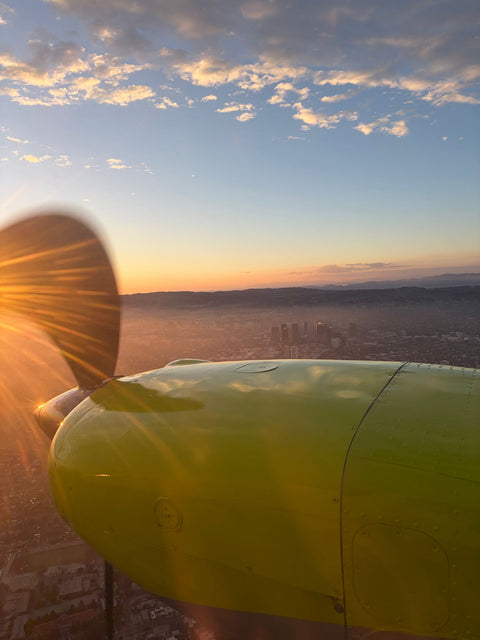
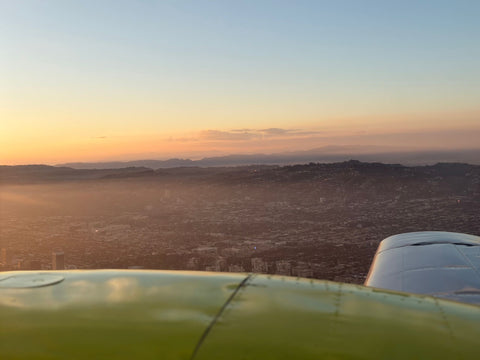
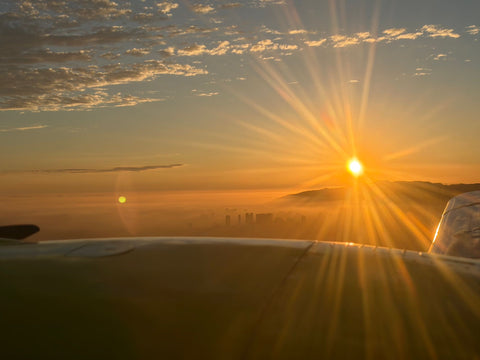
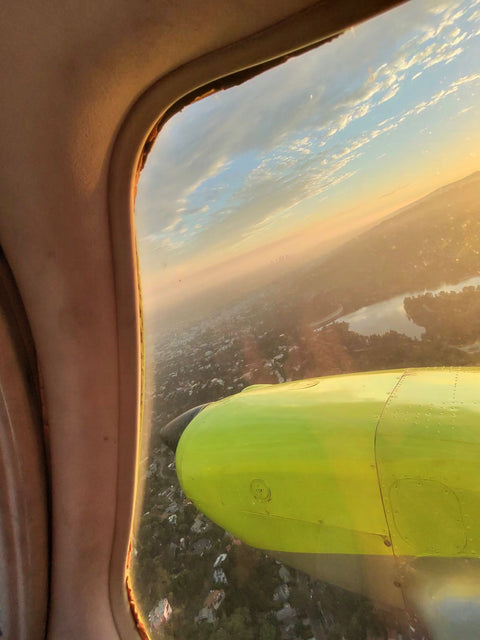
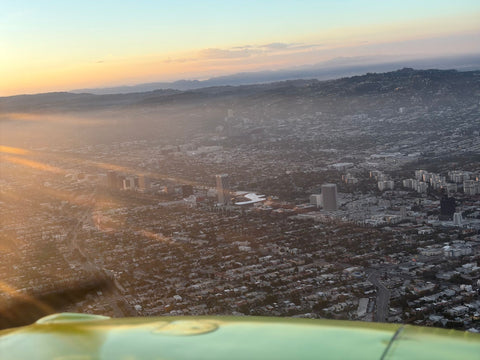
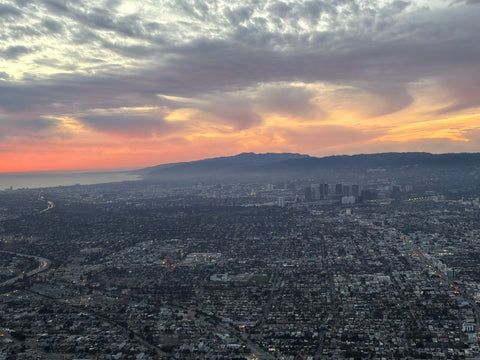
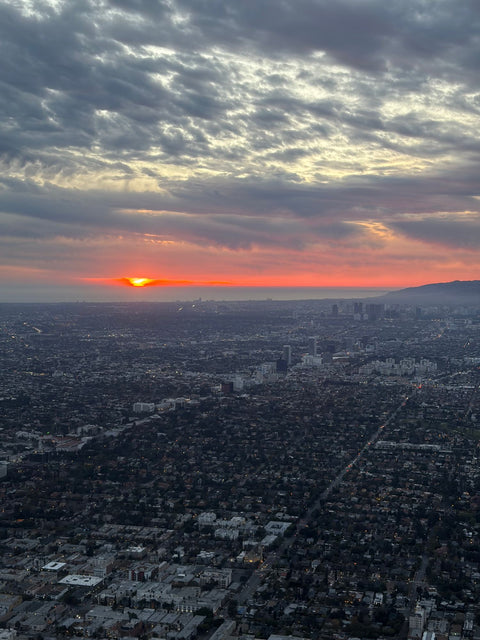
Los Angeles is one of the best places in the country to learn, partly for the weather and partly because the scenery is genuinely spectacular from 2,500 feet. Departing Van Nuys, common routes on a first lesson include:
- The Hollywood Sign — over the Cahuenga Pass and around Mount Lee, close enough to read every letter.
- Griffith Observatory — the white domes on the south face of Mount Hollywood, with the whole LA basin behind it.
- Downtown Los Angeles — the US Bank Tower and the Wilshire Grand cluster standing up out of the flats.
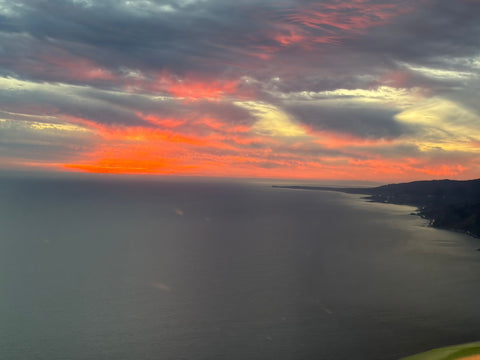
- The Malibu coast — out over the Santa Monica Mountains and down the shoreline past Point Dume.
- Santa Monica Bay — the pier, the beaches, and on a clear winter day Catalina sitting on the horizon.
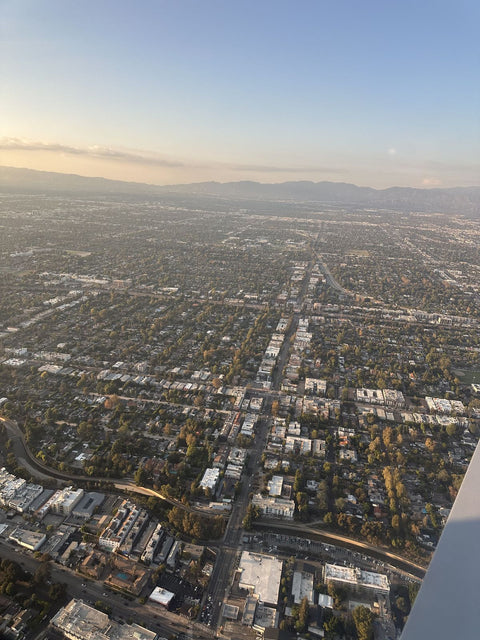
- The San Fernando Valley — the 101, the 405 and the 118 laid out like a map, which is exactly how pilots learn to navigate at first.
You choose. Tell your instructor at the briefing where you want to go and, airspace and weather permitting, that is the route. If a specific view matters to you — a house, a stadium, the coast at sunset — say so when you book.
What Flying Lessons Cost In Los Angeles
Here is the full price list for a first lesson. These are totals. Our booking products are not taxable and carry no booking fee, so the number you see is the number you pay — no tax, no booking fee, $229 is the total.
| Lesson | 60 Minutes | 90 Minutes | 120 Minutes |
|---|---|---|---|
| Flying lesson, one person | $229 | $299 | $399 |
| For two — Downtown LA route | $299 | $399 | $499 |
| For two — Malibu coast route | $299 | $399 | $499 |
| Luxury Cirrus SR22 Discovery Flight | $499 | $649 | $799 |
| Luxury Cirrus SR22 Discovery Flight, With A Passenger | $599 | $849 | $1,049 |
| Full-motion simulator session | $189 | — | — |
| In-person consultation | Free | — | — |
Sixty minutes is the right choice for a first lesson for most people. Ninety gives you time to get out to the coast and back without rushing, and two hours is a genuine cross-country tour. The two-person options put a friend or partner in the back seat while you fly; you are still the one at the controls. Full details on every option are on the discovery flights in Los Angeles page.
Book A Discovery Flight · $229 Give A Flight · From $189
Flying Classes In Los Angeles: What They Actually Look Like
The flying classes Los Angeles beginners picture — a room, a whiteboard, twenty people and a projector — are not what this is. Every lesson here is one instructor, one student, one airplane, and the airplane is where most of the teaching happens. There is classroom-style work, called ground instruction, and it exists to make the flying efficient rather than to fill a semester.
Three ways people cover the ground portion, and most students mix all three:
- One-to-one ground instruction with your own instructor at $110 an hour, aimed at exactly what you are weak on. Briefings and debriefs around each flight are part of your lesson, not an add-on.
- Self-study at home with an online course, checked off with your instructor. The cheapest route and it suits disciplined self-starters.
- The Redbird full-motion simulator at $120 an hour, where procedures, emergencies and instrument work are cheaper and safer to drill than in the airplane — and where a marine-layer morning stops being a wasted day.
There is no term, no cohort and no admissions cycle. Book a lesson for Thursday and you are flying on Thursday. If you want the whole program priced out rather than lesson by lesson, that is flight training in Los Angeles.
Who Can Take A Flying Lesson
Almost anyone. There is no experience requirement, no test to pass beforehand, and no medical certificate needed for a first lesson — the instructor is the pilot in command, so the FAA paperwork that eventually applies to you as a student pilot is not required to take a lesson. You will need a medical certificate later, before you fly solo, and we will walk you through that when the time comes.
There is no minimum age to take a lesson and fly the airplane, though a passenger under 18 needs a parent or guardian to sign. Younger flyers who want to keep going have a structured route through our teen flight training program for ages 10–15.
The one hard limit is weight, and it is an aircraft balance requirement rather than a policy:
| Aircraft | Per Person | Combined |
|---|---|---|
| Piper Warrior PA-28-161 | 180 lb | 360 lb |
| Cirrus SR22 | 200 lb | 400 lb |
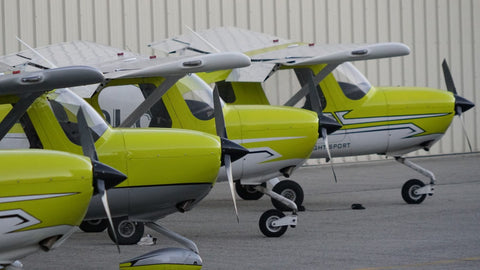
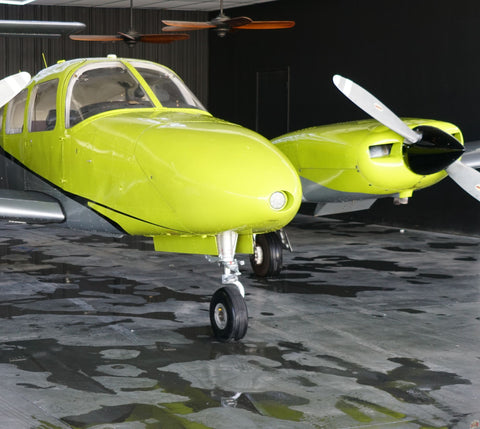
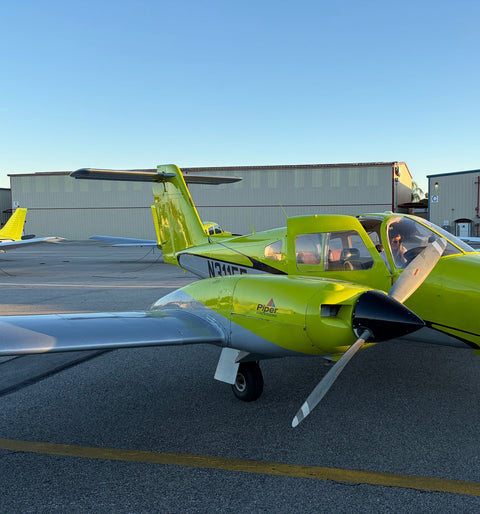
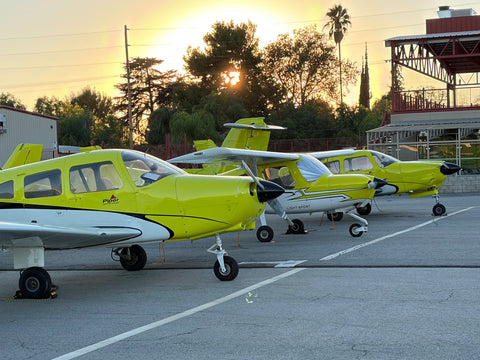
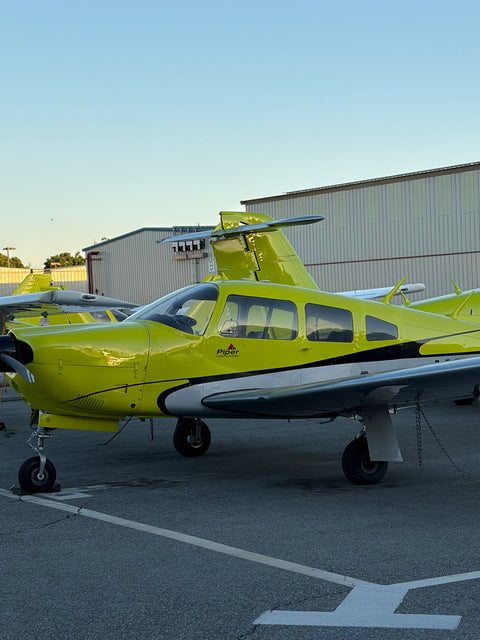
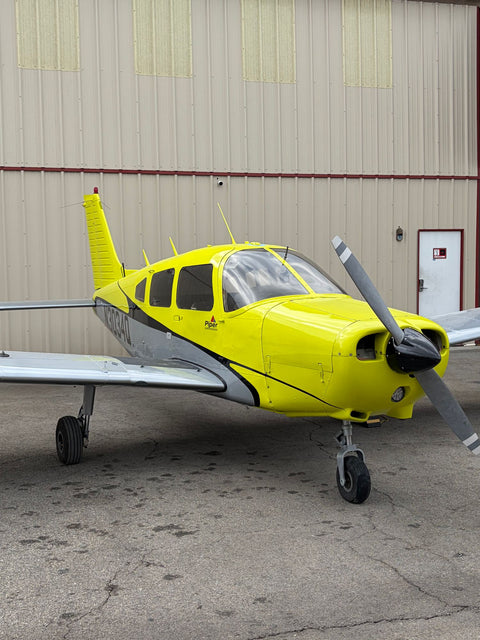
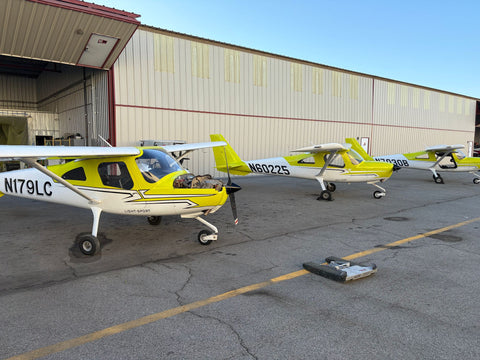
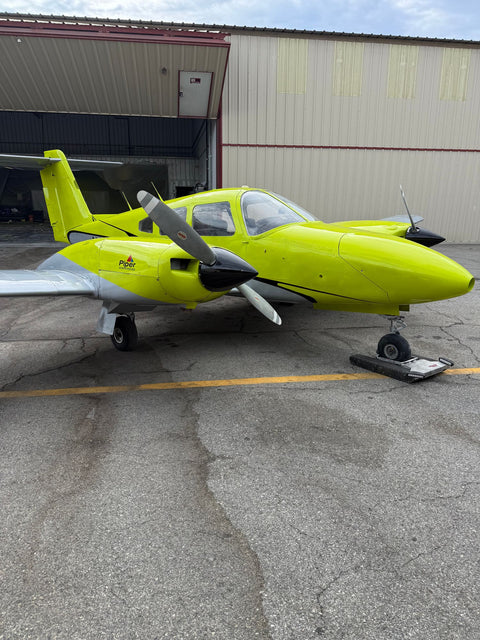
If you are close to a limit, call before you book and we will tell you honestly which aircraft works. The trainer most first lessons use is the Piper Warrior PA-28-161, a four-seat, low-wing airplane with a big door and good visibility. The Diamond DA20-C1 is the sportier option with a bubble canopy and a view straight up.
What To Wear And What To Bring
Wear whatever you would wear to a casual lunch. Comfortable clothes, closed-toe shoes with a flat sole so you can feel the rudder pedals, and layers — it can be 95°F on the ramp in Van Nuys in August and noticeably cooler at 3,000 feet. Sunglasses are genuinely useful; the cockpit is all glass and the LA sun is relentless.
Bring a government-issued photo ID. Bring your phone for photos, but plan to hand it to your instructor or your back-seat passenger once the controls are yours. Skip the hat with a wide brim — it will not fit under the headset — and skip strong cologne in a small warm cabin. Eat something beforehand; flying on an empty stomach is a bad idea, and so is flying on a huge one.
If you get motion sick in cars, tell your instructor at the briefing. Sitting in the front and doing the flying yourself helps enormously, because your brain gets to predict the motion instead of just absorbing it. Smooth-air mornings help too.
Are You Ready For Your First Flying Lesson?
Tick what is true today.
- You are within the weight limit for the airplane: 180 lb per person in the Piper Warrior, 360 lb combined with a passenger.
- You have a government-issued photo ID to bring.
- You have closed-toe, flat-soled shoes you can feel the rudder pedals through.
- You have layers and sunglasses, and no wide-brimmed hat to fit under a headset.
- You know which view you want to fly over, or you are happy to let your instructor choose.
- If you get motion sick in cars, you will tell your instructor at the briefing.
How Lessons Progress From First Flight To A License
Nothing about the first lesson commits you to anything. But if you like it, the path forward is well worn and predictable:
- Lessons two through ten — the basics: climbs, descents, turns, slow flight, and then the traffic pattern at Van Nuys, which means takeoffs and landings, over and over, until they are yours.
- Student pilot certificate and medical — free paperwork through the FAA's IACRA system plus a visit to an aviation medical examiner. We walk you through getting your student pilot certificate.
- First solo — three trips around the pattern by yourself. Most people describe it as the single biggest moment in their flying.
- Cross-country flying and night flying — you start leaving the local area: Camarillo, Santa Barbara, Palm Springs, Big Bear.
- Written exam and checkride — a multiple-choice knowledge test, then a practical exam with an FAA examiner.
The FAA minimum for a Private Pilot certificate under Part 61 is 40 hours of flight time. Our fixed-price 40-hour Private Pilot certificate course in Los Angeles is $10,400, with 60-hour and 80-hour versions at $15,400 and $22,000 for people who would rather buy the extra hours up front than meter them. If your goal is smaller — flying a light aircraft locally on nice days — the Sport Pilot route starts at a 20-hour FAA minimum and $8,400. There is a fuller walk-through on learning to fly in Los Angeles.
How Often To Take Flying Lessons
If you are working toward a certificate, how often you fly matters more than almost anything else you control. Flying two or three times a week means each lesson starts where the last one ended. Flying once every two or three weeks means the first part of every lesson goes on relearning what faded, and those minutes are still billed.
A pattern that works around a job is two lessons a week, one on a weekday evening and one at the weekend. We fly until 9 PM every day, which is what makes the evening lesson possible. At two lessons a week, a private pilot certificate typically takes four to six months; at three a week it gets closer to the two to four months on our private pilot course.
Book A Free Consultation Call Or Text (818) 330-1318
Where You Fly From, And When To Come
We operate from 7900 Balboa Blvd, Main Terminal Unit 108, Van Nuys, CA 91406, at Van Nuys Airport (KVNY) — a Class D tower-controlled field and one of the busiest general aviation airports in the world, which is a good thing to learn at, because the radio work and traffic awareness you pick up here transfer everywhere. From the 405 it is a few minutes off the Roscoe or Sherman Way exits; from the 101 you come north on Balboa; from Santa Monica or the Westside allow 35–50 minutes depending on the 405.
We fly seven days a week, 9 AM to 9 PM. On weather: LA's marine layer is at its thickest in May and June, when mornings can be overcast until late morning and afternoons are clear — so book afternoons in late spring. In July and August, morning air is smoother and the summer heat pushes density altitude up in the afternoon, which means longer takeoff rolls and slower climbs. Autumn and winter mornings are frequently the best flying of the year: cool, clear, and you can see Catalina. If weather cancels your lesson, you are not charged; see the weather and cancellation policy.
Current conditions at Van Nuys show above when the page loads; if they do not, call or text (818) 330-1318 and we will tell you.
Frequently Asked Questions
Do I Really Fly The Airplane Myself?
Yes. You sit in the left seat with your hands on the controls and fly the airplane for most of the time it is in the air. Your instructor sits beside you with a duplicate set of controls and handles the takeoff and landing on a first lesson.
How Much Does A Flying Lesson Cost In Los Angeles?
A 60-minute flying lesson is $229, 90 minutes is $299 and 120 minutes is $399. There is no tax and no booking fee, so $229 is the total you pay.
Do I Need A Medical Certificate Or Any Experience?
No. You need no previous experience and no medical certificate to take a flying lesson, because the instructor is the pilot in command. You will need a medical certificate later, before your first solo flight.
Is There An Age Or Weight Limit For Flying Lessons?
There is no minimum age, but anyone under 18 needs a parent or guardian to sign. Weight limits are set by the aircraft: 180 lb per person and 360 lb combined in the Piper Warrior, and 200 lb per person and 400 lb combined in the Cirrus.
Does My First Lesson Count Toward A Pilot License?
Yes. A first flying lesson is a real instructional flight and the time is logged in your logbook, so it counts toward the 40-hour FAA minimum for a Private Pilot certificate under Part 61.
What Should I Wear To A Flying Lesson?
Wear comfortable casual clothes, closed-toe shoes with flat soles so you can feel the rudder pedals, and bring sunglasses and a photo ID. Dress in layers, because it is cooler at altitude than it is on the ramp.
Where Do The Flying Lessons Depart From?
All lessons depart from Van Nuys Airport at 7900 Balboa Blvd, Main Terminal Unit 108, Van Nuys, CA 91406. We fly seven days a week from 9 AM to 9 PM.
Are Flying Classes In Los Angeles Taught In A Group?
No. Every flying class at You Fly LA is private: one instructor, one student and one airplane, and ground instruction is one-to-one too, at $110 an hour. There is no term or cohort, so you start on the day you book.
How Often Should I Take Flying Lessons?
Two or three lessons a week works best if you are training for a certificate, because less of each lesson goes on review. At two lessons a week, a private pilot certificate typically takes four to six months.
Book Your First Flying Lesson
Pick a time, show up, and fly an airplane over Los Angeles. If you would rather talk it through first — costs, timelines, whether this is realistic for you — the in-person consultation is free and there is no sales pitch attached to it.
Book A Discovery Flight · $229 Book A Free Consultation Call Or Text (818) 330-1318
Sources: 14 CFR 61.109 (private pilot aeronautical experience), 14 CFR 61.313 (sport pilot aeronautical experience) and 14 CFR 61.23 (medical certificates), Title 14 of the Code of Federal Regulations on ecfr.gov, checked September 23, 2026.