







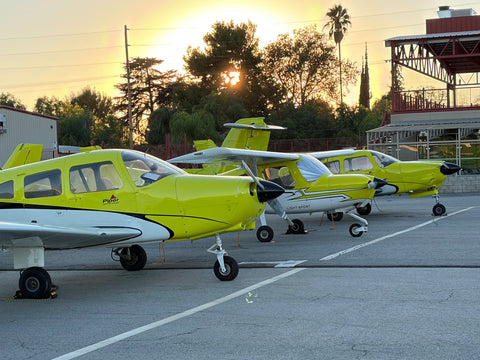
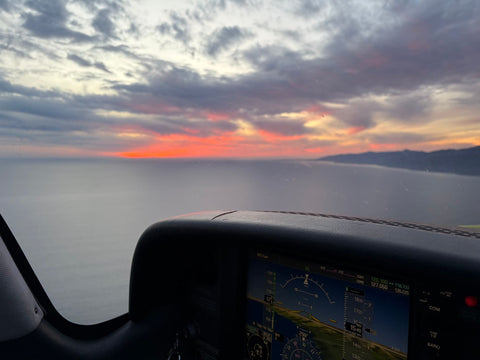
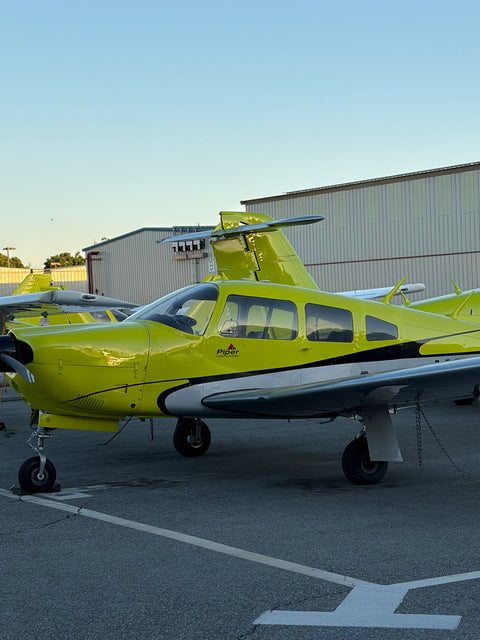
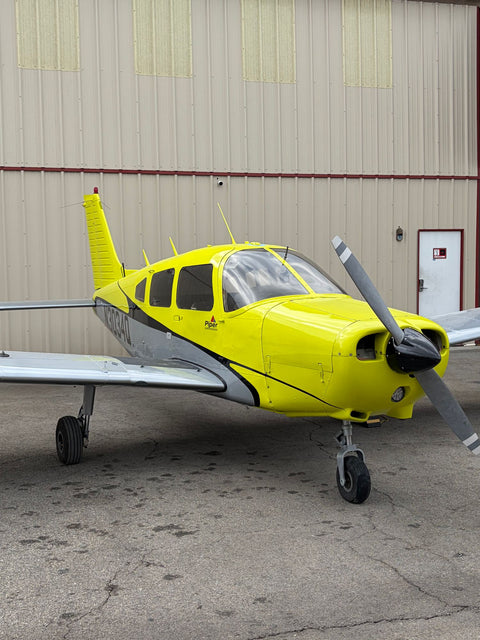

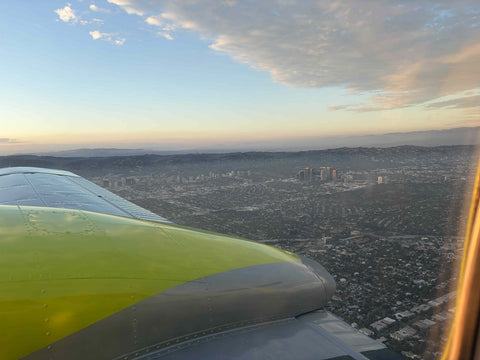

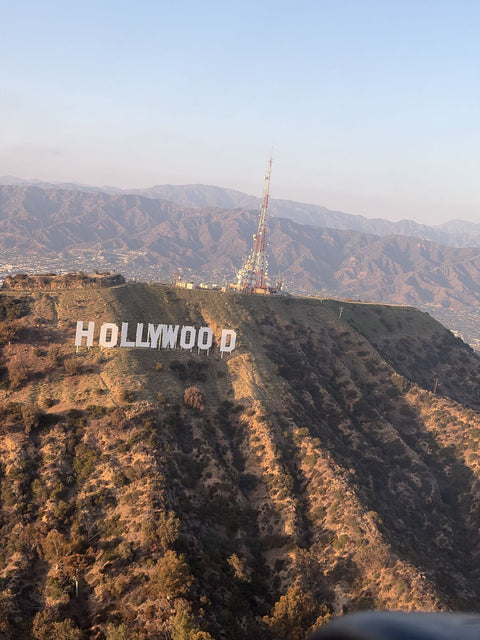


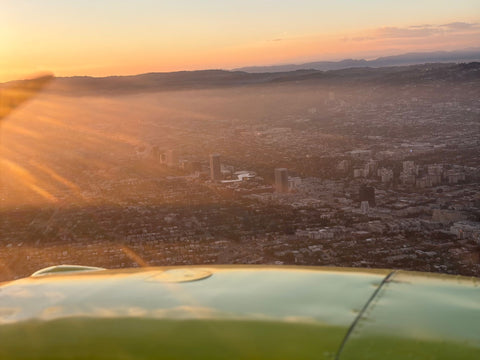
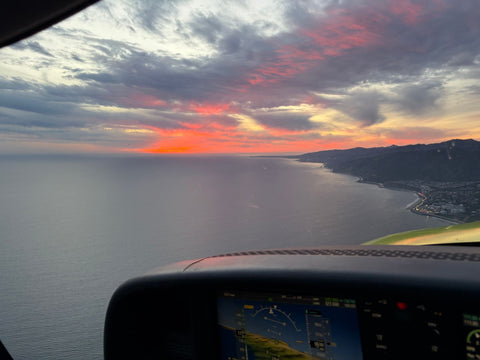






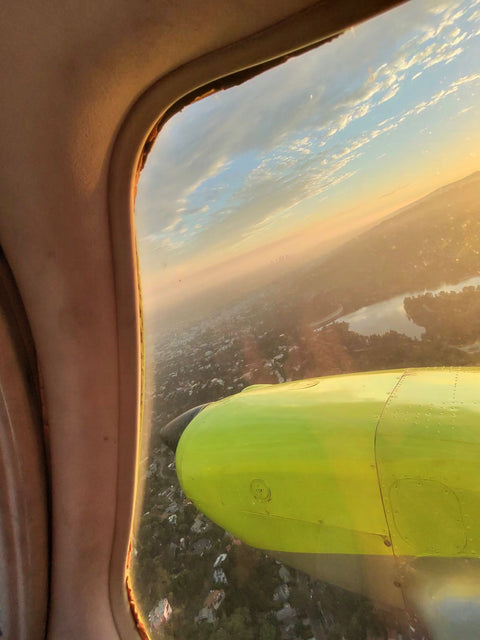

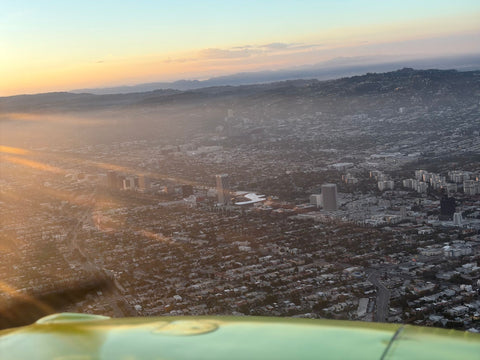
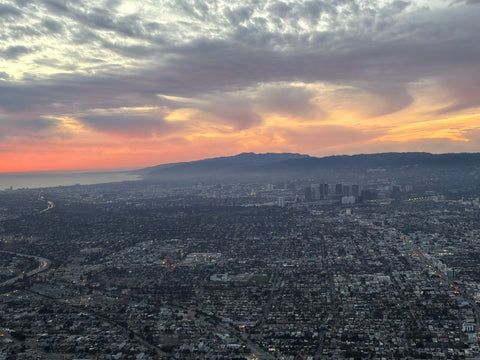
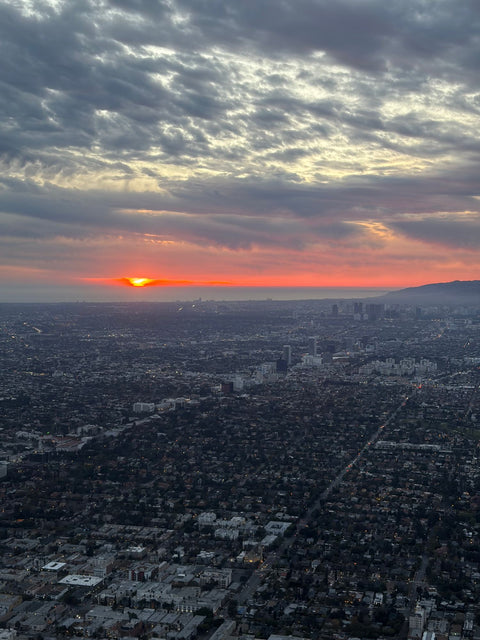

Becoming a pilot in California uses exactly the same federal path as every other state — there is no California pilot license, and nothing you do at the DMV has any bearing on it. What California changes is the speed, the airspace you learn in, how you can pay for it, and where the flying jobs are afterwards. That is what this page is about.
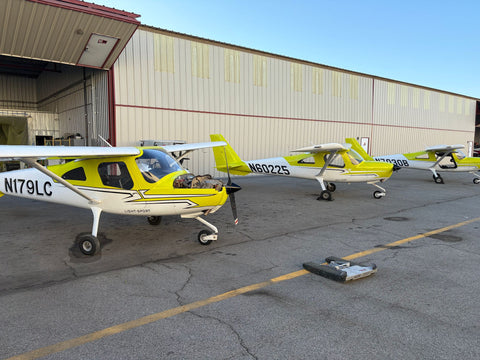
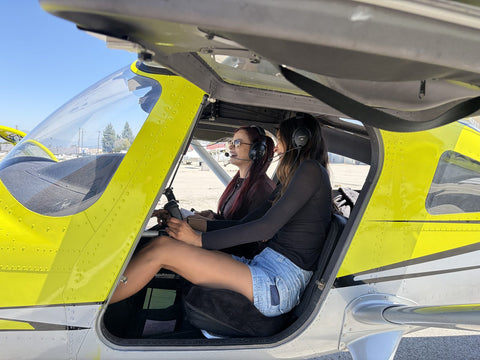
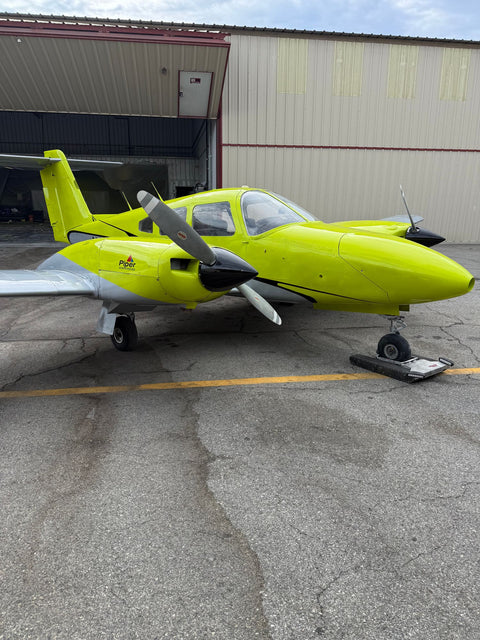
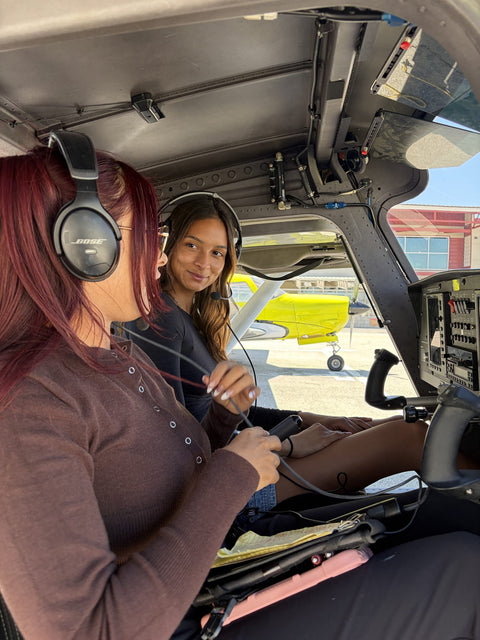
If you want the sequence itself — medical, IACRA, ground school, the written, flight training, solo, checkride — it is set out step by step on how to become a pilot, and it is identical in Fresno, in Florida and here. You Fly LA is a Part 61 school at 7900 Balboa Blvd, Main Terminal Unit 108, on the field at Van Nuys Airport (KVNY), in the San Fernando Valley, and everything below is what our instructors actually plan around. This page sits under our statewide guide to flight schools in California, which covers how to choose the school you do it with.

The Weather Is The Difference, And It Is Worth Months
Flight training is not really measured in hours. It is measured in how reliably you can convert a booked slot into a logged hour, and that conversion rate is the single largest driver of how long a certificate takes and what it costs. This is where California pulls ahead of almost everywhere else in the country.
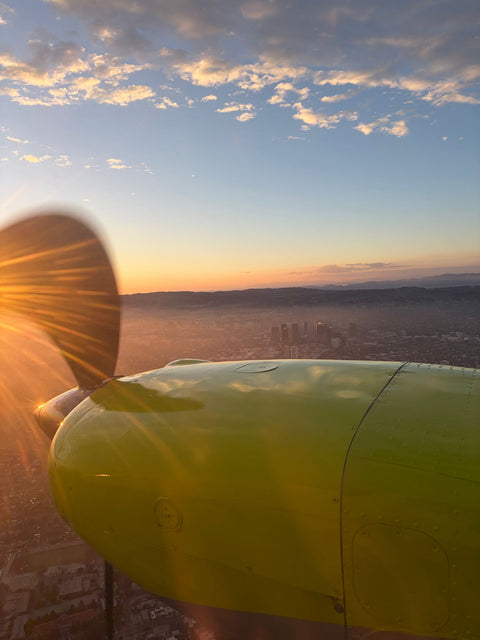
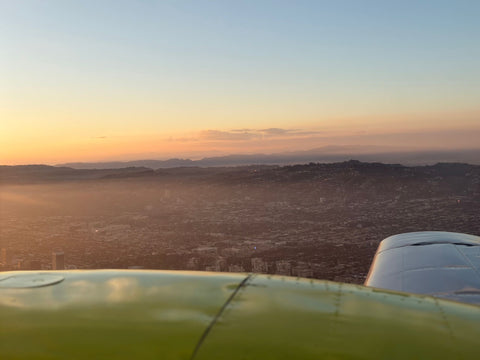
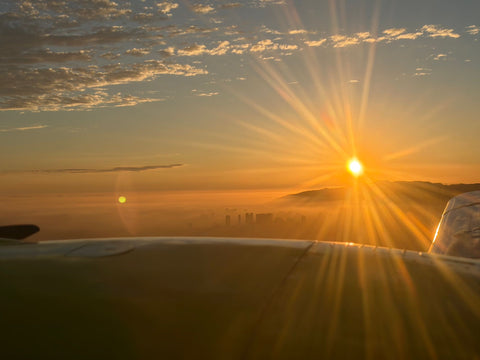
Southern California's dominant pattern is dry, stable and VFR for most of the year. There is no thunderstorm season that shuts down afternoons for months, no winter icing layer that grounds a trainer for weeks, no frontal system arriving every four days. A student here who books twice a week generally flies twice a week. That is not true in most of the United States, and it is why the honest answer to "how long will this take in California?" is "however often you book it" rather than "it depends on the weather."
The flip side is that California's weather problems are narrow, predictable and local — which makes them plannable instead of disruptive.
| Season | What Gets In The Way | Where It Bites | The Workaround |
|---|---|---|---|
| May to early July | Coastal marine layer — low stratus overnight that often does not clear until mid-morning | Coastal fields hardest; inland Valley fields clear earlier | Move lessons to afternoon and evening; fly the pattern under the layer when it is high enough |
| July to September | High density altitude on hot afternoons — degraded climb and longer takeoff rolls | The Valley and the high desert, where afternoons pass 100°F | Fly early mornings; use the heat as the performance-chart lesson it actually is |
| September to December | Santa Ana winds — strong, gusty, offshore, often with mountain-wave turbulence | Passes and canyons in the south | Crosswind and gust work on the good days, simulator and ground on the bad ones |
| December to February | Tule fog inland, and the handful of genuine winter frontal systems | Central Valley and the Sacramento region far more than the LA basin | The quietest, smoothest air of the year in Southern California — the best cross-country season |
The Marine Layer, Specifically
From roughly early May into early July, coastal Southern California gets low stratus overnight. Locals call it May Gray and June Gloom. It is not a storm and it is not dangerous — it is a stratus deck a few hundred to a couple of thousand feet thick that sits over the coastal plain and burns off from inland outward as the ground heats.
That "from inland outward" is the whole point for anyone choosing where to train. Van Nuys sits inland at 802 feet, behind the Santa Monica Mountains, and clears earlier than the fields on the coastal side of the ridge — often by hours. A 7 AM coastal lesson in June is frequently a cancellation; the same lesson at Van Nuys is frequently a delay. Over a two-month stretch at two lessons a week, that difference is a meaningful number of flights. Our weather and cancellation policy sets out exactly what happens when a lesson cannot go, and part-time flight training in Los Angeles has the month-by-month scheduling detail for anyone fitting this around a job.
You Will Learn Complicated Airspace Whether You Like It Or Not
California's three big metropolitan areas are each built around Class B airspace, and the general-aviation training fields sit under and beside the shelves. There is nowhere in the Los Angeles basin, the Bay Area or San Diego to learn to fly quietly.
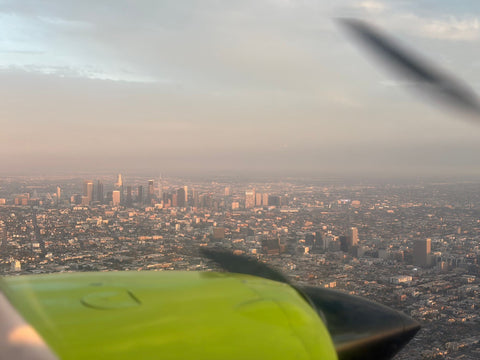
This feels like a disadvantage for about six lessons and then becomes the largest single advantage of training here. Van Nuys is Class D with an operating control tower, directly beneath the Burbank Class C, just north of the LAX Class B. From the moment the engine starts you are inside a system: ground for taxi, tower for departure, a discrete frequency, real traffic in the pattern, and a flight-following handoff the moment you leave. By the time you solo you have made several hundred radio calls. Pilots trained at quiet non-towered fields spend their first year after the checkride learning what you will have absorbed by hour twenty — and the FAA requires three of your solo takeoffs and landings to be at a towered field anyway under 14 CFR 61.109.
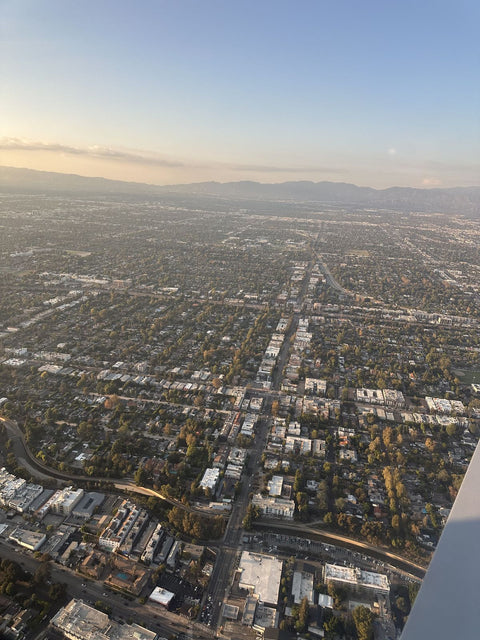
Airport density compounds it. The required 150-nautical-mile solo cross-country can be flown in several directions from the Valley — up the coast, over the ridge to the Oxnard plain, north into the Antelope Valley, or east toward the Inland Empire — and every one of those routes crosses different terrain, different airspace and different weather. You are not flying 150 miles of identical farmland to tick a box. The airports are close enough together that a diversion is a genuine option rather than a theoretical one, which is exactly what the examiner will test.

Paying For It In California: Cal Grant, CSAC And The Degree Route
This is the most commonly misunderstood part of training in this state, and getting it wrong costs people a year.
California's state financial aid is administered by the California Student Aid Commission, and the Cal Grant program is the main award. California Education Code § 69432.7 defines a Cal Grant "qualifying institution" as a California public postsecondary educational institution; or a California private or independent postsecondary institution that participates in the federal Pell Grant Program and in at least two other named federal student aid programs; or a California-headquartered nonprofit accredited by the Western Association of Schools and Colleges that meets a separate institutional-aid test. (Source: California Education Code § 69432.7, as published by the California Legislative Counsel, retrieved 12 September 2026.)
Read that definition carefully, because the consequence is simple and it applies to us too: Cal Grant money follows enrollment at a qualifying college. It does not reach a Part 61 certificate course at an independent flight school, including ours. If state aid is central to how you intend to pay, the route is a degree program with an aviation major at a qualifying California institution, and you should confirm eligibility with the college and with CSAC directly rather than with any flight school.
There is a second reason the degree route exists, and it is the more important one for a career student. The restricted-ATP hour reductions under 14 CFR 61.160 — 1,250 hours for a qualifying associate degree route and 1,000 hours for a qualifying bachelor's degree route, against the standard 1,500 — are conferred by graduating an FAA-authorized institution of higher education. No independent flight school confers them, in California or anywhere else. So the college decision and the state-aid decision are the same decision, and it is worth making deliberately: flight school versus an aviation degree works through both sides, and the 1,500-hour rule and R-ATP works through the arithmetic.
If you are paying for certificate training directly rather than through a degree, our own prices are fixed and published — Private Pilot at $10,400 for the 40-hour Standard, $15,400 for the 60-hour Comprehensive and $22,000 for the 80-hour Premium, Sport Pilot at $8,400, Instrument at $11,700 and Commercial at $15,400. Nothing is taxable and there is no booking fee, so the listed price is the total. Spreading it is covered on flight training financing, and every line item including the ones no school controls is on what flight school actually costs.
Come And See The Ramp Before You Commit
A 60-minute discovery flight from Van Nuys is $229 — no tax, no booking fee — and the hour is logged toward your certificate. It is also the cheapest due diligence you will ever do on a flight school.
Book A Discovery Flight — $229 Book A Free Consultation Call (818) 330-1318
Where The Flying Jobs Actually Are In California
For anyone training toward a career rather than a license, the geography matters more than the brochure. California carries a dense concentration of aviation employment, and it is concentrated in four places a newly-certificated commercial pilot can realistically reach.
- Flight instruction. The first job for most commercial pilots, and the one that pays you to log the hours between 250 and 1,500 instead of buying them. A state with this many training fields and this much year-round flyable weather sustains far more instructor positions than a state with a four-month season. We hire our own graduates — see flight instructor jobs at Van Nuys.
- Business and charter aviation. Van Nuys is a dedicated general-aviation airport with no scheduled airline service, and the charter, management and maintenance operators based on the field are a real source of first professional flying work in the Valley.
- Aerial work. Survey, photography, pipeline and powerline patrol, banner towing and traffic reporting — unglamorous, and it builds turbine-free hours quickly across a state with a lot of ground to cover.
- The airline pipeline. California's large hubs mean crew bases, and crew bases mean commuting is optional rather than compulsory once you are hired — which is worth more to quality of life than most first-year pay differences.
The order is fixed regardless: Private, then Instrument, then Commercial, then the instructor certificates, then hours. Our Airline Pilot Career Program covers zero to 260 hours for $84,000, and commercial pilot training in California covers the middle of that ladder.
What California Does Not Change
Everything federal, which is most of it. There is no state pilot license, no state registration, no state medical, no state written exam. Specifically:
- The 40-hour Part 61 minimum for a Private Pilot certificate under 14 CFR 61.109, and the 35-hour Part 141 minimum, are national figures. A California school cannot lower them and does not have a special version.
- The FAA medical certificate is issued by an Aviation Medical Examiner under 14 CFR 61.23 to the same standard in Bakersfield as in Boston. Details on the FAA medical certificate in Los Angeles.
- The student pilot certificate is free through IACRA and identical nationwide — see the IACRA application step by step.
- A California driver's license is useful as photo ID for your student pilot application and on checkride day, and it is what a Sport Pilot may use instead of an FAA medical. It is not a pilot document.
- Non-US citizens must be approved through the TSA Alien Flight Student Program under 49 CFR Part 1552 before beginning Private, Instrument or Multi-Engine training, in California as everywhere. A discovery flight needs no approval. See flight training for international students.
A Realistic California Timeline
Because weather cancellations are rare here, your timeline is set almost entirely by how often you book. Flying twice a week, most of our students go from first lesson to Private Pilot checkride in five to six months. Three times a week compresses it to three or four. Once a week stretches it to ten to twelve, and the reason is not the calendar — it is that skills decay between flights and you pay to relearn them.
Add a few weeks at the start for the medical and the IACRA paperwork, and two to four weeks at the end for a Designated Pilot Examiner slot, which in Southern California routinely runs weeks out. The detailed version is on how long it takes to become a pilot, and you can model your own numbers with the flight training cost calculator.
Frequently Asked Questions
Is There A California Pilot License?
No. All pilot certification in the United States is federal and issued by the FAA, so there is no California state pilot license, permit or registration, and nothing at the DMV affects it. You will need government-issued photo identification for your student pilot application and on checkride day, and a California driver's license is commonly used for that.
Does California Weather Really Make Flight Training Faster?
Yes, and it is the main thing the state changes. Southern California's dominant pattern is dry and stable for most of the year, so a student who books twice a week generally flies twice a week. The narrow exceptions are the May to early July marine layer, high density altitude on summer afternoons, autumn Santa Ana winds and winter tule fog inland, and all four are predictable enough to schedule around.
Can I Use A Cal Grant To Pay For Flight School In California?
Not for a Part 61 certificate course at an independent flight school, including ours. California Education Code § 69432.7 limits Cal Grant awards to qualifying institutions, which are California public postsecondary institutions, California private or independent institutions participating in the federal Pell Grant Program and at least two other federal student aid programs, and certain accredited California nonprofits. State aid therefore follows enrollment at a college, so confirm eligibility with the college and the California Student Aid Commission directly.
What Is The Marine Layer And How Much Training Does It Cost Me?
From roughly early May into early July, coastal Southern California gets low stratus overnight that often does not clear until mid-morning. It is not dangerous, but it holds early lessons below VFR minimums. Inland fields burn off earlier than coastal ones, so at Van Nuys, at 802 feet behind the Santa Monica Mountains, a June morning lesson is usually a delay rather than a cancellation. Moving lessons to afternoons and evenings removes most of the impact.
Is Learning To Fly In Busy California Airspace Harder?
It is harder for about six lessons and better forever after. Van Nuys is Class D with an operating control tower, directly beneath the Burbank Class C, just north of the LAX Class B, so you are talking to controllers from engine start. By the time you solo you have made several hundred radio calls, and 14 CFR 61.109 requires three of your solo takeoffs and landings to be at a towered airport in any case.
How Much Does It Cost To Become A Pilot In California?
At You Fly LA the Private Pilot Standard package is $10,400 for 40 hours, the Comprehensive is $15,400 for 60 hours and the Premium is $22,000 for 80 hours. Sport Pilot is $8,400, the Instrument Rating is $11,700 and the Commercial certificate is $15,400. Nothing is taxable and there is no booking fee, so the listed price is the total. Separate third-party costs apply for the knowledge test, the aviation medical examiner and the checkride examiner.
How Long Does It Take To Get A Pilot License In California?
Flying twice a week, most students go from first lesson to Private Pilot checkride in five to six months. Three times a week compresses it to three or four months, and once a week stretches it to ten to twelve. Add a few weeks at the start for the medical and IACRA paperwork and two to four weeks at the end for a Designated Pilot Examiner slot.
Ready For Takeoff?
Step one is the only one you can do this week. A 60-minute discovery flight from Van Nuys is $229 — no tax, no booking fee, so $229 is the total — you fly the airplane for most of it, and the hour is logged toward your 40. If you would rather map the whole thing out first, the in-person consultation is free and we will be honest about whether a Part 61 school in Van Nuys is the right answer for what you want.
Book A Discovery Flight — $229 Book A Free Consultation Call (818) 330-1318
You Fly LA · 7900 Balboa Blvd, Main Terminal Unit 108, Van Nuys, CA 91406 · Van Nuys Airport (KVNY) · Open 9 AM – 9 PM, seven days a week.