
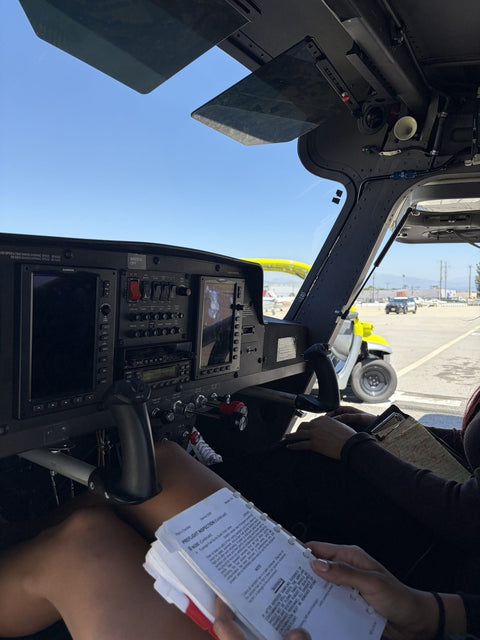
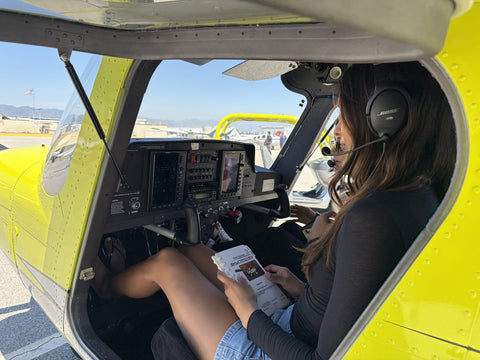


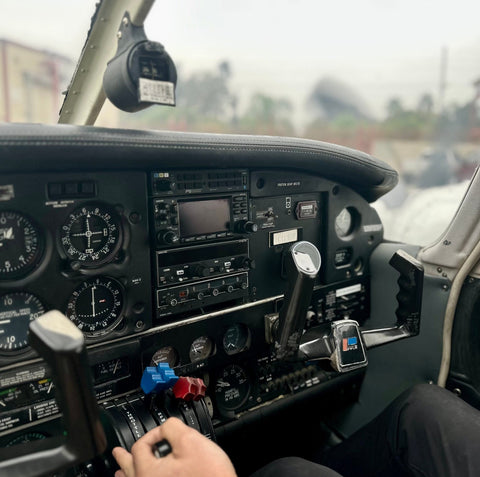
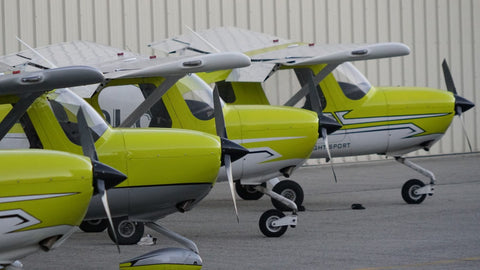


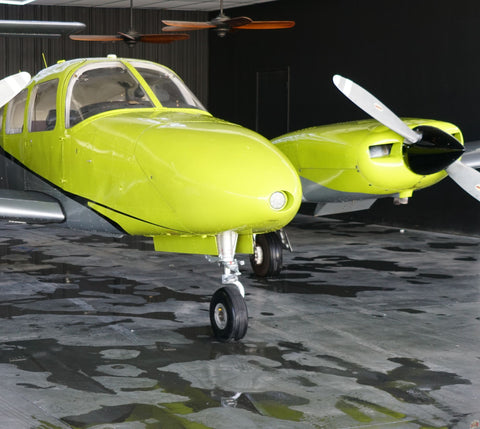

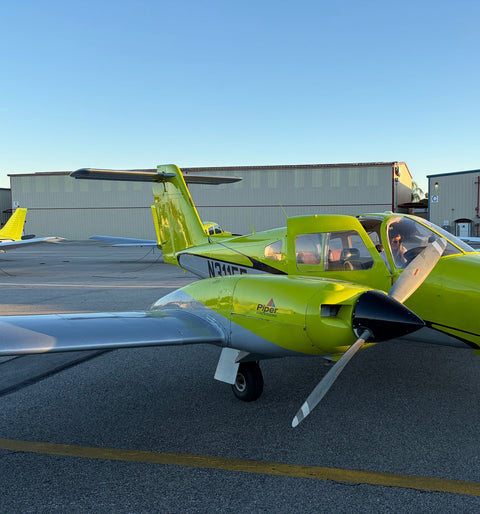



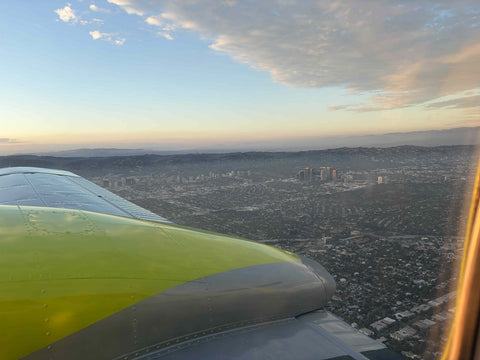

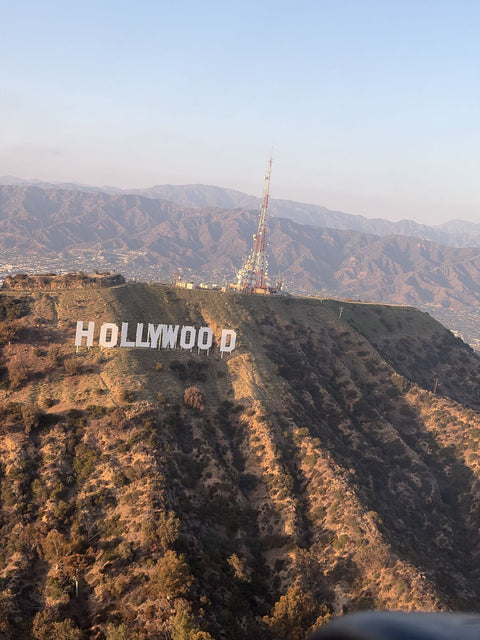


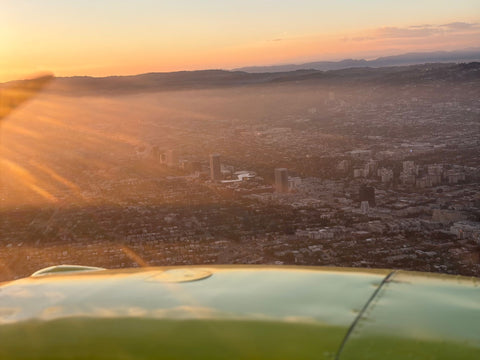
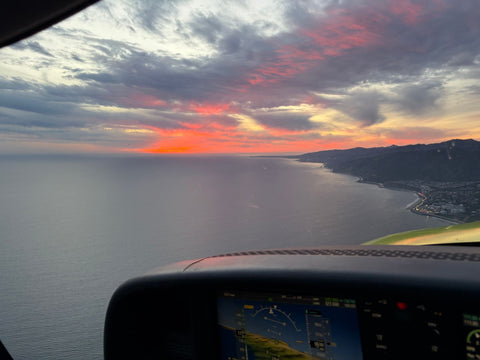


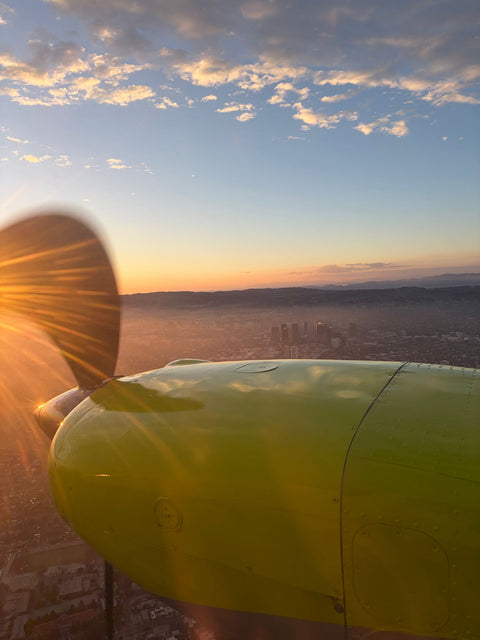
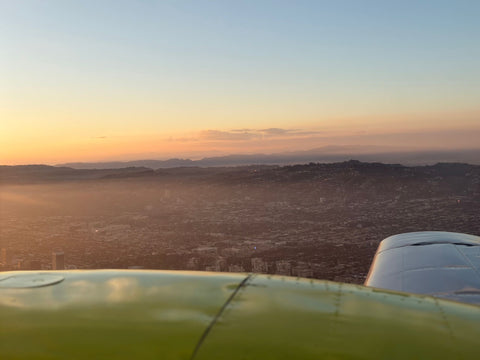






Here is how to become a pilot, whether you want to fly for fun or for a living: the certificates in the order you earn them, what each one costs at Van Nuys, how long they take, and the one step that can end the plan before it starts.
The Short Answer
To become a pilot you pass an FAA medical exam, claim a free student pilot certificate through IACRA, train with a certificated flight instructor to at least the 40-hour Part 61 minimum, pass a written knowledge test, and pass a checkride with an examiner. Most people finish in six to twelve months.
Book A Discovery Flight · $229 Book A Free Consultation
You Fly LA is a Part 61 flight school on the field at Van Nuys Airport (KVNY) in Los Angeles, at 7900 Balboa Blvd, Main Terminal Unit 108. We train people from a first flight through to a Commercial certificate, and this page is the whole path in the order you actually walk it — written by the instructors who walk it with students every week. Nothing here is a national average we cannot source. Where a number comes from a regulation, the regulation is named.
Regulation citations on this page are to 14 CFR Part 61 as published on the Electronic Code of Federal Regulations, current to 1 September 2026. Requirements do change; check the current text before you plan around it.
How To Become A Pilot In Seven Steps
-
Take A Discovery Flight
Fly an hour with an instructor before you commit to anything. You need no medical and no student pilot certificate, and 60 minutes from Van Nuys is $229.
-
Choose Where You Want To End Up
Sport pilot to fly for fun in daylight, private to carry passengers and travel, commercial to be paid, and the ATP for the airlines. If you are unsure, train toward private.
-
Get An FAA Medical
See an Aviation Medical Examiner in your first month. Third class covers solo and private flying; take a first class if a career is possible. Sport pilots may fly on a US driver's license instead.
-
Get Your Student Pilot Certificate
It is free through IACRA, and your instructor verifies the application. You must be 16 to solo an airplane.
-
Pass The Written Test
The private pilot knowledge test is 60 questions in 2 hours with a 70 percent pass mark. Take it early, ideally before your first solo.
-
Fly The Training
At least 40 hours under 14 CFR 61.109, including 20 with an instructor and 10 solo. Most students need more, which is why our packages run 40, 60 and 80 hours.
-
Pass The Checkride
An oral exam and a flight test with a designated pilot examiner, flown to the Airman Certification Standards. Book the examiner early, because Southern California calendars run weeks out.
Certificates, Ratings And Endorsements — How The Ladder Stacks
The FAA does not issue "licenses." It issues certificates, and almost every piece of confusion at the start comes from not separating three different things.
- A certificate is your level of pilot — Student, Sport, Recreational, Private, Commercial, Airline Transport. You hold one at a time and you upgrade it.
- A rating attaches to a certificate and expands what or how you may fly — the Instrument Rating, the Multi-Engine Rating, a type rating. A rating is never a standalone license, which is why there is no such thing as an "instrument license."
- An endorsement is a logbook signature from an instructor. No test, no card. Under 14 CFR 61.31 that is how you become legal to fly a complex airplane, a high-performance airplane with an engine of more than 200 horsepower, a tailwheel airplane, or a pressurized aircraft certified above 25,000 feet MSL.
Type ratings sit apart again: 14 CFR 61.31(a) requires one to act as pilot in command of a large aircraft, a turbojet-powered airplane or a powered-lift. Nothing in primary training needs one. For the full set side by side, see every FAA certificate and rating compared.
First, Decide Where You Want To End Up
This fork determines everything downstream and it happens earlier than most people expect. There are four realistic destinations, and the honest answer for a lot of people is the first one.
| Where You Want To End Up | Certificates Needed | Paid To Fly? | Cost At You Fly LA |
|---|---|---|---|
| Fly for fun, daytime, good weather | Sport Pilot | No | $8,400 |
| Carry passengers, travel, own an aircraft | Private, then Instrument | No | $10,400–$22,000 plus $11,700 |
| Be paid to fly — instruct, charter, survey | Private, Instrument, Commercial | Yes | $10,400 + $11,700 + $15,400 |
| Fly for an airline | All of the above, plus Multi-Engine, CFI, and an ATP at 1,500 hours | Yes | $84,000 zero to 260 hours |
Undecided is fine. Train toward the Private Pilot certificate: it is the trunk of the tree, every professional path runs through it, and nothing you spend on it is wasted if you change your mind. If the question behind the question is whether any of this is a good idea for you, read our honest assessment of whether becoming a pilot is worth it before you spend anything.
Step 1: Fly Once Before You Commit To Anything
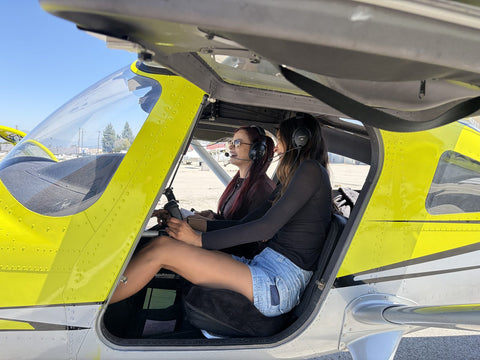
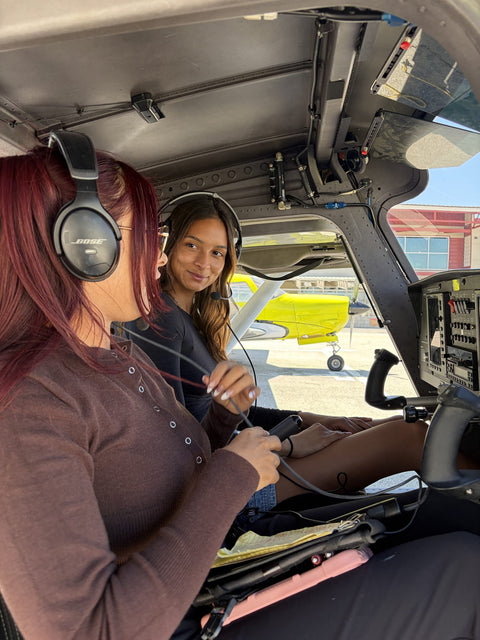
A discovery flight is a real lesson in a real airplane with a certificated instructor beside you. You need no medical certificate, no student pilot certificate and no experience — bring a government photo ID and that is the whole list. You sit in the left seat and fly the airplane.
Sixty minutes from Van Nuys is $229. There is no tax and no booking fee, so $229 is the total. Ninety minutes is $299 and two hours is $399, and the time is loggable, so if you continue, this hour already counts toward your certificate. A small number of people find out they genuinely dislike light aircraft in bumpy air, and $229 is a far better way to learn that than a five-figure commitment. See what a discovery flight actually involves, minute by minute.
Step 2: The Eligibility Rules That Are Not Negotiable
There is no minimum age to start flight training and no upper age limit. A twelve-year-old can take lessons and log every hour. Age controls when you may fly alone and when a certificate may be issued. Every applicant must also be able to read, speak, write and understand English — a hard requirement written into the eligibility rule for each certificate, and one the examiner assesses during the checkride oral.
| Certificate | Minimum Age | Medical Needed To Exercise It | Regulation |
|---|---|---|---|
| Student Pilot | 16 for airplanes | Third class before solo | 14 CFR 61.83, 61.23 |
| Sport Pilot | 17 | US driver's license or third class | 14 CFR 61.305 |
| Recreational Pilot | 17 | Third class | 14 CFR 61.96, 61.23 |
| Private Pilot | 17 | Third class | 14 CFR 61.103, 61.23 |
| Commercial Pilot | 18 | Second class | 14 CFR 61.123, 61.23 |
| Flight Instructor | 18 | Third class when acting as PIC | 14 CFR 61.183, 61.23 |
| Airline Transport Pilot | 23, or 21 for a restricted ATP | First class | 14 CFR 61.153, 61.23 |
Starting early is a genuine advantage: a student who begins at 14 arrives at 16 ready to solo and at 17 ready for a checkride. Our Teens Pilot Course for ages 10 to 15 is $4,200 and is built around exactly that timeline.
Step 3: Get The Medical Before You Spend Anything More
This is the most important sequencing advice on the page. The medical is the only step that can disqualify you after you have already spent money. You do not need one to fly with an instructor, and you do not need one for a discovery flight — but you do need one before you solo, so get it in month one.
An FAA medical certificate is issued only by an Aviation Medical Examiner, a physician designated by the FAA. Your own doctor cannot issue one. You complete FAA MedXPress online, then take the confirmation number to the AME appointment. Under 14 CFR 61.23 there are three classes: third class to solo and to exercise Private privileges, second class for Commercial privileges, first class for ATP privileges at an airline. Durations run from the date of the examination, and they are shorter once you turn 40.
If a professional career is even a possibility, take a first-class medical now, even though third class is all you legally need to start. It answers the only question that really matters — whether the career is medically available to you — before you commit tens of thousands of dollars. Sport Pilot is the exception, because it can be exercised on a valid US driver's license instead of an FAA medical, provided you have never had an FAA medical application denied.
Far less disqualifies people than they fear. Glasses, contacts and LASIK are routine. Where to find an AME near the 101 and 405 corridors, and what happens in the exam itself, is on our guide to the FAA medical certificate in Los Angeles. The conditions that genuinely cause trouble — and the much longer list that does not — are set out in what actually disqualifies you from being a pilot, and color vision has its own page because it comes up constantly: can you be a pilot if you are colorblind.
If you have a history that might complicate things — certain medications, past surgeries, mental health treatment, a cardiac or neurological history — talk to an AME before you formally apply. A denied application is far harder to unwind than one never filed.
Step 4: The Student Pilot Certificate, And IACRA
Your student pilot certificate is a separate document from your medical, and it is free. If a website is charging you for one, you are on the wrong website. It is issued through IACRA, the FAA's Integrated Airman Certification and Rating Application system, and the first thing you do there is create an account and receive an FTN, an FAA Tracking Number, which follows you through every certificate and rating for the rest of your flying life.
The application is verified in person by your flight instructor, a Designated Pilot Examiner, an Airman Certification Representative or an FAA Flight Standards District Office employee, and the plastic certificate arrives by mail weeks later. Under 14 CFR 61.83 you must be 16 for airplanes. The certificate itself does not expire — the medical behind it does. Read what a student pilot certificate is and is not, then follow the IACRA application screen by screen, including the errors that get applications kicked back.
Step 5: Ground School And The Written Exam
Everyone calls it "the written," though it has been on a computer for years. Under 14 CFR 61.39 you must pass it within the 24 calendar months preceding the month you complete your practical test, and you need an instructor endorsement or evidence of a ground training course before you may sit it. The FAA's Airman Knowledge Testing Matrix, effective 22 October 2025, sets the shape of each test.
| Test | Code | Questions | Time Allotted | Passing Score |
|---|---|---|---|---|
| Sport Pilot Airplane | SPA | 40 | 2.0 hours | 70 |
| Private Pilot Airplane | PAR | 60 | 2.0 hours | 70 |
| Instrument Rating Airplane | IRA | 60 | 2.0 hours | 70 |
| Commercial Pilot Airplane | CAX | 100 | 2.5 hours | 70 |
| Flight Instructor Airplane | FIA | 100 | 2.5 hours | 70 |
| Airline Transport Pilot Multiengine | ATM | 125 | 3.5 hours | 70 |
Source: FAA Airman Knowledge Testing Matrix, effective 22 October 2025. Note that the matrix also expects you to have an FTN from IACRA before you sit the test, which is one more reason to do Step 4 early.
Take the written early — ideally before your first solo. A student who already understands Class D airspace on the ground does not burn twenty minutes of a $179 airplane hour learning it in the air. Ground instruction with us is $110 per hour, the same rate as flight instruction. For the subject areas, the endorsement, the test center and an honest study plan, see how to prepare for and sit the private pilot written exam.
Not Sure Which Step You Are On?
Come and sit down with an instructor at Van Nuys. We will map your medical class, your budget, your timeline and which certificate actually fits what you want to do. It costs nothing.
Book A Discovery Flight — $229 Book A Free Consultation Call (818) 330-1318
Step 6: The Flight Training Itself
This is where the hours and the money go. For a Private Pilot certificate with an airplane single-engine rating, 14 CFR 61.109 requires at least 40 hours of flight time, of which at least 20 hours must be flight training from an authorized instructor and at least 10 hours must be solo. Inside those totals the rule is specific, and the specifics are what shape the calendar.
The Pre-Solo Block
Aircraft control and the traffic pattern: straight and level, climbs, descents, turns, slow flight, stalls, ground reference maneuvers, then landing after landing. Almost everyone plateaus on landings somewhere in the teens of hours. It is normal and it passes. Before your instructor can endorse you to solo, 14 CFR 61.87 requires that you have received and logged training in the maneuvers listed in that section, demonstrated satisfactory proficiency, and passed a written pre-solo knowledge test administered by your own instructor, covering the applicable sections of 14 CFR parts 61 and 91, the airspace rules and procedures for the airport where you will solo, and the flight characteristics and operational limitations of the make and model you fly. Your instructor must review every incorrect answer with you before authorizing the solo.
First Solo
Three takeoffs and landings, alone, usually at your home field. It is the single most memorable day in flight training. You must be 16, hold a student pilot certificate, and hold at least a third-class medical. At a towered Class D field like Van Nuys you will have made several hundred radio calls by this point, which is why the frequency no longer intimidates you when it matters.
Cross-Country, Night And Instrument Exposure
Then navigation. Within the 40 hours, 14 CFR 61.109(a) requires at least 3 hours of cross-country flight training, 3 hours of night flight training including one cross-country of over 100 nautical miles and 10 takeoffs and 10 landings to a full stop, and 3 hours of flight training by reference to instruments alone. Your 10 solo hours must include 5 hours of solo cross-country, one solo cross-country of 150 nautical miles total distance with full-stop landings at three points and one leg of more than 50 nautical miles, and three takeoffs and landings to a full stop at an airport with an operating control tower.
Checkride Preparation
The last block polishes everything to Airman Certification Standards tolerances. 14 CFR 61.109(a)(4) requires 3 hours of test preparation with an instructor within the two calendar months preceding the month of the test — so this block cannot be done early and banked. This is where our Redbird full-motion simulator at $120 an hour earns its keep against $179 for the airplane: you can freeze an emergency and talk about it, which you cannot do in flight.
The complete hour-by-hour breakdown of 61.109, with every sub-requirement, is on the FAA private pilot license requirements. What each of those lessons actually consists of on the ground and in the air — the syllabus, the stages, the briefings, a typical week — is on what pilot schooling actually involves.
Step 7: The Checkride
The practical test is conducted by a Designated Pilot Examiner and has two parts on the same day. The oral comes first and works through the Airman Certification Standards: certificates and documents, airworthiness, weather, cross-country planning, performance and limitations, airspace, aeromedical factors and your specific aircraft's systems. You defend a real cross-country plan you were assigned in advance. The flight test follows: you depart on the first leg of that plan, get diverted, fly the maneuver sequence, and return for landings to standard.
Three outcomes are possible — a pass, a discontinuance if weather or an aircraft problem stops the test, or a notice of disapproval on specific tasks, in which case you retrain those items and re-test only those items. A partial failure on one maneuver ends nothing. Book the examiner early; Designated Pilot Examiner calendars in Southern California routinely run weeks out, and that wait is real time added to the end of otherwise well-run training. Read what to expect on checkride day, from the oral to the debrief.
What It Costs And How Long It Takes
Our Private Pilot packages are fixed prices, not hourly meters: $10,400 for the 40-hour Standard, $15,400 for the 60-hour Comprehensive and $22,000 for the 80-hour Premium. Want to train in the Cirrus SR22 Turbo? Add it to any package at +$400 per hour, for as many hours as you choose. Sport Pilot is $8,400. Hourly, the aircraft is $179, the Diamond DA20 is $229, instruction is $110 and ground is $110.
Forty hours is a legal floor, not a forecast, and we will not quote you a national average we cannot source. What we will say plainly is that most students finish meaningfully above 40 hours, which is exactly why our packages are sized at 40, 60 and 80. Budget against the 60-hour band and treat anything less as a bonus. Anyone quoting a flat 40-hour price with no discussion of what happens at hour 45 is selling you a number, not a plan.
| Pace | Lessons Per Week | Hours Per Month | Time To About 60 Hours | Who It Suits |
|---|---|---|---|---|
| Full-time | 4–5 | 26–32 | 2–3 months | Sabbatical or no job, weekday availability |
| Accelerated part-time | 3 | About 18 | 3–4 months | Self-employed, students, flexible schedules |
| Steady | 2 | About 12 | 5–6 months | The sweet spot for working adults |
| Casual | 1 | About 6 | 10–12 months | Workable, but expect relearning every flight |
| Occasional | 0.5 | About 3 | 20+ months | Not recommended — hours and cost climb |
Add a few weeks at the start for the medical and IACRA, and two to four weeks at the end for an examiner slot. To put your own numbers into it, use the flight training cost calculator. For every line item including the ones no flight school controls — the knowledge test fee, the AME's fee, the examiner's fee, a headset, charts and apps — see what flight school actually costs, and for the calendar in detail, how long it takes to become a pilot.
Can You Do This With A Full-Time Job?
Yes, and most of our students do. Two lessons a week is the pace that works. A Tuesday evening slot and a Saturday morning slot, plus three to five hours a week of study at home, gets a working adult to a checkride in a bit under half a year. Frequency is the single biggest lever on total hours and therefore total cost: at two or three lessons a week skills compound, while at one lesson every other week you spend the first twenty minutes of each flight relearning what you already paid to learn.
Two Southern California realities shape the calendar and both have workarounds. May and June bring the marine layer, and coastal stratus can hold mornings below VFR minimums until it burns off, so afternoon and evening lessons are the answer. Summer afternoons push past 100°F in the Valley, where high density altitude degrades climb performance, so summer training moves early. We are open 9 AM to 9 PM, seven days a week, largely because of this. The full working-adult playbook is on part-time flight training in Los Angeles, and our weather and cancellation policy tells you what happens when a lesson cannot go.
After The Private Certificate: If You Want This As A Career
The Private certificate is where flying for fun ends and the professional ladder begins. The order is fixed and each rung has a reason.
Instrument Rating. 14 CFR 61.65(d) requires 50 hours of cross-country time as pilot in command, of which 10 must be in an airplane, plus 40 hours of actual or simulated instrument time, of which 15 must be with an authorized instrument instructor. It is $11,700 with us, and a large share of that instrument time can be flown in the Redbird rather than the airplane. Commercial Pilot. 250 hours total under 14 CFR 61.129, a second-class medical, and $15,400. Multi-Engine Rating. Proficiency-based, no published hour minimum, $5,100 over seven days. CFI, CFII and MEI. $15,400 combined, and the reason almost everyone does it: instructing is how you get paid to log the hours between 250 and 1,500 instead of buying them.
The ATP is the last rung, and you do not buy it at a flight school. It requires 1,500 hours, with restricted-ATP reductions under 14 CFR 61.160 to 1,250 hours for an associate degree route, 1,000 hours for a qualifying bachelor's degree route, and 750 hours for eligible military pilots — all of which run through an FAA-authorized institution of higher education rather than through any independent flight school. Our Airline Pilot Career Program takes you from zero to 260 hours for $84,000; the remaining hours are built on the job. The arithmetic of the reductions is worked through on the 1,500-hour rule and R-ATP.
Where You Would Actually Do This With Us
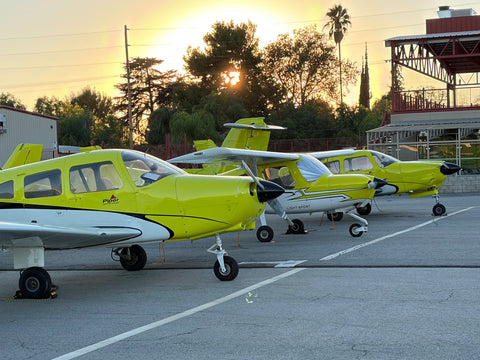
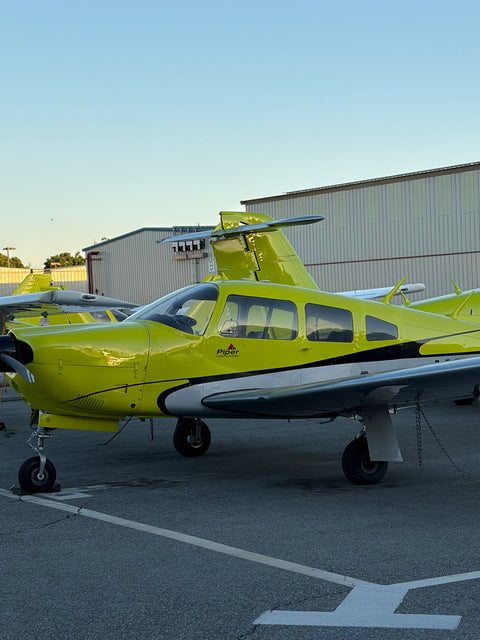
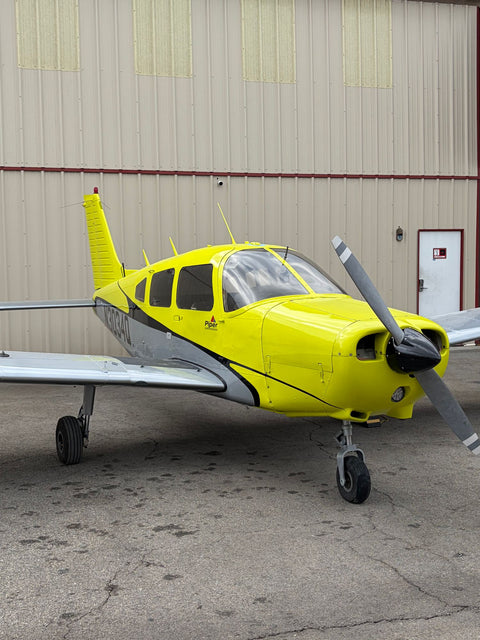
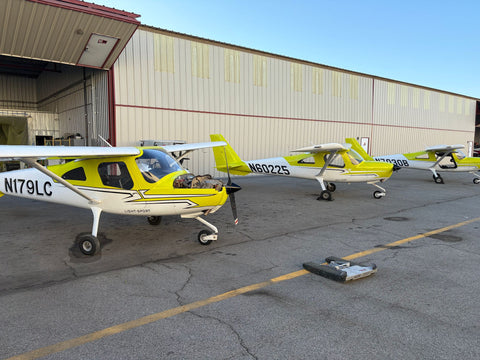
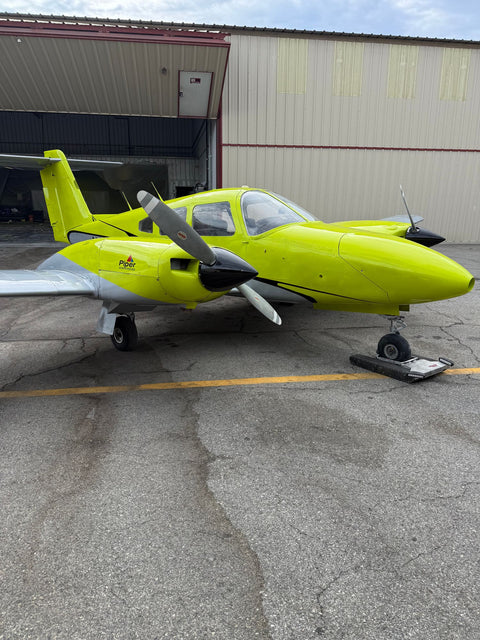
We are at 7900 Balboa Blvd, Main Terminal Unit 108, on the field at Van Nuys, inside KVNY's Class D airspace and beneath the Burbank Class C, just north of the LAX Class B — which is the best radio classroom in Southern California, because you cannot avoid learning it. The fleet is Piper Warrior PA-28-161 at $179 an hour inside a package, Diamond DA20-C1, Cessna 162 Skycatcher, Piper Arrow, Piper Seminole and Cirrus SR22T, plus the Redbird full-motion simulator. Six types on one ramp is a scheduling asset in a city where a canceled lesson can cost you a fortnight.
You will be assigned one instructor rather than whoever is free — instructor churn is the quiet cause of overrun at a lot of schools, and it costs students real flights. Meet the people who would teach you on our instructors page, see the course itself on our Private Pilot course in Los Angeles, and if you are anywhere else in the state, becoming a pilot in California covers what this state specifically changes.
Frequently Asked Questions
How Long Does It Take To Become A Pilot?
Flying two lessons a week, most students reach a Private Pilot certificate in five to six months. Full-time training at four to five lessons a week compresses that to two or three months, and one lesson a week stretches it to ten to twelve. Add a few weeks at the start for the medical and IACRA paperwork, and two to four weeks at the end to get onto a Designated Pilot Examiner's calendar.
How Much Does It Cost To Become A Pilot?
At You Fly LA a Sport Pilot certificate is $8,400 and Private Pilot packages are $10,400 for 40 hours, $15,400 for 60 hours and $22,000 for 80 hours. Add $11,700 for the Instrument Rating and $15,400 for the Commercial certificate if you intend to be paid to fly. The zero-to-airline program covering 260 hours is $84,000. Separate third-party costs include the knowledge test fee, the medical examiner's fee and the checkride examiner's fee.
What Do You Need To Become A Pilot?
A government photo ID for your first lesson, an FAA medical certificate from an Aviation Medical Examiner before you solo, a free student pilot certificate through IACRA, the ability to read, speak, write and understand English, and the flight training itself. There is no college degree requirement and no minimum age to start.
How Old Do You Have To Be To Become A Pilot?
There is no minimum age to start training or to log flight time with an instructor. Under 14 CFR 61.83 you must be 16 to hold a student pilot certificate for airplanes and to solo one. Under 14 CFR 61.103 you must be 17 to be issued a Private Pilot certificate, and under 14 CFR 61.123 you must be 18 for a Commercial Pilot certificate. There is no upper age limit.
Do I Need A Medical Certificate Before My First Lesson?
No. You can fly with an instructor from day one with no medical certificate at all, and a discovery flight needs nothing but a photo ID. Under 14 CFR 61.23 you need at least a third-class medical before you fly solo. Get it in your first month anyway, because the medical is the only step that can disqualify you after you have already spent money.
Is 40 Hours Really Enough To Get A Private Pilot License?
Forty hours is the FAA minimum under Part 61 and 35 hours under Part 141. Both are legal floors that assume perfect retention, weather and scheduling. Most students finish above the minimum, which is why our packages are sized at 40, 60 and 80 hours. Budget for the 60-hour band and treat anything less as a bonus.
What Is The Difference Between A Pilot Certificate And A Pilot License?
They mean the same thing in ordinary speech, but the FAA issues certificates rather than licenses. A certificate is your level of pilot, such as Private or Commercial. A rating such as the Instrument Rating or the Multi-Engine Rating attaches to a certificate and expands what or how you may fly, and an endorsement is a logbook signature from an instructor that requires no test and no card.
What Is The Fastest Way To Become A Pilot?
The shortest certificate is sport pilot, with a 20-hour minimum under 14 CFR 61.313; our sport pilot course is $8,400. For a private pilot certificate, the fastest route is frequency: get the medical and the IACRA application done in the first month, pass the written before your first solo, and fly four or five times a week, which usually gets full-time students to the checkride in two to three months.
Which Pilot License Should I Get First?
For most people, the private pilot certificate, because every other path runs through it and it lets you carry passengers, fly at night and travel. Choose sport pilot only if you want to fly for fun in daylight with one passenger and would rather use a US driver's license than an FAA medical. If a career is the goal, start the private certificate with a first-class medical in hand.
Start With The Step That Needs No Paperwork
Every certificated pilot started with one flight. Ours costs $229, takes an hour, requires nothing but a photo ID, and counts toward your certificate. There is no tax and no booking fee, so $229 is the total. If you would rather map the plan first — destination, medical class, budget, timeline — the in-person consultation at Van Nuys is free.
Book A Discovery Flight — $229 Book A Free Consultation Call (818) 330-1318
You Fly LA · 7900 Balboa Blvd, Main Terminal Unit 108, Van Nuys, CA 91406 · Van Nuys Airport (KVNY) · Open 9 AM – 9 PM, seven days a week.
Sources: 14 CFR 61.23, 61.39, 61.83, 61.103, 61.109, 61.123, 61.153, 61.313 and 61.315 (Electronic Code of Federal Regulations, eCFR, read 23 September 2026); FAA Airman Knowledge Testing Matrix, effective 22 October 2025 (faa.gov).