




















A Pilot License Is Actually A Certificate — And That Fixes Most Of The Confusion
There are six types of pilot licenses in the United States — Student, Sport, Recreational, Private, Commercial and Airline Transport — plus a separate family of ratings and endorsements that attach to them. If you came looking for the recreational pilot license, it is one of the six, and we explain below why almost nobody chooses it now. The FAA does not issue "licenses" at all. It issues certificates, and the difference between a certificate, a rating and an endorsement is the single most useful thing on this page.
- A certificate is your level of pilot. It is the noun. You hold one at a time and you upgrade it.
- A rating is added to a certificate and expands what or how you may fly — Instrument, Multi-Engine, or a specific aircraft type. It is not a standalone license and never expires on its own.
- An endorsement is a logbook signature from an instructor. No test, no plastic card, no FAA paperwork — just a signature that clears you for a category of aircraft or an operation.
So "instrument license" is not a thing. The Instrument Rating is added to your Private or Commercial certificate. Everything below is organized in the order you would actually earn it, with the regulation behind each figure named so you can check it. You Fly LA is a Part 61 school at Van Nuys Airport in Los Angeles and we train every certificate and rating on this page except the Recreational, and we will explain why that one is missing.
Citations are to 14 CFR Part 61 as published on the Electronic Code of Federal Regulations, current to 1 September 2026, and to the FAA Airman Knowledge Testing Matrix dated 22 October 2025. Requirements change; verify before planning around them.
Quick Answer: The FAA issues six pilot certificates: student, sport (20 hours minimum), recreational (30), private (40), commercial (250) and airline transport pilot (1,500, or less for a restricted ATP). Ratings such as instrument and multi-engine attach to a certificate, and endorsements are instructor sign-offs in your logbook. The recreational pilot license sits between sport and private and is rarely chosen now; at You Fly LA the sport course is $8,400 and private packages start at $10,400.
Book A Free Consultation Call Or Text (818) 330-1318
The Complete Comparison Table
| Certificate Or Rating | Min Age | FAA Minimum Hours | Medical | What It Lets You Do | What It Does Not Allow | Price At You Fly LA |
|---|---|---|---|---|---|---|
| Student Pilot Certificate | 16 (61.83) | None | Third class before solo | Train, and fly solo with instructor endorsements | No passengers, no compensation | $0 via IACRA |
| Sport Pilot | 17 (61.305) | 20 hours (61.313) | Driver's license or third class | Day VFR in a light-sport aircraft, one passenger | No night without the 61.329 endorsement, no IMC, no compensation | $8,400 |
| Recreational Pilot | 17 (61.96) | 30 hours (61.99) | Third class | Day VFR, one passenger, near your home airport | No night, no compensation, heavy restrictions | Not offered — see Sport or Private |
| Private Pilot | 17 (61.103) | 40 Part 61 (61.109) / 35 Part 141 | Third class | Carry passengers day and night, fly nationwide | No flying for compensation or hire; no IMC | $10,400 / $15,400 / $22,000 |
| Instrument Rating | Certificate held | 50 hr XC PIC + 40 hr instrument (61.65) | Same as certificate | File and fly IFR, fly in cloud and low visibility | Not a certificate; adds no paid privileges | $11,700 |
| Commercial Pilot | 18 (61.123) | 250 hours (61.129) | Second class | Be paid to fly | Not enough on its own for airline flying | $15,400 |
| Multi-Engine Rating | Certificate held | No published hour minimum | Same as certificate | Act as PIC of multi-engine airplanes | Not a certificate; single-engine privileges unchanged | $5,100 |
| CFI | 18 (61.183) | Commercial certificate first | Third class when acting as PIC | Be paid to teach flying | Adds no new flying privileges of your own | $15,400 for CFI, CFII and MEI |
| CFII | 18 | CFI plus Instrument Rating | Third class when acting as PIC | Teach instrument students | Does not cover multi-engine instruction | Included above |
| MEI | 18 | CFI plus Multi-Engine Rating | Third class when acting as PIC | Teach in multi-engine airplanes | Does not cover instrument instruction | Included above |
| ATP | 23, or 21 restricted (61.153) | 1,500, R-ATP from 750 (61.160) | First class | Act as PIC for a scheduled airline | Does not guarantee a job | Earned on the job |
How The Ladder Stacks
Certificates replace each other; ratings accumulate on top. A Commercial pilot does not "still hold" a Private certificate — the Commercial certificate supersedes it. But an Instrument Rating earned on a Private certificate carries across when you upgrade to Commercial, and so does a Multi-Engine Rating and every endorsement in your logbook. Nothing you earn is lost on the way up.
There is a third axis most people never hear about until their instructor mentions it. Every certificate is issued with category and class ratings printed on it — category being airplane, rotorcraft, glider, lighter-than-air or powered-lift, and class being, within the airplane category, single-engine land, multi-engine land, single-engine sea or multi-engine sea. So a normal first certificate reads "Private Pilot — Airplane Single-Engine Land." Adding the Multi-Engine Rating adds a class. Type ratings are the narrowest tier: under 14 CFR 61.31(a) one is required to act as pilot in command of a large aircraft, a turbojet-powered airplane or a powered-lift, which is why airline pilots are type-rated on a specific aircraft. Nothing in primary training requires one.
Student Pilot Certificate
Not a license to fly on your own — a license to learn. It permits solo flight only with specific instructor endorsements for the aircraft, the airport and the conditions. It costs nothing, is issued through IACRA, the FAA's online system, and requires an FTN (FAA Tracking Number) that follows you for the rest of your flying life. Under 14 CFR 61.83 you must be 16 for airplanes and able to read, speak, write and understand English. You do not need one for a discovery flight or for dual instruction — only to solo, and the certificate itself does not expire, though the medical behind it does. See what a student pilot certificate is and is not and the IACRA application step by step.
Sport Pilot Certificate
Lets you: fly a light-sport aircraft in daytime VFR with one passenger, at the lowest cost and hour requirement of any certificate. 14 CFR 61.313 sets a 20-hour minimum for airplane single-engine land privileges, of which at least 15 hours must be flight training from an instructor and at least 5 hours solo. Uniquely, it can be exercised with a valid US driver's license instead of an FAA medical certificate, which makes it the right answer for some people with a medical complication — provided no FAA medical application has ever been denied.
Does not let you: fly in cloud, fly for compensation, or fly aircraft outside the performance limits in 14 CFR 61.316. Airspace and altitude are restricted without additional training. Night is possible, but only with the training and endorsement in 14 CFR 61.329, which also requires a medical certificate or the 61.113(i) alternative — so night flying and the driver's-license route do not combine. Our Sport Pilot course is $8,400, against $10,400 for the Private Standard package.
Recreational Pilot Certificate
A middle tier created between Sport and Private, with a 30-hour minimum under 14 CFR 61.99. In practice it is almost extinct: it restricts you to daytime VFR, one passenger, lower-powered aircraft and a radius around your home airport, and lifting those restrictions requires endorsements that bring you close to Private requirements anyway. We do not offer it, and we would steer you to Sport Pilot for cost or Private Pilot for freedom.
Side by side, the three entry-level certificates look like this.
| Item | Sport Pilot | Recreational Pilot | Private Pilot |
|---|---|---|---|
| FAA minimum hours | 20 (61.313) | 30 (61.99) | 40 (61.109) |
| Minimum age | 17 | 17 | 17 |
| Medical | US driver's license or FAA medical | Third class | Third class |
| Passengers | One | One | As many as the airplane seats |
| Night flying | Only with the 61.329 endorsement | No | Yes |
| Towered airports and Class B, C, D | With a logbook endorsement | With training and an endorsement | Yes |
| Distance from departure airport | No fixed limit | 50 NM unless trained and endorsed | No fixed limit |
| At You Fly LA | $8,400 | Not offered | From $10,400 |
Private Pilot Certificate
The certificate most people mean by "pilot's license," and the trunk of the tree — every professional path runs through it.
Lets you: act as pilot in command of an aircraft you are rated for, day or night, carry passengers anywhere in the United States, and share flight expenses with them on a pro-rata basis.
Does not let you: be paid to fly, and does not permit flight in instrument conditions without an Instrument Rating. 14 CFR 61.109 sets 40 hours under Part 61 — at least 20 hours of flight training from an instructor and at least 10 hours solo — against 35 under Part 141. Those are legal floors, not forecasts, which is why our Private Pilot packages are sized at 40 hours for $10,400, 60 for $15,400 and 80 for $22,000. Want to train in the Cirrus SR22 Turbo? Add it to any package at +$400 per hour, for as many hours as you choose. See the full 61.109 hour breakdown, the cost breakdown and Part 61 versus Part 141.
Instrument Rating — A Rating, Not A Certificate
This is the most misunderstood item in aviation. There is no such thing as an "instrument license." The Instrument Rating attaches to a certificate you already hold and changes the conditions you may fly in, not your level of pilot.
Lets you: file and fly IFR, enter cloud, and operate in low visibility — which in practical terms is what turns an aircraft from a fair-weather toy into transportation.
Does not let you: earn money. A Private Pilot with an Instrument Rating still cannot fly for compensation. 14 CFR 61.65(d) requires 50 hours of cross-country time as pilot in command, of which 10 must be in an airplane, plus 40 hours of actual or simulated instrument time, of which 15 must be received from an authorized instrument instructor. A large share of that instrument time can be flown in our Redbird full-motion simulator, which inside a course package is $120 per hour against $179 for the airplane. Our Instrument Rating course is $11,700.
Commercial Pilot Certificate
Lets you: be paid to fly. That is the whole point — it is the line between hobby and profession. 14 CFR 61.129 sets a 250-hour minimum for an airplane single-engine rating, and you need a second-class medical under 14 CFR 61.23 to exercise the privileges.
Does not let you: start an airline or a charter operation on your own. Carrying passengers or cargo for hire generally requires an operating certificate held by a company, which is why most newly-certificated commercial pilots are hired into instructing, aerial work or charter rather than flying paying passengers independently. It is also not sufficient for airline flying, which requires an ATP. Our Commercial Pilot course is $15,400.
Multi-Engine Rating
Lets you: act as pilot in command of multi-engine airplanes. It is a class rating added to your existing certificate, and it is proficiency-based with no published hour minimum — you train until you meet the standard and then take a checkride.
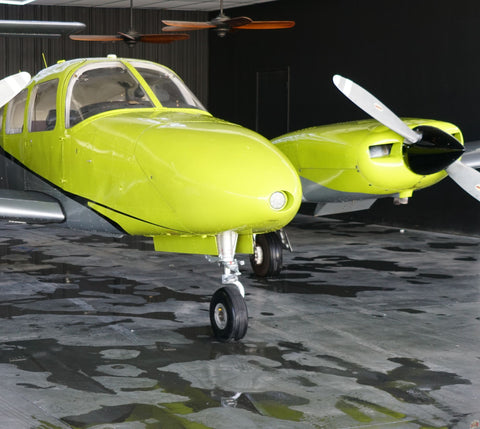
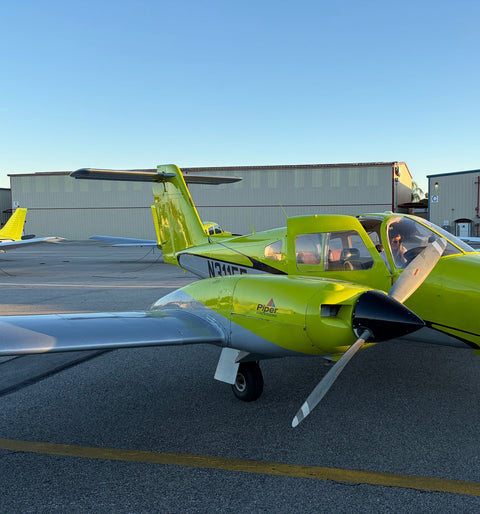
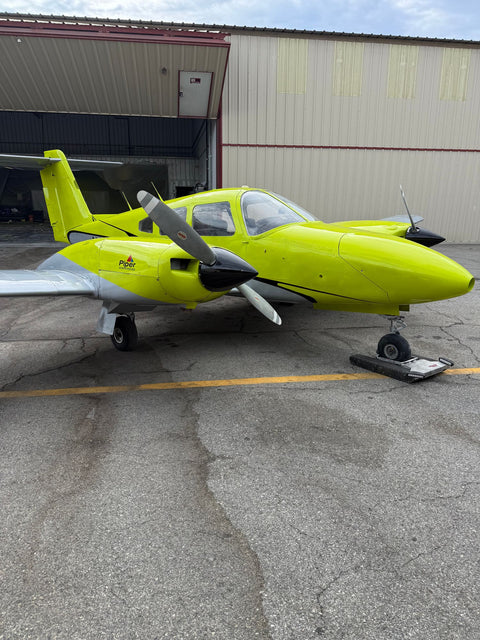
Does not let you: anything new in single-engine aircraft. Most students complete it in about a week in our Piper Seminole. The Multi-Engine Rating is $5,100 over seven days.
Flight Instructor: CFI, CFII And MEI
Three separate instructor credentials, and the difference matters when you are hiring an instructor or planning a career. Under 14 CFR 61.183 you must be 18 and hold a Commercial or ATP certificate first.
- CFI — teach primary students toward Sport, Recreational, Private and Commercial certificates.
- CFII — additionally teach instrument students and give instrument instruction.
- MEI — additionally teach in multi-engine airplanes.
Instructing does not add flying privileges of your own; it lets you be paid to teach. It is also the standard way pilots build from 250 hours toward the 1,500 required for an ATP, because you are paid to log time instead of buying it. Our combined CFI, CFII and MEI course is $15,400, and we hire our own graduates — see flight instructor jobs.
Not Sure Which One You Need?
Sit down with an instructor at Van Nuys and we will work out which certificate matches what you actually want to do with an airplane. It costs nothing, and there is no obligation attached to it.
Book A Discovery Flight · $229 Book A Free Consultation Call Or Text (818) 330-1318
Airline Transport Pilot (ATP)
The highest certificate the FAA issues, and the only one required to act as pilot in command for a scheduled airline. It requires 1,500 hours, a first-class medical, and under 14 CFR 61.153 a minimum age of 23 — or 21 for a restricted ATP. The restricted-ATP reductions in 14 CFR 61.160 run to 1,250 hours for a qualifying associate degree route, 1,000 hours for a qualifying bachelor's degree route, and 750 hours for eligible military pilots, and all of them are conferred by an FAA-authorized institution of higher education rather than by any independent flight school.
You do not buy an ATP at a flight school the way you buy a Private. You accumulate the hours, and the certificate typically comes at the point of airline hiring. Our Airline Pilot Career Program takes you from zero to 260 hours for $84,000; from there you build time, normally by instructing. See the 1,500-hour rule and R-ATP and how to become an airline pilot.
Every Knowledge Test, And What It Takes To Pass
Each certificate and rating has its own FAA knowledge test, and the passing score is 70 for all of them. The figures below are from the FAA Airman Knowledge Testing Matrix dated 22 October 2025.
| Test | Code | Questions | Time Allotted | Minimum Age To Sit It |
|---|---|---|---|---|
| Sport Pilot Airplane | SPA | 40 | 2.0 hours | 15 |
| Recreational Pilot Airplane | RPA | 50 | 2.0 hours | 15 |
| Private Pilot Airplane | PAR | 60 | 2.0 hours | 15 |
| Instrument Rating Airplane | IRA | 60 | 2.0 hours | 15 |
| Commercial Pilot Airplane | CAX | 100 | 2.5 hours | 16 |
| Flight Instructor Airplane | FIA | 100 | 2.5 hours | 16 |
| Airline Transport Pilot Multiengine | ATM | 125 | 3.5 hours | 18 |
Under 14 CFR 61.39 your result must sit within the 24 calendar months preceding the month you complete the practical test, so taking a written far too early is its own kind of mistake. Preparation is covered on the private pilot written exam, and what the checkride itself involves is on what to expect on checkride day.
Endorsements People Mistake For Licenses
These are logbook signatures, not certificates. No written test, no checkride, no card in your wallet — an instructor trains you, signs your logbook, and you are legally qualified. All four below come from 14 CFR 61.31.
| Endorsement | What It Covers | How You Get It |
|---|---|---|
| Complex | Retractable landing gear, flaps and a controllable-pitch propeller | Ground and flight training, plus a logbook endorsement |
| High-performance | An airplane with an engine of more than 200 horsepower | Ground and flight training, plus a logbook endorsement |
| Tailwheel | Conventional-gear airplanes, where the third wheel is at the tail | Flight training, plus a logbook endorsement |
| High-altitude | Pressurized aircraft with a service ceiling or maximum operating altitude above 25,000 feet MSL | Ground and flight training, plus a logbook endorsement |
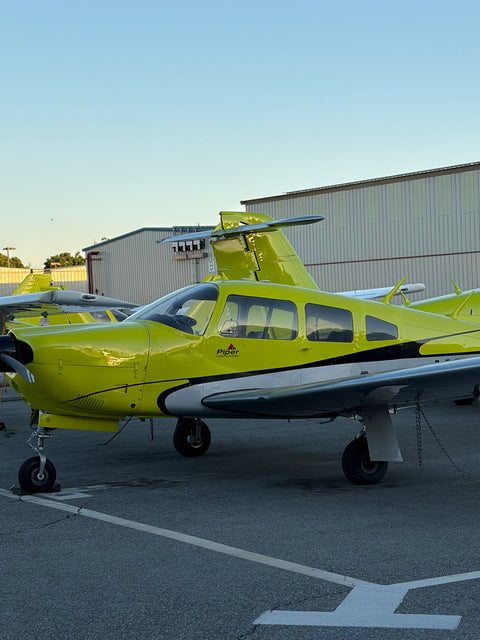
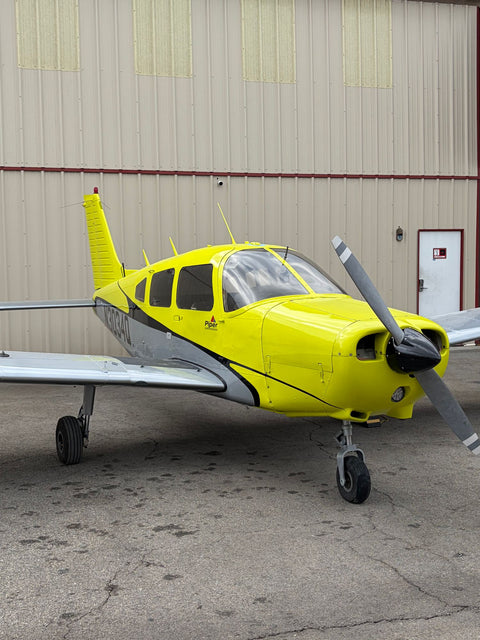
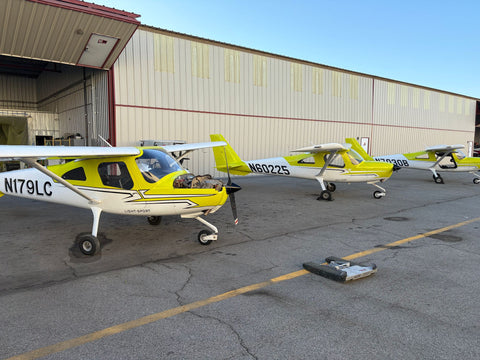
Two of these are directly available in our fleet: the Piper Arrow is a complex airplane with retractable gear and a constant-speed propeller, and the Cirrus SR22 is high-performance. See our fleet and the Cirrus SR22.
Which One Should You Get?
If you want to fly for fun on nice days and cost is the deciding factor, Sport Pilot at $8,400. If you want to carry your family somewhere real, Private Pilot, then the Instrument Rating. If you want to be paid, the sequence is Private, Instrument, Commercial, then CFI to build hours. If the destination is an airline, the whole ladder — and read how much pilots make and whether becoming a pilot is worth it before you commit the capital.
If you are earlier than that, how to become a pilot walks the whole path in order, and what pilot schooling actually involves covers what the training weeks are made of. If an airline-sponsored route appeals, read what an airline cadet program actually is before you sign anything.
Frequently Asked Questions
What Are The Different Types Of Pilot Licenses?
The FAA issues six pilot certificates: Student, Sport, Recreational, Private, Commercial and Airline Transport Pilot. Separately it issues ratings that attach to a certificate, such as the Instrument Rating and the Multi-Engine Rating, and instructor certificates including CFI, CFII and MEI. Endorsements such as complex, high-performance, tailwheel and high-altitude are logbook signatures rather than certificates.
Is A Pilot License The Same As A Pilot Certificate?
In ordinary speech they mean the same thing, but the FAA issues certificates rather than licenses, and every official document uses that word. A certificate is your level of pilot and it is what people mean when they say pilot license. A rating attaches to a certificate and expands what or how you may fly, and an endorsement is a logbook signature from an instructor that requires no test and no card.
What Is The Difference Between A Pilot Certificate And A Rating?
A certificate is your level of pilot and you hold one at a time, upgrading it as you progress. A rating attaches to that certificate and expands what or how you may fly, such as the Instrument Rating or the Multi-Engine Rating. A rating is never a standalone license, so there is no such thing as an instrument license.
What Is The Easiest Pilot License To Get?
The Sport Pilot certificate has the lowest FAA minimum, at 20 hours under 14 CFR 61.313, and it can be exercised with a valid US driver's license instead of an FAA medical certificate. At You Fly LA it costs $8,400. The trade-off is real: daytime VFR unless you add the 61.329 night endorsement, one passenger, aircraft within the 61.316 performance limits, and no flying for compensation.
Do I Need A Medical Certificate For Every Pilot License?
You need a third-class medical to solo and to exercise Private Pilot privileges, a second-class medical to exercise Commercial privileges, and a first-class medical for ATP privileges at an airline, all under 14 CFR 61.23. Sport Pilot is the exception and can be exercised with a valid US driver's license. No medical is required for a discovery flight or for dual instruction.
Which Pilot License Do I Need To Get Paid To Fly?
The Commercial Pilot certificate, which has a 250-hour FAA minimum under 14 CFR 61.129 and requires a second-class medical. It does not by itself let you carry passengers or cargo for hire independently, because that generally requires a company operating certificate, and it is not sufficient for airline flying, which requires an ATP at 1,500 hours.
What Is The Difference Between Complex And High-Performance?
Complex refers to an airplane with retractable landing gear, flaps and a controllable-pitch propeller. High-performance refers to an airplane with an engine of more than 200 horsepower. They are separate endorsements under 14 CFR 61.31 and an airplane can be one, both or neither. Both are logbook signatures from an instructor rather than certificates, with no written test or checkride.
What Can You Do With A Recreational Pilot License?
Fly by day with one passenger, in an airplane certificated for no more than four occupants with one engine of up to 180 horsepower and fixed landing gear, within 50 nautical miles of your departure airport and away from towered airports and Class B, C and D airspace, unless you have the extra training and endorsements 14 CFR 61.101 allows. The FAA minimum is 30 hours under 61.99.
Is A Recreational Pilot License Worth It?
For most people, no. It saves 10 hours against the private certificate's 40-hour minimum but keeps you in daylight, close to home and out of controlled airspace unless you add endorsements, and Van Nuys itself is a towered Class D airport. Sport pilot costs less and needs no FAA medical; private pilot removes almost all of the limits. That is why we do not offer it.
Start With One Flight, Then Pick Your Path
You do not need to choose a certificate before you fly. A 60-minute discovery flight over Los Angeles is $229 — no tax, no booking fee, $229 is the total — it requires nothing but a photo ID, and the hour is loggable toward whichever certificate you eventually choose. If you would rather map the options first, the in-person consultation at Van Nuys is free.
Book A Discovery Flight · $229 Book A Free Consultation Call Or Text (818) 330-1318
You Fly LA · 7900 Balboa Blvd, Main Terminal Unit 108, Van Nuys, CA 91406 · Van Nuys Airport (KVNY) · Open 9 AM – 9 PM, seven days a week.
Sources: 14 CFR 61.96, 61.99, 61.101, 61.160, 61.313 and 61.315, Title 14 of the Code of Federal Regulations on ecfr.gov, and the FAA Airman Knowledge Testing Matrix on faa.gov, checked September 23, 2026.