






















The private pilot ACS is the FAA document your examiner works from on checkride day. It lists every area of operation, every task inside each area, and the numbers you have to hold while you fly them. If you know what is in it, the checkride is no longer a mystery; it becomes a list of things you have already practiced. This page walks through the current edition area by area, puts the flight tolerances in one table, and ends with a readiness check you can run on yourself in about two minutes.
Quick answer: The current private pilot ACS is FAA-S-ACS-6C, in effect since May 31, 2024. It has 12 areas of operation; a pilot training in a single-engine land airplane is tested in 11 of them (the multiengine area does not apply). The core flight standard is altitude within 100 feet, heading within 10 degrees and airspeed within 10 knots, with tighter or looser limits on specific tasks.
Book A Free Consultation Book A Discovery Flight · $229 Call Or Text (818) 330-1318
What The ACS Is And Why It Replaced The PTS
ACS stands for Airman Certification Standards. For the private pilot airplane certificate it replaced the old Practical Test Standards in June 2016, and the FAA has revised it since; the edition in force today is FAA-S-ACS-6C, which superseded 6B Change 1. It is also written into the regulations: 14 CFR 61.43 requires the practical test to be flown to the applicable ACS, and 14 CFR 61.14 incorporates FAA-S-ACS-6C by reference.
The difference from the PTS is structure. Every task now has three kinds of element. Knowledge elements (K) are what you must understand. Risk management elements (R) are the hazards you must be able to identify, assess and mitigate. Skill elements (S) are what you must physically do, and that is where the tolerances live. Each element carries a code such as PA.I.C.K2: PA is the private airplane ACS, I is the area of operation, C is the task and K2 is the second knowledge element.
Those codes tie your written test to your checkride. When you miss questions on the FAA knowledge test, your Airman Knowledge Test Report lists the ACS codes for the missed items, and the examiner must re-test those elements on the practical test. That is why we tell students to keep the report and study it rather than file it.

The Areas Of Operation, One By One
The areas below are the ones that apply to a single-engine land airplane. Seaplane-only and multiengine-only tasks are left out; if you are adding a multiengine rating later, Area X and several multiengine emergency tasks come into play.
I. Preflight Preparation
Tasks A to H: pilot qualifications, airworthiness requirements, weather information, cross-country flight planning, the National Airspace System, performance and limitations, operation of systems, and human factors. This is the backbone of the oral. Task D asks you to prepare, present and explain a cross-country plan the examiner assigns, with a risk analysis built on real-time weather, and to recalculate fuel reserves when the scenario changes.
II. Preflight Procedures
Preflight assessment, flight deck management, engine starting, taxiing and the before-takeoff check. The examiner watches how you organize the cockpit and use checklists, not only whether the engine starts.
III. Airport And Seaplane Base Operations
Communications, light signals and runway lighting, and traffic patterns. The pattern standard is traffic pattern altitude within 100 feet and the appropriate airspeed within 10 knots. At a towered field like Van Nuys, the radio work is tested every time you key the microphone.
IV. Takeoffs, Landings And Go-Arounds
For a land airplane: normal, soft-field and short-field takeoffs and landings (Tasks A to F), the forward slip to a landing (Task M) and the go-around or rejected landing (Task N). This area carries the most numbers, and they are in the table in the next section.
V. Performance And Ground Reference Maneuvers
Steep turns and ground reference maneuvers. Steep turns are a full 360 degrees at about 45 degrees of bank, usually in both directions. Ground reference means one of rectangular course, S-turns or turns around a point, entered between 600 and 1,000 feet above the ground.
VI. Navigation
Pilotage and dead reckoning, navigation systems and radar services, diversion, and lost procedures. On the pilotage leg you must stay within three nautical miles of your planned route and reach checkpoints within five minutes of your estimate.
VII. Slow Flight And Stalls
Maneuvering during slow flight, power-off stalls, power-on stalls and spin awareness. Each flight task must be completed no lower than 1,500 feet above the ground. Spin awareness is knowledge and risk management only; you do not spin the airplane on a private checkride.
VIII. Basic Instrument Maneuvers
Straight-and-level flight, constant-airspeed climbs and descents, turns to headings, recovery from unusual attitudes, and using radio communications, navigation systems and radar services, all by reference to instruments. This is the "view-limiting device" part of the ride.
IX. Emergency Operations
Emergency descent, emergency approach and landing (simulated), systems and equipment malfunctions, and emergency equipment and survival gear. Expect the examiner to pull the power somewhere you did not plan for.
XI. Night Operations
One task, Night Operations. Its skills section is intentionally left blank in FAA-S-ACS-6C, so night is tested on the ground: vision, airport lighting, equipment, illusions and night risk management.
XII. Postflight Procedures
After landing, parking and securing, including documenting any discrepancy you found. The test is not over until the airplane is tied down.
The Standards: Altitude, Heading And Airspeed
These are the skill tolerances from FAA-S-ACS-6C for a single-engine land airplane. Treat them as the edge of the envelope, not the target: if you fly to the middle, a gust or a distraction will not put you outside.
| Task | ACS Standard | What It Feels Like |
|---|---|---|
| Traffic pattern (III.B) | Pattern altitude ±100 ft, airspeed ±10 kt | One trimmed attitude on downwind, then small corrections |
| Normal and short-field takeoff (IV.A, IV.E) | VY +10/−5 kt to a safe maneuvering altitude; short field uses VX +10/−5 kt until the obstacle is cleared or 50 ft | Hold the pitch picture; do not chase the needle |
| Normal approach and landing (IV.B) | Approach speed +10/−5 kt with gust factor; touch down within 400 ft beyond or on the specified point | A stable final from 500 ft makes the 400 ft easy |
| Short-field landing (IV.F) | Approach speed +10/−5 kt; touch down within 200 ft beyond or on the point, minimum float | A stabilized approach and minimum float decide it |
| Forward slip to a landing (IV.M) | Touch down within 400 ft beyond or on the specified point, no side drift | A power-off judgment exercise |
| Steep turns (V.A) | Entry altitude ±100 ft, airspeed ±10 kt, bank 45° ±5°, roll out on entry heading ±10° | Back pressure and a little power as the bank comes in |
| Ground reference (V.B) | Altitude ±100 ft, airspeed ±10 kt, 600 to 1,000 ft above ground | Bank changes with groundspeed, not with nerves |
| Pilotage, diversion (VI.A, VI.C) | Altitude ±200 ft, heading ±15° | The easiest numbers on the ride, if you are not lost |
| Slow flight (VII.A) | Altitude ±100 ft, heading ±10°, airspeed +10/−0 kt, bank ±10° | No stall warning allowed while you maneuver |
| Power-off and power-on stalls (VII.B, VII.C) | Heading ±10° straight; bank not more than 20° ±10° turning; power-on at no less than 65 percent power | Coordinated rudder is the whole task |
| Basic instrument maneuvers (VIII) | Altitude ±200 ft, heading ±20°, airspeed ±10 kt; roll out on heading ±10° | Scan, do not stare |
| Emergency descent (IX.A) | Bank 30° to 45°, airspeed +0/−10 kt, level off ±100 ft | Fast, steep and fully under control |
| Emergency approach and landing (IX.B) | Best glide speed ±10 kt | Trim for glide first, then choose the field |
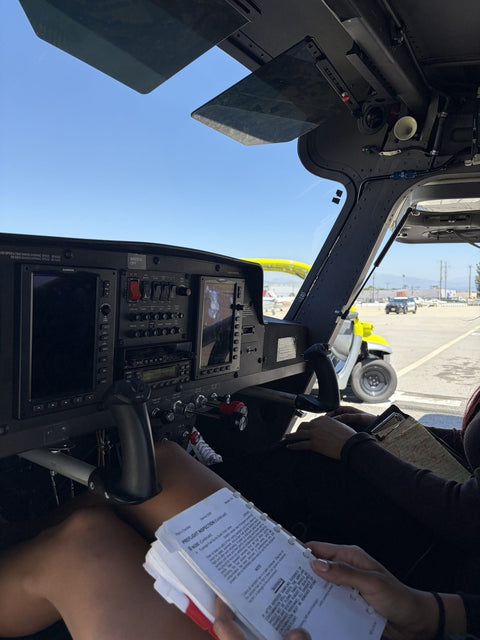
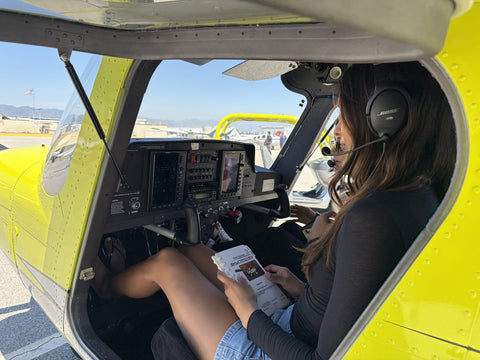
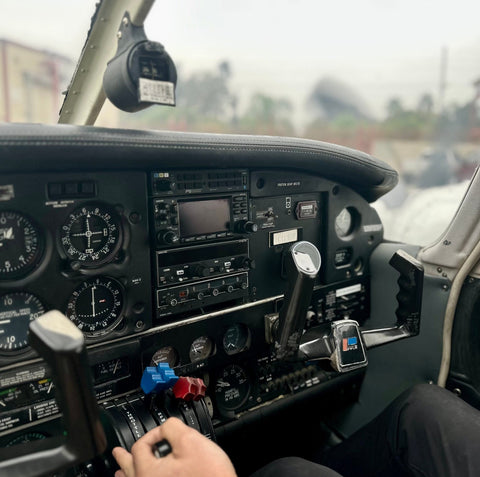
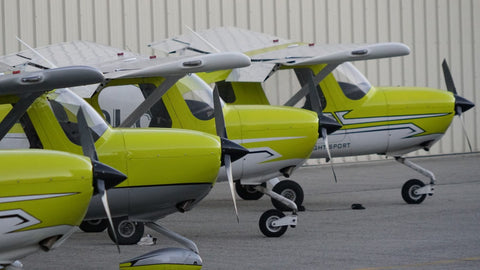
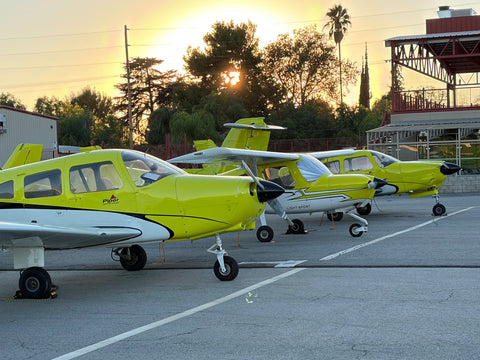
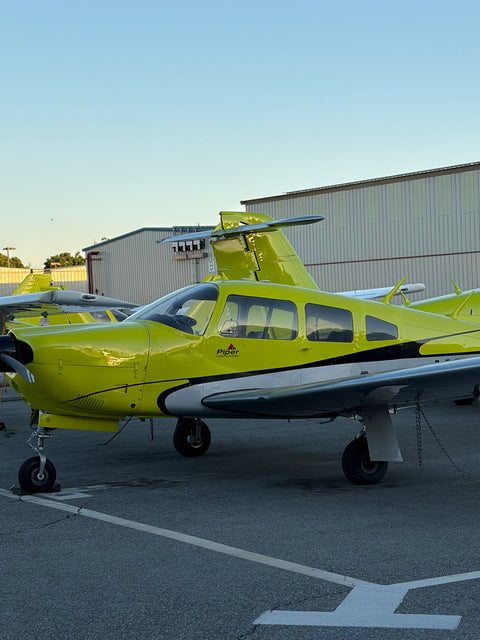
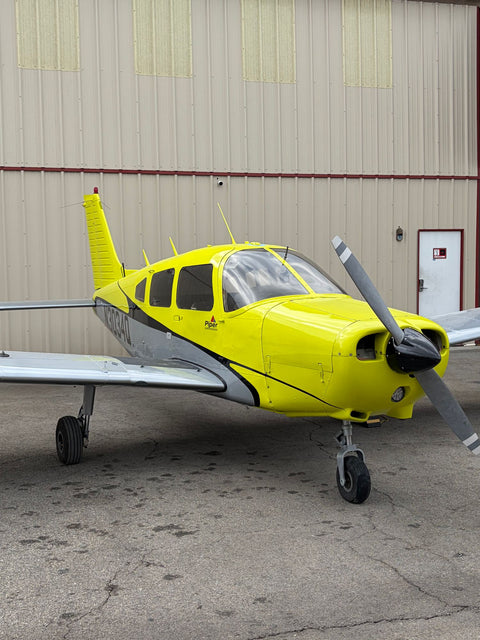
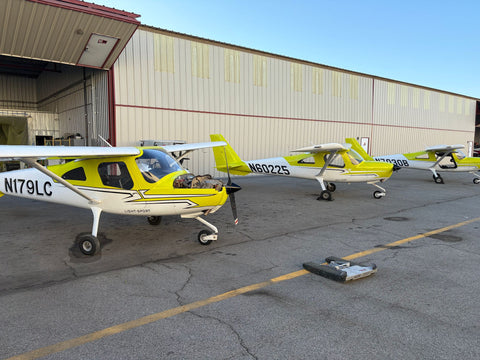
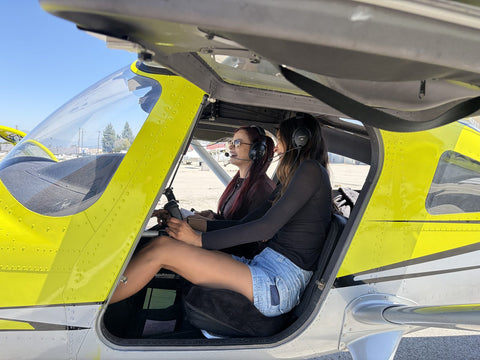
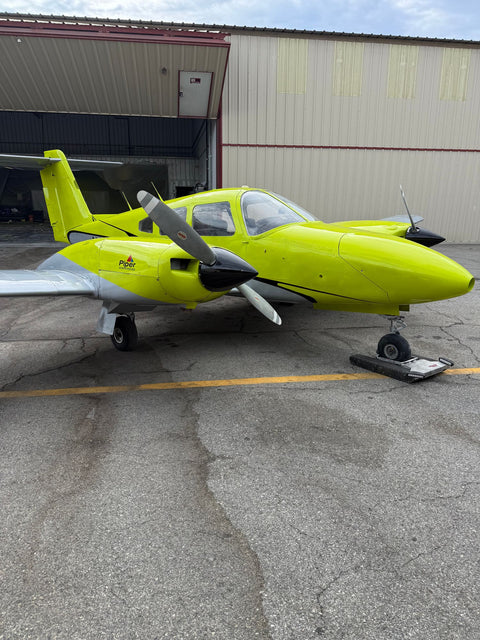
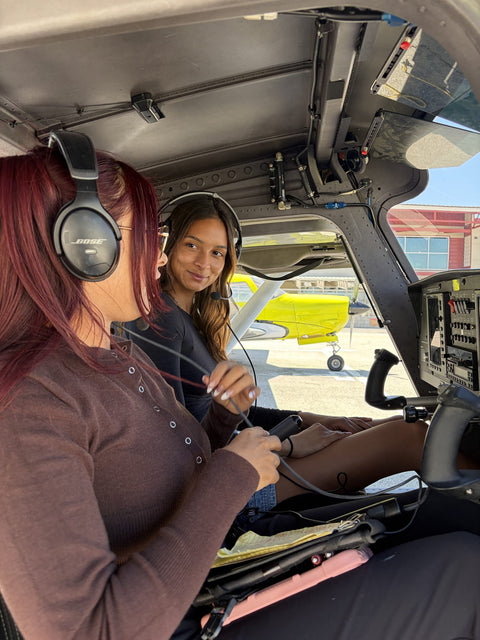
How those numbers feel depends on the airplane. In the Piper Warrior, a low-wing four-seater, a steep turn at 45 degrees needs a firm, steady pull and some trim, and the airplane is stable enough to hold it once you set it. In the Diamond DA20-C1, which flies with a center stick, the forces are lighter and the airplane answers faster, so the same tolerances are held with smaller inputs. Flying both is useful: the lighter airplane shows up sloppy inputs quickly, and the heavier one rewards trimming and patience. Our aircraft pages describe the Piper Warrior and the Diamond DA20-C1 in full.
The tolerances are not a pass line on their own. The ACS lists typical reasons for failing, and they include consistently exceeding tolerances, not taking prompt corrective action when you drift outside them, failing to clear the area, any action that makes the examiner intervene to keep the flight safe, and failing to exercise risk management. A momentary excursion that you catch and correct is judged very differently from one you do not notice.
How The Oral And The Flight Use The ACS
The practical test has a ground portion and a flight portion, and you must pass the ground portion before the flight begins. Questioning continues in the airplane. For each task, the ACS sets the minimum an examiner must test: every element you missed on the knowledge test, at least one knowledge element, at least one risk management element, and all of the skill elements unless the task says otherwise. The examiner can sample more and can combine tasks into one scenario.
In practice, the oral follows Area I closely: your certificates and medical, the airplane's documents and inspections, weather, the cross-country you planned, airspace, performance, systems and human factors. Our private pilot oral exam guide goes through those tasks one by one with the questions examiners tend to ask. The flight then runs through Areas II to IX and XII in whatever order the examiner's scenario demands. For the day itself, from paperwork to the three possible outcomes, see what to expect on your FAA checkride, and for what the examiner charges, checkride fees and wait times in Southern California.
Two paperwork rules connect the ACS to the regulations. The knowledge test must have been passed within the 24 calendar months before the month you complete the practical test, and your instructor's endorsement must say you received training within the 2 calendar months before the month of application and are prepared for the test. The knowledge test itself is 60 questions, 2 hours, with a passing score of 70 percent; our private pilot written practice test is a good first measure of where you stand.
Hazardous attitudes are part of this too. Task I.H, Human Factors, lists hazardous attitudes as a risk management element, which means the examiner can build a scenario around one and ask how you would recognize it in yourself.
Check Your Readiness
Tick each statement you could honestly demonstrate to an examiner tomorrow, without your instructor's help. Flight maneuvers carry double weight because they are the hardest to bluff on the day. With the new theme your answers are saved in this browser, so you can come back after your next lesson and see what moved.
- Area I: I can explain my certificate, medical and currency limits, and the airplane's required documents and inspections.
- Area I: I can present a cross-country plan with a weather-based risk analysis and recalculate fuel reserves on request.
- Area I: I can explain the airspace I will fly through and the weather products I used, and name my personal minimums.
- Area II and XII: I run the preflight, engine start, taxi, run-up and shutdown from the checklist without prompting.
- Area III: I hold pattern altitude within 100 feet and speed within 10 knots, with correct radio calls at a towered field.
- Area IV: My normal, soft-field and short-field takeoffs and landings meet the ACS numbers, including the 200-foot short-field touchdown.
- Area IV: I can fly a forward slip to a landing and a go-around without being told how.
- Area V: My steep turns stay within 100 feet and 10 knots, and I can fly a ground reference maneuver with wind correction.
- Area VI: I can navigate by pilotage and dead reckoning, divert to an alternate, and describe what I would do if lost.
- Area VII: I fly slow flight without a stall warning and recover from power-off and power-on stalls promptly and coordinated.
- Area VIII: I can fly straight-and-level, climbs, descents, turns and unusual-attitude recoveries by instruments alone.
- Area IX: I set best glide and pick a field immediately when the power comes out, and I can fly an emergency descent.
- Area XI: I can explain night vision, airport lighting, night illusions and the equipment required for night flight.
- I have my knowledge test report and can explain every ACS code listed on it.
If the checklist does not appear as interactive boxes on your screen, read it as a plain list and count your honest yeses. The fuller cost and timing picture for the whole certificate is on our private pilot license in Los Angeles page.
Practicing ACS Maneuvers From Van Nuys
Van Nuys is a busy towered airport, so airwork does not happen over the field. Steep turns, slow flight, stalls and emergency descents are flown in practice areas away from the densest neighborhoods: over the Santa Susana and Santa Monica mountain ranges, out toward the open ground north-west of the Valley, and over the water once clear of the coast. Our page on noise abatement at Van Nuys explains how we choose them. Ground reference work needs a clear road grid or field boundary and room below you, so your instructor will pick a spot that gives you 600 to 1,000 feet above the ground with somewhere to land if the engine quits.
The traffic pattern is the other classroom. Every lesson at Van Nuys starts and ends with a tower clearance, so by checkride day the radio calls in Area III have been practiced dozens of times. When the pattern is too busy for landing practice, we take the lesson to a quieter airport nearby, which is better for the student and for the neighbors.
How many lessons it takes to fly all of this to the standard depends on you and on how often you fly. The regulation sets one fixed piece: 14 CFR 61.109 requires 3 hours of flight training in preparation for the practical test within the 2 calendar months before the month of the test. Our private pilot packages include that preparation, and the simulator is useful for Area VIII and for rehearsing emergency flows before you fly them.
Book A Free Consultation Call Or Text (818) 330-1318
Frequently Asked Questions
Which Edition Of The Private Pilot ACS Is Current?
FAA-S-ACS-6C, Private Pilot for Airplane Category, in effect since May 31, 2024. It superseded FAA-S-ACS-6B Change 1, and it is the edition incorporated by reference in 14 CFR 61.14. Always download it from faa.gov rather than using a copy from a study site, because the examiner uses the edition current on the day of your test.
What Happens If I Bust One Task?
Failing any task fails its area of operation, and failing any area fails the practical test. The examiner issues a Notice of Disapproval listing what you failed and what was not tested. The examiner may continue the test so you can earn credit for other areas, but only with your consent.
What Are The Retest Rules?
Under 14 CFR 61.49 you need additional training from an authorized instructor and a new endorsement from that instructor before retesting. Under 14 CFR 61.43(f) you keep credit for the areas you passed if you complete the rest of the test within 60 days and bring the original disapproval or discontinuance form.
What Are The Main Tolerances?
Most maneuvers ask for altitude within 100 feet, heading within 10 degrees and airspeed within 10 knots. Steep turns add bank 45 degrees within 5; slow flight allows airspeed only +10/−0 knots; landings must touch down within 400 feet of your point, or 200 feet for a short-field landing. Navigation legs allow 200 feet and 15 degrees.
Is Night Flying Tested On The Checkride?
Not in the air. The Night Operations task in FAA-S-ACS-6C has knowledge and risk management elements but its skills section is left blank, so night is covered in the oral. You still need the 3 hours of night training required by 14 CFR 61.109 before you can take the test.
Do I Fly The Whole Cross-Country On The Checkride?
Usually not. You plan the whole trip on the ground for Task I.D, then fly the first part of it for pilotage and dead reckoning until the examiner is satisfied, and often a diversion to somewhere else. The standard in the air is altitude within 200 feet, heading within 15 degrees, and checkpoints within five minutes of your estimate.
Book A Free Consultation Book A Discovery Flight · $229 Call Or Text (818) 330-1318
Related Reading
- Private pilot oral exam guide: Area I task by task.
- The FAA checkride: what to expect: the day, the paperwork and the outcomes.
- Private pilot written exam: scheduling, topics and scores.
- Private pilot license requirements: the hours and experience in 14 CFR 61.109.
- Commercial pilot maneuvers: what the next ACS adds.
- Student pilot resources: the whole path in the order it happens.
Sources: FAA-S-ACS-6C, Private Pilot for Airplane Category Airman Certification Standards; FAA Airman Certification Standards page; FAA ACS Frequently Asked Questions; 14 CFR 61.14, 61.39, 61.43, 61.49 and 61.109.