Instrument Flying Skills · Simulated Instrument Time

Foggles And View-Limiting Devices For Simulated Instrument Time

Foggles are view-limiting glasses whose lenses are frosted everywhere except a clear band at the bottom, so you can read the panel but cannot see out of the windshield. Fly with them on, with a qualified safety pilot in the other seat, and the time is simulated instrument time you can log under 14 CFR 61.51(g).

40 hrsInstrument time for the rating
20 hrsMost an advanced ATD can count
3 hrsHood work for the private
$189Try the full-motion sim
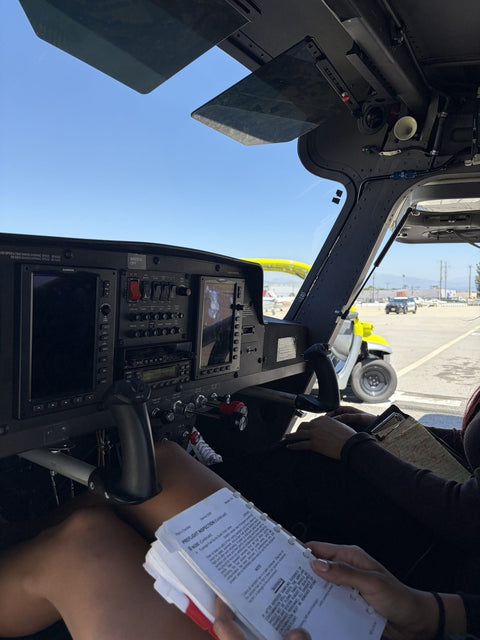
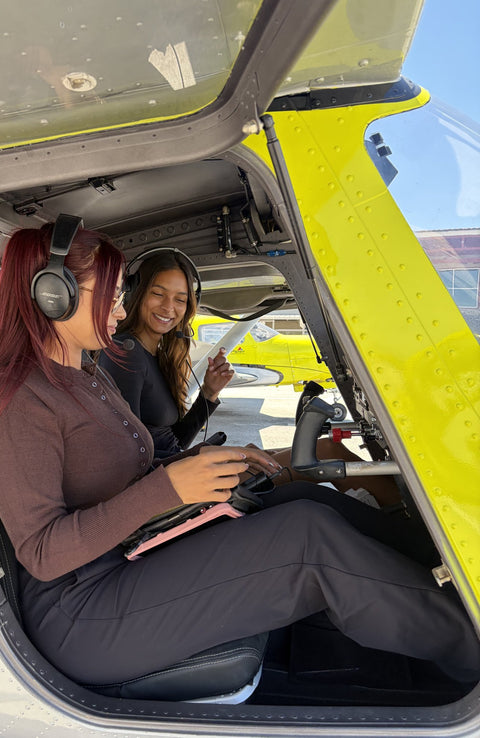
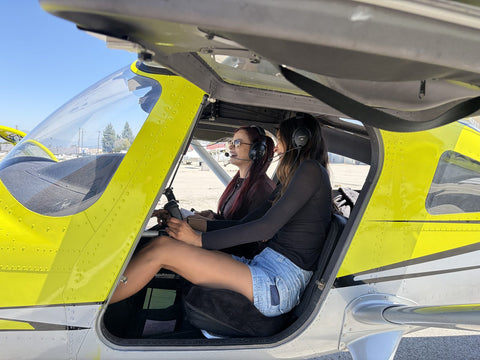
Flight instructor briefing a student pilot in the cockpit before a training flight

Foggles are one part of our guide to instrument flying skills. This page covers the device itself: what the regulations say about wearing one, who has to sit beside you, where the hours count, and how foggles compare with a full-motion simulator. Every rule comes with its paragraph number.

We train at Van Nuys Airport (KVNY), seven days a week from 9 AM to 9 PM, with two IFR-equipped Piper Warriors and a Redbird MCX full-motion simulator in the fleet. If you have never flown, a $229 discovery flight puts you in the left seat for an hour. If you are already training, a free consultation is the quickest way to plan your hood work.

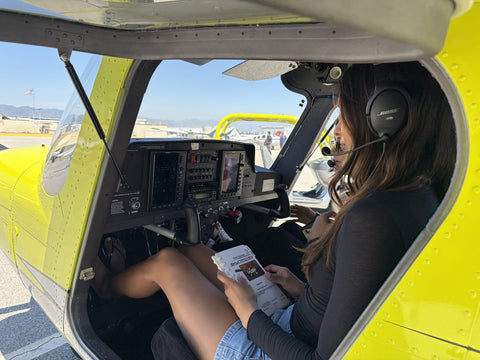
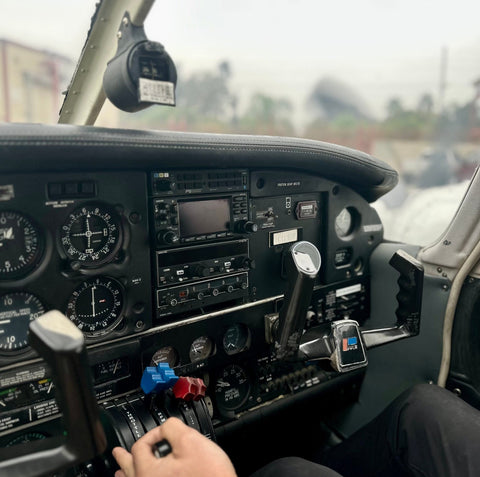
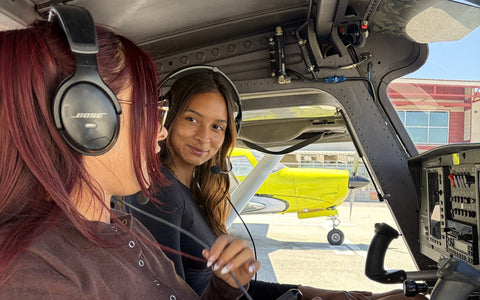
Student pilot in a headset scanning a glass cockpit display during a training flight

What Foggles Are, And The Hood They Replaced

The regulations never say "foggles". The FAA's term is view-limiting device, and 14 CFR 61.45(d)(2) defines one by what it does: it stops the pilot from seeing outside the aircraft without stopping the examiner from seeing outside. Any product that does that qualifies. None is named.

For decades the standard tool was the hood, a long plastic visor worn like the brim of an oversized cap. It blocks the windshield and most of the side windows and leaves a tunnel down to the panel. It works, and it is bulky and awkward under a headset.

Foggles do the same job in the shape of a pair of glasses. The frosting sits where your eyes go when you look out, and the clear band sits where they go when you look down at the instruments. They fold into a flight bag and leave the safety pilot's view alone. That matters, because the person beside you is now the only one watching for traffic.

Flip-down visors and clip-on styles exist too. The principle does not change: you see the panel and nothing else.

Every instructor has watched the same cheat. You lift your chin a few degrees, the clear band lines up with the windshield, and the horizon comes back. It feels like help and it is the opposite, because the whole point of the exercise is learning that the panel is enough. Keep your head level and move your eyes.

ATT · Attitude

Drag, Or Use The Arrow Keys, To Bank And Pitch. It Eases Back To Level.

FAA-Approved Full-Motion Simulator

Full Motion, Indoors At Van Nuys.

An FAA-approved Redbird full-motion simulator with a real instructor beside you — takeoffs, turns, landings, even engine failures. Never canceled by weather, no weight limit, and the hours can count toward a certificate.

Why Pilots Wear Them: Logging Simulated Instrument Time

14 CFR 61.51(g)(1) lets you log instrument time only for flight time when you operate the aircraft "solely by reference to instruments under actual or simulated instrument flight conditions." Actual conditions mean cloud. Simulated conditions mean a view-limiting device on a day with no cloud to fly into.

That logged time feeds four things. The private asks for 3 hours of instrument training, the commercial for 10, and the instrument rating for 40 hours of instrument time. After the rating, the approaches and holds that keep you current can be flown the same way. The table further down cites each one.

There is a second reason, and it has nothing to do with the logbook. Take away the outside view and your inner ear becomes the only thing telling you which way is up. It is wrong often enough that the FAA ranks illusions among the most common factors in fatal accidents, and our page on spatial disorientation and the somatogravic illusion explains why. Hood work is where you learn to ignore that voice and believe the attitude indicator.

One logbook detail catches people out. For a currency flight, 61.51(g)(3) wants the location and type of each approach and the name of the safety pilot, if one was required. Write them in on the ramp, not a week later from memory.

Private+Safety PilotAt least a private certificate with the category and class ratings, 91.109(c)(1)
VisionForward And To Each SideOr a competent observer on board to supplement it, 91.109(c)(2)
DualControlsFully functioning, with a throwover-wheel exception for single-engine airplanes, 91.109(c)(3)
NameIn The LogbookFor currency, log each approach and the safety pilot's name, 61.51(g)(3)

The Safety Pilot Rule: 14 CFR 91.109(c)

Under 14 CFR 91.109(c), nobody may operate a civil aircraft in simulated instrument flight unless three conditions are met. First, the other control seat is occupied by a safety pilot who holds at least a private pilot certificate with category and class ratings appropriate to the aircraft.

Second, the safety pilot has adequate vision forward and to each side of the aircraft, or a competent observer on board adequately supplements it. Third, the aircraft has fully functioning dual controls. A single-engine airplane may use one throwover control wheel instead, if the safety pilot decides the flight can be conducted safely and the person flying holds at least a private certificate with the appropriate ratings.

The safety pilot's job is to see and avoid for both of you. From Van Nuys that is real work. The airport sits under the Los Angeles Class B shelf, with Burbank's Class C 11 miles east and Whiteman 6 miles northeast. The person in the right seat scans outside while you scan inside.

On a dual lesson your flight instructor sits in that seat, so the rule takes care of itself. The question comes up after the checkride, when two instrument pilots want to keep each other current. Our page on IFR currency requirements covers that case, including who logs what.

Foggles Vs The Simulator

Both build instrument time, and the regulations treat them differently. 14 CFR 61.65(i) caps device time toward the instrument rating at 10 hours in a basic aviation training device or 20 in an advanced one. Paragraph (j) caps all device time at 20 hours combined outside a Part 142 course. Foggles time in the airplane has no cap.

Every device hour also needs a witness. Under 61.51(g)(4), simulator time counts toward a certificate or rating only when an authorized instructor observes it and signs your logbook or training record.

A student at the controls of the red Redbird MCX full-motion flight simulator

The Redbird MCX Simulator

Our Redbird MCX is an FAA-approved advanced aviation training device on full motion, with single- and multi-engine profiles. It costs $200 an hour retail or $120 inside a package, and the $11,700 instrument package puts 20 of its 40 dual hours in it, the most 61.65(i) allows. Because 91.109(c) governs aircraft, there is no safety pilot to find, and the session goes ahead when the marine layer sits on the field. A 60-minute full-motion session is $189.

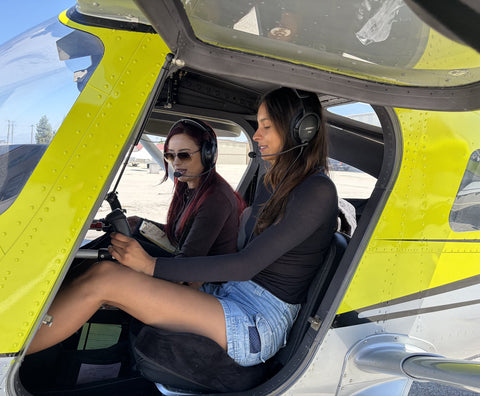
Instructor and student side by side in a training airplane cockpit, both in headsets

Foggles And A Safety Pilot In The Airplane

The airplane gives you what no device can: a real controller, real traffic, real bumps and an approach that ends over a real runway. In our IFR-equipped Piper Warriors it costs $179 an hour at the package rate or $269 retail, plus $110 an hour for the instructor. Only the airplane puts the actual accelerations of a climb or a turn through your inner ear, and that is where the illusions come from. You need a safety pilot every flight, and a pair of foggles that fits.

Instrument Time Without Foggles

Book The Simulator, A Lesson Or A First Flight

An hour in the Redbird MCX for $189, a two-hour first lesson from $349 ($749 in the Cirrus SR22 Turbo on Perspective glass), or a $229 discovery flight, alone or for two.

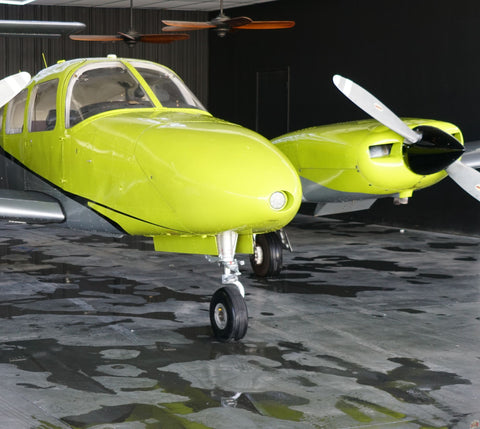
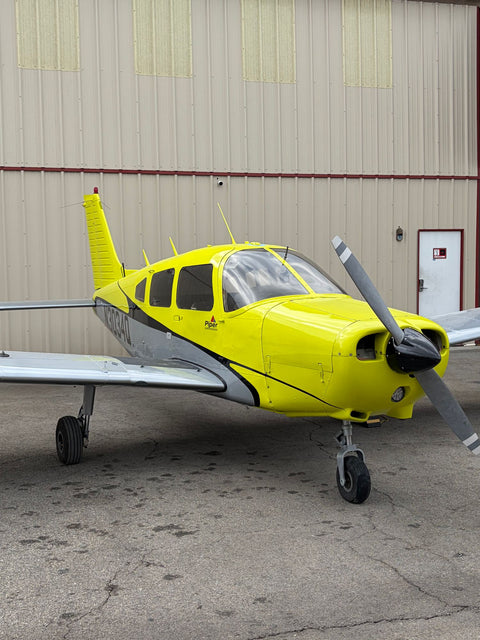
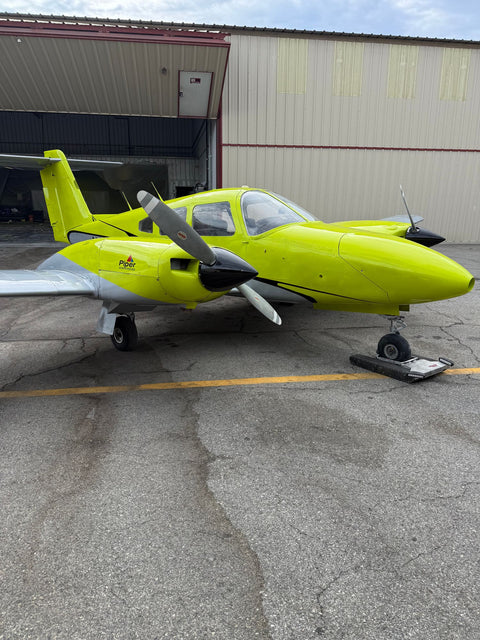
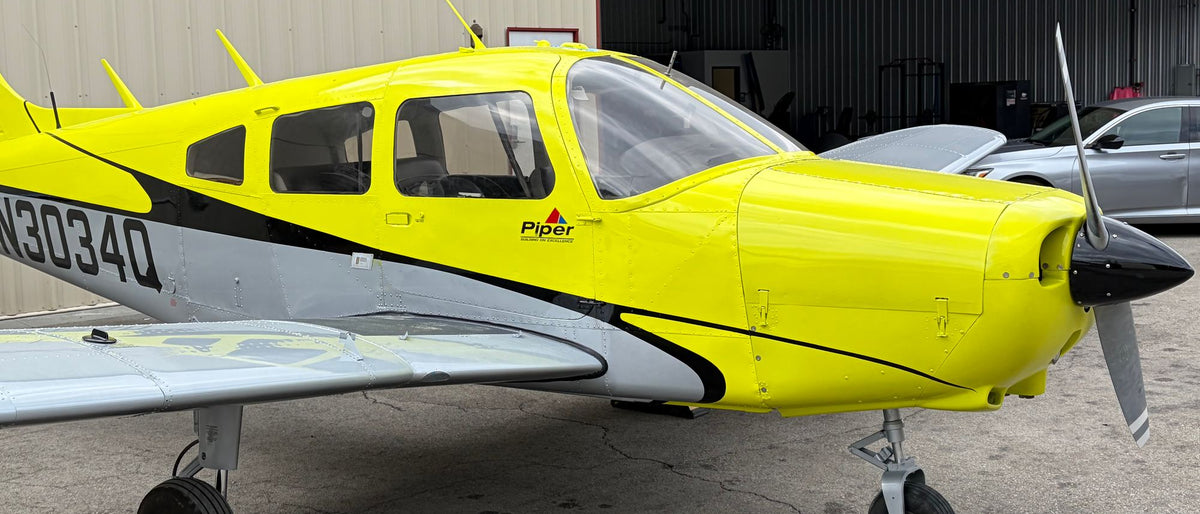
Piper Warrior N3034Q, front quarter, beside an open hangar at Van Nuys Airport
PIPER WARRIOR · 160 HP · LOW WING
The Classic 60–120 Min

Discovery Flight For One

Credited in full toward your training if you enroll within 24 hours.

One seat, one instructor, no audience. You take the controls once we are clear of the Van Nuys pattern, and your instructor signs the time into your logbook if you bring one.

  • Hands-on stick time
  • Pre-flight briefing and walk-around
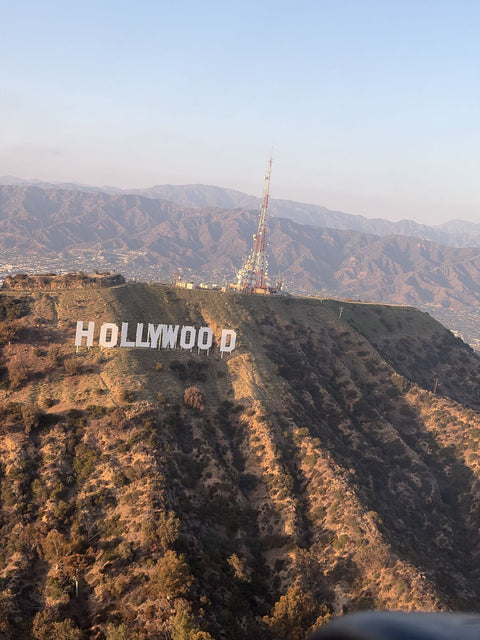
  • Hollywood Sign and downtown
  • One-on-one with an FAA-certified instructor
  • Bring your logbook, we sign it

Flight Length

$229all-in · one flyer · 60 minutes

Book For One

Weight limit 180 lb for the person flying.

Or gift it →
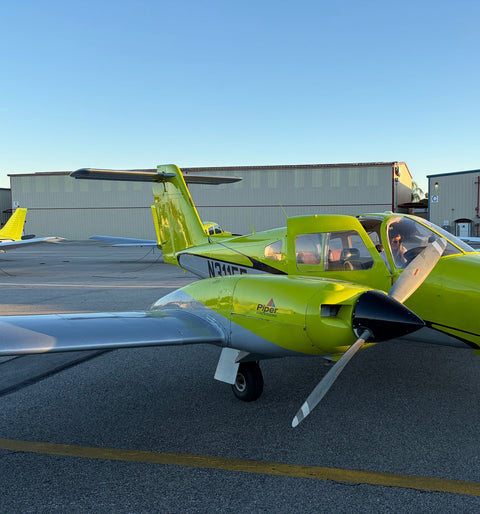
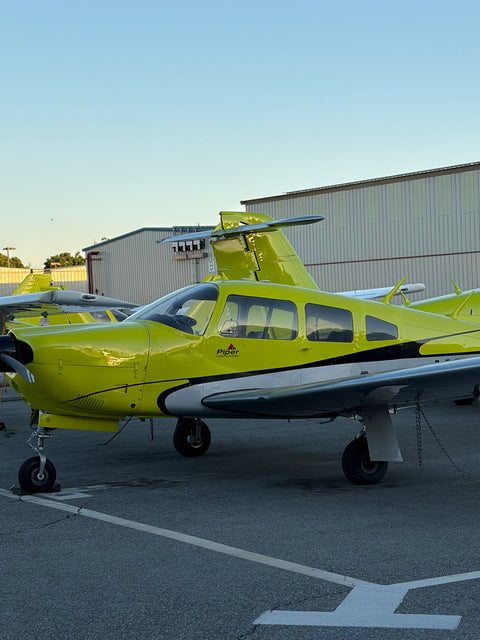
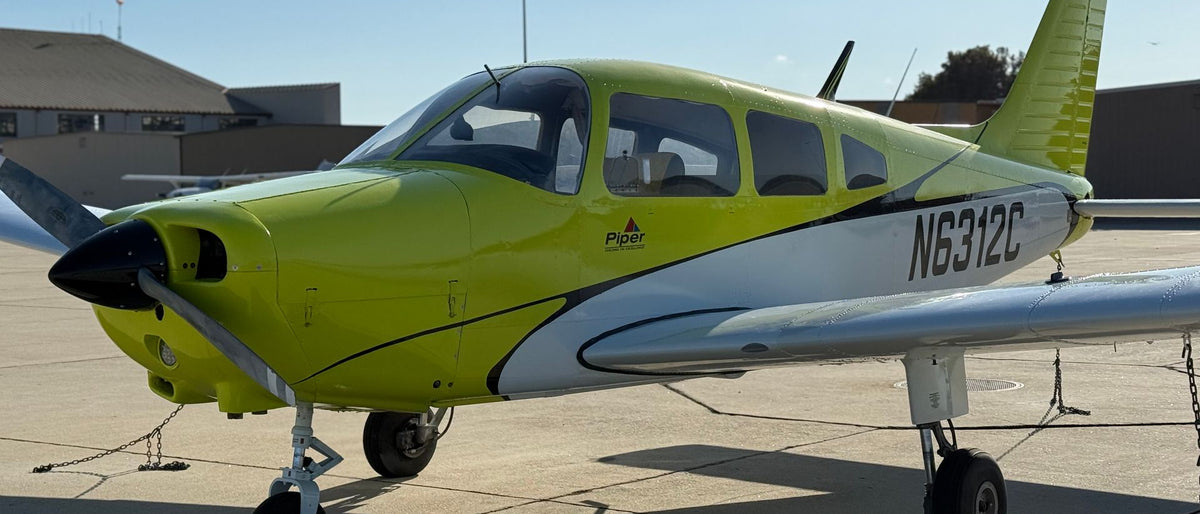
Piper Warrior N6312C, a four-seat low-wing trainer, parked on a sunny ramp
PIPER WARRIOR · FOUR SEATS
★ Most Popular 60–120 Min

Discovery Flight For Two Over Downtown

Logged as dual instruction toward the 40-hour minimum for a private license.

One of you flies while the other rides on the intercom and ends up as the photographer. The route runs past the Hollywood Sign and around the downtown towers.

  • Two seats in the Piper Warrior
  • Headsets for both of you
  • Hollywood Sign and the downtown towers
  • Hands-on flying for one of you
  • Pre-flight briefing and walk-around

Flight Length

$299all-in · two seats · 60 minutes

Book For Two

Weight limit 360 lb combined.

Or gift it →
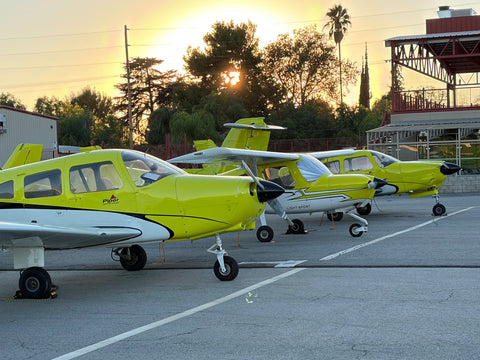
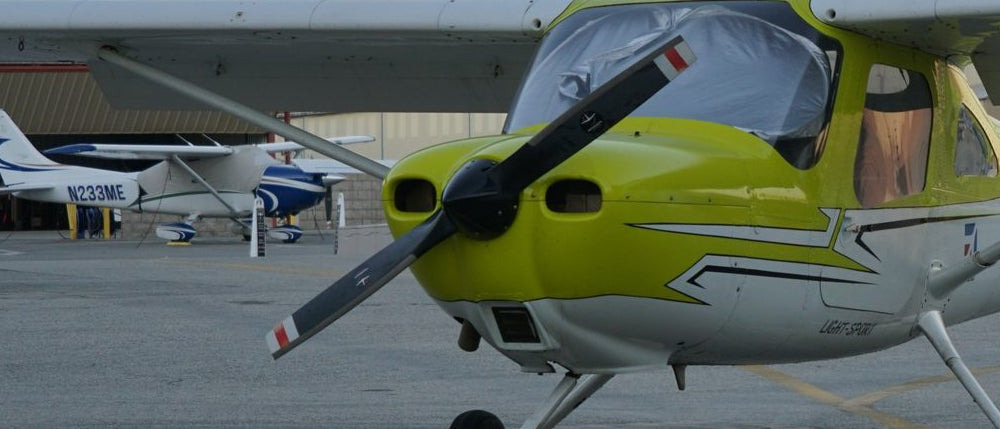
Cessna 162 Skycatcher trainer seen nose first on the Van Nuys ramp at sunset
CESSNA 162 · OR PIPER WARRIOR
Day One 2 Hours

Two-Hour Beginner Flying Lesson

Credited in full toward your training if you enroll within 24 hours.

Half an hour on the ground learning what the yoke, the pedals and the throttle do, then about seventy minutes in the air over Simi Valley with your instructor beside you.

  • 30-minute ground lesson first
  • About 70 minutes at the controls
  • Simi Valley and the Santa Susana Mountains
  • Cessna 162 or Piper Warrior
  • Debrief and a signed logbook entry

Lesson Length

$349all-in · one student · 2 hours

Book The Lesson

Weight limit 180 lb for the person flying.

Or gift it →
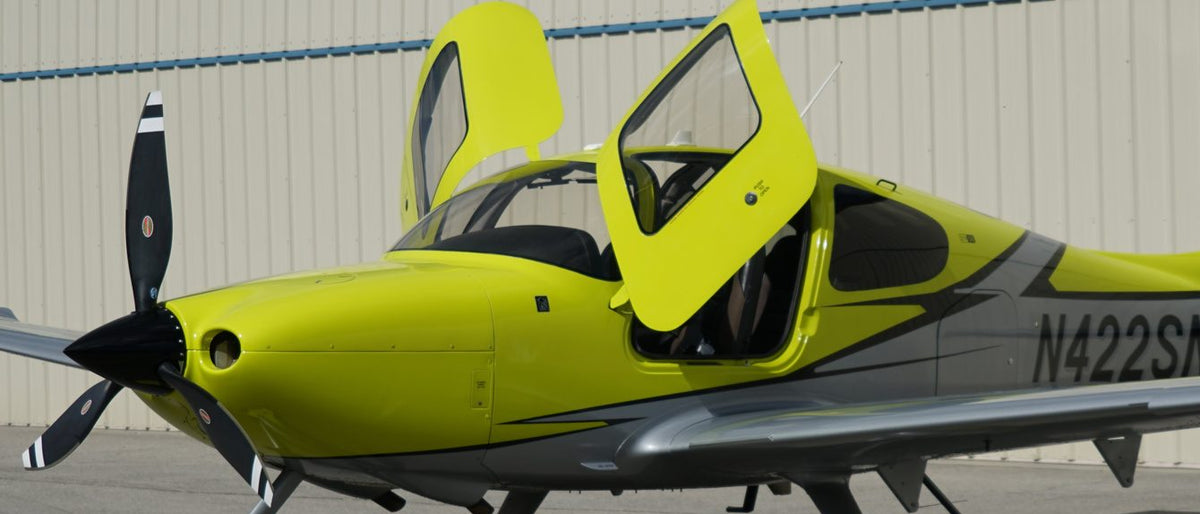
Cirrus SR22 Turbo with its gull-wing door open on the ramp at Van Nuys+ Luxury
CIRRUS SR22 TURBO · N422SN · 310 HP
+ Luxury 2 Hours

Two-Hour Beginner Flying Lesson In The Cirrus SR22 Turbo

Turbocharged, all glass, and fitted with a whole-airframe parachute.

Not the sensible first lesson, and most people do not start here. The ones who do usually know they will finish the certificate and want to begin in the airplane they will fly afterwards.

  • Cirrus SR22 Turbo N422SN
  • Cirrus Perspective glass panel
  • CAPS whole-airframe parachute
  • Side-stick and 310 hp
  • About 70 minutes at the controls

Lesson Length

$749all-in · one student · 2 hours

Book The Cirrus

Weight limit 200 lb for the person flying. No guest seat on this lesson.

Or gift it →

Where Simulated Instrument Time Counts

Four places in the regulations ask for instrument time, and all four accept time flown under a view-limiting device.

Where Simulated Instrument Time Counts
Certificate Or Rule What It Asks For Simulator Credit Regulation
Private pilot, airplane single-engine 3 hours of flight training solely by reference to instruments: straight and level, constant-airspeed climbs and descents, turns to a heading, unusual-attitude recovery, radio, navigation and radar services 61.109(k) names full flight simulators and flight training devices, not aviation training devices; see our simulator hours page 14 CFR 61.109(a)(3)
Instrument rating, airplane 40 hours of actual or simulated instrument time, 15 of them from an instructor with an instrument-airplane rating Up to 10 hours in a basic ATD or 20 in an advanced ATD; 20 hours combined for all devices 14 CFR 61.65(d)(2), (i), (j)
Commercial pilot, airplane single-engine 10 hours of instrument training using a view-limiting device, including attitude instrument flying, partial panel and unusual-attitude recovery; 5 of the 10 in a single-engine airplane See our simulator hours page 14 CFR 61.129(a)(3)(i)
Instrument currency Six approaches, holding procedures and tasks, and intercepting and tracking courses in the 6 calendar months before the month of the flight A full flight simulator, FTD or ATD may be used, alone or combined with the aircraft 14 CFR 61.57(c)(1)–(2)

For a student pilot, the first row is the one that matters. Your instructor decides where the 3 hours fit into the course. If you have not started yet, the private begins with a two-hour first lesson for $349, and our private pilot license requirements page lists the rest of 61.109.

The second row is the big one. The instrument rating requirements set the 40 hours, and our instrument rating course is built around them at $11,700. That buys 20 hours in the airplane, 20 in the Redbird MCX, 40 hours of dual and 10 of ground, with $2,500 down and four payments of $2,300.

Commercial students meet the third row later; the commercial pilot license requirements page has the full list. For device credit certificate by certificate, see simulator hours that count.

The fourth row never goes away. Once you hold the rating, 61.57(c) asks for six approaches, holding procedures and course tracking every six calendar months. Paragraph (c)(1) says in plain words that you may fly them using a view-limiting device.

An instructor can lay out where your hood time should go, in the airplane or in the Redbird MCX, against your own schedule. Book a free consultation, or call (818) 330-1318, seven days a week from 9 AM to 9 PM.

Choosing A Pair

You will need your own pair sooner or later. Under 14 CFR 61.45(d)(2), the applicant for a practical test that involves flying solely by reference to instruments has to furnish the device. The private checkride includes basic instrument maneuvers, so the rule reaches further than the instrument checkride. You do not have to buy a pair to start hood work, because You Fly LA provides foggles free to use on lessons.

Start with fit. If you fly in prescription glasses, try foggles on over them before you buy, because some styles push your frames into the bridge of your nose. Then check the view in a cockpit, not a shop mirror. With your head level, the frosting should cut off the windshield and the clear band should show the whole panel, bottom row included.

Comfort matters more than it seems at the counter. The arms sit under your headset's ear cups for long stretches, and thin flat arms press less and spoil the seal less. If you are still choosing a headset, our pilot headsets guide covers that side.

We do not rank brands. Any pair that fits, with the frosting and the clear band in the right places, does the job. Try them with your headset before the lesson, not in the run-up area with the engine running.

Questions About Foggles

Can I Wear Foggles And Log The Time When Flying Alone?

No. 14 CFR 91.109(c) applies to every civil aircraft in simulated instrument flight, not only to training flights, so an instrument-rated pilot practicing alone is bound by it too. Without a qualified safety pilot in the other control seat, the flight itself breaks the rule.

Who Can Be My Safety Pilot?

Any pilot with at least a private pilot certificate carrying the category and class ratings for the airplane, and with adequate vision forward and to each side. The rule in 91.109(c)(1) does not ask the safety pilot to hold an instrument rating or an instructor certificate.

How Much Hood Time Does A Private Pilot Need?

Three hours, under 14 CFR 61.109(a)(3), flown as flight training with an authorized instructor. The checkride tests the same skills in Area VIII of the Private Pilot ACS, Basic Instrument Maneuvers, from straight-and-level flight to recovery from unusual flight attitudes.

Does Simulator Time Count Instead Of Foggles Time?

Toward the instrument rating, up to a limit: 20 hours in an advanced aviation training device such as the Redbird MCX, or 10 in a basic one. For currency the rule is simpler. Under 61.51(g)(5), device time meets the recency requirement as long as a logbook or training record names the device, the time and the content.

Do I Need To Buy Foggles For My Lessons?

No. You Fly LA provides foggles free to use on lessons, so you can fly with a pair in the airplane before you buy your own for the checkride.

Do I Need My Own Foggles For The Checkride?

Yes, under 61.45(d)(2). Appendix 3 of the Instrument Rating ACS (FAA-S-ACS-8C) adds that the device must not restrict the evaluator's ability to see and avoid other traffic. It does not apply to elements of a task that need visual references, and you and the evaluator should agree on when it goes on and comes off.

Does Foggles Time Keep Me Instrument Current?

Yes, with a safety pilot aboard. Let it lapse, though, and the clock matters: if you go more than six calendar months without meeting the 61.57(c) requirements, 61.57(d) says the only way back is an instrument proficiency check.

Where The Hours Go

Every Hour And Every Dollar, Course By Course

Private, instrument and commercial, each priced all-in, with the airplane, simulator, instruction and ground hours listed. Pick a rating to see its packages.

Build Instrument Time At Van Nuys

Fly the Redbird MCX for $189, take a two-hour first lesson for $349, or start with a $229 discovery flight. Or plan your instrument hours at a free consultation, or call (818) 330-1318, 9 AM to 9 PM, seven days a week.
Free rescheduling up to 24 hours before a flight, and if the weather says no, you do not pay.