Van Nuys Airport · KVNY · Instrument Training

Instrument Flying Skills: The Scan, Approach Charts And Holds

Instrument flying is three skills stacked on top of each other: a scan that holds altitude within 100 feet and heading within 10 degrees with no horizon to look at, an approach chart read top to bottom before you need it, and holds flown to the AIM's timing. The FAA's Instrument Rating ACS tests all three, to those numbers.

$11,700Instrument package price
20 hrsOf the 40 dual hours, in the Redbird MCX
40 hrsInstrument time 61.65(d) requires
$189An hour in the full-motion sim
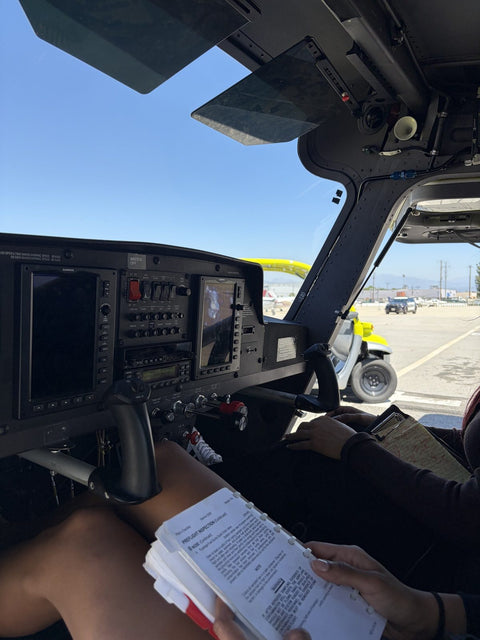
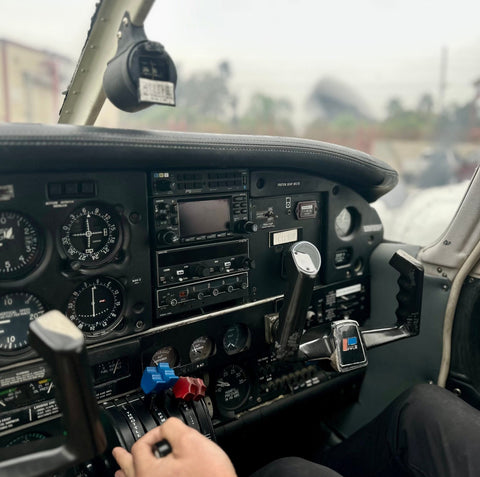
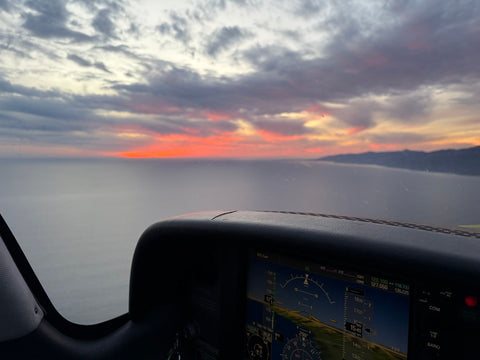
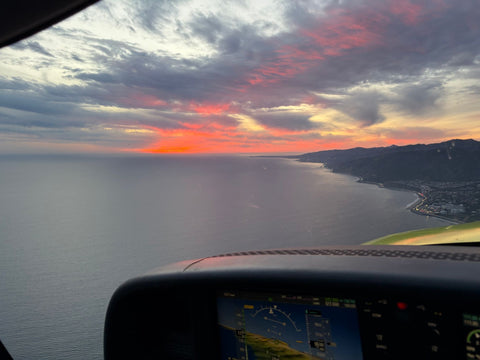
Glass cockpit instrument panel used for instrument training at Van Nuys Airport

This guide is for private pilots weighing the rating and for students already in it, and it takes the skills one at a time. The course itself, its price and the case for training through a Los Angeles marine layer are on our instrument rating in Los Angeles page. If the letters IFR are still new, start with IFR explained or VFR vs IFR. If you are not licensed yet, the visual flying underneath all of this is in our guide to private pilot maneuvers.

Every rule below comes from the FAA's own documents: 14 CFR, the Aeronautical Information Manual (AIM), the Instrument Procedures Handbook (FAA-H-8083-16B) and the Instrument Rating Airplane ACS (FAA-S-ACS-8C). We give the paragraph each time, so you can check it yourself.

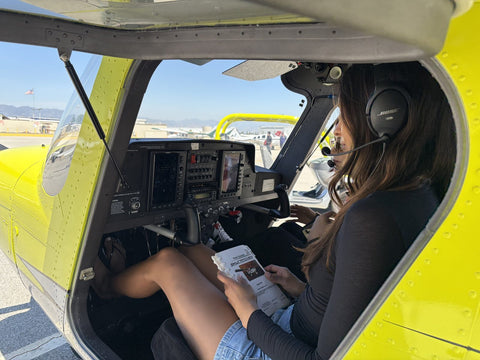
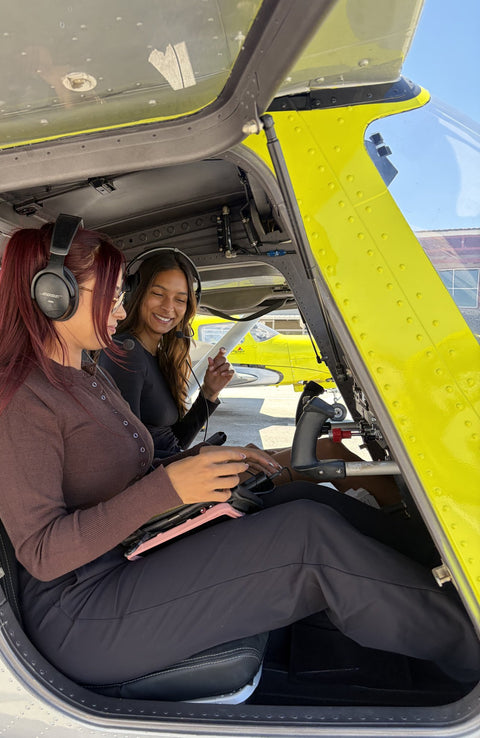
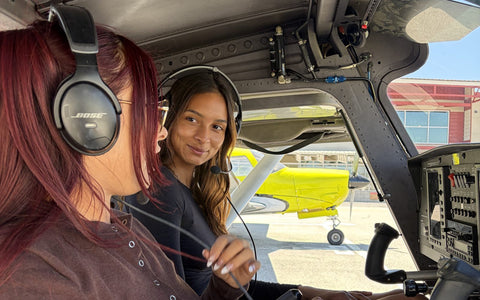
Flight instructor pointing out an instrument on the panel to a student pilot

What Instrument Flying Asks Of You

The checkride standard is FAA-S-ACS-8C, in force since 31 May 2024. It splits the rating into eight areas of operation, and 14 CFR 61.65(c) lists the same eight as the training you must receive. Here they are in plain words.

The Eight Areas Of The Instrument Rating ACS (FAA-S-ACS-8C)
Area ACS Title What It Means In The Airplane
I Preflight Preparation Your own qualifications, the weather and an IFR cross-country plan
II Preflight Procedures The systems and instruments IFR depends on, and the flight deck check before you go
III Air Traffic Control Clearances And Procedures Copying and flying a clearance, and holding
IV Flight By Reference To Instruments Attitude flying with no outside view, and recovery from unusual attitudes
V Navigation Systems Intercepting and tracking courses and DME arcs; departures, en route and arrivals
VI Instrument Approach Procedures Non-precision, precision, missed and circling approaches, and the landing from one
VII Emergency Operations Lost communications, and an approach with the primary flight instruments failed
VIII Postflight Procedures Checking the instruments and equipment after you shut down

Area VII also contains two engine-out tasks. They apply only to applicants in a multi-engine airplane, so in a single-engine trainer you fly the other two.

The standards are numbers, not impressions. Task IV.A asks you to hold altitude within 100 feet, headings within 10 degrees, airspeed within 10 knots and bank within 5 degrees in turns, solely by reference to instruments. Task III.B, holding, uses the same altitude, airspeed and heading limits and adds a course needle kept within three-quarter scale. The full task list, and how the knowledge test lines up with it, is on our page about the instrument written and the ACS.

All of it sits on top of a private certificate. To apply for the rating, 14 CFR 61.65(a) requires you to hold at least a private pilot certificate, or to be applying for one at the same time. If you have never flown, that path starts with a $229 discovery flight from our ramp at Van Nuys.

The Scan, And Why Your Inner Ear Lies

The ACS names the skill in a single line. Task IV.A, skill element S2: use proper instrument cross-check and interpretation, and apply the appropriate pitch, bank, power and trim. Cross-check is the scan, your eyes moving from instrument to instrument on a rhythm. Interpretation is reading what each one is actually telling you. Neither lasts long if your body is voting against them.

Your inner ear senses acceleration, not attitude. In cloud, with no horizon to correct it, it gives wrong answers that the AIM catalogues in paragraph 8-1-5. Roll into a bank too gently for the inner ear to notice, correct it abruptly, and you can feel as if you are banking the other way: the leans. Hold a long, coordinated turn and the inner ear stops reporting it at all. Notice the altitude unwinding, feel a wings-level descent, pull back to stop it, and you tighten the turn and lose more height. The AIM calls that the graveyard spiral.

The one that catches pilots close to the ground is the somatogravic illusion. A rapid acceleration on takeoff can feel exactly like the nose pitching up, and the AIM's warning is that a disoriented pilot may push the airplane into a nose-low attitude to correct a climb that is not happening. A rapid deceleration does the opposite.

The AIM's prevention is blunt. These illusions can be prevented only by visual reference to reliable, fixed points on the ground or to flight instruments. In cloud, that leaves the instruments. The ACS lists spatial disorientation and optical illusions as a risk element of Task IV.A, next to the situations that degrade your cross-check.

One habit worth building from the first hour: when your body and the attitude indicator disagree, believe the instrument and confirm it with a second one. Each illusion, and what to do about it, is covered in our guide to spatial disorientation and the somatogravic illusion.

ATT · Attitude

Drag, Or Use The Arrow Keys, To Bank And Pitch. It Eases Back To Level.

FAA-Approved Full-Motion Simulator

Full Motion, Indoors At Van Nuys.

An FAA-approved Redbird full-motion simulator with a real instructor beside you — takeoffs, turns, landings, even engine failures. Never canceled by weather, no weight limit, and the hours can count toward a certificate.

Reading An Approach Chart, Top To Bottom

An approach chart is designed to be briefed in order. The Instrument Procedures Handbook (chapter 4) says the FAA format "is presented in a logical order, facilitating pilot briefing of the procedures", and it calls the top section the Pilot Briefing Information. Read the chart in four passes, the same way every time.

Step 1 of 4

The Briefing Strip

Check the name first. The procedure name is printed at both the top and the bottom of the page, and briefing the RNAV approach when you were cleared for the ILS wastes the whole briefing. Under it, the communication strip lists the frequencies in the order you will use them, from arrival to touchdown. The notes box carries the restrictions that change how you fly, such as a procedure not authorized at night. On an RNAV (GPS) chart, the WAAS information sits in the top-left corner.

Step 2 of 4

The Plan View

The approach seen from above. The legend in the FAA's Terminal Procedures Publication lists what can appear here: routes, holding patterns, radio aids, fixes, obstacles and special use airspace. Trace the path from where you are to the final approach course, and look for any hold you might be given. The minimum safe altitude circle is here too, with its center point, radius and sectors (AIM 5-4-5). It is an emergency altitude, not a descent target, and our guide to minimum sector altitude reads one step by step.

Step 3 of 4

The Profile View

The approach seen from the side: segment altitudes, the final approach fix, the glide slope where there is one, and the missed approach point. How a number is printed matters. Under AIM 5-4-5, an underscored altitude is a minimum, an overscored one is a maximum, one with both lines is mandatory, and one with neither is recommended. On a non-precision approach the final approach fix is marked with a cross; on a precision approach a lightning bolt marks the glide slope intercept.

Step 4 of 4

The Minimums

The block at the bottom gives the lowest you may go and the visibility you need, by aircraft approach category from A to D: a DA or an MDA, the height above touchdown or above the airport, and the visibility or RVR. An RNAV (GPS) chart normally carries four lines of minimums, LPV, LNAV/VNAV, LNAV and circling (IPH, chapter 4). Brief the line your equipment supports, then look at the airport sketch beside it for the touchdown zone elevation and the approach lights.

Precision, Non-Precision And The Missed Approach

AIM 5-4-5 sorts approaches by what the needles tell you. A precision approach gives course and glidepath deviation from a system built to precision standards; the AIM's examples are PAR, ILS and GLS. An approach with vertical guidance, an APV, also gives a glidepath but is not required to meet those standards, and LPV and LNAV/VNAV are both APVs. A non-precision approach gives course guidance only, as on a VOR, NDB or LNAV approach.

The minimums follow the guidance. Lines that support vertical guidance publish a decision altitude (DA); lines with lateral guidance only, such as LNAV and LP, publish a minimum descent altitude (MDA). You fly down the glidepath to a DA and decide there. You descend to an MDA and level off until you either have what 14 CFR 91.175 requires to go lower or reach the missed approach point. What you must see before you leave the minimums is explained on our FAR 91.175 page.

The checkride asks for both kinds. ACS-8C Task VI.A requires at least two different non-precision approaches, in simulated or actual instrument conditions, and its appendix sets conditions on the mix, including a course reversal on at least one. Task VI.B adds a precision approach, and Tasks VI.C to VI.E a missed approach, a circling approach and the landing.

Fly the missed approach as often as you fly the approach. 91.175(e) tells you to execute it immediately if you reach the missed approach point or DA without what paragraph (c) requires, or lose sight of the airport while circling. The IPH gives the reason to start it on time. The published missed approach protects you from obstacles only if you begin it at or above the DA, or at the missed approach point. It also assumes a climb of 200 feet per nautical mile unless the chart asks for more.

Try It Before You Commit

Book The Simulator, A Lesson Or A First Flight

Fly an hour in the Redbird MCX for $189, take a two-hour lesson from $349, or start from zero with a $229 discovery flight. Lessons and discovery flights reschedule free up to 24 hours before.

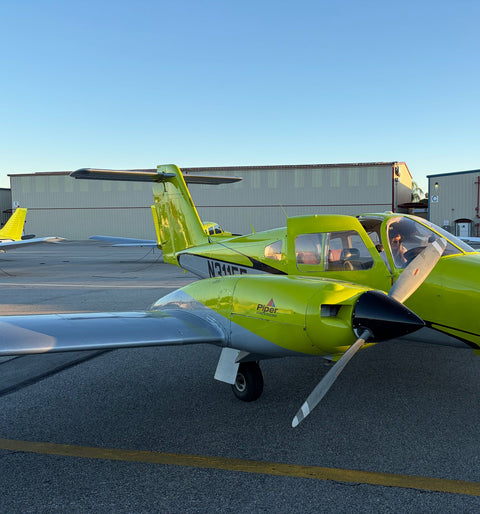
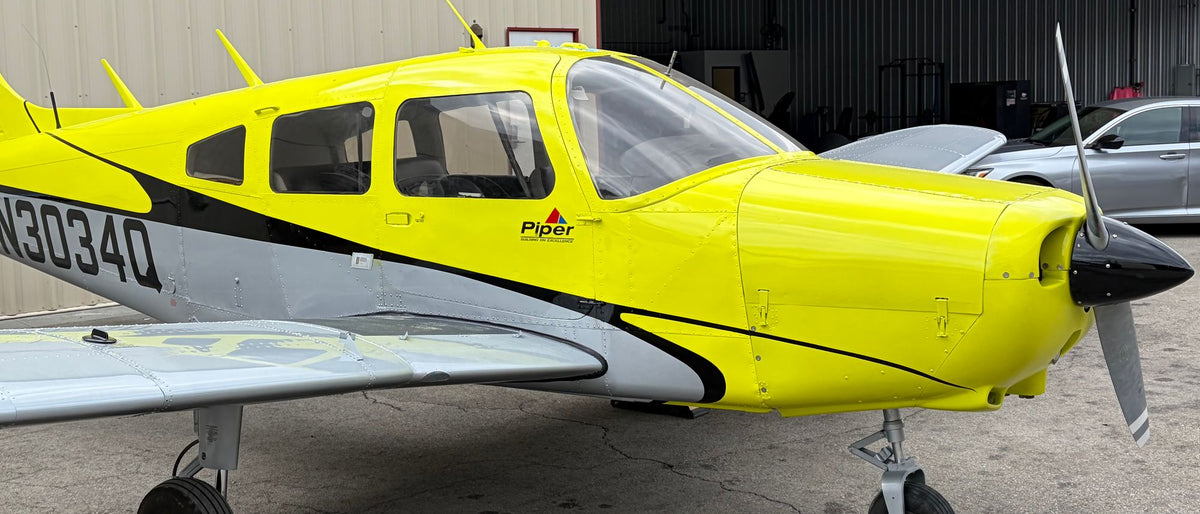
Piper Warrior N3034Q, front quarter, beside an open hangar at Van Nuys Airport
PIPER WARRIOR · 160 HP · LOW WING
The Classic 60–120 Min

Discovery Flight For One

Credited in full toward your training if you enroll within 24 hours.

One seat, one instructor, no audience. You take the controls once we are clear of the Van Nuys pattern, and your instructor signs the time into your logbook if you bring one.

  • Hands-on stick time
  • Pre-flight briefing and walk-around
  • Hollywood Sign and downtown
  • One-on-one with an FAA-certified instructor
  • Bring your logbook, we sign it

Flight Length

$229all-in · one flyer · 60 minutes

Book For One

Weight limit 180 lb for the person flying.

Or gift it →
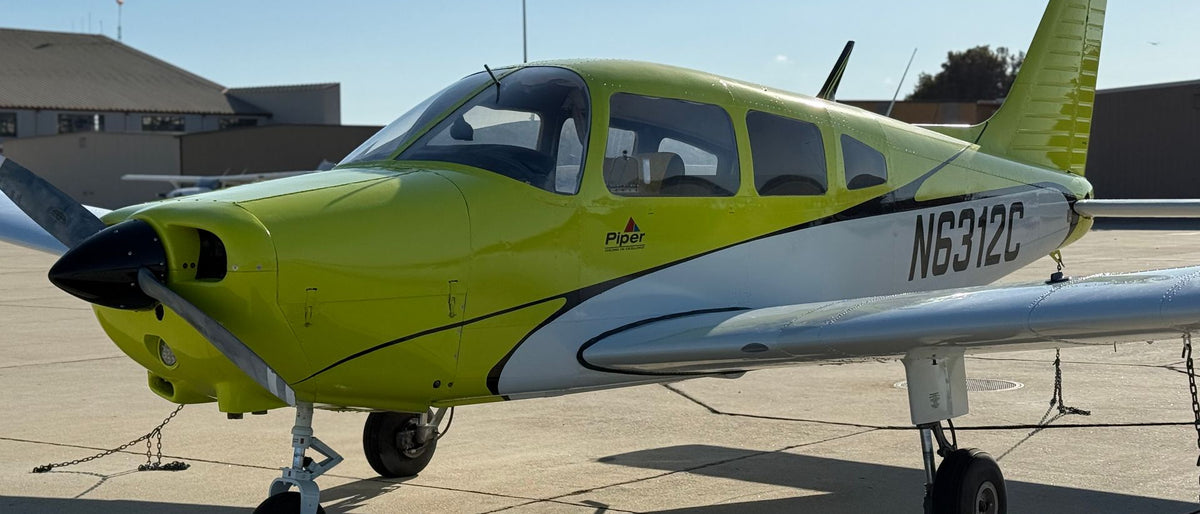
Piper Warrior N6312C, a four-seat low-wing trainer, parked on a sunny ramp
PIPER WARRIOR · FOUR SEATS
★ Most Popular 60–120 Min

Discovery Flight For Two Over Downtown

Logged as dual instruction toward the 40-hour minimum for a private license.

One of you flies while the other rides on the intercom and ends up as the photographer. The route runs past the Hollywood Sign and around the downtown towers.

  • Two seats in the Piper Warrior
  • Headsets for both of you
  • Hollywood Sign and the downtown towers
  • Hands-on flying for one of you
  • Pre-flight briefing and walk-around

Flight Length

$299all-in · two seats · 60 minutes

Book For Two

Weight limit 360 lb combined.

Or gift it →
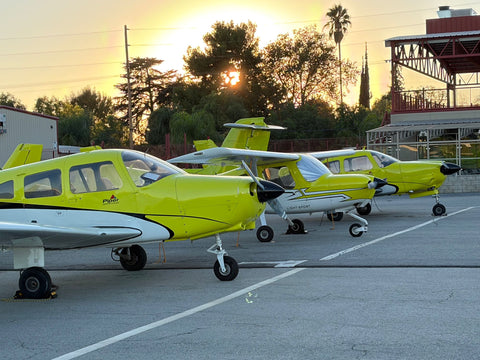
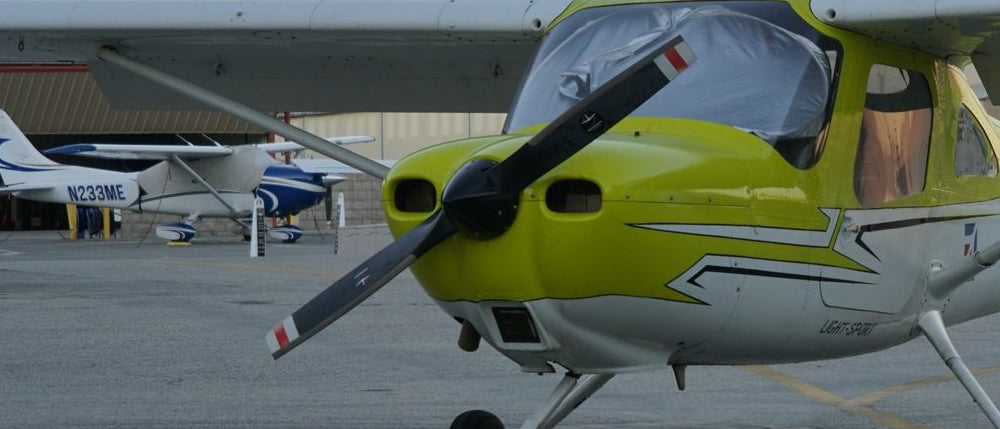
Cessna 162 Skycatcher trainer seen nose first on the Van Nuys ramp at sunset
CESSNA 162 · OR PIPER WARRIOR
Day One 2 Hours

Two-Hour Beginner Flying Lesson

Credited in full toward your training if you enroll within 24 hours.

Half an hour on the ground learning what the yoke, the pedals and the throttle do, then about seventy minutes in the air over Simi Valley with your instructor beside you.

  • 30-minute ground lesson first
  • About 70 minutes at the controls
  • Simi Valley and the Santa Susana Mountains
  • Cessna 162 or Piper Warrior
  • Debrief and a signed logbook entry

Lesson Length

$349all-in · one student · 2 hours

Book The Lesson

Weight limit 180 lb for the person flying.

Or gift it →
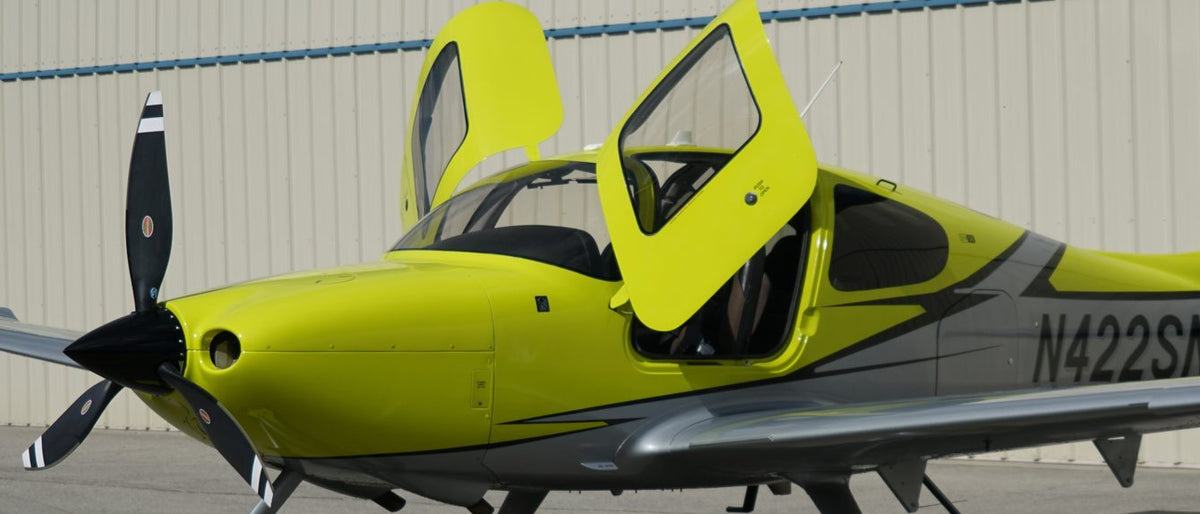
Cirrus SR22 Turbo with its gull-wing door open on the ramp at Van Nuys+ Luxury
CIRRUS SR22 TURBO · N422SN · 310 HP
+ Luxury 2 Hours

Two-Hour Beginner Flying Lesson In The Cirrus SR22 Turbo

Turbocharged, all glass, and fitted with a whole-airframe parachute.

Not the sensible first lesson, and most people do not start here. The ones who do usually know they will finish the certificate and want to begin in the airplane they will fly afterwards.

  • Cirrus SR22 Turbo N422SN
  • Cirrus Perspective glass panel
  • CAPS whole-airframe parachute
  • Side-stick and 310 hp
  • About 70 minutes at the controls

Lesson Length

$749all-in · one student · 2 hours

Book The Cirrus

Weight limit 200 lb for the person flying. No guest seat on this lesson.

Or gift it →

Holding Patterns In Practice

AIM 5-3-8 sets the rules. A standard hold turns right unless the chart or the clearance says left. The inbound leg takes one minute at or below 14,000 feet MSL. The maximum speeds are 200 knots indicated from the minimum holding altitude through 6,000 feet, 230 knots from 6,001 to 14,000 and 265 knots above that. A Warrior that cruises at about 128 knots never comes near those limits, so in a trainer the work is the entry and the wind.

The AIM describes three entries, parallel, teardrop and direct, chosen by your heading at the fix relative to a line 70 degrees off the holding course on the holding side. It calls them the procedures recommended by the FAA. Wind is the harder half. The AIM's rule is to correct for drift on both legs and to triple the inbound correction on the outbound leg, then adjust the outbound timing until the inbound leg comes out at a minute.

Holding comes up twice in an instrument pilot's life. It is a checkride task, flown to the limits above, and it is one of the three items 14 CFR 61.57(c) requires within the six calendar months before an IFR flight. Fall more than six calendar months behind on them and only an instrument proficiency check restores your currency. Our guide to holding patterns covers entries, timing, speeds and wind with worked numbers.

Planning The Rating? A free consultation at Van Nuys is about half an hour with an instructor. Bring your logbook and we will look at your cross-country and instrument time against 14 CFR 61.65 and tell you what is left to fly. Book a free consultation or call (818) 330-1318.

Great experience overall! The instructors are knowledgeable, supportive, and genuinely care about their students. I really appreciated the quality of training and professionalism. Highly recommend!

★★★★★Kayla M.Google ReviewRead More Reviews

Simulated Instrument Time: Foggles, Safety Pilots And The Simulator

14 CFR 61.65(d)(2) asks for 40 hours of actual or simulated instrument time, 15 of them from an authorized instrument instructor. Much of that can be simulated, in one of two ways: a view-limiting device in a real airplane, or an approved training device on the ground. 14 CFR 61.51(g) says you log instrument time only while flying solely by reference to instruments, in actual or simulated conditions.

In the airplane, 14 CFR 91.109(c) sets three conditions. The other control seat must hold a safety pilot with at least a private pilot certificate in the airplane's category and class. That safety pilot needs adequate vision forward and to each side, or a competent observer on board to supplement it. And the airplane needs fully functioning dual controls, with a narrow exception for a single throwover control wheel in a single-engine airplane. Our guide to foggles and view-limiting devices covers the devices themselves and the safety pilot's job.

On the ground, 14 CFR 61.65(i) lets you credit up to 20 hours in an advanced aviation training device, or up to 10 in a basic one. Three conditions apply: the FAA approved the device, an authorized instructor gives the time, and the FAA approved the training done in it. Paragraph (j) caps everything from simulators and training devices combined at 20 hours, outside a Part 142 training center. 61.51(g) adds that device time counts toward the rating when an authorized instructor observes it and signs for it.

Our Redbird MCX is an FAA-approved advanced aviation training device, and our instrument package puts 20 of the package's 40 dual hours in it. Which device hours count toward which certificate is laid out on simulator hours that count.

One honest limit. The simulator trains the scan, the procedures and the radio work, and it is never cancelled for weather. We do not claim it recreates the inner-ear illusions above. You learn those on the ground, and you meet them with an instructor beside you in actual cloud.

Where You Train These At Van Nuys

Instrument training here moves between the Redbird MCX and the two airplanes we list for instrument work, the Warrior and the Cirrus. Your instructors are Francis, our Instrument and Multi-Engine Instructor, and Alex, our founder and chief flight instructor, whose ratings include the instrument rating. Instruction is $110 an hour, in the airplane or the simulator. Van Nuys itself is a towered Class D airport under the Los Angeles Class B shelf; how that airspace works is in our Los Angeles airspace guide.

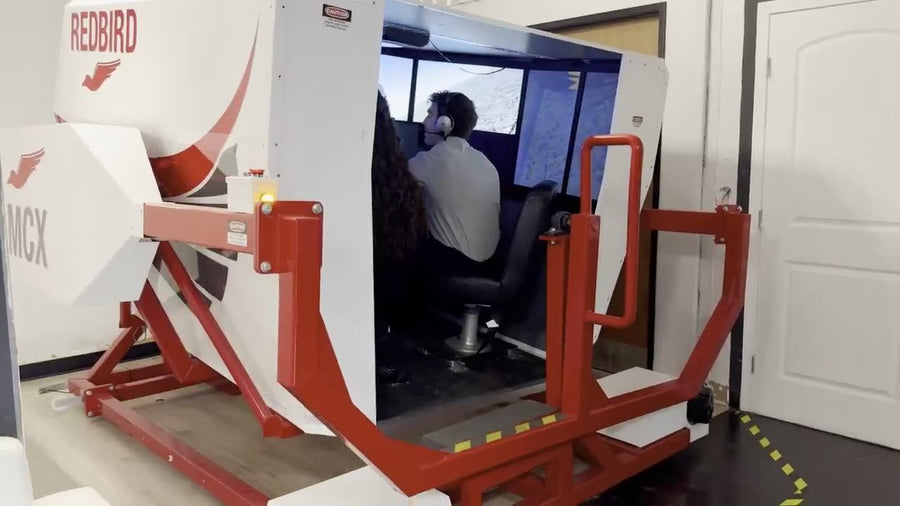
A student at the controls of the red Redbird MCX full-motion flight simulator

The Redbird MCX Simulator

A full-motion Redbird MCX with single- and multi-engine profiles, approved by the FAA as an advanced aviation training device. It is never cancelled for weather and has no weight limit. $200 an hour retail, $120 inside a package, or $189 for a 60-minute session with an instructor if you want to try it first. More on our full-motion flight simulator page.

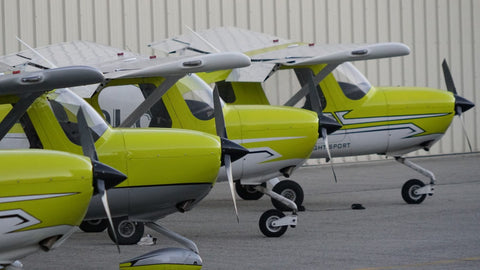
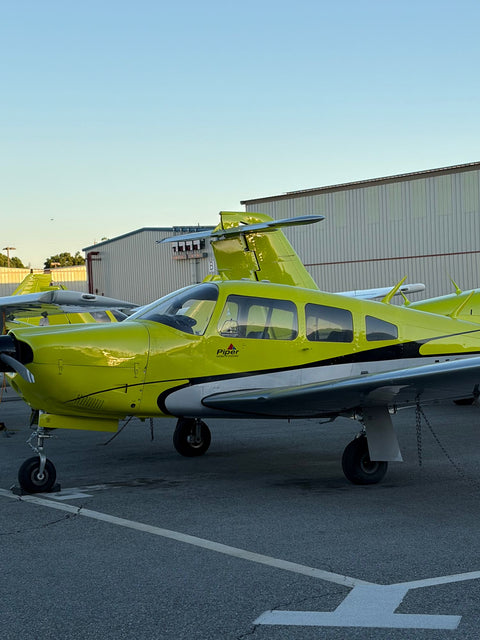
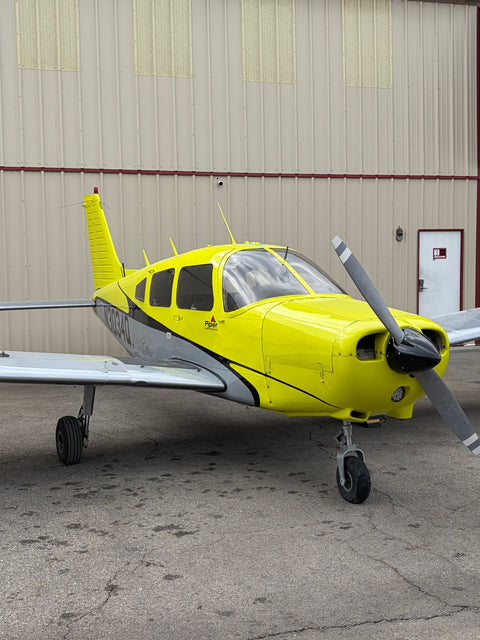
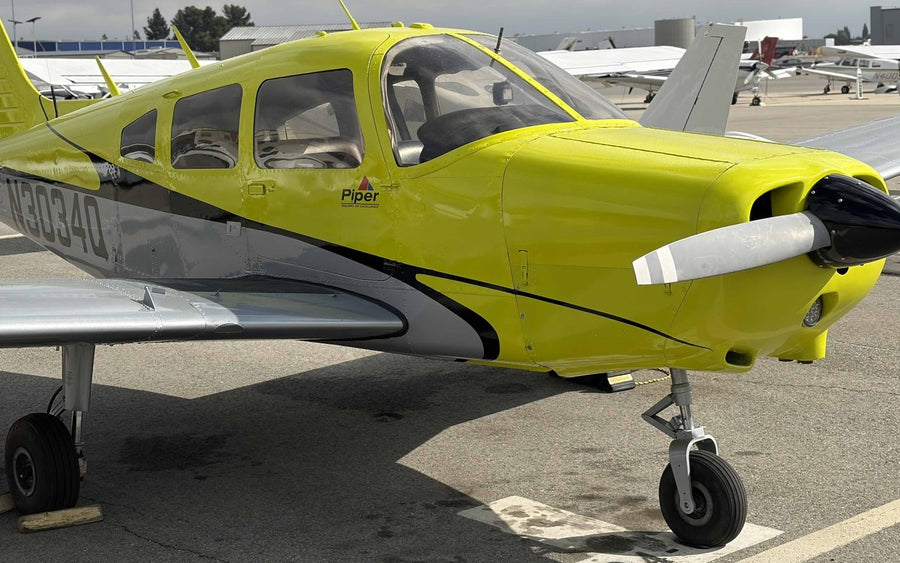
Yellow Piper Warrior N3034Q parked on the Van Nuys ramp under a cloudy sky

The Piper Warrior

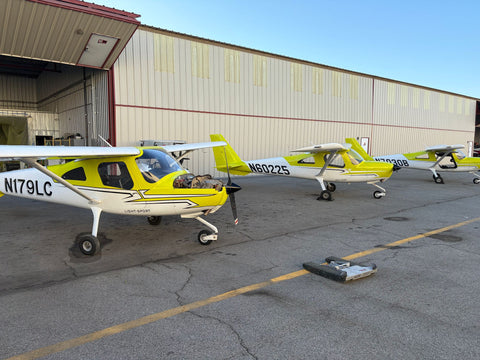
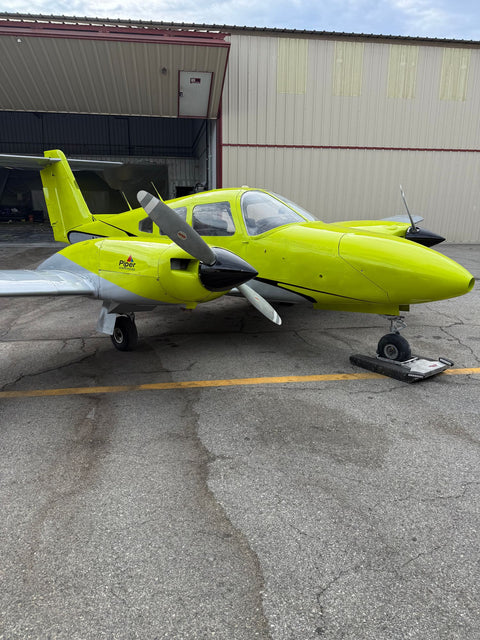
Two of them, N3034Q and N6312C: four seats, a low wing, 160 horsepower, about 128 knots and IFR-equipped. $269 an hour retail, $179 inside a package. If we were choosing an airplane for your first approach in real cloud, it would be this one: steady, predictable and well under half the Cirrus's hourly rate. Specifications are on our Piper Warrior PA-28-161 page.

Yellow Cirrus SR22 Turbo seen from the side, showing the cabin, cowling and propeller

The Cirrus SR22 Turbo

N422SN: 310 turbocharged horsepower, 215 knots, FL250, Cirrus Perspective glass and the CAPS parachute. $649 an hour retail. It is the nearest thing on our ramp to a modern glass flight deck, and a pilot who learns the rating in the Warrior can add Perspective time before or after the checkride. A high-performance endorsement in it is $1,799. More on our Cirrus SR22 page.

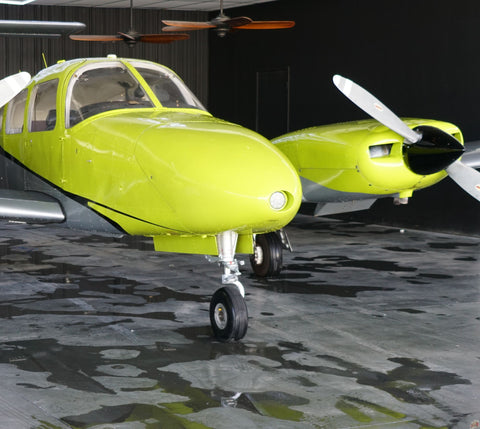
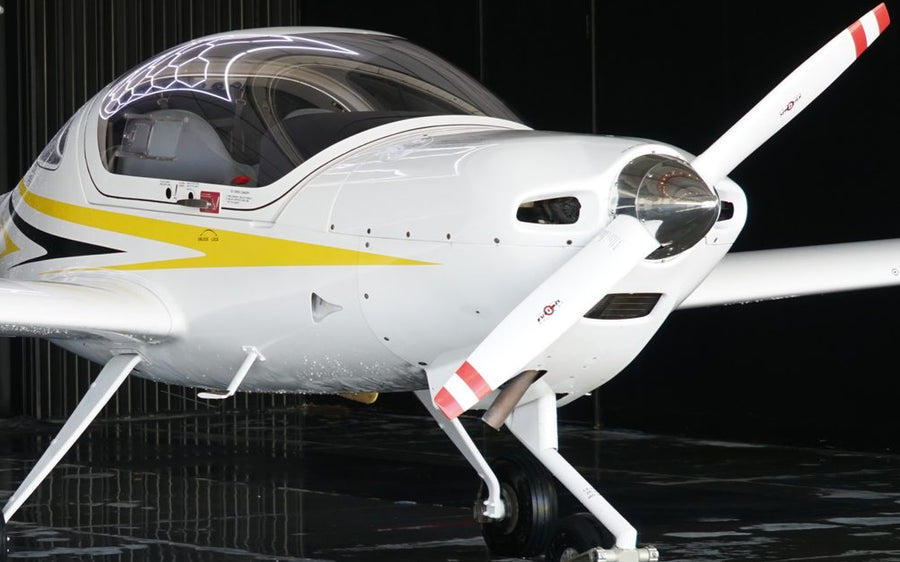
Diamond DA20-C1 trainer in the hangar, bubble canopy and propeller seen from the front

The Diamond DA20-C1

N306EF and N308EF fly private, commercial and spin training rather than instrument work, but the DA20 carries a Garmin 430, and so do the Piper Arrow N316EF and the Seminole N311EF. The commercial and multi-engine ratings that often follow the instrument rating are flown in those airplanes, so time spent learning the 430 pays again later. $329 an hour retail, $229 inside a package. If you have not flown at all yet, a two-hour first lesson for $349, in the Cessna 162 or the Warrior, is where all of this starts.

Included Every Time

What A $229 Discovery Flight Includes

$229 · All-In 60 Min Flight Time

Not a pilot yet? Every instrument rating starts with a first hour in the left seat. Discovery flights leave our ramp at Van Nuys Airport (KVNY) with an FAA-certificated flight instructor, and the full price is credited toward training if you enroll within 24 hours.

40 HrsInstrument TimeActual or simulated, 15 with an instrument instructor, 14 CFR 61.65(d)
50 HrsPIC Cross-Country10 of them in an airplane, 61.65(d)
20 HrsIn The Redbird MCXThe most an advanced ATD can count, 61.65(i)
$11,700Our Instrument Package20 hrs aircraft, 20 sim, 40 dual, 10 ground

What The Instrument Rating Adds Up To

14 CFR 61.65(d) sets the experience. You need 50 hours of cross-country time as pilot in command, 10 of them in an airplane, and 40 hours of actual or simulated instrument time, 15 of them with an authorized instrument instructor. Inside those 40 sit three hours of instrument training in an airplane within two calendar months of the practical test, and an IFR cross-country with an instructor: 250 nautical miles, an instrument approach at each airport and three different kinds of approach. Our page on instrument rating requirements takes each line in turn.

Our instrument package is $11,700. It holds 20 hours in the airplane, 20 in the Redbird MCX, 40 hours of dual instruction across both and 10 hours of ground. Exam fees sit outside it, and instrument rating cost lists them. If your cross-country time is short of 50 hours, building it comes on top, and a free consultation is the quickest way to find out by how much.

If you want to teach instrument flying one day, the instructor rating that follows is covered on our CFII rating page.

Pick A Rating

Every Hour And Every Dollar, Course By Course

The instrument course is $11,700: 20 hours in the airplane, 20 in the simulator, 40 dual and 10 ground. Open the Instrument tab to see it beside the other ratings.

Questions About Instrument Flying Skills

Can I Practice Instrument Flying In The Simulator?

Yes, and it counts. 14 CFR 61.65(i) allows up to 20 of the 40 instrument hours in an FAA-approved advanced aviation training device, given by an authorized instructor. The Redbird MCX at Van Nuys is one, and our instrument package uses all 20 of those hours in it.

Do I Need A Safety Pilot To Wear Foggles?

In the airplane, yes. 14 CFR 91.109(c) requires a safety pilot with at least a private certificate for the category and class in the other control seat. The safety pilot needs adequate vision forward and to each side, or a competent observer, and the airplane needs fully functioning dual controls. If the flight is for currency, 61.51(g)(3) also asks you to log the safety pilot's name.

What Does The Instrument Checkride Cover?

All eight areas of FAA-S-ACS-8C, from preflight preparation to postflight procedures, on the ground and in the airplane. The examiner's fee runs roughly $800 to $1,000, and it is not part of our package price.

How Many Approaches Keep Me Current?

Six, plus holding procedures and tasks and intercepting and tracking courses, all within the six calendar months before the month of the flight, under 14 CFR 61.57(c). A simulator or training device can count if it represents the airplane category. The details are on our IFR currency requirements page.

What Is The Difference Between A Precision And A Non-Precision Approach?

A precision approach gives course and glidepath guidance and ends at a decision altitude; a non-precision approach gives course guidance only and ends at a minimum descent altitude. For the checkride, the ACS-8C appendix defines a precision approach as one flown to a published decision altitude using approved vertical guidance.

What Does Instrument Training Cost Here?

$11,700 for the package: 20 hours in the airplane, 20 in the simulator, 40 hours of dual and 10 of ground. You can pay $2,500 down and four payments of $2,300, or finance it over up to 15 years through Stratus Financial after a soft credit check.

Start Your Instrument Training At Van Nuys

Plan the $11,700 instrument package at a free consultation, or fly an approach in the Redbird MCX for $189 first. Not licensed yet? Start with a $229 discovery flight or a $349 first lesson.

Call (818) 330-1318, seven days a week, 9 AM to 9 PM.