

Instrument Flying Skills · Holding

Holding Patterns: Entries, Timing, Speeds And Wind Correction

A holding pattern is a racetrack flown around a fix while air traffic control decides what happens next. The standard one in the AIM turns right, takes one minute on the inbound leg at or below 14,000 feet MSL, and is flown at no more than 200 knots indicated up to 6,000 feet.

1 minInbound leg at or below 14,000 ft MSL
200 ktMax holding speed up to 6,000 ft
3Entries the FAA recommends
$189Practice holds in the full-motion sim
Redbird MCX full-motion flight simulator with a student at the controls at Van Nuys

The rules here come from paragraph 5-3-8 of the Aeronautical Information Manual for entries, timing, speeds and wind, and from the Instrument Rating Airplane ACS (FAA-S-ACS-8C) for what the checkride expects. It is one of the guides under our hub on instrument flying skills. Where we give an opinion rather than a rule, we say so.
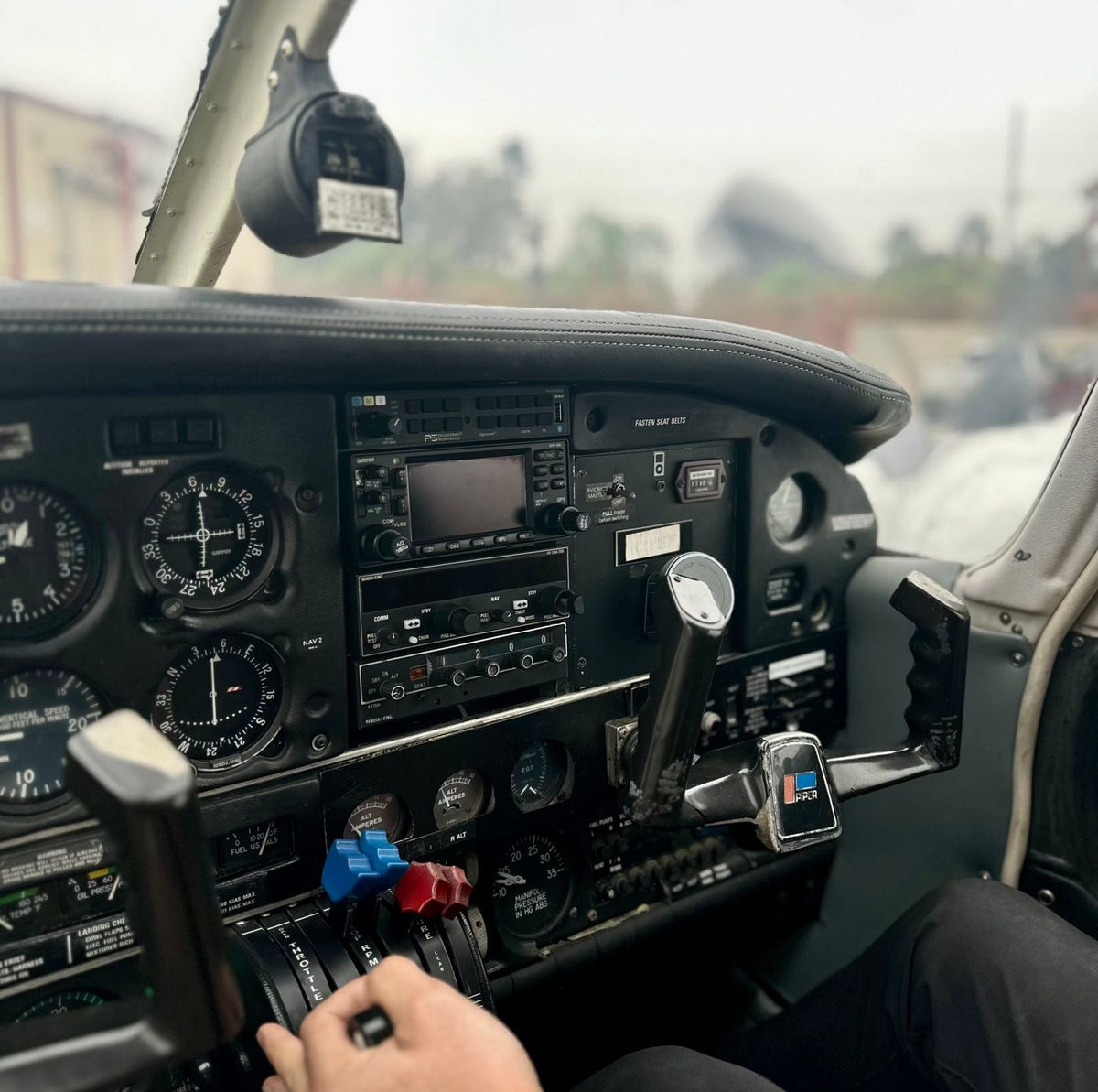
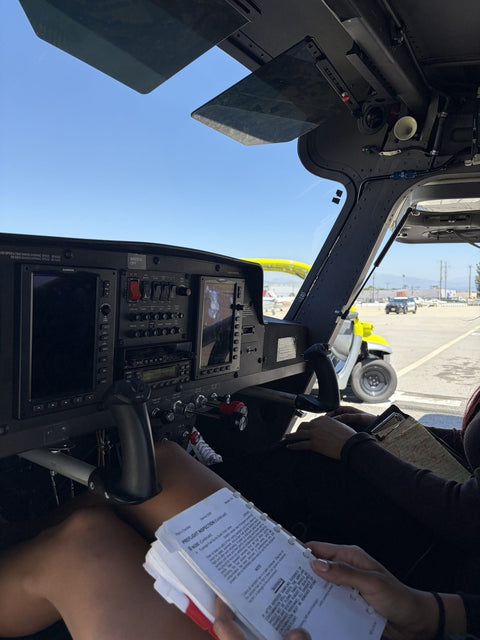
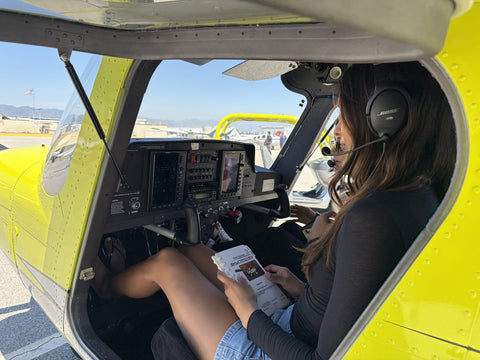
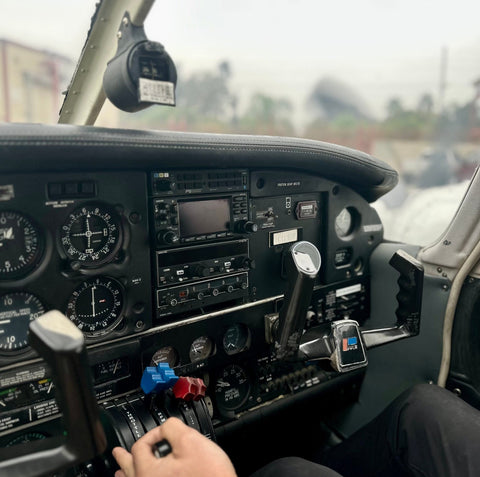
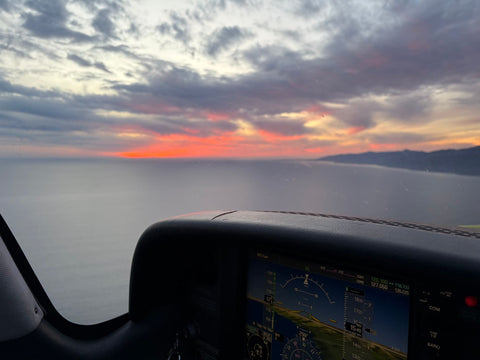
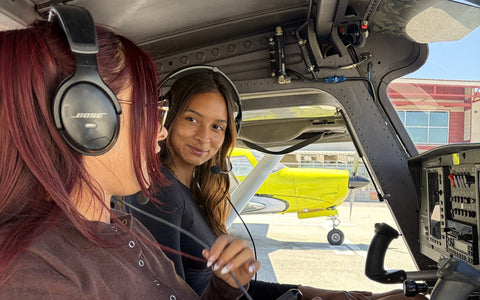
Glass cockpit instrument panel used for instrument training at Van Nuys Airport

What A Holding Pattern Is, And Why ATC Uses One

Holds exist because the sky runs out of room before the airport does. AIM 5-3-8 covers what happens when a clearance to a fix short of your destination involves an expected delay. The controller issues complete holding instructions, unless the pattern is charted, along with an expect further clearance (EFC) time and a best estimate of any further delay.

If the hold is charted and the controller does not read out the instructions, you hold as charted; the controller may simply say "as published", and will give the full instructions if you ask. If there is no charted hold and no instructions, the AIM says to ask ATC for holding instructions before you reach the fix. Patterns at the most generally used holding fixes are printed on the charts.

Holds also appear inside approaches. The ACS lists "holding in lieu" of a procedure turn as one way to fly a course reversal, and at least one of the non-precision approaches on the checkride must include a course reversal. If the radio fails while you are holding, the AIM points you to 14 CFR 91.185, the lost communications rule.

If you are reading this before your private certificate, holds come later. The first step is a $229 discovery flight or a two-hour first lesson for $349 at Van Nuys.

Anatomy Of A Standard Hold

Every hold has the same parts. The holding fix is the reference point for the whole pattern. The inbound leg is flown toward the fix along the holding course. At the fix you turn to the outbound leg, fly it, and turn again at the outbound end to rejoin the inbound course. The side of the course where the pattern sits is the holding side; the other side is the nonholding side.

A standard pattern turns right at both ends. A nonstandard pattern turns left, and you fly one only when the chart or the clearance says so.

Outbound timing starts over or abeam the fix, whichever comes later, and if you cannot tell when you are abeam, the AIM says to start it when the turn to the outbound leg is complete. Holding at a VOR, you begin the turn outbound at the first complete reversal of the to/from indicator.

The fix is the only fixed thing in the picture. Everything else, the heading you hold outbound, how long you fly it and where the outbound turn begins, moves with the wind, and that is where most of the work is.

The Three Entries

AIM 5-3-8 describes three ways into a hold and calls them the procedures for entry and holding recommended by the FAA. Which one you fly depends on your heading as you reach the fix, judged against a line drawn 70 degrees from the holding course on the holding side. The AIM treats 5 degrees either way in heading as within good operating limits for choosing the entry.

Direct Entry

In the AIM's words, fly directly to the fix and turn to follow the holding pattern. You cross the fix, make the first turn in the direction of the hold, and you are established on the outbound leg. It is the simplest of the three, and the one to be quick about: the outbound timing starts as soon as you are abeam the fix.

Teardrop Entry

Fly to the fix, then turn outbound to a heading 30 degrees off the holding course, inside the pattern on the holding side, and fly it for one minute. Then turn in the direction of the hold to intercept the inbound course. The path over the ground draws the teardrop that gives the entry its name.

Parallel Entry

At the fix, turn to a heading that parallels the holding course outbound on the nonholding side, and fly it for one minute. Then turn in the direction of the hold through more than 180 degrees, and either return to the fix or intercept the inbound course. The long turn is where students lose the picture, so we suggest saying the direction of turn out loud before you start it.

1 MinInbound LegAt or below 14,000 ft MSL
1.5 MinInbound LegAbove 14,000 ft MSL
RightStandard TurnsUnless the chart or ATC says left
3 MinSlow DownStart the speed reduction within 3 minutes of the fix

Timing And Leg Length

AIM 5-3-8 sets the inbound leg at one minute at or below 14,000 feet MSL and one and a half minutes above. You time the outbound leg, and you adjust it lap by lap so that the inbound leg comes out at the right length. In still air the two legs take about the same time. With wind they will not, and that is expected.

On a DME or GPS hold, distance replaces time. The chart or the controller gives the outbound leg length in nautical miles, and the end of the outbound leg is where the DME or along-track distance reads that number. The AIM gives two examples. Holding toward the navaid at a fix 10 NM out, with 5 NM legs, the outbound leg ends at 15 DME. Holding away from the navaid at a fix 28 NM out, with 8 NM legs, it ends at 20 DME.

Entries and holding procedures stay the same on a distance hold. Only the end of the outbound leg changes from a clock to a readout.

Maximum Holding Airspeeds

AIM 5-3-8 gives three maximum indicated airspeeds that apply to all holding, by altitude.

Maximum Holding Airspeeds (AIM 5-3-8)
Altitude (MSL) Maximum Holding Airspeed
Minimum holding altitude through 6,000 ft 200 KIAS
6,001 ft through 14,000 ft 230 KIAS
14,001 ft and above 265 KIAS
Some holds between 6,001 and 14,000 ft, marked by an icon on the chart 210 KIAS
A hold with a published lower limit The charted figure, for example 175 KIAS, shown in parentheses

Slow down before you get there. AIM 5-3-8 expects you to start a speed reduction when you are 3 minutes or less from a clearance limit with no clearance beyond it, so that you cross the fix the first time at or below the maximum holding speed. ACS-8C Task III.B asks for the same thing on the checkride: within 3 minutes of the fix, change to the right airspeed for the altitude and set power for fuel conservation. If you cannot comply with a speed limit, tell ATC immediately.

In a Warrior cruising at about 128 knots, none of these limits bite. Move up to the 215-knot Cirrus SR22 Turbo and the 200-knot limit below 6,000 feet becomes a number you plan for.

Rusty On Holds? If your last hold was on your checkride, a free consultation with an instructor at Van Nuys is the cheapest way to plan getting current. It takes about half an hour; bring your logbook. Book a free consultation or call (818) 330-1318.

Correcting For Wind

The AIM's instruction is to compensate for wind mainly with drift correction on both the inbound and outbound legs. The inbound leg is easy to correct, because you are tracking a course: the needle tells you the drift, and you hold whatever heading keeps it centered.

The outbound leg has no course to track, so the AIM gives a rule of thumb. Triple the inbound drift correction on the outbound leg, on the opposite side, to avoid large turning adjustments at the end. Its example: 8 degrees left inbound becomes 24 degrees right outbound.

Then fix the timing. If the inbound leg came out at 45 seconds, the next outbound leg needs to be longer; if it came out at 75, shorter. Correct a little on each lap, and write the numbers down so the next correction starts from a fact rather than a feeling.

The ACS puts it in one element. Task III.B, skill element S5, asks you to use wind correction to keep the pattern you want and to cross the fix as close as possible to a specified time.

Fly A Hold This Week

Book The Simulator, A Lesson Or A First Flight

Practice entries in the Redbird MCX for $189, take a two-hour lesson from $349, or start from zero with a $229 discovery flight.

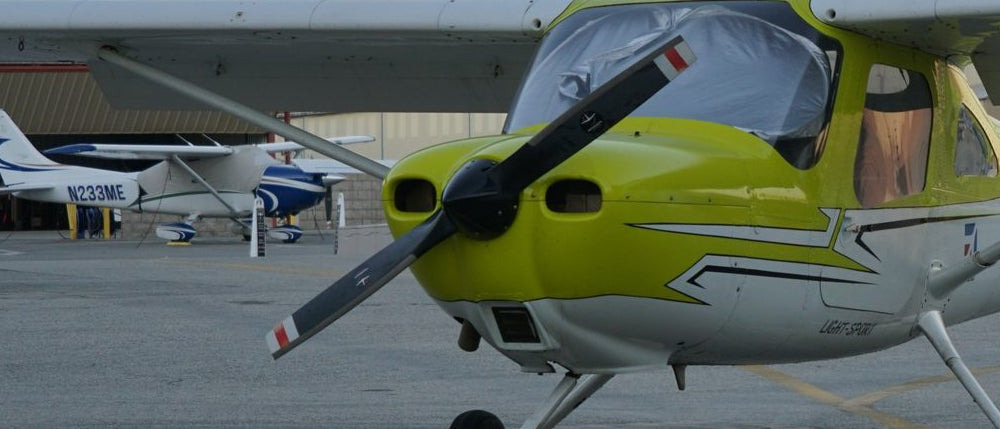
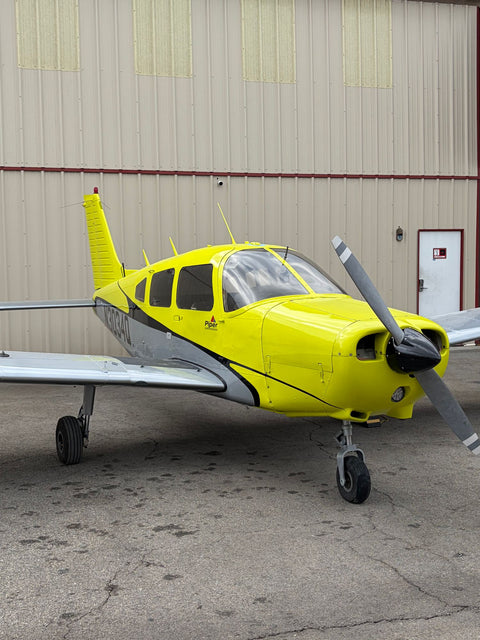
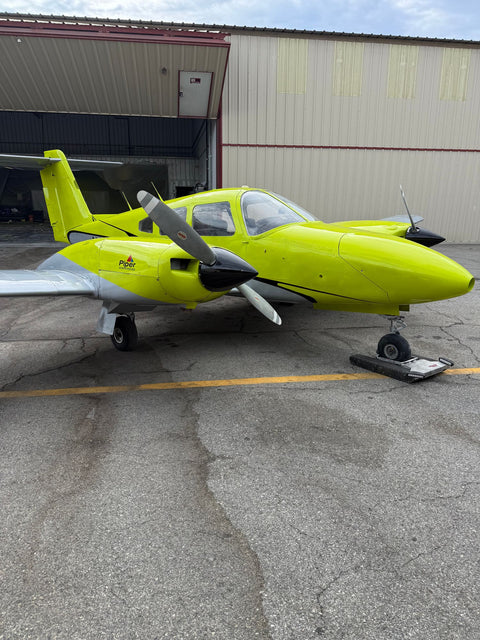
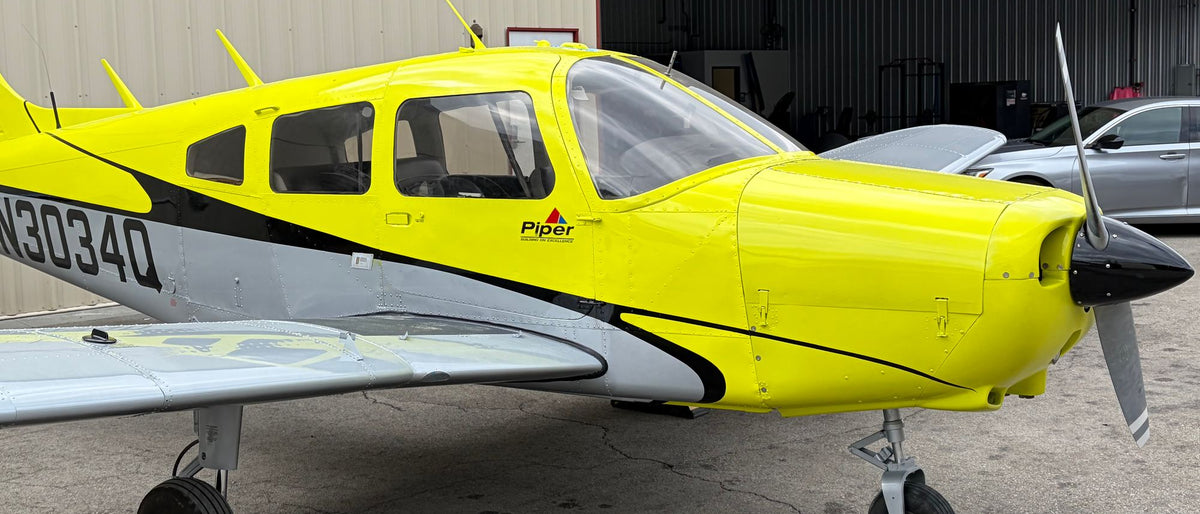
Piper Warrior N3034Q, front quarter, beside an open hangar at Van Nuys Airport
PIPER WARRIOR · 160 HP · LOW WING
The Classic 60–120 Min

Discovery Flight For One

Credited in full toward your training if you enroll within 24 hours.

One seat, one instructor, no audience. You take the controls once we are clear of the Van Nuys pattern, and your instructor signs the time into your logbook if you bring one.

  • Hands-on stick time
  • Pre-flight briefing and walk-around
  • Hollywood Sign and downtown
  • One-on-one with an FAA-certified instructor
  • Bring your logbook, we sign it

Flight Length

$229all-in · one flyer · 60 minutes
Book For One

Weight limit 180 lb for the person flying.

Or gift it →
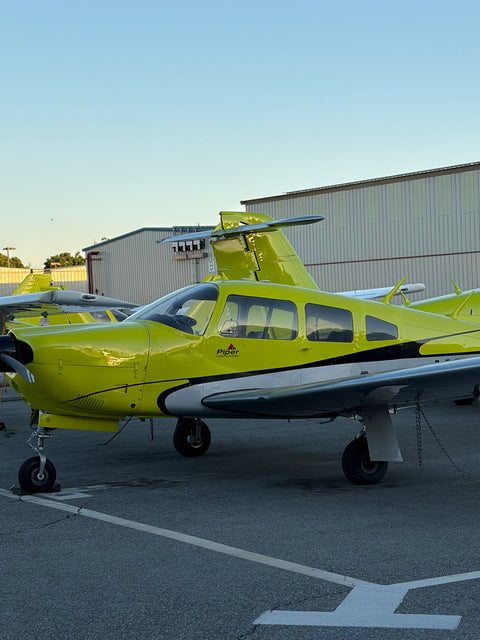
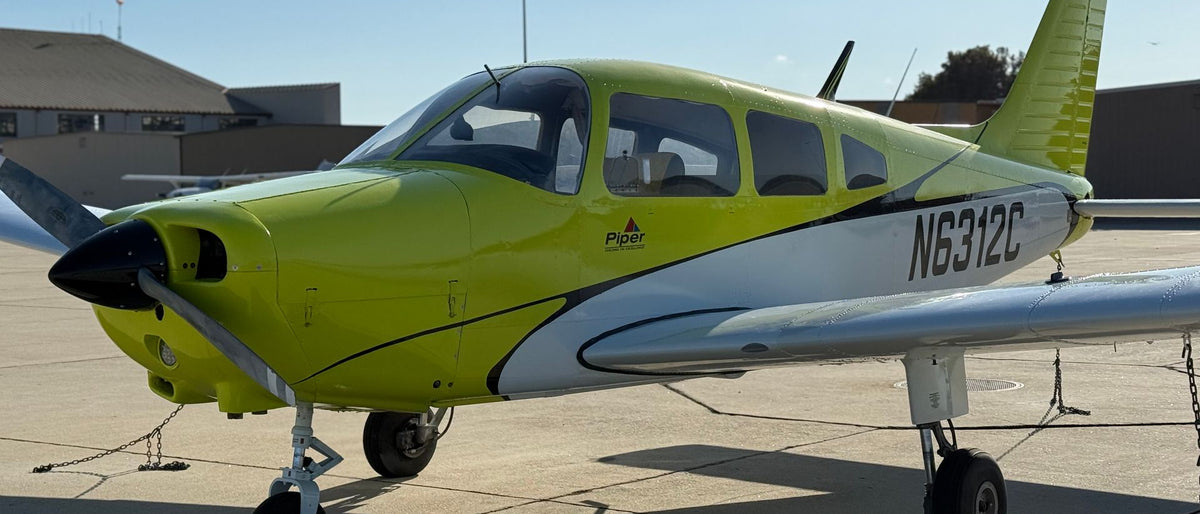
Piper Warrior N6312C, a four-seat low-wing trainer, parked on a sunny ramp
PIPER WARRIOR · FOUR SEATS
★ Most Popular 60–120 Min

Discovery Flight For Two Over Downtown

Logged as dual instruction toward the 40-hour minimum for a private license.

One of you flies while the other rides on the intercom and ends up as the photographer. The route runs past the Hollywood Sign and around the downtown towers.

  • Two seats in the Piper Warrior
  • Headsets for both of you
  • Hollywood Sign and the downtown towers
  • Hands-on flying for one of you
  • Pre-flight briefing and walk-around

Flight Length

$299all-in · two seats · 60 minutes

Book For Two

Weight limit 360 lb combined.

Or gift it →
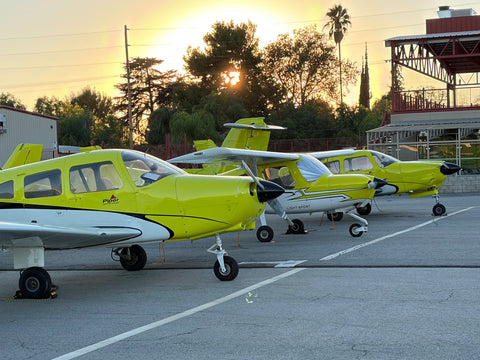
Cessna 162 Skycatcher trainer seen nose first on the Van Nuys ramp at sunset
CESSNA 162 · OR PIPER WARRIOR
Day One 2 Hours

Two-Hour Beginner Flying Lesson

Credited in full toward your training if you enroll within 24 hours.

Half an hour on the ground learning what the yoke, the pedals and the throttle do, then about seventy minutes in the air over Simi Valley with your instructor beside you.

  • 30-minute ground lesson first
  • About 70 minutes at the controls
  • Simi Valley and the Santa Susana Mountains
  • Cessna 162 or Piper Warrior
  • Debrief and a signed logbook entry

Lesson Length

$349all-in · one student · 2 hours

Book The Lesson

Weight limit 180 lb for the person flying.

Or gift it →
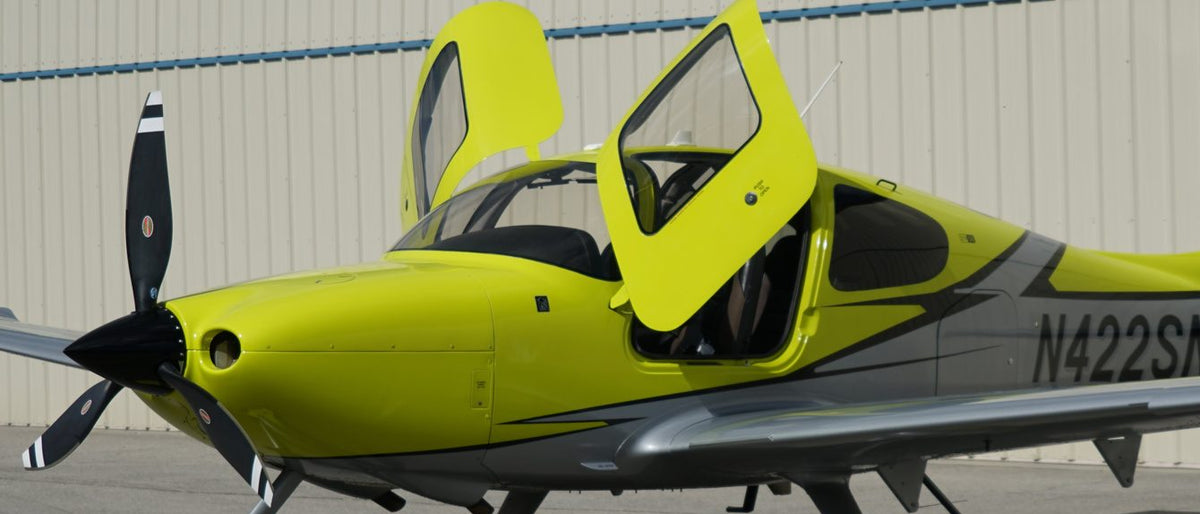
Cirrus SR22 Turbo with its gull-wing door open on the ramp at Van Nuys+ Luxury
CIRRUS SR22 TURBO · N422SN · 310 HP
+ Luxury 2 Hours

Two-Hour Beginner Flying Lesson In The Cirrus SR22 Turbo

Turbocharged, all glass, and fitted with a whole-airframe parachute.

Not the sensible first lesson, and most people do not start here. The ones who do usually know they will finish the certificate and want to begin in the airplane they will fly afterwards.

  • Cirrus SR22 Turbo N422SN
  • Cirrus Perspective glass panel
  • CAPS whole-airframe parachute
  • Side-stick and 310 hp
  • About 70 minutes at the controls

Lesson Length

$749all-in · one student · 2 hours

Book The Cirrus

Weight limit 200 lb for the person flying. No guest seat on this lesson.

Or gift it →

Practicing Holds In The Simulator And The Airplane

We think the first holds belong in the simulator. Our Redbird MCX is a full-motion, FAA-approved advanced aviation training device with single- and multi-engine profiles. It is never cancelled for weather, an instructor sits beside you, and an hour costs $189 as a single session, or $200 retail and $120 inside a package. Under 14 CFR 61.65(i), up to 20 hours in an advanced device like it count toward the 40 instrument hours the rating requires. More on our full-motion flight simulator page.

For currency, 14 CFR 61.57(c)(2) lets you fly the holding tasks in a full flight simulator, flight training device or aviation training device, as long as the device represents the airplane category and you fly the tasks in simulated instrument conditions. You can mix device time and airplane time in any combination.

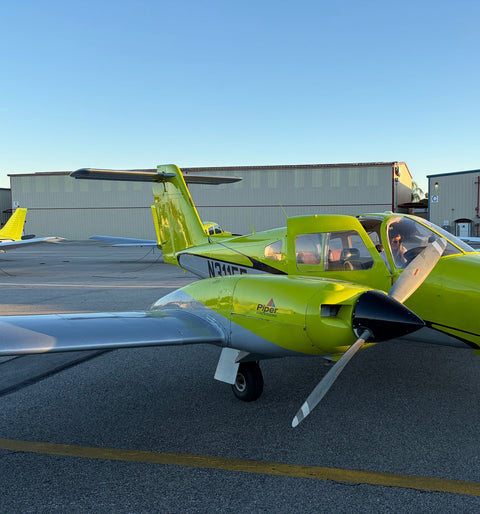
In the airplane, our Piper Warriors, N3034Q and N6312C, are IFR-equipped, at $269 an hour retail and $179 inside a package. Flying holds under a view-limiting device needs a safety pilot under 14 CFR 91.109(c), and our guide to foggles and view-limiting devices explains the rule. Pilots moving on to the commercial and multi-engine ratings meet a Garmin 430 in the Piper Arrow N316EF and the Seminole N311EF.

Which device hours count toward which certificate is laid out on simulator hours that count.

ATT · Attitude

Drag, Or Use The Arrow Keys, To Bank And Pitch. It Eases Back To Level.

FAA-Approved Full-Motion Simulator

Full Motion, Indoors At Van Nuys.

An FAA-approved Redbird full-motion simulator with a real instructor beside you — takeoffs, turns, landings, even engine failures. Never canceled by weather, no weight limit, and the hours can count toward a certificate.

Included Every Time

What A $229 Discovery Flight Includes

$229 · All-In 60 Min Flight Time

Not a pilot yet? Every instrument rating starts with a first hour in the left seat. Discovery flights leave our ramp at Van Nuys Airport (KVNY) with an FAA-certificated flight instructor, and the full price is credited toward training if you enroll within 24 hours.

Holding On The Checkride And For Currency

On the checkride, holding is ACS-8C Area III, Task B. The examiner wants an entry procedure appropriate to the hold, whether standard, nonstandard, published or not, and the speed change within 3 minutes of the fix. You must recognize arrival at the fix promptly, then fly the pattern to altitude within 100 feet, airspeed within 10 knots, headings within 10 degrees and the course needle within three-quarter scale. The knowledge element covers reporting criteria, appropriate speeds and the recommended entry procedures. The test as a whole is covered on the instrument written and the ACS.

For currency, 14 CFR 61.57(c)(1) lists "holding procedures and tasks" next to six instrument approaches and intercepting and tracking courses, all within the six calendar months before the month of the flight. Our page on IFR currency requirements covers the rest of that rule. Fall more than six calendar months behind and only an instrument proficiency check restores it.

If you are training for the rating, holds are part of our instrument package: $11,700 for 20 hours in the airplane, 20 in the Redbird MCX, 40 hours of dual instruction and 10 of ground. The course is explained on instrument rating in Los Angeles. Holds share the plan view of the approach chart with the minimum safe altitude circle, which our guide to minimum sector altitude explains.

Pick A Rating

Every Hour And Every Dollar, Course By Course

The instrument course is $11,700: 20 hours in the airplane, 20 in the simulator, 40 dual and 10 ground. Open the Instrument tab to see it beside the other ratings.

Questions About Holding Patterns

Which Way Do Standard Holding Turns Go?

Right. A nonstandard hold turns left at both ends. In the turns, the AIM says to use 3 degrees per second, a 30-degree bank, or a 25-degree bank with a flight director, whichever needs the least bank.

How Long Is The Inbound Leg?

One minute at or below 14,000 feet MSL and one and a half minutes above. On a DME or GPS hold the leg is a distance instead, and the AIM says it is given in minutes if you ask for that or the controller thinks it necessary.

How Fast Can I Fly In A Hold?

200 knots indicated up to 6,000 feet, 230 to 14,000 and 265 above, unless a different limit is published. At US Air Force fields the maximum is 310 knots and at Navy fields 230, unless the chart shows otherwise.

Do I Have To Use The Entry The AIM Shows?

The AIM calls parallel, teardrop and direct the entries recommended by the FAA. It accepts that other entries may keep you inside protected airspace, but warns that deviating from the recommended procedures while flying too fast can take you outside it.

Does A Hold Count Toward Instrument Currency?

Yes. 14 CFR 61.57(c)(1) lists holding procedures and tasks among the three things you must log. For the approaches, 61.51(g)(3) asks your logbook to show the location and type of each one and, if you used one, the safety pilot's name.

Can I Log Holds Flown In A Simulator?

Yes, for currency, if the device represents the airplane category and you fly in simulated instrument conditions. Under 14 CFR 61.51(g)(5), the logbook or training record must show the device, the time and the content of the training.

Fly Your Holds Before The Examiner Asks

Practice entries and wind correction in the Redbird MCX for $189, or plan the $11,700 instrument package at a free consultation. Not licensed yet? Start with a $229 discovery flight or a $349 first lesson.

Call (818) 330-1318, seven days a week, 9 AM to 9 PM.