Private Pilot Maneuvers · Slow Flight And Stalls

Slow Flight And Stalls: Power-On, Power-Off And The Recovery

Slow flight is controlled flight just above the stall, flown without setting off the stall warning. A stall happens when the wing exceeds its critical angle of attack, at any airspeed. Private pilots fly both, along with power-off stalls (the landing stall) and power-on stalls (the departure stall), and every recovery starts by lowering the nose.

VIIPrivate ACS area: slow flight and stalls
4Tasks in that area, spin awareness included
DA20Our utility-category trainer
$549Two-hour DA20 lesson
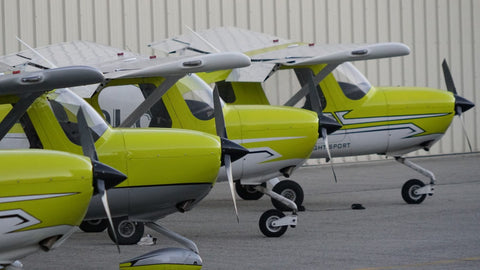
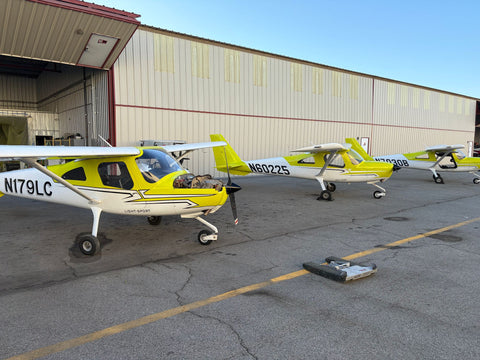
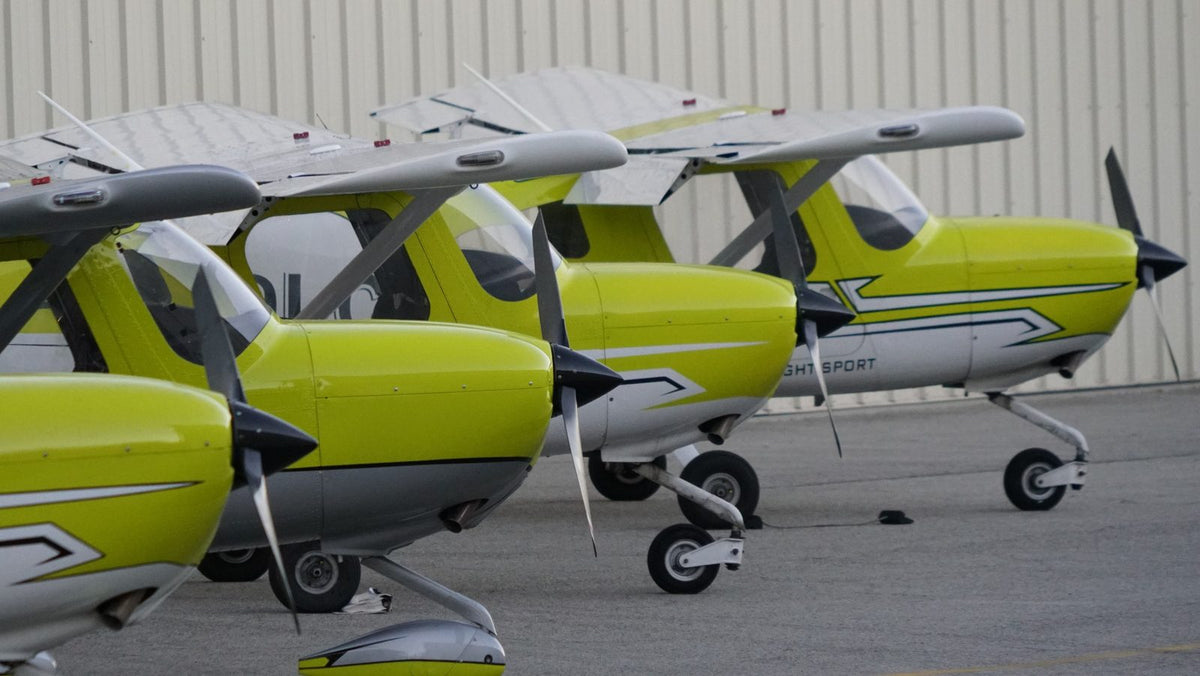
Noses and propellers of Cessna 162 Skycatcher trainers lined up outside a hangar at Van Nuys

Slow flight and stalls make up Area VII of the FAA's Private Pilot ACS (FAA-S-ACS-6C), one part of our private pilot maneuvers guide. The area has four tasks: maneuvering during slow flight, power-off stalls, power-on stalls and spin awareness. The technique and the numbers below come from the FAA's Airplane Flying Handbook (FAA-H-8083-3C), chapter 5, and the task-by-task standards are on our Private Pilot ACS page.

For a lot of people, stalls are the lesson they worry about before they fly one. If that is you, our honest answer to whether learning to fly is dangerous is worth ten minutes first. Nobody is asked to spin the airplane for a private certificate.

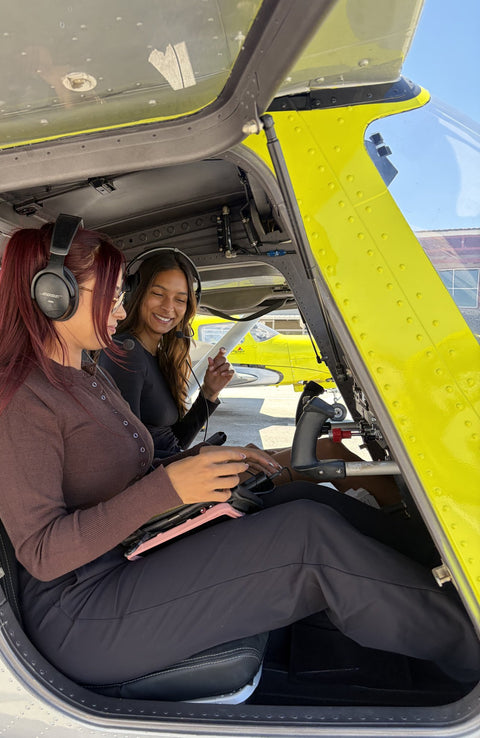
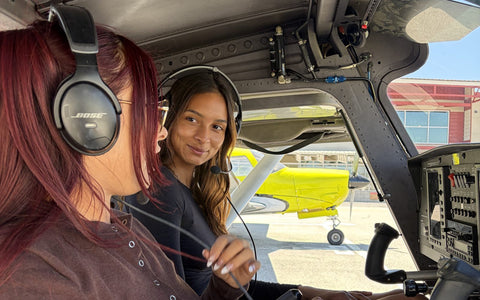
Flight instructor briefing a student pilot in the cockpit before a training flight

What Slow Flight Is, And Why The Checkride Includes It

The Airplane Flying Handbook describes slow flight as flight at an airspeed where the airplane is still under control without the stall warning going off. It calls 5 to 10 knots above the 1G stall speed a good target. In the seat, the airplane feels as if it has gone soft. The controls need bigger movements for the same result, the nose sits high, and it takes a surprising amount of power to hold altitude at a speed that feels slow.

It is on the checkride because every takeoff and every landing passes through the same speed range. The handbook says practice makes a pilot familiar with the feel, sound and visual cues of flight at that speed. It also lists the shapes to practice: straight-ahead climbs and climbing turns at about 20 degrees of bank, and power-off glides with descending turns, to represent the takeoff and landing phases.

14 CFR 61.87(d) puts flight at various airspeeds, from cruise down to slow flight, on the list of training you need before you solo. The stall speed your target is measured from is in your airplane's POH, which is why we do not print one here. The Cessna 162, the Warrior and the DA20 each have their own numbers, and your instructor briefs them on the ground.

Amazing experience! Highly recommend. I flew with Alex and he was extremely professional and knowledgeable. The entire experience was exceptional.

★★★★★Tielle L.Google ReviewRead More Reviews
1,500 ftRecovery FloorThe Airplane Flying Handbook recommends stall practice that recovers no lower than this above the ground in a single-engine airplane
5–10 ktSlow-Flight TargetAbove the 1G stall speed, the handbook's suggested slow-flight speed
+41%Stall Speed At 60°A level 60° banked turn means 2 G, and the stall speed rises by 41 percent
AnyAirspeed Or AttitudeThe critical angle of attack can be exceeded at any airspeed, attitude or power setting

What A Stall Actually Is

A stall is not a speed. It happens when the wing exceeds its critical angle of attack and the air over the top can no longer follow the curve of the wing. The handbook is plain about it: you can exceed the critical angle of attack at any airspeed, at any attitude and at any power setting. A published stall speed only holds for one weight and one configuration, with the wings level.

Bank is the easiest way to prove it. In a level 60-degree turn the load factor is 2 G, and the handbook says the airplane stalls at a speed 41 percent higher than its 1G stall speed. Pull hard enough at a speed that feels safe and the wing stalls anyway; that is an accelerated stall. The same arithmetic sits behind maneuvering speed, and the 45-degree version shows up in our guide to steep turns.

If you have never felt an airplane go light in your hands, a $229 discovery flight is not a stall lesson. It is an hour at the controls with an instructor beside you, and it is credited in full toward training if you enroll within 24 hours.

Power-Off Stalls: The Landing Stall

A power-off stall rehearses the stall you could meet on approach to land. The handbook sets it up in normal landing approach conditions, with the flaps in the landing configuration. Power comes back and the airplane settles into an approach descent. Then you raise the nose smoothly and keep raising it, as if you were trying to stretch a glide to the runway, until the airplane stalls.

The scene it protects you from is a familiar one. A turn from base to final overshoots the centerline, and the pilot tightens it with rudder and back pressure instead of going around. Low and slow with crossed controls is the classic setup for a stall that becomes a spin, and the power-off stall teaches your hands what the start of it feels like.

On some entries you recover at the first sign, the buffet or the warning; on others you let it reach the full stall. 14 CFR 61.87(d)(10) names both for pre-solo training, and your instructor will tell you which before each one. Flap settings and speeds come from the POH, and they differ across our three trainers.

ATT · Attitude

Drag, Or Use The Arrow Keys, To Bank And Pitch. It Eases Back To Level.

FAA-Approved Full-Motion Simulator

Full Motion, Indoors At Van Nuys.

An FAA-approved Redbird full-motion simulator with a real instructor beside you — takeoffs, turns, landings, even engine failures. Never canceled by weather, no weight limit, and the hours can count toward a certificate.

Power-On Stalls: The Departure Stall

A power-on stall rehearses the one after takeoff or during a go-around, when the nose is high and the engine is working hard. The handbook has it practiced from straight climbs and from climbing turns, normally in the takeoff configuration, at takeoff or recommended climb power. Some airplanes reach an uncomfortably steep pitch attitude at full power, and the handbook allows a reduced setting for those.

The nose comes up further than feels right, and the airplane wants to yaw. Keeping the ball centered with rudder as the speed bleeds away is most of the skill. The handbook links mishandled yaw during a stall with spin entry, and high power at low speed is where yaw is hardest to manage.

Practice it until it feels routine. The real one happens close to the ground, with no time to think.

Start In The Airplane

Book A Lesson Or A First Flight

Two-hour lessons from $349, including the DA20 at $549, or a 60-minute discovery flight at $229. All are credited in full toward training if you enroll within 24 hours.

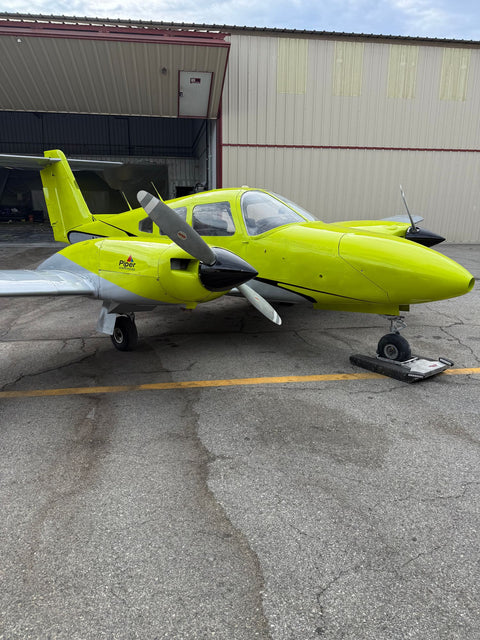
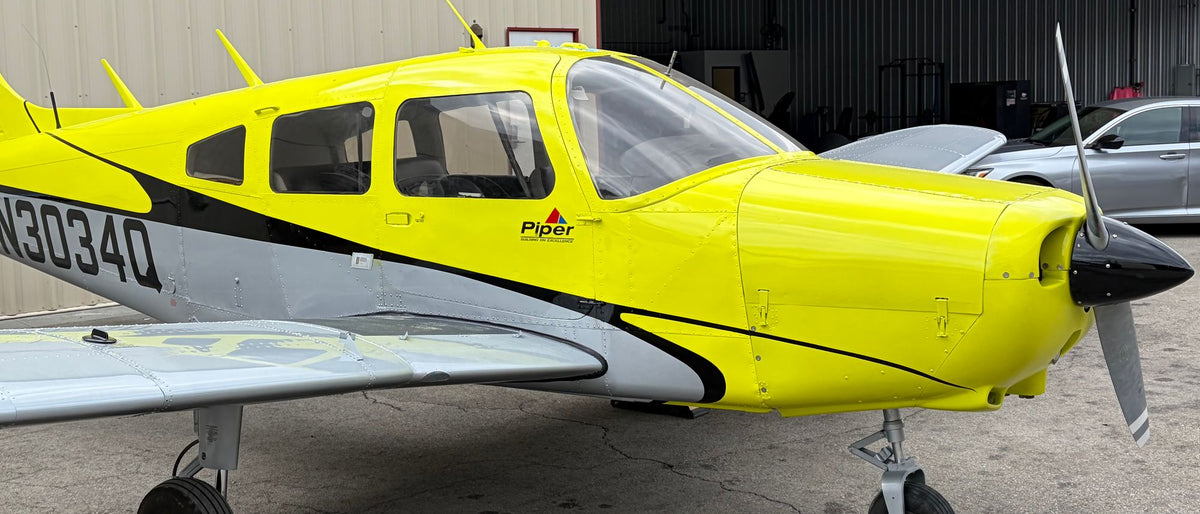
Piper Warrior N3034Q, front quarter, beside an open hangar at Van Nuys Airport
PIPER WARRIOR · 160 HP · LOW WING
The Classic 60–120 Min

Discovery Flight For One

Credited in full toward your training if you enroll within 24 hours.

One seat, one instructor, no audience. You take the controls once we are clear of the Van Nuys pattern, and your instructor signs the time into your logbook if you bring one.

  • Hands-on stick time
  • Pre-flight briefing and walk-around
  • Hollywood Sign and downtown
  • One-on-one with an FAA-certified instructor
  • Bring your logbook, we sign it

Flight Length

$229all-in · one flyer · 60 minutes

Book For One

Weight limit 180 lb for the person flying.

Or gift it →
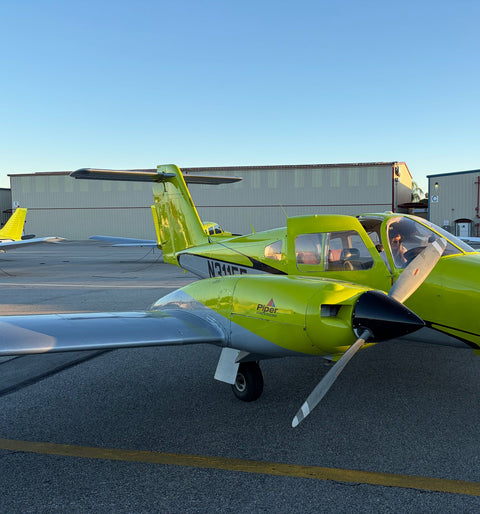
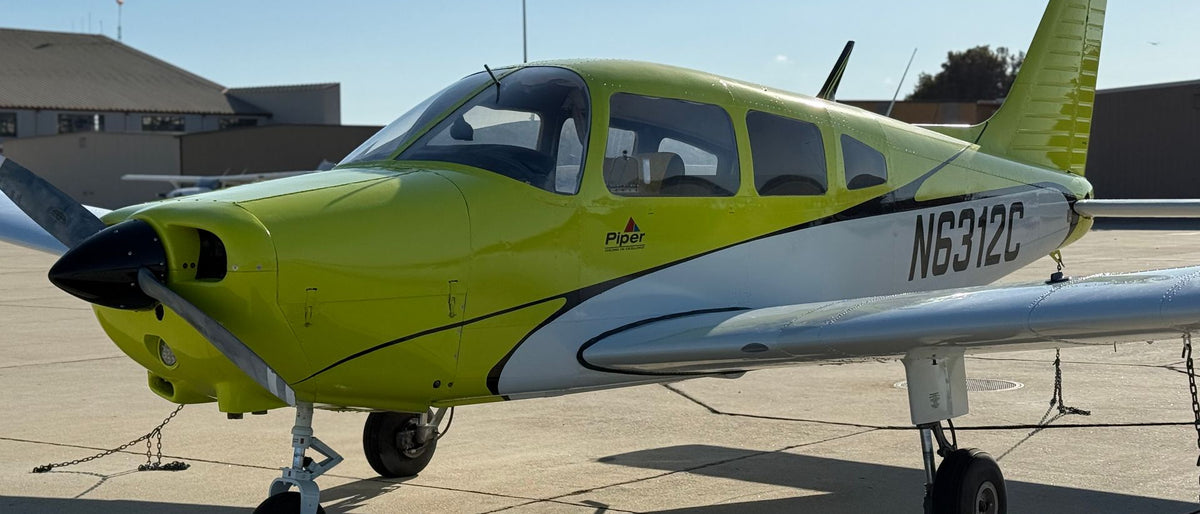
Piper Warrior N6312C, a four-seat low-wing trainer, parked on a sunny ramp
PIPER WARRIOR · FOUR SEATS
★ Most Popular 60–120 Min

Discovery Flight For Two Over Downtown

Logged as dual instruction toward the 40-hour minimum for a private license.

One of you flies while the other rides on the intercom and ends up as the photographer. The route runs past the Hollywood Sign and around the downtown towers.

  • Two seats in the Piper Warrior
  • Headsets for both of you
  • Hollywood Sign and the downtown towers
  • Hands-on flying for one of you
  • Pre-flight briefing and walk-around

Flight Length

$299all-in · two seats · 60 minutes

Book For Two

Weight limit 360 lb combined.

Or gift it →
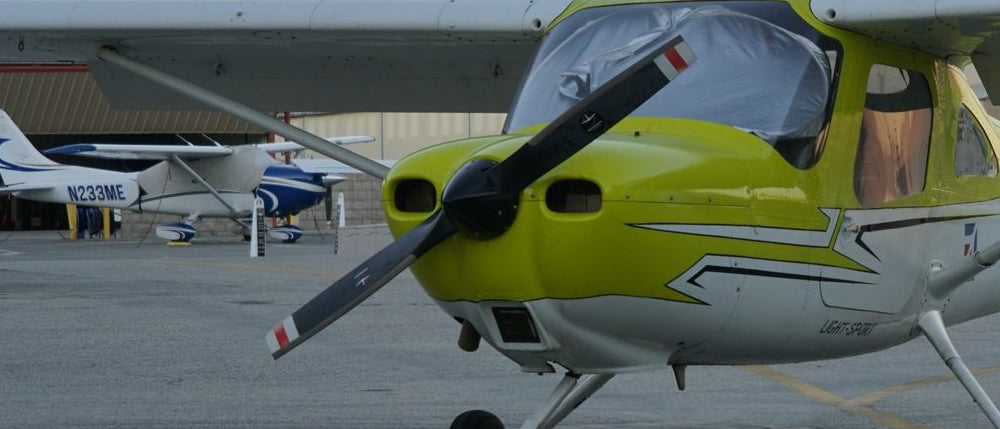
Cessna 162 Skycatcher trainer seen nose first on the Van Nuys ramp at sunset
CESSNA 162 · OR PIPER WARRIOR
Day One 2 Hours

Two-Hour Beginner Flying Lesson

Credited in full toward your training if you enroll within 24 hours.

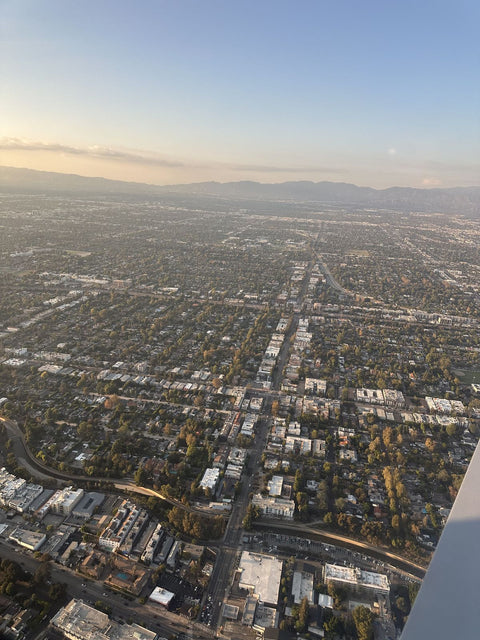
Half an hour on the ground learning what the yoke, the pedals and the throttle do, then about seventy minutes in the air over Simi Valley with your instructor beside you.

  • 30-minute ground lesson first
  • About 70 minutes at the controls
  • Simi Valley and the Santa Susana Mountains
  • Cessna 162 or Piper Warrior
  • Debrief and a signed logbook entry

Lesson Length

$349all-in · one student · 2 hours

Book The Lesson

Weight limit 180 lb for the person flying.

Or gift it →
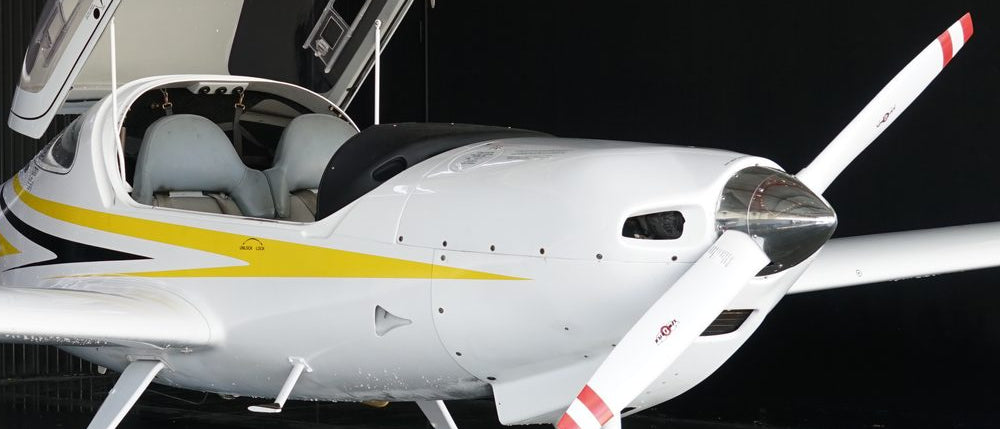
Diamond DA20 with its bubble canopy raised, showing the side-by-side cockpit
DIAMOND DA20-C1 · 125 HP · STICK
The Stick 2 Hours

Two-Hour Beginner Flying Lesson In The Diamond DA20

A stick instead of a yoke, and a canopy you can see straight out of.

Lighter on the controls than the Cessna, and quicker to show you when your feet are lazy on the rudder. A good first lesson if you already think you want the certificate.

  • Diamond DA20-C1, two seats
  • Stick and bubble canopy
  • 125 hp Continental IO-240
  • 30-minute ground lesson first
  • About 70 minutes at the controls

Lesson Length

$549all-in · one student · 2 hours

Book The DA20

Weight limit 200 lb for the person flying.

Or gift it →

The Recovery, Step By Step

Chapter 5 of the Airplane Flying Handbook gives a generic stall recovery template and says the manufacturer's procedure comes first where the two differ. The order matters more than the speed of your hands.

Step 1 of 4

Reduce The Angle Of Attack

Pitch the nose down until the wing is flying again, and trim if you need to. The handbook calls reducing the angle of attack the most important action, for an impending stall or a full one. In an airplane with an autopilot or a wing leveler, disconnecting it comes first.

Step 2 of 4

Level The Wings

Only once the nose is down, roll the wings level with coordinated aileron and rudder. Keep the ball centered while you do it, and resist the urge to pull.

Step 3 of 4

Add Power As Needed

Power stops the altitude loss and brings the speed back. It cannot break the stall on its own. The handbook describes a secondary stall as one that follows a recovery where the pilot did not lower the nose enough, or tried to fly out of the stall with power only. Speedbrakes or spoilers come in at this point on airplanes that have them.

Step 4 of 4

Return To The Desired Flight Path

Climb back to the altitude and heading you left, at a normal climb speed, without pulling hard enough to stall the wing a second time. Then clear the area again before the next one.

Spin Awareness: What The Private ACS Asks

Task VII-D in ACS-6C is called spin awareness, and the word matters. FAA Advisory Circular 61-67C describes spin awareness training as recognizing the situations that could lead to an inadvertent stall or spin, and avoiding them. You learn the setups, such as the skidding base-to-final turn and the uncoordinated power-on stall, and how the airplane warns you before it spins.

Spin training itself belongs to the flight instructor certificate. 14 CFR 61.183(i) says a CFI applicant needs a logbook endorsement for training in stall awareness, spin entry, spins and spin recovery, given in an airplane certificated for spins. We teach it in the utility-category Diamond DA20 on our CFI spin endorsement course. For upset and spin training outside the instructor track, see upset recovery training.

The handbook adds one rule for anyone who does spin: begin high enough to complete the recovery at or above 1,500 feet above the ground.

Not sure stalls are for you? Book a free consultation or call (818) 330-1318. We will talk through what a stall lesson involves and how it fits a private pilot plan, with nothing to pay.

Where You Practice Stalls Here

Stalls and slow flight are flown over the Simi Valley / Santa Susana practice area, in whichever of our trainers you fly. Each airplane's stall speeds and flap settings are in its own POH; ask for them on the ramp rather than trusting a web page. To fly the DA20 before you commit to training, book the two-hour DA20 lesson for $549.
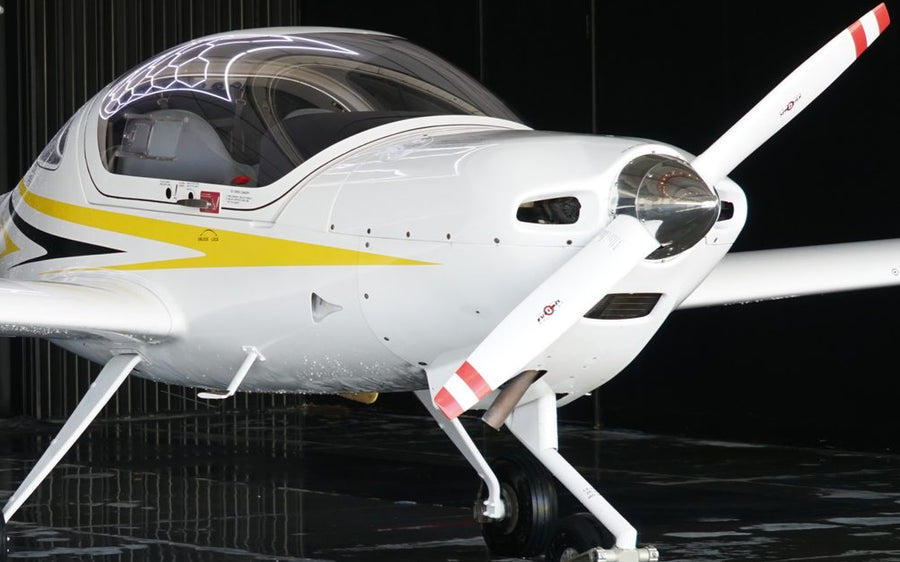
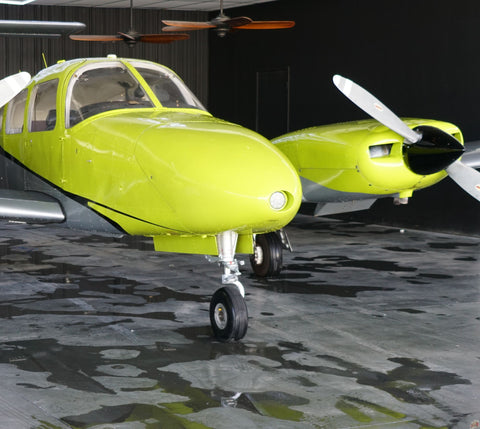
Diamond DA20-C1 trainer in the hangar, bubble canopy and propeller seen from the front

The Diamond DA20-C1

N306EF and N308EF. A two-seat low wing with a stick, a bubble canopy, a 125 hp IO-240 and a Garmin 430, certificated in the utility category. It is the airplane we use for spin training, and the stick puts the stall recovery right in your hand. $229 an hour in a package, $329 retail. More on the DA20.
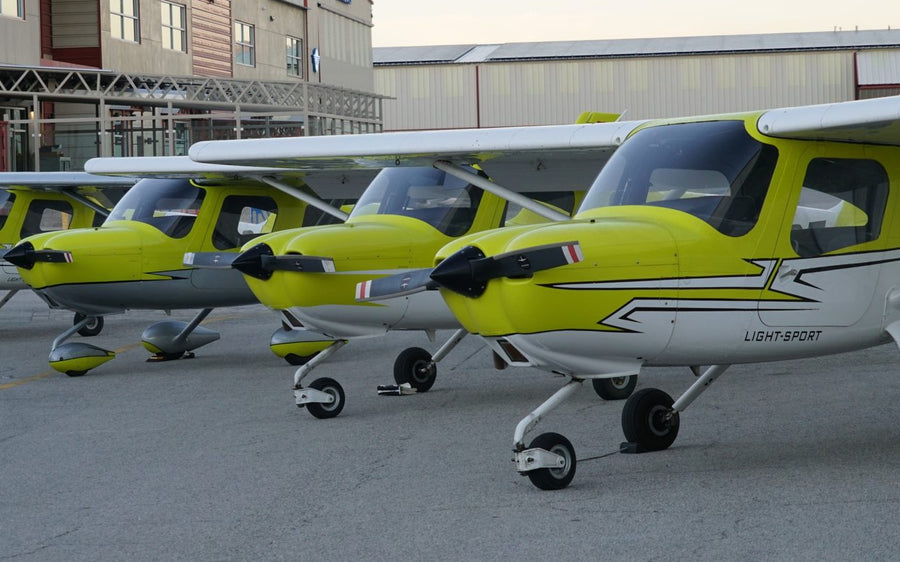
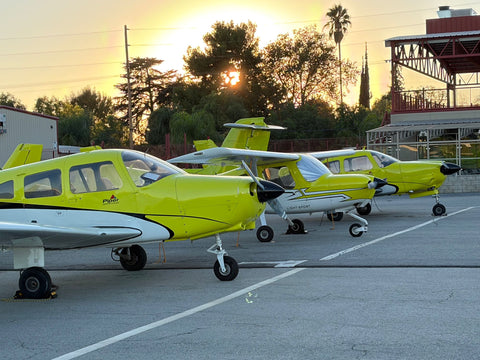
Row of yellow Cessna 162 Skycatcher trainers lined up on the ramp at Van Nuys Airport

The Cessna 162 Skycatcher

Six on the line. A two-seat high wing with a 100 hp Continental O-200-D and Garmin G300 glass, and the only high wing of our three trainers, so the stall looks different out of the window. $179 an hour in a package, $269 retail. More on the Cessna 162.
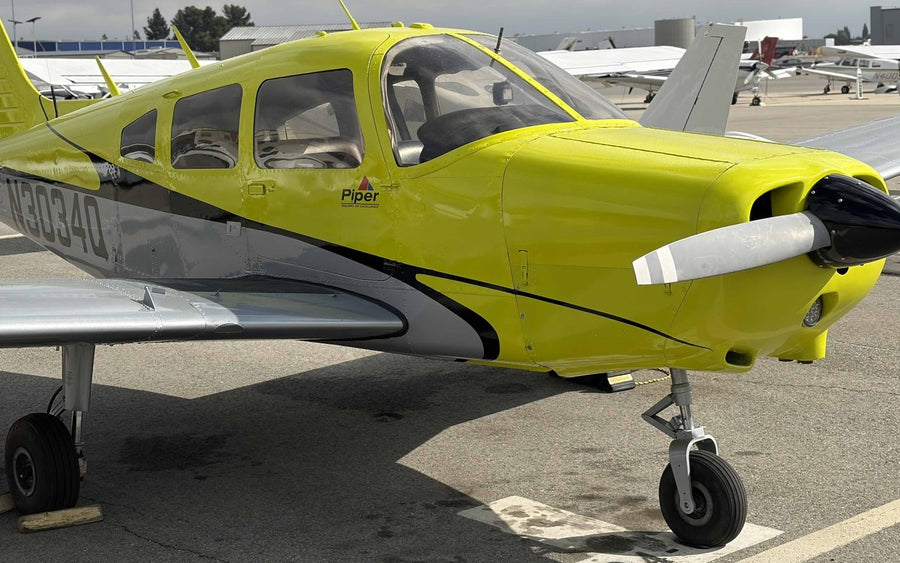
Yellow Piper Warrior N3034Q parked on the Van Nuys ramp under a cloudy sky

The Piper Warrior

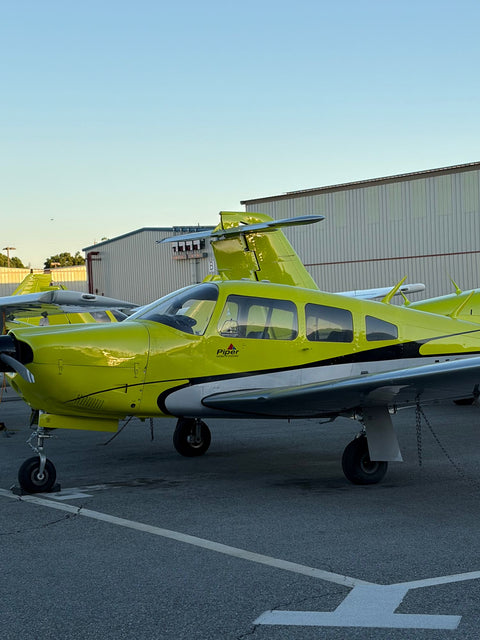
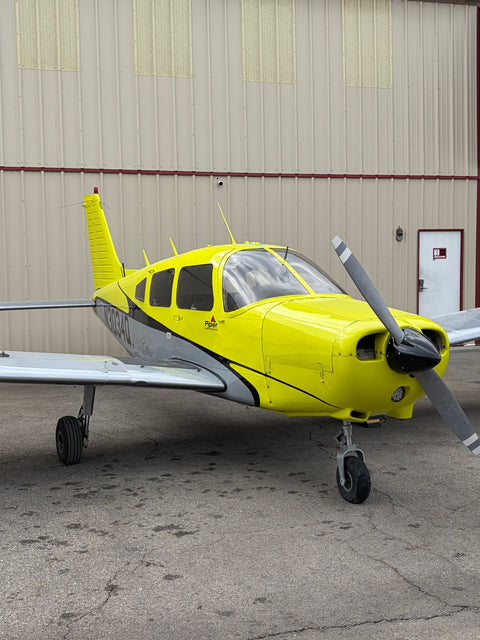
N3034Q and N6312C. Four seats, a low wing and IFR equipment, with the most power of the three at 160 hp. The same rates as the 162: $179 an hour in a package, $269 retail. More on the Warrior.
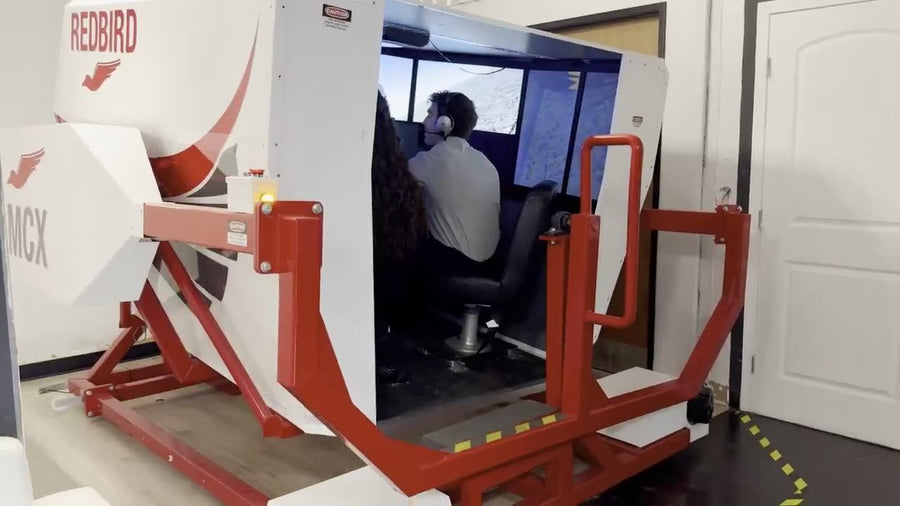
A student at the controls of the red Redbird MCX full-motion flight simulator

The Redbird MCX Simulator

A full-motion Redbird MCX, FAA-approved as an advanced aviation training device. Useful for drilling the recovery order and the instrument scan with an instructor beside you. $120 an hour in a package, $200 retail. More on the simulator.

Questions About Slow Flight And Stalls

What Is The Difference Between A Power-On And A Power-Off Stall?

The phase of flight each one rehearses. A power-off stall is set up like an approach to land, in the landing configuration with the power reduced. A power-on stall is set up like a departure, in the takeoff configuration at takeoff or climb power, from a straight climb or a climbing turn of 15 to 20 degrees of bank.

Do Private Pilots Have To Spin The Airplane?

No. AC 61-67C says spin training is required only for flight instructor applicants, airplane and glider, and that it must be done in an aircraft approved for spins. A private applicant flies the stalls and covers spin awareness.

How High Are Stalls Practiced?

The Airplane Flying Handbook recommends practicing stalls at an altitude that allows recovery no lower than 1,500 feet above ground level in a single-engine airplane, or higher if the POH recommends it. Slow flight has the same 1,500-foot floor in a single-engine airplane, and 3,000 feet in a multi-engine airplane. Your instructor briefs the altitude before you leave the ramp.

Why Is The DA20 Used For Spin Training?

It is certificated in the utility category, and it is the trainer we use for spins; 14 CFR 61.183(i) requires that training in an airplane certificated for spins. Our spin training and CFI spin endorsement course runs in the DA20: 3 hours in the airplane, 2 hours in the full-motion simulator and classroom instruction, for $2,000.

Can I Try Stalls In The Simulator First?

You can fly the Redbird MCX on its own. The 60-minute full-motion simulator experience is $189, and a two-hour beginner simulator lesson is $249. Use it to learn the recovery order and the instrument picture; the feel of a stall in the seat comes from the airplane.

Will The Stall Warning Go Off In Slow Flight?

It should not. The handbook defines slow flight by staying clear of it, and stall warning devices exist to alert you as the wing approaches its critical angle of attack. If the warning sounds, the angle of attack is too high: lower the nose a little and add power to hold altitude.

Fly Your First Stall With An Instructor Beside You

Stalls are flown in private pilot training with an instructor beside you every time. Start with a two-hour lesson for $349, or $549 in the DA20, or an hour at the controls on a $229 discovery flight. Not sure yet? Book a free consultation. 7900 Balboa Blvd, Van Nuys Airport, open seven days, 9 AM to 9 PM.
Free rescheduling up to 24 hours before, and if the weather says no, you do not pay.