Van Nuys Airport · KVNY · A First Lesson, In Order

What Happens On A Beginner Flying Lesson

You arrive, you spend half an hour learning what the controls do, you walk around the airplane with a checklist, and then comes about seventy minutes flying with an instructor beside you. Ten minutes back at the table and a signed logbook entry close it out. The whole lesson is two hours.

Unit 108Main Terminal, 7900 Balboa Blvd
Photo IDPlus closed-toe shoes and sunglasses
HeadsetLent to you for the flight
LogbookSigned entry before you leave
Student and instructor inspecting the wing of a low-wing trainer on the preflight walk-around

What follows is one example morning, written out in order: a nine o'clock lesson in the Cessna 162, off our ramp at Van Nuys. Your slot could start at any time from 9:00 AM to 5:00 PM, and the clock moves with it.

Our beginner flying lessons page has the prices and the five lessons. Here you get the morning itself.

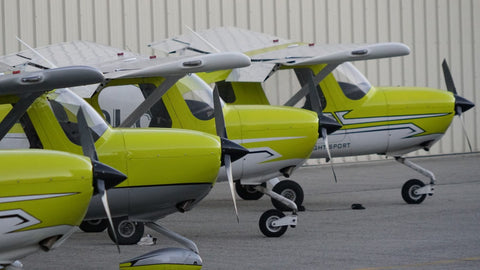
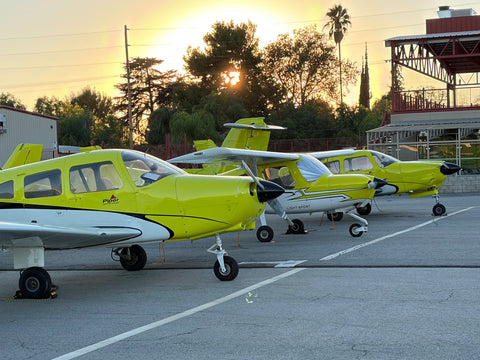
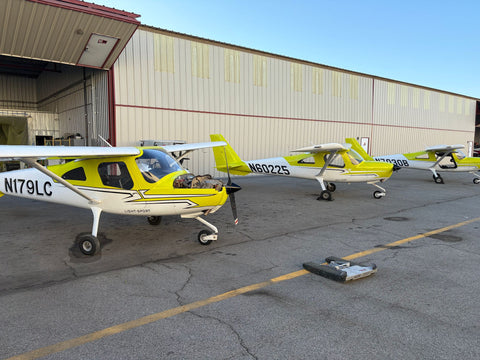
A row of Cessna 162 Skycatchers lined up at Van Nuys Airport

Nine In The Morning On Balboa Boulevard

You park off Balboa and come into the Main Terminal, Unit 108, which is on the airport rather than across the road from it. If you crossed the Valley on Sherman Way, you have already driven under the field, through the tunnel that carries the road beneath it.

You brought a photo ID, closed-toe shoes and sunglasses, because that is the whole list. The headset is ours.

Your instructor may still be finishing the paperwork on the airplane you are about to fly. Nothing dramatic happens for a few minutes, and it is the last unhurried part of the morning.

Then your instructor comes out, shakes your hand and asks what you already know about airplanes. If the honest answer is nothing, say so. It decides where the next half hour starts, and it is the most useful thing you can tell them.

Half An Hour At The Table

You sit down with a model airplane, a whiteboard or a diagram, depending on who is teaching. The controls come first: the yoke, the rudder pedals and the throttle. Then how a wing makes lift, and why pulling back does not simply mean going up.

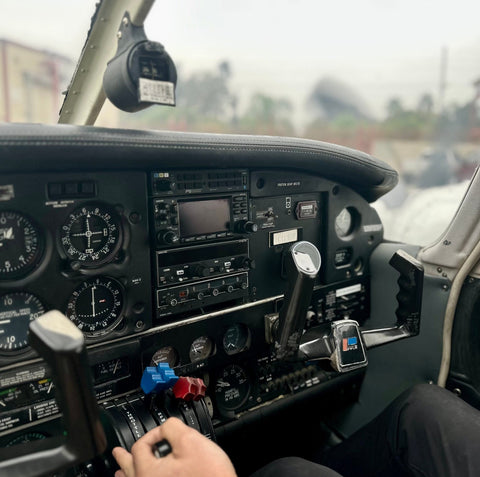
After that come the six basic instruments in front of the left seat, which in the Skycatcher are drawn on a glass screen rather than hung on dials. Airspeed, attitude, altitude, heading. You will stare at two of them for the next hour and largely ignore the rest.

The last ten minutes are the plan: where you are going, what you will fly and what your instructor will handle. Hearing the sequence once on the ground is the reason the flying does not feel like being thrown into it.

ATT · Attitude

Drag, Or Use The Arrow Keys, To Bank And Pitch. It Eases Back To Level.

FAA-Approved Full-Motion Simulator

Full Motion, Indoors At Van Nuys.

An FAA-approved Redbird full-motion simulator with a real instructor beside you — takeoffs, turns, landings, even engine failures. Never canceled by weather, no weight limit, and the hours can count toward a certificate.

From The Ramp To The Run-Up

Half an hour in, you walk out to the airplane. Four things happen between here and the runway, always in this order.

The Walk-Around With The Checklist
Step 1 of 4

The Walk-Around With The Checklist

You are the one holding the checklist. Fuel in both tanks, checked by eye rather than by gauge. A fuel sample drained into a clear tester and held up to the light to look for water. Oil on the dipstick, then the tires, the brake lines, the pitot tube, and the control surfaces moved by hand to feel that nothing is binding.

Ten minutes, and for most people it is the ten minutes that proves this is a lesson. Nobody on a sightseeing ride drains fuel into a plastic cup.

Getting In, Headset On
Step 2 of 4

Getting In, Headset On

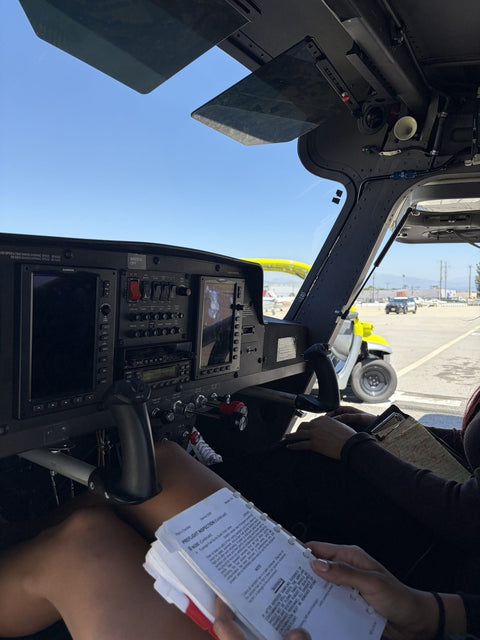
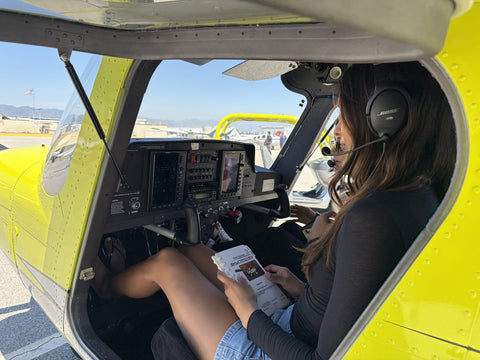
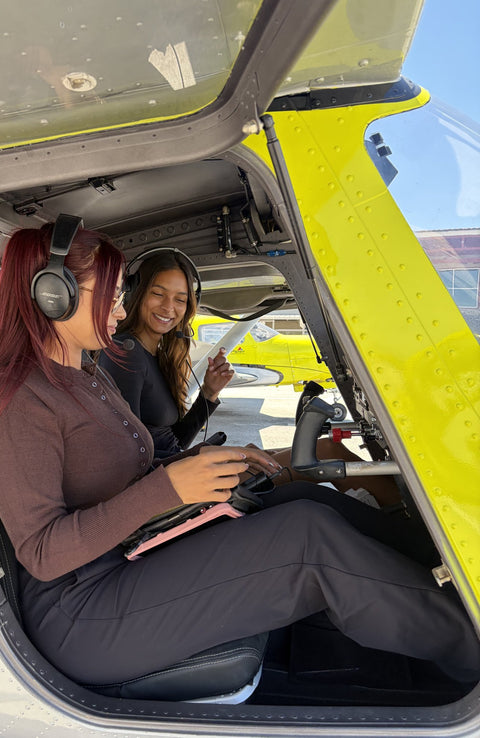
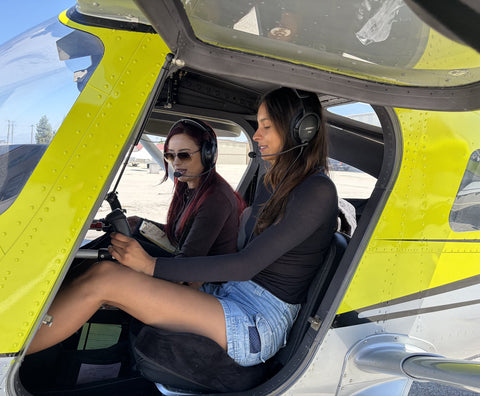
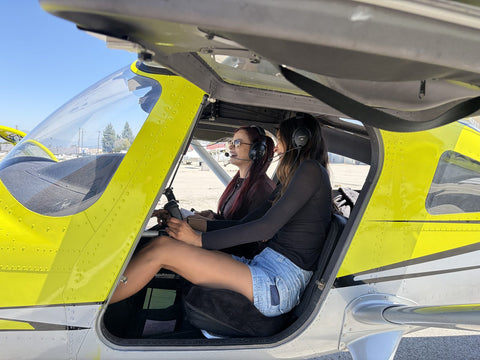
The Skycatcher is a two-seat high-wing airplane with a Garmin G300 glass panel and a hundred horsepower up front. You slide the seat until your feet reach the pedals with a bend left in your knee, and do up the belts.

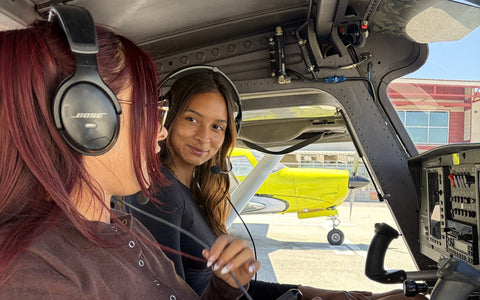
The headset goes on and the cabin goes quiet. You can hear your instructor at conversational volume, and the tower too, which sounds fast and clipped until about the third transmission, when your ear catches up.

Engine Start, By The Checklist
Step 3 of 4

Engine Start, By The Checklist

Your instructor reads the start checklist out, one line at a time. Starter, and the engine catches. It is louder through the airframe than through the headset.

Your instructor calls Ground, reads the taxi clearance back, and then hands you the rudder pedals.

The Run-Up Checks
Step 4 of 4

The Run-Up Checks

Steering with your feet is the first genuinely strange thing you do all day, and everyone oversteers for the first fifty feet. In the run-up area at Charlie you hold the brakes, bring the power up and work through the checks: magnetos, carburetor heat, instruments, controls free and correct.

Two minutes. You will run the same checks before every flight you ever make in this airplane.

The Takeoff

Then the tower clears you for takeoff. Van Nuys has two parallel runways, 16R at 8,001 feet and 16L at 4,000, and which one you get depends on the wind and the traffic.

Full power, and the airplane starts to roll. Part way down the runway the nose comes up, the rumble from the wheels stops, and the ground noise goes with it.

The airplane is flying, and Van Nuys drops away underneath you.

Your First Turn

Once the airplane is level, your instructor asks you for a turn to the right. You roll in a little aileron, add a touch of rudder on the same side, and the horizon tips.

What surprises people is what it does not feel like. There is no falling sensation and no sideways push, because a coordinated turn keeps your weight pressed straight down into the seat. Your inner ear has nothing to complain about. You watch the nose track around the horizon, and it feels like steering rather than tilting.

That is usually the moment somebody stops gripping the yoke.

Pick Your Lesson

Choose Your Lesson And Book It

The morning above is the $349 lesson. The other four run on the same clock in a different seat, the simulator included.

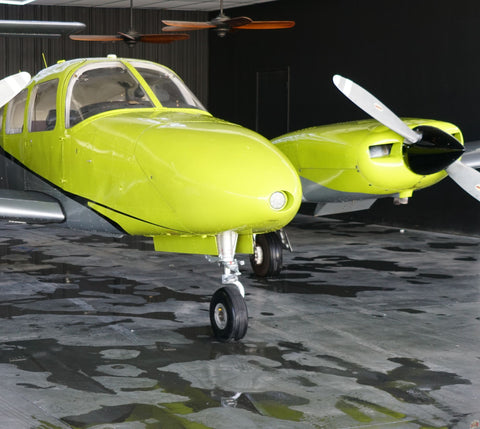
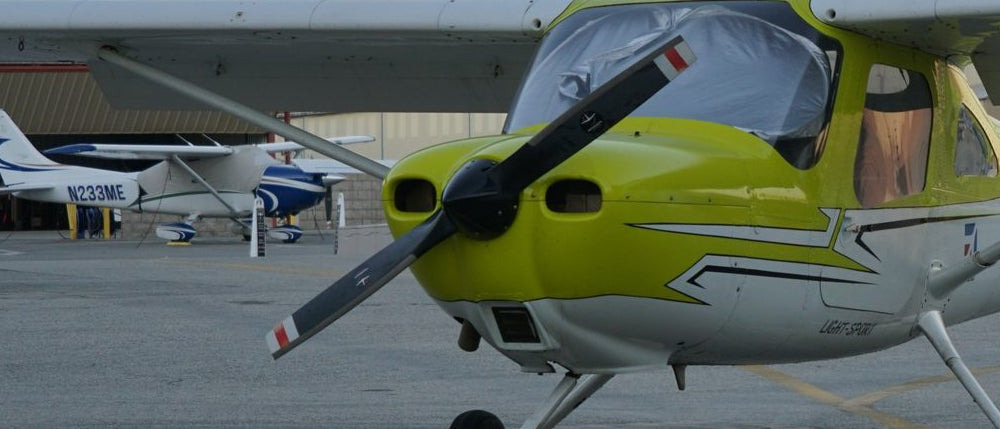
Cessna 162 Skycatcher trainer seen nose first on the Van Nuys ramp at sunset
CESSNA 162 · OR PIPER WARRIOR
Day One 2 Hours

Two-Hour Beginner Flying Lesson

Credited in full toward your training if you enroll within 24 hours.

Half an hour on the ground learning what the yoke, the pedals and the throttle do, then about seventy minutes in the air over Simi Valley with your instructor beside you.

  • 30-minute ground lesson first
  • About 70 minutes at the controls
  • Simi Valley and the Santa Susana Mountains
  • Cessna 162 or Piper Warrior
  • Debrief and a signed logbook entry

Lesson Length

$349all-in · one student · 2 hours

Book The Lesson

Weight limit 180 lb for the person flying.

Or gift it →
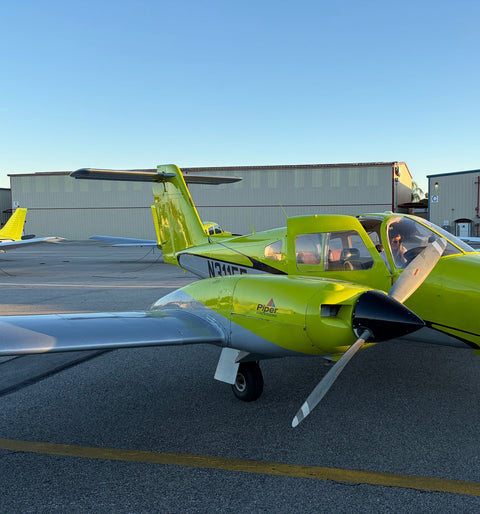
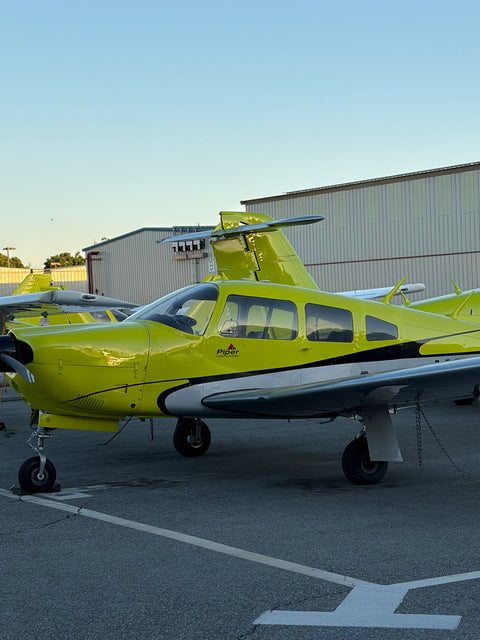
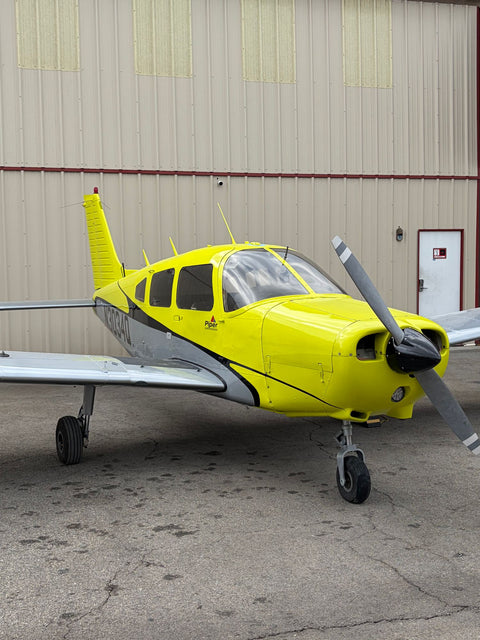
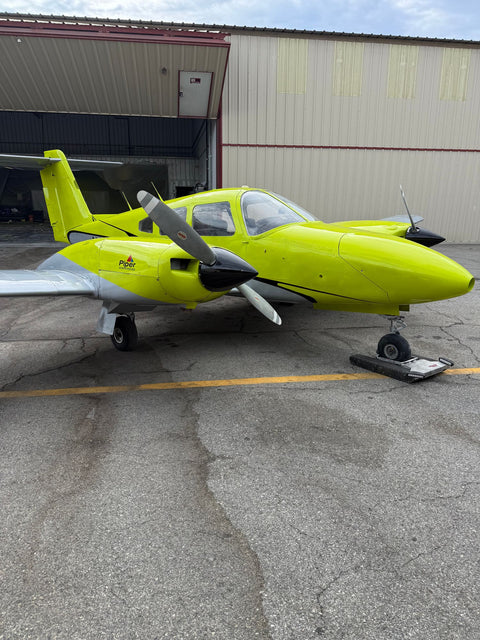
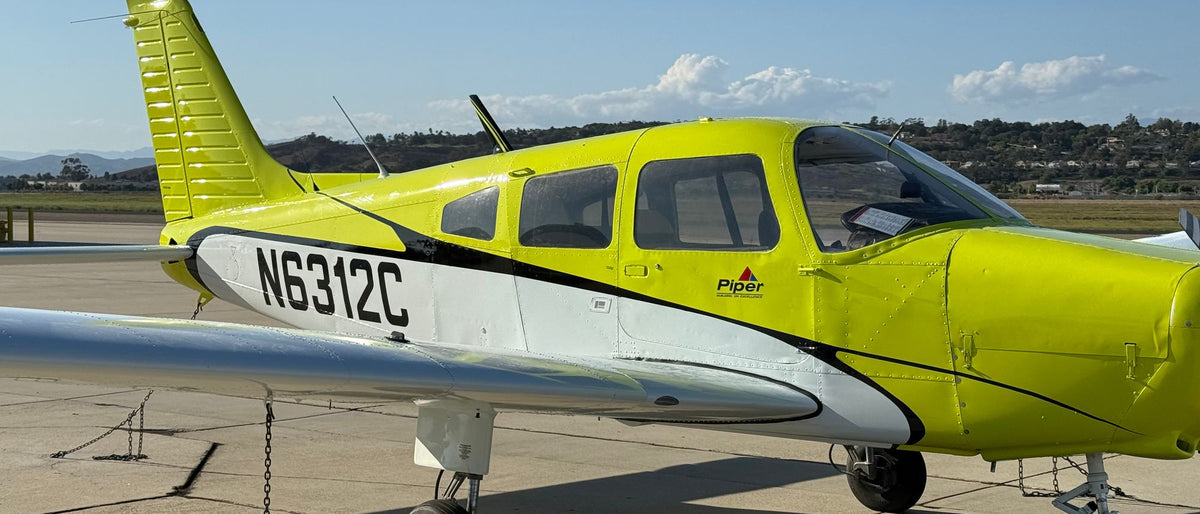
Side view of Piper Warrior N6312C on a sunny ramp, cabin and cowling in view
PIPER WARRIOR PA-28-161 · GUEST SEAT
Bring Someone 2 Hours

Two-Hour Beginner Flying Lesson For Two

One of you takes the lesson. The other rides along on the intercom.

The same two hours in the four-seat Piper Warrior, with somebody you know in the back. They sit in on the ground lesson, listen in the air and take the photographs.

  • Four-seat Piper Warrior
  • A guest in the back seat
  • Headsets for both of you
  • 30-minute ground lesson first
  • About 70 minutes at the controls

Lesson Length

$449all-in · student and guest · 2 hours

Book For Two

Weight limits 180 lb each and 360 lb combined.

Or gift it →
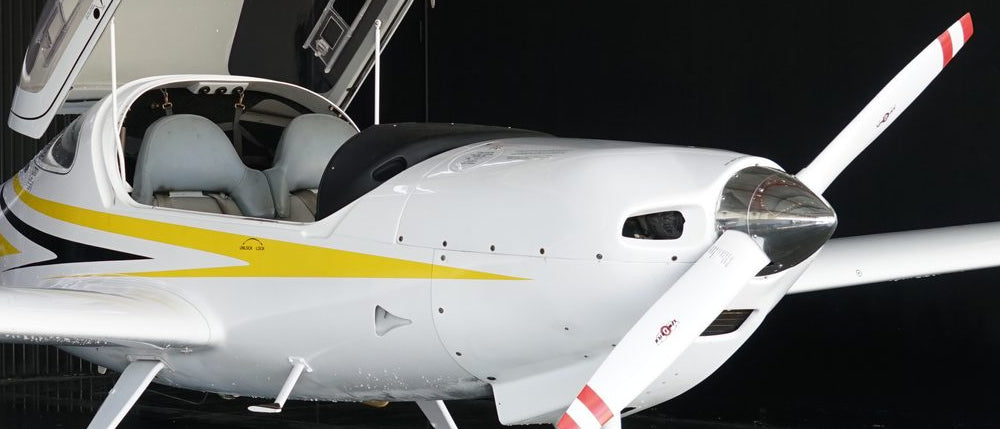
Diamond DA20 with its bubble canopy raised, showing the side-by-side cockpit
DIAMOND DA20-C1 · 125 HP · STICK
The Stick 2 Hours

Two-Hour Beginner Flying Lesson In The Diamond DA20

A stick instead of a yoke, and a canopy you can see straight out of.

Lighter on the controls than the Cessna, and quicker to show you when your feet are lazy on the rudder. A good first lesson if you already think you want the certificate.

  • Diamond DA20-C1, two seats
  • Stick and bubble canopy
  • 125 hp Continental IO-240
  • 30-minute ground lesson first
  • About 70 minutes at the controls

Lesson Length

$549all-in · one student · 2 hours

Book The DA20

Weight limit 200 lb for the person flying.

Or gift it →
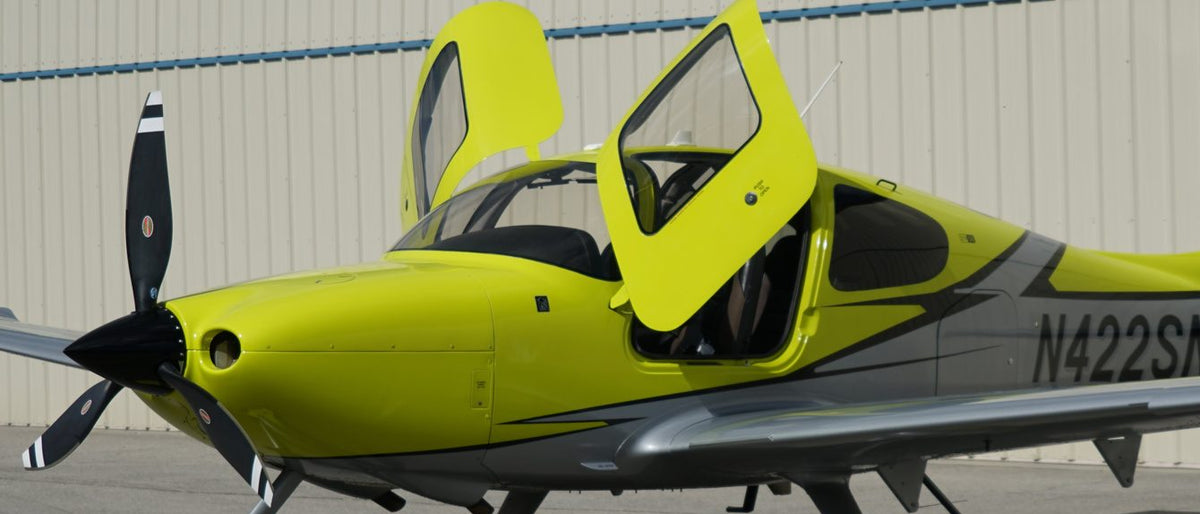
Cirrus SR22 Turbo with its gull-wing door open on the ramp at Van Nuys+ Luxury
CIRRUS SR22 TURBO · N422SN · 310 HP
+ Luxury 2 Hours

Two-Hour Beginner Flying Lesson In The Cirrus SR22 Turbo

Turbocharged, all glass, and fitted with a whole-airframe parachute.

Not the sensible first lesson, and most people do not start here. The ones who do usually know they will finish the certificate and want to begin in the airplane they will fly afterwards.

  • Cirrus SR22 Turbo N422SN
  • Cirrus Perspective glass panel
  • CAPS whole-airframe parachute
  • Side-stick and 310 hp
  • About 70 minutes at the controls

Lesson Length

$749all-in · one student · 2 hours

Book The Cirrus

Weight limit 200 lb for the person flying. No guest seat on this lesson.

Or gift it →
A student at the controls of the Redbird MCX full-motion simulator at You Fly LA
REDBIRD MCX · FAA-APPROVED AATD
No Weather Call 2 Hours

Two-Hour Beginner Simulator Lesson

An FAA-approved AATD, so the time is loggable.

The same two-hour lesson, flown in the full-motion Redbird MCX instead of an airplane. Book it if the weather looks unsettled, if you would rather start on the ground, or if $249 is the number that works.

  • Redbird MCX on full motion
  • 30-minute ground lesson first
  • About 70 minutes flying the maneuvers
  • Never canceled for weather
  • No weight limit
  • Up to 50 hours count toward a commercial certificate

Lesson Length

$249all-in · one student · 2 hours

Book The Simulator Lesson

No weight limit. You accept the weather and cancellation policy before you book.

Or gift it →

Airwork Over Simi Valley

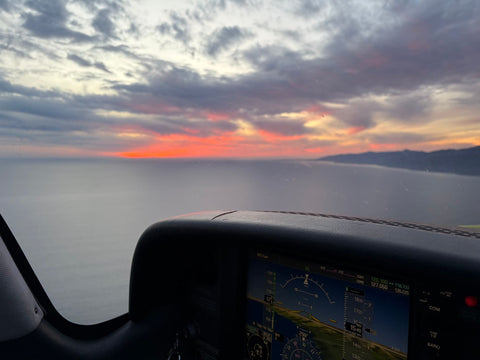
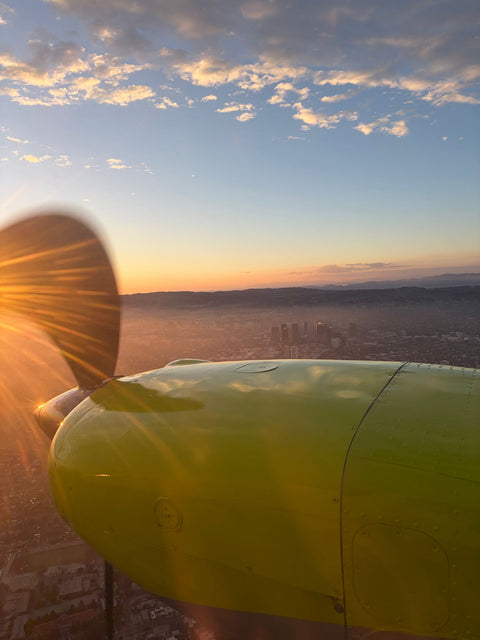
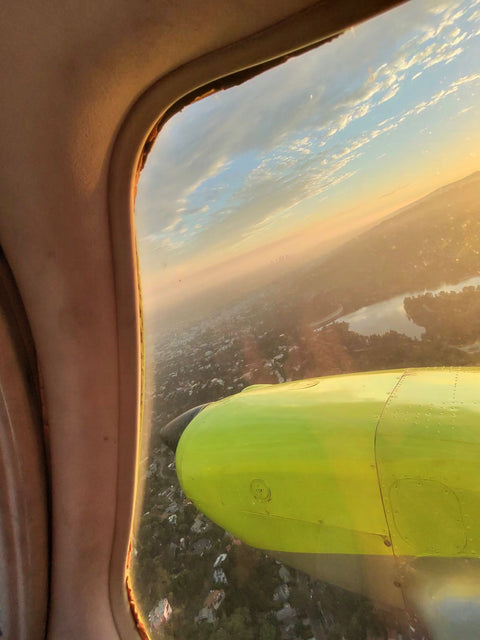
Out over Simi Valley and the Santa Susana Mountains, things go quiet and there is open air with room to be clumsy in. You climb and descend to a number your instructor gives you, hold a heading, and turn in both directions. Our guide to the Simi Valley practice area explains why we fly there.

We keep a first lesson to straight and level, climbs, descents and medium turns. That is plenty, and the time goes faster than you would believe.

Then your instructor takes the airplane for a moment, points out a landmark and gives it back. The test is whether you can find that landmark again on your own. You usually can.

It was an amazing flight! Amazing experience!
Thanks Alex for taking us around and give us to enjoy and try flying by myself. I am sure I’ll come back for study.

★★★★★Constantine P.Google ReviewRead More Reviews

The Way Back And The Logbook

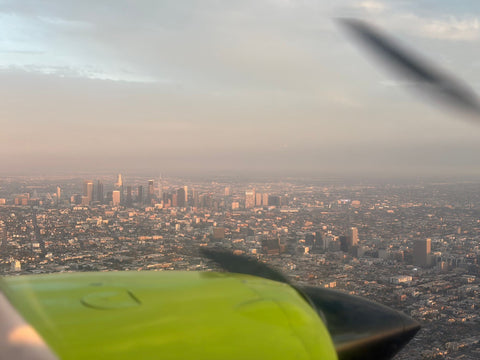
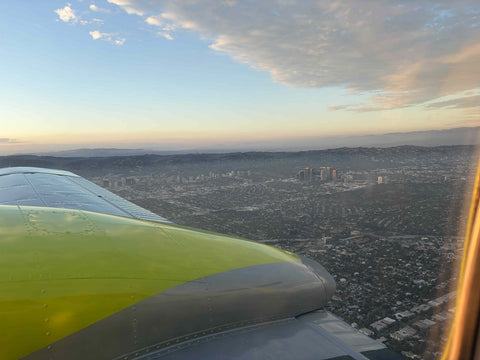
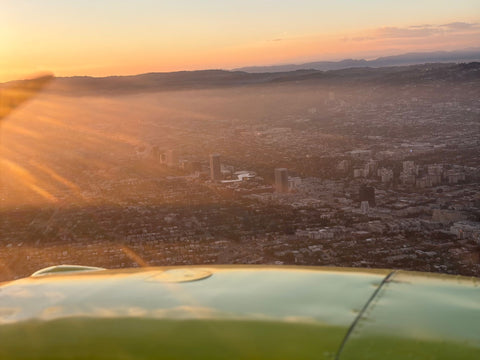
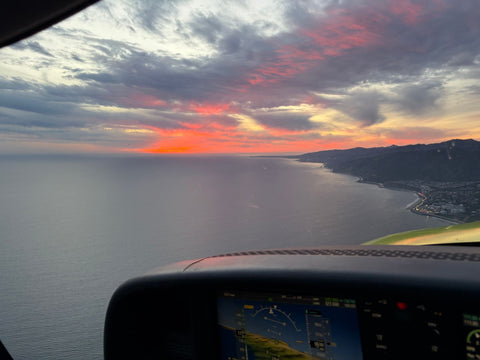
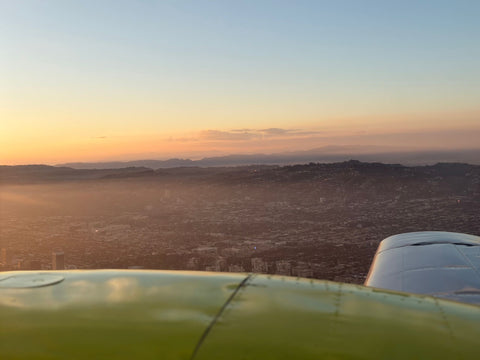
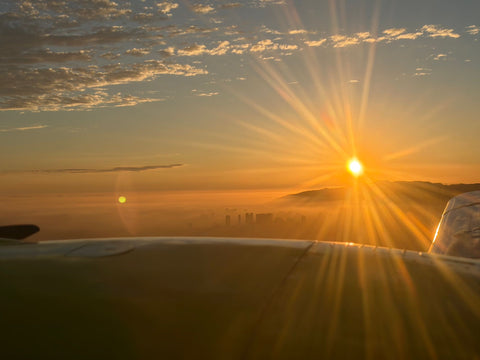
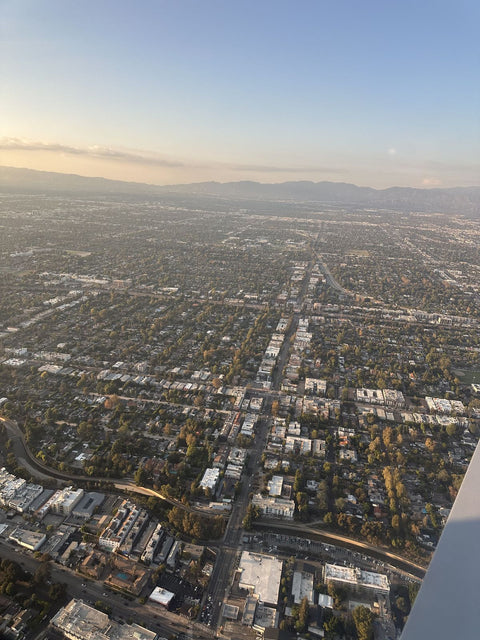
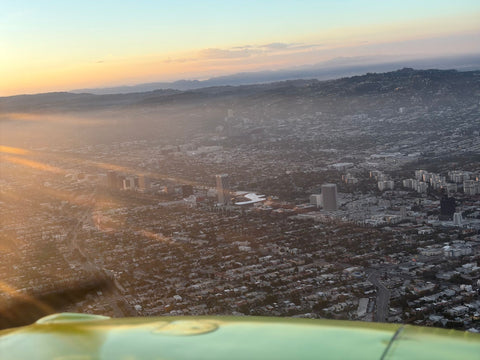
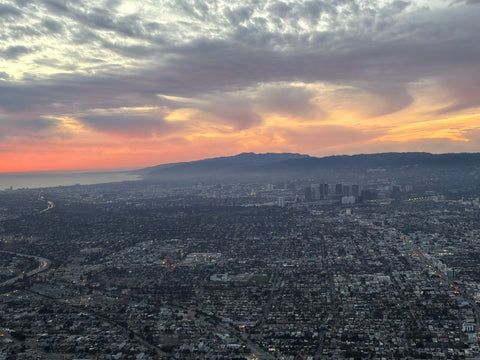
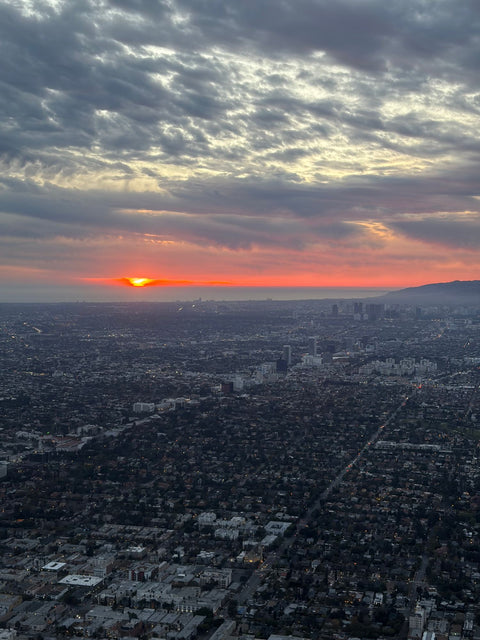
The Valley comes back under the nose on the way home, the whole grid of it from Chatsworth across to the hills. Your instructor talks to the tower on the way in, and then it is the runway, the taxi back and the shutdown on our ramp.

Ten minutes at the table to finish. What you did well, what to work on, and your logbook opened and filled in: date, aircraft type, tail number, flight time and your instructor's signature. It is dual instruction received, and it counts toward the 40 hours that 14 CFR 61.109 sets for a private certificate.

Then you walk back out past the airplane you just flew, and somebody else gets in it.

Questions About Your First Lesson

Which Airplane Will Be On The Ramp For Me?

On the $349 lesson, a Cessna 162 Skycatcher or a Piper Warrior, depending on the schedule that morning. The Skycatchers are N60225, N7030B, N6039M, N179LC, N5208V and N52049. The Warriors are N3034Q and N6312C. Your logbook entry names the one you flew.

Can I Start With The Diamond Instead?

Yes, on the Diamond DA20 lesson for $549. It is N306EF or N308EF, a 125-horsepower low wing with a control stick instead of a yoke and a bubble canopy you can see straight out of. We think it is the better airplane to learn in and the less forgiving one, which is the same sentence twice.

Who Talks On The Radio?

Your instructor, for the whole flight. Van Nuys is Class D airspace with a control tower, sitting under the Los Angeles Class B shelf, so there is a clearance to get before you taxi and another before you take off. You can key the microphone later in training, once the phraseology has stopped sounding like a foreign language.

Is There A Weight Limit?

Yes. It is 180 lb per person in the Cessna 162 or the Piper Warrior, and 360 lb combined when a guest rides in the back of the Warrior on the $449 lesson. In the Diamond DA20 or the Cirrus SR22 Turbo it is 200 lb for the person flying. The simulator has no limit.

What If The Weather Says No?

Then you do not pay. The decision is made on the 9 AM weather call, and moving a lesson for any other reason is free up to 24 hours before it starts. The full wording is on our weather and cancellation policy page.

Can Someone Under 18 Book?

Yes, with a parent or guardian. The FAA lets a student fly solo at sixteen and hold a private certificate at seventeen.

Can I Come And See The Airplanes First?

Yes. The school is open from 9:00 AM to 9:00 PM, seven days a week, at 7900 Balboa Blvd, Van Nuys, CA 91406. Come in before you book if you would rather see the airplanes than read about them.

Keep Reading

Come And Fly One

Reading about it only gets you so far. Two hours, from $349, at 7900 Balboa Blvd, Main Terminal Unit 108, on the field at Van Nuys, with lessons starting every day between 9:00 AM and 5:00 PM.