








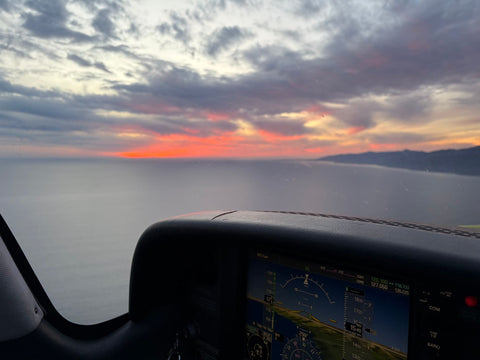
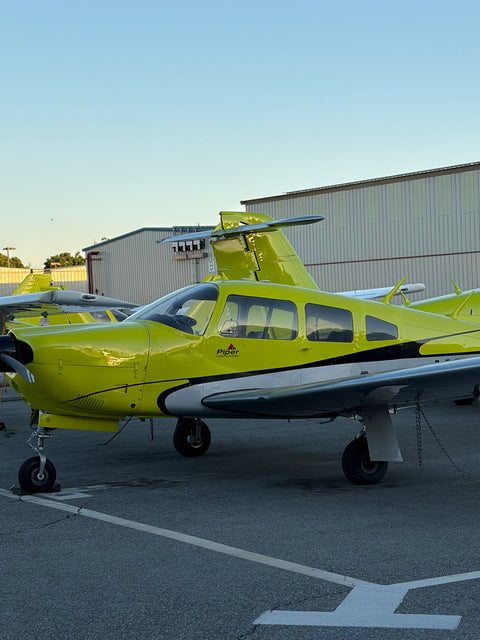
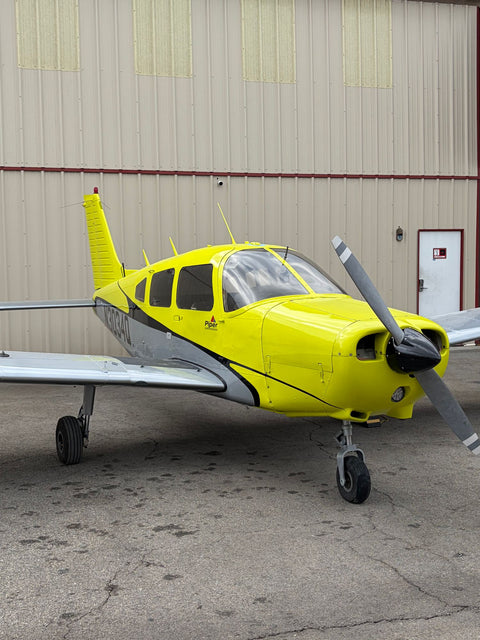

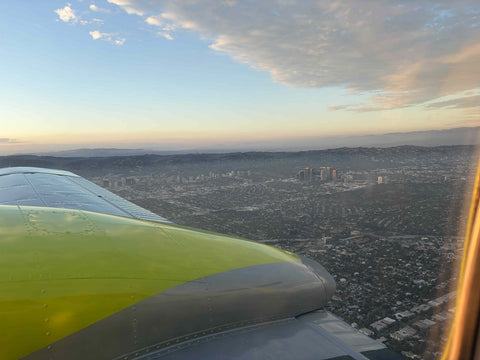




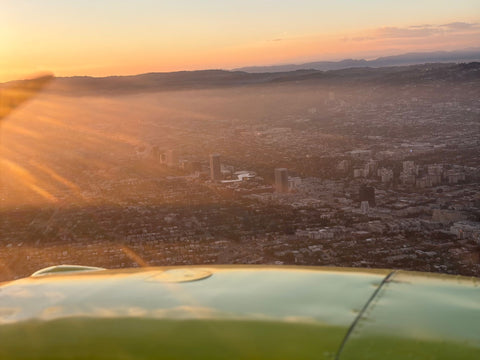
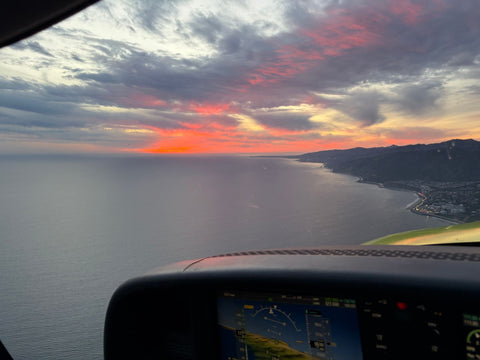


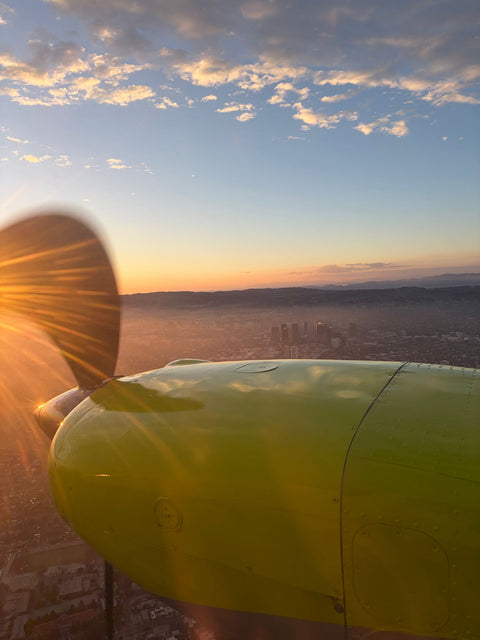
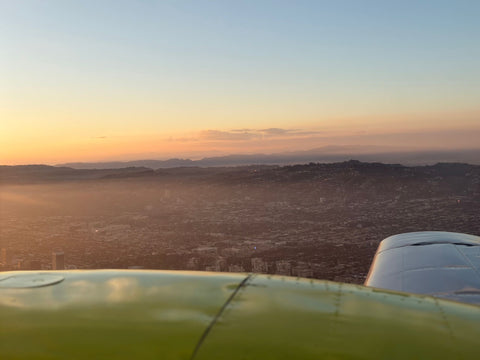





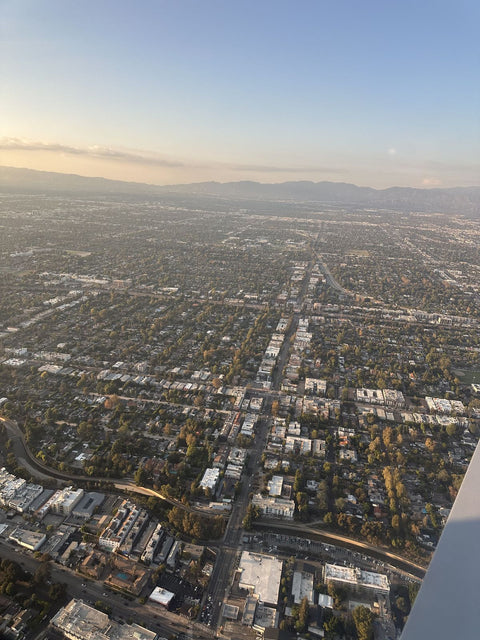
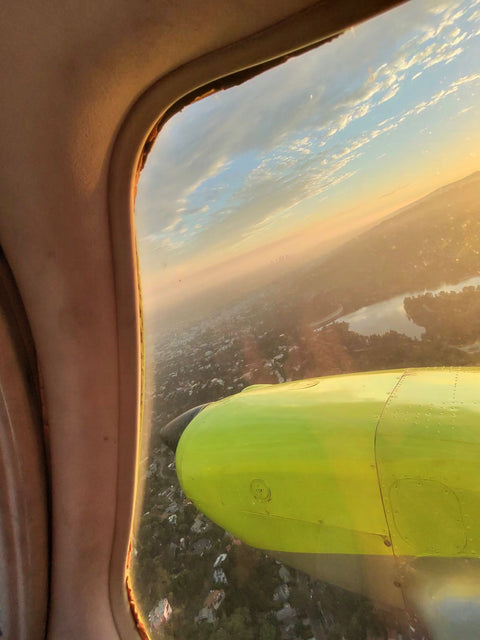

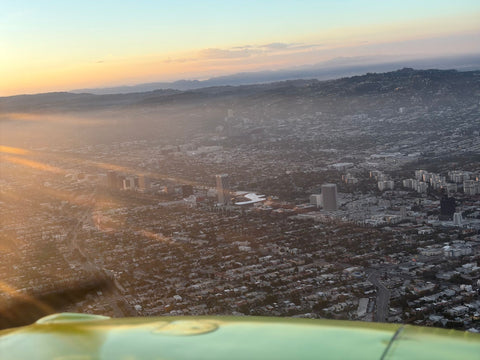
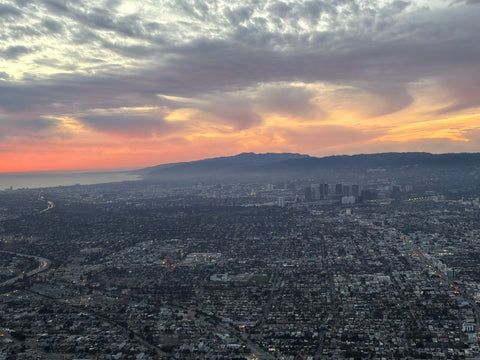

Quick Answer: Most days at Van Nuys are flying days. The NOAA 1991–2020 climate normals for the airport record about 34 days a year with measurable rain, and the thing that most often moves a flight is not rain but a morning marine layer in late spring and early summer, which usually lifts by midday. If the weather does say no, we move your flight at no charge.
What The Weather Means For A Discovery Flight
A discovery flight is flown by visual flight rules: you and your instructor navigate by looking outside, so the flight needs clear air under the clouds and enough visibility to see traffic, terrain and the landmarks you came for. The legal floor inside the Van Nuys Class D airspace is 3 miles of visibility, a ceiling of at least 1,000 feet to fly beneath the clouds, and set distances from them (14 CFR 91.155). We plan with far more margin than that, because a first flight should be smooth and scenic, not merely legal.
That is why the panel above can say "Instructor's Call" on a day that is perfectly flyable for a lesson. A student working on landings can use a gray, breezy afternoon well; someone booking their first hour over the Hollywood Sign deserves a clear one. When the two differ, we tell you and offer a better hour or day.
Book A Discovery Flight · $229 Call Or Text (818) 330-1318
The Marine Layer, Month By Month
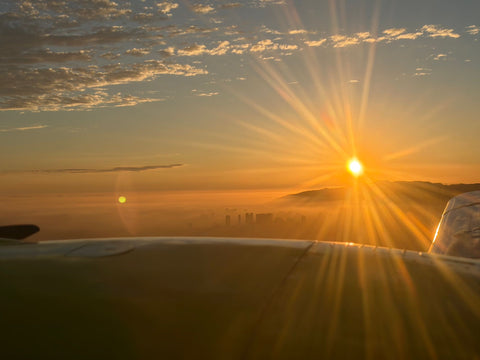
Van Nuys Airport sits about fifteen miles inland with the Santa Monica Mountains between it and the ocean, so it usually clears earlier than coastal fields. Here is the pattern across the year and the slot we suggest, drawn from our flyable days at Van Nuys guide.
| Months | What To Expect | Best Slot |
|---|---|---|
| December–February | No marine layer to speak of, cool smooth air, the clearest visibility after a front; the three wettest months | Any time of day |
| March–April | Rain tapering off; the marine layer starts to appear on some mornings | Late morning or afternoon |
| May–June | Marine layer at its most persistent; on the worst days it lifts only in the afternoon | Afternoon |
| July–September | Marine layer weaker and clearing earlier; hot afternoons bring bumps | Early morning or near sunset |
| October–November | Marine layer gone; occasional Santa Ana wind events, forecast days ahead | Morning, and watch the forecast |
How Your Instructor Makes The Call
The panel gives a verdict; your instructor gives the decision. Under 14 CFR 91.3 the pilot in command is directly responsible for, and the final authority on, the operation of the aircraft, and here is how that works in practice.
-
The Forecast The Day Before
Your instructor reads the Van Nuys terminal forecast and the area forecast for your slot. If a front or a Santa Ana event is clearly coming, we call you early.
-
The Morning Report
The current observation, the one decoded above, shows whether the ceiling and visibility are doing what the forecast said, and which way they are trending.
-
Your Flight, Not Just The Rules
A first flight wants smooth air, a clear view and a comfortable crosswind; a lesson may want something else. The limits are set for the flight you booked.
-
Airspace And Restrictions
Temporary flight restrictions, such as those the FAA issues around wildfires under 14 CFR 91.137, can close a route even on a clear day.
-
The Final Look
At the airplane, your instructor makes the go or no-go decision, and it is not negotiable in either direction.
-
If It Is A No
We move your flight to a day you choose at no charge. If the day has to happen today, the full-motion simulator flies in any weather.
If The Weather Says No
You do not pay for a flight we cancel. We contact you as early as we can, move you to a new slot at no cost, and your booking or gift card stays valid. You can also reschedule yourself free with at least 24 hours' notice. The full terms are on our weather and cancellation policy, and students in training can read what happens to a lesson on a bad-weather day. You can still watch the airport from the public viewing area, which is free and open daily until sunset.
Frequently Asked Questions
How Much Wind Is Too Much?
Our rule of thumb is in the panel: under 15 knots with gusts under 20 is good, 15 to 25 or gusts to 30 is the instructor's call, and more than that is a hold. What matters most is the crosswind; Van Nuys runways point roughly north and south, so a strong westerly blows across them.
Can We Fly When It Is Hot?
Yes, but heat thins the air. On a 95-degree afternoon the density altitude at Van Nuys is roughly 3,400 feet, so the airplane climbs more slowly, and the air over the Valley gets bumpy. In summer, an early-morning or near-sunset slot is smoother.
Does Wildfire Smoke Cancel Flights?
It can, in two ways: smoke reduces visibility, and the FAA may issue a temporary flight restriction over a fire to protect firefighting aircraft. Either one can move a flight even when the sky above looks blue.
Can We Fly At Night?
Yes. The night discovery flight is $329, and the same weather rules apply. Winter is the best season for it, because it is dark early and the air is clearest; details are on our night flight over Los Angeles page.
It Is Gray Right Now. Should I Cancel?
Not yet. A gray morning at Van Nuys in May or June is often a clear early afternoon. Check the forecast panel above, or call (818) 330-1318 and we will tell you what we expect for your slot.
Sources: 14 CFR 91.3 (pilot in command authority); 14 CFR 91.137 (temporary flight restrictions); 14 CFR 91.155 (basic VFR weather minimums); NOAA 1991–2020 climate normals for Van Nuys Airport (station USW00023130), as summarized on our flyable days page. The live observation is the official KVNY surface report published by the National Weather Service, and the forecast is the KVNY terminal aerodrome forecast.