































A multi-crew pilot license — the MPL — is an airline-sponsored license that trains an ab-initio student directly into the right seat of a specific airliner, and it is not an FAA license. The FAA does not issue one. If you are training in the United States, the path to an airline flight deck runs through the FAA certificates instead: private, instrument, commercial, and then an airline transport pilot certificate.
That single fact catches most people searching for this term. The MPL is real, it is rigorous, and tens of thousands of words have been written about it — almost all of them from outside the United States. This page explains what the license actually is, who issues it, how its structure differs from the American route, and what to do if you already hold one or another foreign license and want to fly here.
Quick Answer: A multi-crew pilot license (MPL) is an airline-sponsored co-pilot license issued outside the United States under rules built on ICAO standards, and the FAA does not issue one. It qualifies its holder to fly as co-pilot on one airliner type for the sponsoring airline; the European course requires at least 240 hours of flying training, much of it in simulators. In the United States the path runs private, instrument, commercial and then the airline transport pilot certificate, which requires 1,500 hours unless a reduced minimum applies.
What A Multi-Crew Pilot License Is
The MPL is a co-pilot license. Its holder is qualified to operate as first officer on one particular type of multi-engine turbine airliner, in a two-pilot crew, for the airline that sponsored the training. That is the entire privilege, and it is deliberately narrow.
Everything about the license follows from that design. Rather than teaching a student to fly a light single alone and then bolting on instrument, multi-engine and crew skills afterwards, an MPL course teaches multi-crew operation and jet handling from early in the syllabus, largely in simulators, with the airline's own procedures embedded throughout. The student is assessed continuously against defined competencies rather than being timed against an hour total.
To make that concrete, take the European implementation, which is written out in full in Regulation (EU) No 1178/2011, Annex I — the rules known as Part-FCL. Under FCL.405.A(a) the privileges of an MPL holder are "to act as co-pilot in an airplane required to be operated with a co-pilot." Under FCL.405.A(c) even the instrument privileges attached to the license are limited to airplanes required to be operated with a co-pilot. An MPL holder cannot go and fly a light aircraft with friends on the strength of it.
Where The MPL Comes From And Who Issues It
The MPL originates in the international standards published by the International Civil Aviation Organization, the United Nations body established by the Convention on International Civil Aviation — the Chicago Convention. ICAO's personnel licensing standards live in Annex 1 to that Convention, a document the FAA's own regulations name directly: 14 CFR 61.160(h) refers to "Annex 1 'Personnel Licensing' to the Convention on International Civil Aviation."
ICAO does not issue licenses. States do. So an MPL exists only where a national aviation authority has written it into its own rules, and the license you actually hold is issued by that authority, not by ICAO. In the European Union the implementing rules are Part-FCL, Subpart E, and its requirements are specific enough to quote. Other authorities outside the United States have adopted their own versions. The United States has not.
What An MPL Course Actually Contains
The figures below come from Appendix 5 to Part-FCL, the Integrated MPL Training Course, in Regulation (EU) No 1178/2011. They describe the European course. Another authority's numbers will differ in detail, but the shape is the same everywhere the license exists.
| Element | Requirement | Reference |
|---|---|---|
| Minimum age | 18 | FCL.400.A |
| Who may be admitted | Ab-initio applicants only, in one continuous competency-based course | Appendix 5, paragraphs 3 and 4 |
| Who may run the course | An approved training organization that is part of a commercial air transport operator, or has a specific arrangement with one | Appendix 5, paragraph 2 |
| Theoretical knowledge | At least 750 hours of instruction to airline transport pilot license level, plus the type rating theory | Appendix 5, paragraph 7 |
| Flying training | At least 240 hours total as pilot flying and pilot not flying, in actual and simulated flight, across four phases | Appendix 5, paragraph 8 |
| Real take-offs and landings | At least 12, under instructor supervision, in an airplane of the type the rating will be issued for | Appendix 5, paragraph 11 |
| Assessment | Continuous assessment against 9 defined competency units, as pilot flying and pilot not flying, under VFR and IFR | FCL.415.A and Appendix 5, paragraphs 12 and 13 |
| License restriction | Restricted to the sponsoring operator until that airline's conversion course is completed | Appendix 5, paragraph 2 |
Read the third and last rows together and the nature of the license becomes obvious. The course can only be run by a training organization tied to an airline, and the license is restricted to that airline until its conversion course is finished. The MPL is not a qualification you buy and then shop around with. It is the training arm of a specific employer's hiring pipeline.
Note also the twelve real take-offs and landings. That is the regulatory floor for actual airplane landings in the type across the whole course; the rest of the handling is done in full flight simulators, and Appendix 5 specifies the fidelity required at each phase. It is the feature of the license that attracts the most argument, and it is the one a reader should understand before comparing the MPL with an hours-based path.
The FAA Does Not Issue A Multi-Crew Pilot License
This is checkable in one place. 14 CFR 61.5(a)(1) lists every pilot certificate the FAA issues: student pilot, sport pilot, recreational pilot, private pilot, commercial pilot, and airline transport pilot. There is no multi-crew pilot license on that list. Searched in full, the phrase "multi-crew" does not appear anywhere in 14 CFR Part 61 — verified against the eCFR text of Part 61 with a title issue date of 10 September 2026.
The FAA has considered it. In the rulemaking "Pilot Certification and Qualification Requirements for Air Carrier Operations," published at 78 FR 42324 on 15 July 2013 — the rule that gave the United States the current airline transport pilot requirements — the agency recorded at 78 FR 42360 that it had asked in the proposal whether it should adopt an alternative licensing structure for pilots who only want to fly for a Part 121 air carrier, explicitly naming the multicrew pilot license, and what training such a license should require. Seventy-nine commenters responded and just over half supported the FAA at least considering it.
The FAA did not adopt one. Its stated conclusion was that while it recognized the potential benefits of such a structure, it was "cognizant of the potential risks such a dramatic departure from traditional certification and experience requirements could present," and it agreed with commenters about "the limited data points available for a comprehensive evaluation of existing MPL programs abroad." It said an industry working group could study the question but declined to commit to a timetable. That was 2013, and Part 61 today still lists the same six pilot certificates.
So if you are searching for a multi-crew pilot license in the United States, there is nothing to enroll in. What exists instead is the certificate ladder, and it is a good one.
The MPL And The FAA Route, Side By Side
| Question | Multi-Crew Pilot License | FAA Certificate Path |
|---|---|---|
| Who issues it | A national authority outside the United States, under rules built on ICAO Annex 1 | The FAA, under 14 CFR Part 61 |
| How you get in | Selected by a sponsoring airline; ab-initio applicants only | Walk into a flight school and start; no sponsor required |
| What it lets you do | Act as co-pilot on one airplane type that requires two pilots, for the sponsoring operator | Fly as pilot in command from the private certificate onward; be paid to fly from the commercial certificate onward |
| Flight time | At least 240 hours, much of it in simulators; at least 12 real take-offs and landings in type | 40 hours minimum for the private certificate under Part 61, 250 hours for the commercial, 1,500 hours for an unrestricted ATP |
| If the airline relationship ends | The license is restricted to that operator until its conversion course is complete; unwinding it toward single-pilot privileges takes further flying | Your certificates are yours and are unaffected by any employer |
| Instructing as a career step | Not part of the structure | A standard route — the CFI certificate lets you be paid to build hours |
The FAA hour figures in that table are the regulatory minimums, not what people typically finish on. What the American ladder looks like stage by stage, and which certificate does what, is set out on our page on the types of pilot licenses and certificates.
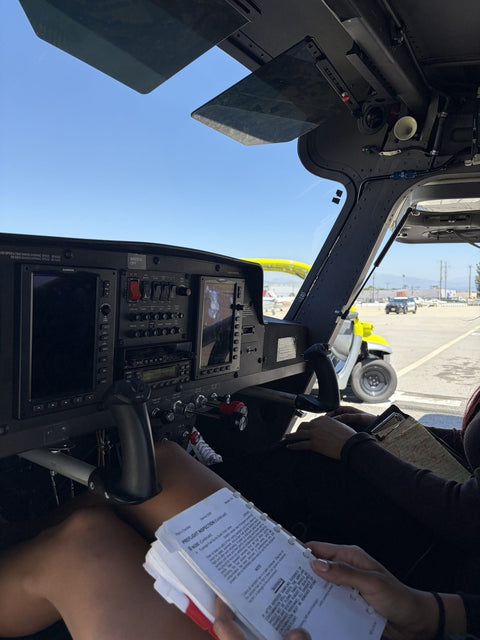
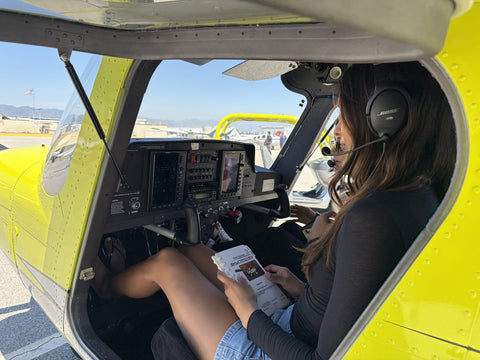
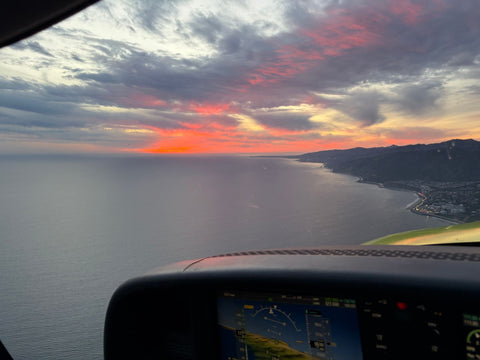
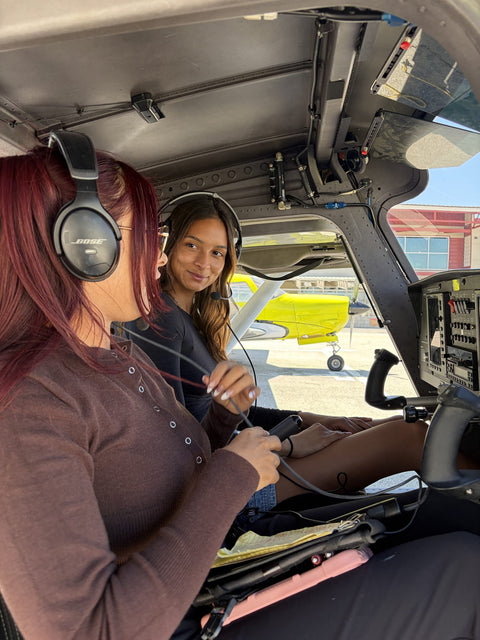
Start Where Everyone Starts. Whatever route you eventually take, the first hour is the same: you in the left seat over Los Angeles with an instructor beside you. A sixty-minute discovery flight is $229 — no tax, no booking fee, $229 is the total — and it is loggable toward a private pilot certificate.
Why A US-Based Student Almost Certainly Wants The FAA Route
Three reasons, in order of how much they matter.
The MPL is not available to you. This is the decisive one. There is no FAA multi-crew pilot license to apply for, and a foreign MPL is issued by a foreign authority through an airline in that country, to candidates that airline has selected, usually with residency and work-authorization requirements attached. You cannot simply buy a seat on one from Los Angeles.
The FAA certificates are portable and they are yours. An MPL is coupled to an employer by design. The FAA certificates are not coupled to anything. If a hiring cycle turns, if you change your mind about airline flying, if you want to fly a light aircraft on a weekend, or if you want to instruct, a commercial certificate and a CFI carry on working. That resilience is worth a great deal in an industry with famously cyclical hiring — the wider picture is on airline cadet programs explained.
The American structure has a paid hour-building stage built into it. An unrestricted airline transport pilot certificate needs 1,500 hours of total time under 14 CFR 61.159, with reduced totals available to some applicants under 14 CFR 61.160 — 1,000 hours with a qualifying aviation bachelor's degree, 1,250 with a qualifying associate's degree, and 750 hours for military pilots. Read the 1,500 hour rule and the restricted ATP for the detail. The hour requirement is often described as the American system's weakness. It is also what creates thousands of instructing jobs, which is how most US airline pilots get paid to build the very time the rule demands.
What that costs here, in figures you can check against our price list: Private Pilot standard 40-hour course $10,400, Instrument Rating $11,700, Commercial Pilot $15,400, Multi-Engine Rating $5,100 over seven days, and the combined flight instructor course covering CFI, CFII and MEI $15,400. Taken as one program from zero, our Airline Pilot Career Program is $84,000 and builds to 260 hours. The full sequence is on how to become an airline pilot.
If You Already Hold An MPL Or Another Foreign License
Here the honest answer is a structure plus a warning, because the details are a determination the FAA makes case by case and nobody should invent one for you.
The relevant regulation is 14 CFR 61.75, "Private pilot certificate issued on the basis of a foreign pilot license." It allows a person holding a foreign pilot license at the private pilot level or higher, issued by a contracting State to the Convention on International Civil Aviation, to be issued a US private pilot certificate with the appropriate ratings. Its main features:
- The foreign license must not carry a limitation stating that the holder has not met all of the ICAO standards for that license — 61.75(b)(2).
- The applicant must hold a medical certificate issued under 14 CFR Part 67 or a medical license issued by the country that issued the foreign license, and must be able to read, speak, write and understand English — 61.75(b)(4) and (b)(5).
- Aircraft ratings from the foreign license may be carried across for private pilot privileges only — 61.75(c).
- An instrument rating can be added if the foreign license authorizes instrument privileges and the applicant passes the appropriate knowledge test within the preceding 24 months — 61.75(d).
- Only one foreign license may be used as the basis for a US certificate, and the resulting US certificate can only be exercised while the foreign license is in the holder's possession or readily accessible in the aircraft — 61.75(f) and (g).
The warning. An MPL is a co-pilot license, not a private pilot license, and whether a particular MPL satisfies the "private pilot level or higher" test in 61.75(a) is a question for the FAA and not for a flight school's website. Do not assume it converts, and do not assume it does not. Contact an FAA Flight Standards office with your actual license in hand before you plan around any answer. The same applies to any license-specific limitation printed on your document.
What is clear from the European rules is that unwinding an MPL toward single-pilot privileges is real work even within the system that issued it. Under FCL.325.A, before an MPL holder may exercise commercial pilot privileges in Europe they must complete 70 hours of flight time in airplanes — as pilot in command, or at least 10 hours as pilot in command plus the remainder as pilot in command under supervision — of which 20 hours must be VFR cross-country, including a cross-country flight of at least 540 km (300 nautical miles) with full-stop landings at two different aerodromes flown as pilot in command, plus elements of the commercial modular course and the commercial skill test. That is the price of converting a two-crew license into single-pilot privileges, and it is a fair illustration of how specialized the MPL is.
Training In Los Angeles As An International Student
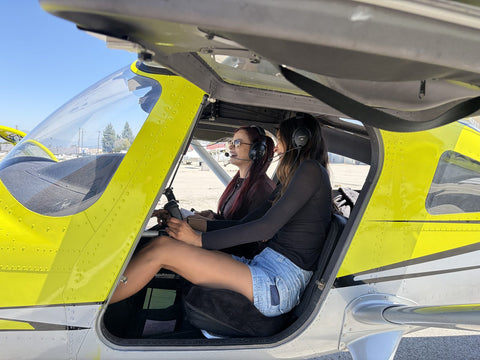
Plenty of pilots arrive at Van Nuys holding a foreign license, or holding nothing at all, and train to FAA certificates here. Visa requirements, TSA flight training security program steps for foreign nationals, documentation and the practical order of operations are set out on our page for international student pilots. If you are starting from zero rather than converting, the first regulatory step is a student pilot certificate, which is applied for through the FAA's IACRA system — see the IACRA student pilot certificate.
Training happens at Van Nuys Airport, Class D with a control tower, two parallel runways and the Burbank Class C shelf directly overhead. For a pilot whose experience is two-crew and procedural, the value of a field like this is that it forces single-pilot radio discipline and vertical airspace awareness into every flight from the first lesson. We are open 9 AM to 9 PM, seven days a week, at 7900 Balboa Blvd, Main Terminal Unit 108.
Frequently Asked Questions
What Is A Multi-Crew Pilot License?
A multi-crew pilot license, or MPL, is an airline-sponsored license that qualifies its holder to act as co-pilot on one particular type of multi-engine turbine airliner that requires two pilots. It is built around competency-based, heavily simulator-based training in a multi-crew environment from early in the syllabus, rather than the traditional sequence of single-pilot licenses.
Does The FAA Issue A Multi-Crew Pilot License?
No. 14 CFR 61.5(a)(1) lists every pilot certificate the FAA issues — student, sport, recreational, private, commercial and airline transport — and there is no multi-crew pilot license among them. The FAA asked whether it should adopt one in the 2013 rulemaking published at 78 FR 42324 and decided not to, citing the risks of departing from traditional certification requirements and the limited data available on MPL programs abroad.
How Many Flight Hours Does An MPL Require?
Under the European rules in Appendix 5 to Part-FCL, at least 240 hours of flying training as pilot flying and pilot not flying, in actual and simulated flight, across four phases, together with at least 750 hours of theoretical knowledge instruction. At least 12 take-offs and landings must be flown in an actual airplane of the type the rating covers.
Can I Fly A Light Aircraft On An MPL?
Not on the MPL itself. Under FCL.405.A the privileges are limited to acting as co-pilot in an airplane required to be operated with a co-pilot, and the instrument privileges are limited the same way. A holder can obtain private or commercial privileges separately, but that takes additional flying — FCL.325.A requires 70 hours of flight time in airplanes before commercial privileges may be exercised.
Can I Convert A Foreign Pilot License To An FAA Certificate?
14 CFR 61.75 provides for a US private pilot certificate issued on the basis of a foreign pilot license at the private pilot level or higher, issued by a contracting State to the Convention on International Civil Aviation, subject to medical, English language and documentation requirements. Whether any particular license qualifies is a determination for the FAA, so confirm your own case with an FAA Flight Standards office before planning around it.
What Should A US-Based Student Do Instead?
Train for the FAA certificates in sequence: private pilot, instrument rating, commercial pilot, then the flight instructor certificates if you intend to build hours by teaching, and then an airline transport pilot certificate. At You Fly LA the Private Pilot standard course is $10,400, the Instrument Rating $11,700, the Commercial Pilot course $15,400 and the combined flight instructor course $15,400.
Can I Get An MPL At A US Flight School?
No. The FAA does not issue an MPL, and under the rules that do create it the course can only be run by a training organization tied to the sponsoring airline, so no US flight school can offer one. What a US school can offer is the FAA certificate ladder, from private pilot to the flight instructor ratings.
Is The MPL Or The FAA Route Faster To An Airline?
On paper the MPL is faster, because it trains you straight into one airline's right seat in a single course. That speed comes with the sponsor attached: the license is restricted to that operator until its conversion course is complete. On the FAA route our Airline Pilot Career Program takes a beginner through every rating to MEI in about nine months, and you then build toward the 1,500 hours an unrestricted ATP requires as a paid instructor, with certificates that belong to you.
Talk To Us
If you are weighing an overseas cadet route against training in the United States, or you hold a foreign license and want to know what it is worth here, a free consultation is the fastest way to get a straight answer. Call (818) 330-1318 between 9 AM and 9 PM, seven days a week, or come to 7900 Balboa Blvd, Main Terminal Unit 108, Van Nuys, CA 91406.
Book A Discovery Flight · $229 Book A Free Consultation Call Or Text (818) 330-1318
You Fly LA · 7900 Balboa Blvd, Main Terminal Unit 108, Van Nuys, CA 91406 · Open 9 AM – 9 PM, 7 days.
Sources: 14 CFR 61.5, 61.75, 61.159 and 61.160, Title 14 of the Code of Federal Regulations on ecfr.gov, checked September 23, 2026.