


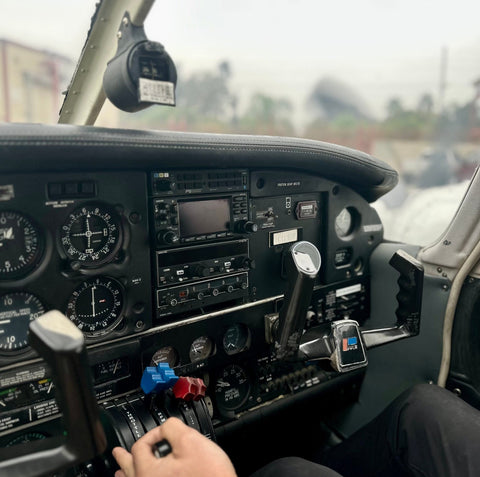




















A small airplane has fewer controls than most people expect, and each one does one clear job. Your hands move the nose up and down and roll the wings; your feet keep the airplane pointed where it is going and steer it on the ground; one lever sets the power; and a small wheel or switch takes the pressure off everything so the airplane flies itself between inputs. This page explains every control in a training cockpit the way we explain them on the ramp at Van Nuys, including how they differ between the airplanes we fly.
Quick Answer: The main controls are the yoke or stick (pitch and roll, through the elevator and ailerons), the rudder pedals (yaw in the air, steering and brakes on the ground), the throttle (engine power) and the trim (which removes control pressure). Flaps and the mixture complete the set. On a discovery flight you use the yoke or stick, the rudder and the throttle yourself, with an instructor on a second set of controls.
Book A Discovery Flight · $229 Call Or Text (818) 330-1318

The Three Axes
An airplane moves around three axes, all passing through its center of gravity, and each primary control works one of them. The FAA's Pilot's Handbook of Aeronautical Knowledge puts it simply: the ailerons, elevator (or stabilator) and rudder "constitute the primary control system and are required to control an aircraft safely during flight."
| Axis | Motion | Your Input | Control Surface |
|---|---|---|---|
| Lateral, wingtip to wingtip | Pitch: nose up or down | Yoke or stick back or forward | Elevator or stabilator |
| Longitudinal, nose to tail | Roll: one wing up, one down | Yoke turned or stick moved sideways | Ailerons |
| Vertical, through the roof | Yaw: nose left or right | Rudder pedals | Rudder |
Yoke Or Stick
Pull back and the tail surface pushes the tail down, so the nose comes up; push forward and the nose goes down. Turn the yoke or move the stick to the left and the left aileron rises while the right one drops, so the airplane rolls left. That is all the hand control does. It does not steer like a car's wheel: the airplane turns because it is banked, not because the yoke is turned.
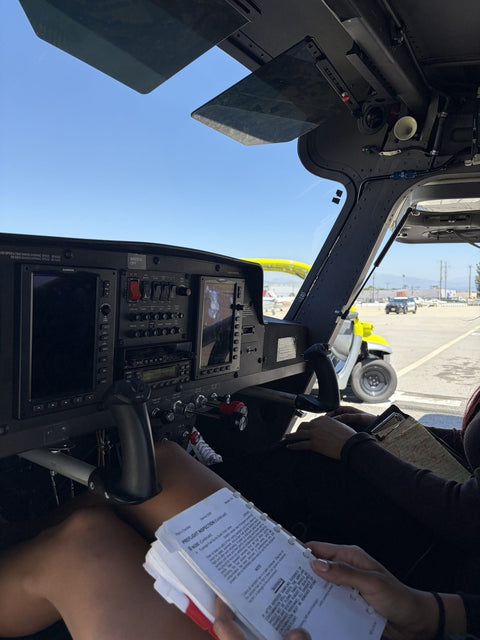
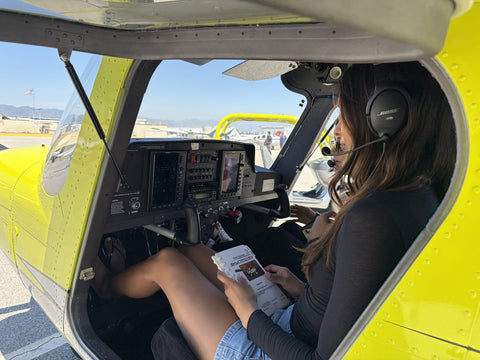
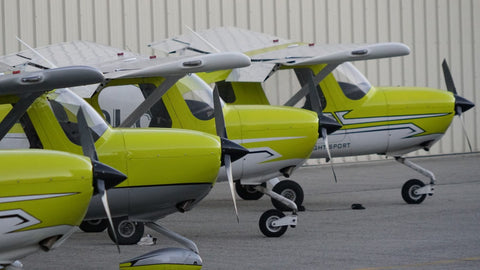
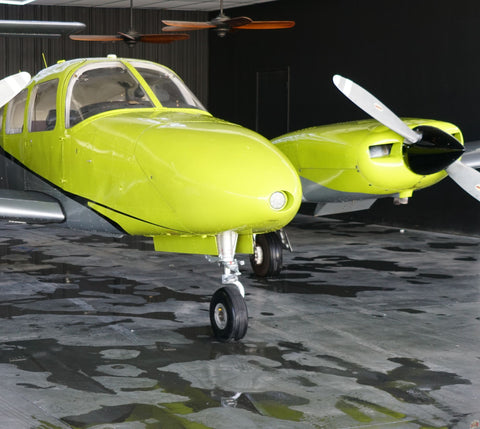
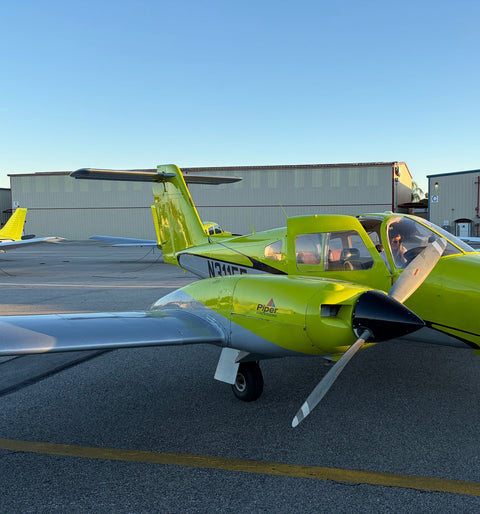
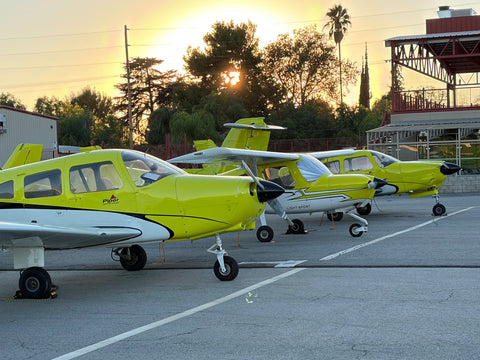
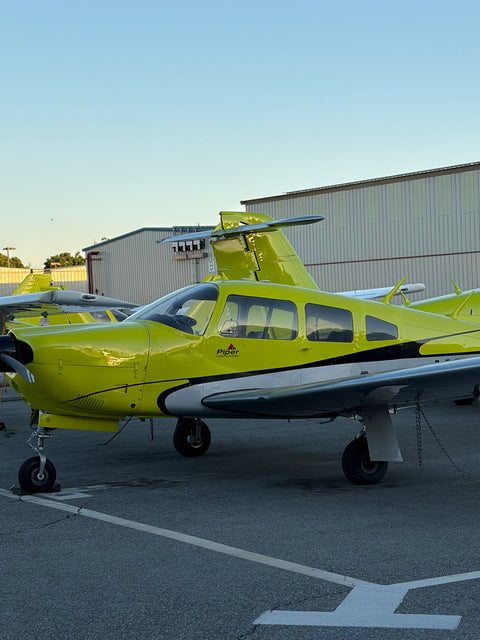
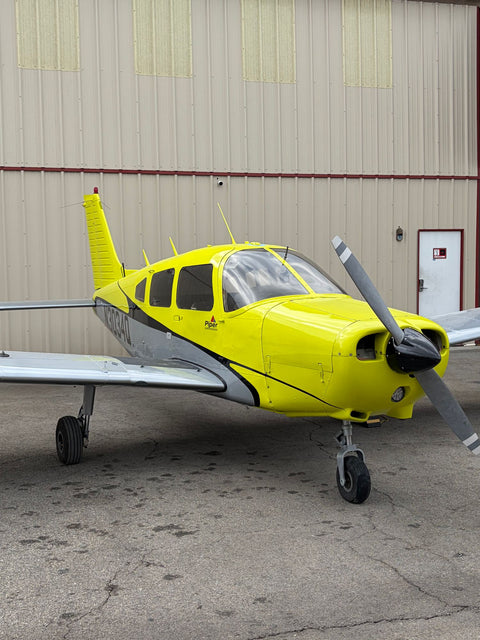
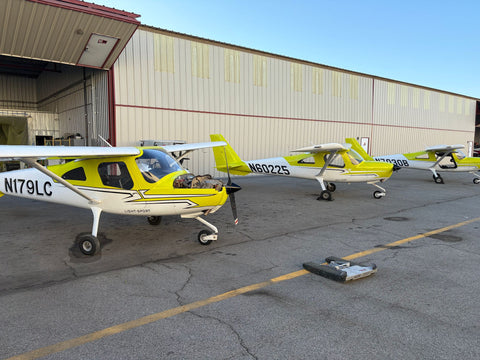
The form differs across our fleet. The Piper Warrior has a conventional yoke working a stabilator, a one-piece horizontal tail that pivots as a whole, with an antiservo tab that, in the handbook's words, increases the force needed to move it "thus making it less prone to pilot-induced overcontrolling." The Diamond DA20-C1 has a center stick, which feels direct and precise. The Cessna 162 uses single-handed sticks mounted in the panel, and the Cirrus SR22 has a side-yoke by each pilot's outer hand that moves like a yoke rather than a stick. After a few minutes, none of them feels strange.
How much pressure does it take? Less than people expect. In a properly trimmed trainer the airplane holds its attitude on fingertip pressure, and the most common first-lesson habit is gripping too hard.
Rudder Pedals And Brakes
In the air, the rudder yaws the nose left or right. Its main job in a turn is to cancel adverse yaw. The handbook explains that the lowered aileron on the rising wing makes more lift and more drag, which pulls the nose the wrong way, and "application of the rudder is used to counteract adverse yaw." You judge it with the slip indicator, a ball in a curved glass tube: keep it centered, and if it slides, press the rudder on the side it went to.
On the ground, your feet steer. In the Warrior the nosewheel is linked to the rudder pedals, so taxiing is mostly pedal pressure. The DA20 and the Cirrus have a castering nosewheel, so you steer with the brakes, pressing the top of one pedal or the other. Those tops are toe brakes, and using them evenly and gently is one of the first things you practice.
Throttle, Mixture And Trim
Throttle. Push it in for more power, pull it out for less. The Warrior, DA20 and Cessna 162 have fixed-pitch propellers, so the throttle alone sets power and you read the result on the tachometer. The Cirrus uses a single power lever that manages throttle and propeller together.
Mixture. Usually a red knob or lever beside the throttle, it sets the ratio of fuel to air. It is set by checklist for takeoff and landing and adjusted in cruise, and it is also how the engine is shut down. The Warrior's engine is carbureted, so it also has a carburetor heat control to clear ice from the intake.
Trim. The handbook's definition: trim systems "relieve the pilot of the need to maintain constant pressure on the flight controls." In the Warrior it is a wheel between the front seats; in the Cirrus it is a switch on the side-yoke that moves a spring cartridge. Set the attitude you want with the yoke, roll or click the trim until the pressure disappears, and let go: a well-trimmed airplane holds that attitude on its own.
Flaps
Flaps are panels on the trailing edge of the wing that, per the handbook, "increase both lift and induced drag for any given" angle of attack. The practical effect is that the airplane can fly slower and descend more steeply without gaining speed, which is why they come down in stages on approach and landing. Each airplane has a maximum speed for extending them. The Warrior's flaps are a manual lever between the seats with detents at four positions; the Cessna 162 and Cirrus flaps are electric, selected with a switch. The speed limits that govern control use are a topic of their own.
Book A Discovery Flight · $229 Book A Free Consultation
Step Through A Turn
A level turn uses almost every control in a set order. Here it is one input at a time, the way you will fly it on your first lesson.
-
Look First
Before any turn, look out in the direction you are turning and behind the wing for traffic. The instructor will point out anything you miss.
-
Roll In With Aileron
Turn the yoke or move the stick gently toward the turn. The ailerons roll the airplane into a bank; a shallow training turn is about 20 to 30 degrees.
-
Add Rudder With It
Press the rudder on the same side as you roll, just enough to keep the ball centered. Without it the nose swings the wrong way for a moment, which is adverse yaw.
-
Neutralize And Hold
At the bank you want, bring the yoke back toward center. The airplane stays banked and keeps turning; you only correct if the bank drifts.
-
Add A Little Back Pressure
In a bank some of the wing's lift points sideways, so the nose wants to drop. Gentle back pressure holds the altitude.
-
Roll Out
Start rolling out a little before your new heading, with opposite aileron and rudder together, and release the back pressure as the wings come level.
-
Trim And Check
Wings level, nose on the horizon, altitude where it started. Adjust the trim if you are holding pressure, then look outside again.
Try The Controls
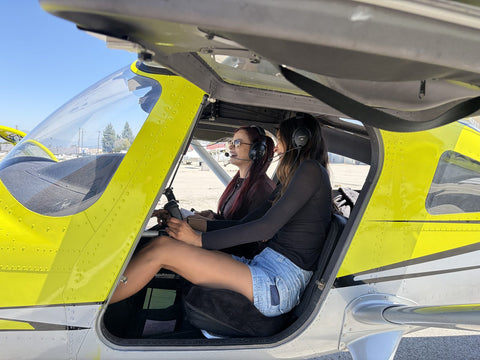
The quickest way to understand all of this is to feel it. On a discovery flight you sit in the left seat, the pilot's seat, and after the takeoff the airplane is yours: climbs, turns, level flight and the trim, with an instructor beside you on the other set of controls the whole time. Sixty minutes is $229, departing and landing at Van Nuys. The ground-level walkthrough is on what to expect on your discovery flight, the next layer, from takeoff to landing, is how to fly a plane, and how high you will be is on how high planes fly.
Frequently Asked Questions
Is Flying A Plane Like Driving A Car?
Only on the ground, and even there you steer with your feet. In the air you control three axes instead of one, you turn by banking, and speed is managed with the nose as much as with the throttle. Most people find it more intuitive than they feared within the first twenty minutes.
Why Are There Two Sets Of Controls?
So the instructor can fly, demonstrate or correct from the right seat without taking anything from you. The two sets are linked, so you feel the instructor's inputs and they feel yours.
What Does The Autopilot Do?
It holds a heading, an altitude or a programmed course, moving the same control surfaces you would. Our Cirrus SR22 has an integrated autopilot; students learn to fly by hand first, because you cannot manage automation you could not replace.
Glass Cockpit Or Traditional Gauges?
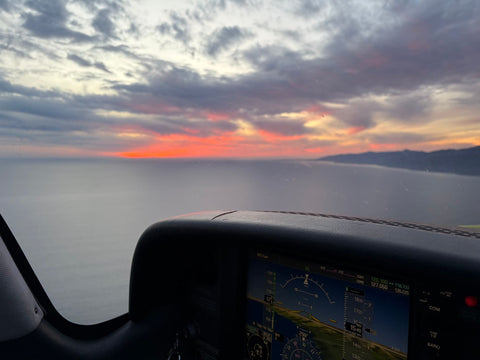
The controls are the same either way; what changes is how the instruments are displayed. Screens show more at once, round gauges are simpler to learn on. We compare them on glass cockpit versus steam gauges.
Do All Airplanes Have A Yoke?
No. Trainers use yokes, center sticks, panel-mounted sticks or side-yokes, and fighters and aerobatic airplanes use sticks. They all move the same surfaces in the same sense: back for nose up, left for left roll.
Which Controls Will I Use On My First Flight?
The yoke or stick, the rudder pedals and, with your instructor's hand near yours, the throttle and trim. Your instructor handles the radio, the checklists, the flaps and the landing unless you want to follow through on it.
Book A Discovery Flight · $229 Call Or Text (818) 330-1318
Sources: FAA Pilot's Handbook of Aeronautical Knowledge (FAA-H-8083-25C), Chapter 6, Flight Controls; FAA Airplane Flying Handbook (FAA-H-8083-3C), Chapter 3, Basic Flight Maneuvers.