























If you are thinking about a flying career, it is a fair question: why spend years and tens of thousands of dollars training for a job a computer might do? The honest answer starts with what automation already does in a modern cockpit, which is a lot, and then looks at what the rules, the technology and the FAA itself say about removing the people. We train pilots at Van Nuys for a living, so we have an interest here; everything below is sourced so you can check it.
Quick Answer: Not on any timeline that matters to someone starting training now. Autopilots already fly most of a typical airline cruise and can land in fog, but US rules require at least two pilots on every airline flight, and the FAA's own roadmap for artificial intelligence states that "AI cannot be a copilot but can perform autopilot functions." The federal outlook projects pilot jobs growing 7 percent from 2025 to 2035, with about 16,400 openings a year.
Book A Free Consultation Call Or Text (818) 330-1318
The Short Answer
What is automated today is the steady-state flying: holding altitude, heading and speed, following a programmed route, managing thrust, and flying an approach to a runway with the right ground equipment. What is not automated is the part that makes the job hard: deciding whether to go at all, managing a failure the designers did not anticipate, choosing where to divert with a sick passenger aboard, and noticing when the automation itself is wrong. Regulation follows that split. The machine may fly the airplane; a named person is responsible for it.
What Autopilots Already Do
Cruise. On a typical airline flight the autopilot is engaged shortly after takeoff and flies the climb, the cruise and much of the descent along a route loaded into the flight management system. The pilots program it, check it against the clearance, and change it every time air traffic control or the weather changes the plan.
Approaches and autoland. Airliners with the right equipment, crews with the right training and runways with the right ground systems can fly coupled approaches all the way to touchdown in very low visibility. The FAA approves these all-weather operations under Advisory Circular 120-118. Autoland exists precisely for the conditions where a human cannot see the runway in time, and it is authorized with two trained pilots monitoring it.
Emergencies in small airplanes. Since 2020 the FAA has certified emergency autoland systems on some turboprops and light jets: if the pilot is incapacitated, a passenger presses a button and the airplane picks an airport, broadcasts automated radio calls and lands itself. That is a genuine advance, and it is designed as a last resort for a single-pilot airplane, not as a replacement crew.
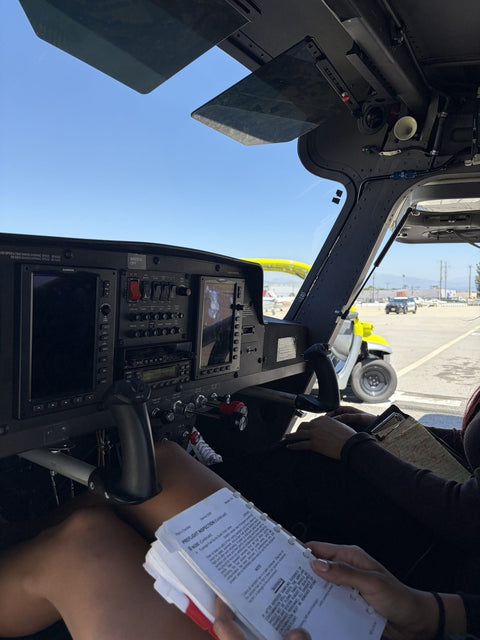
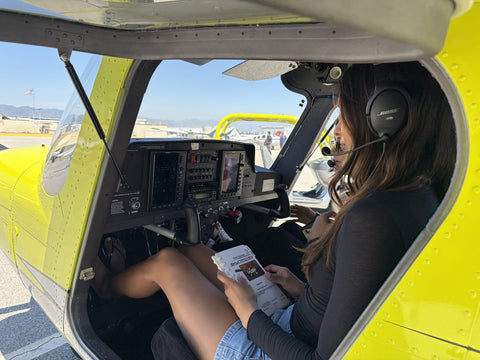
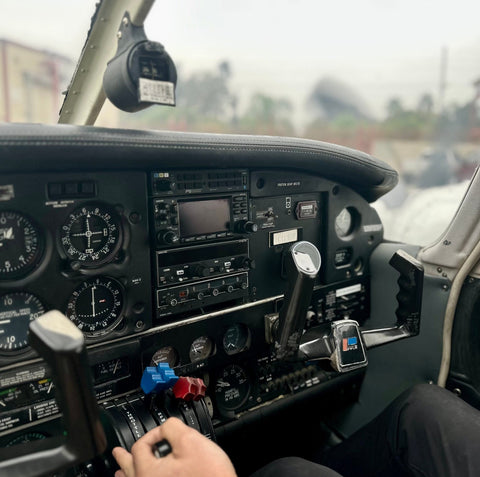
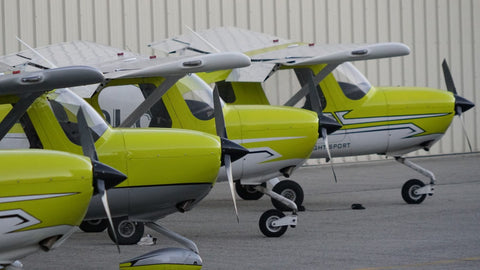
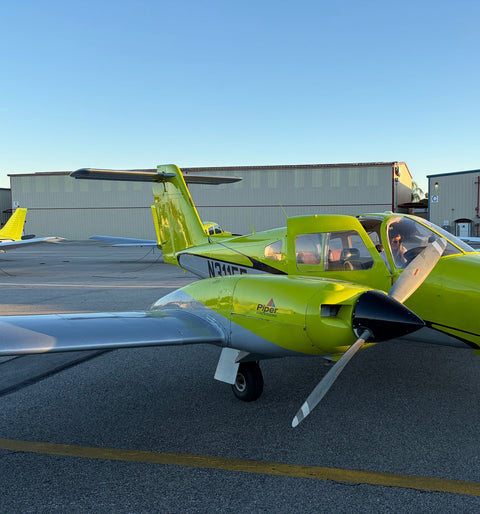
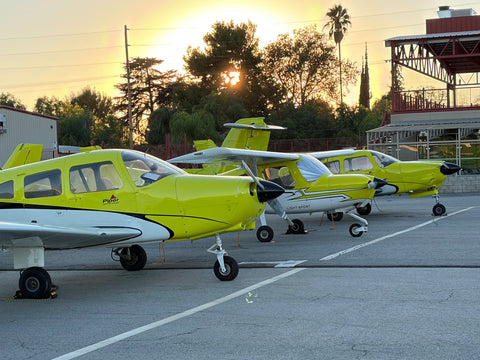
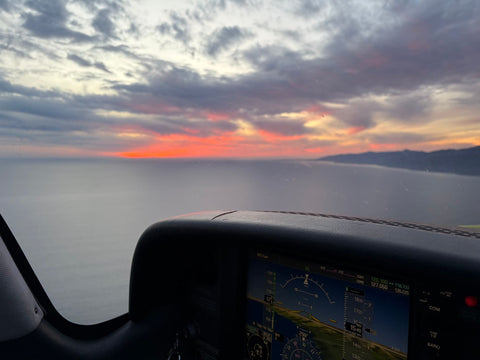
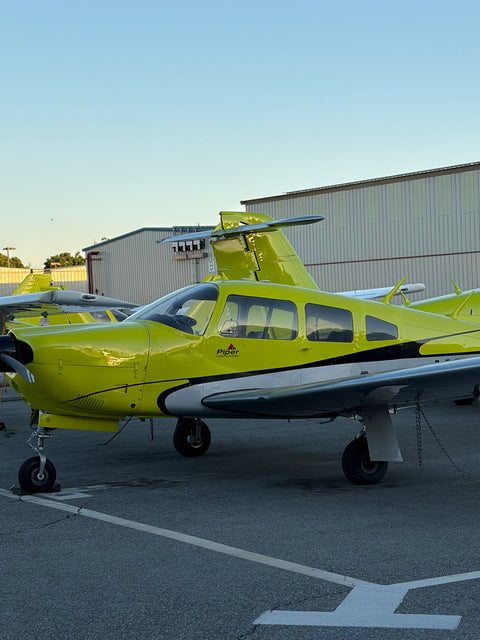
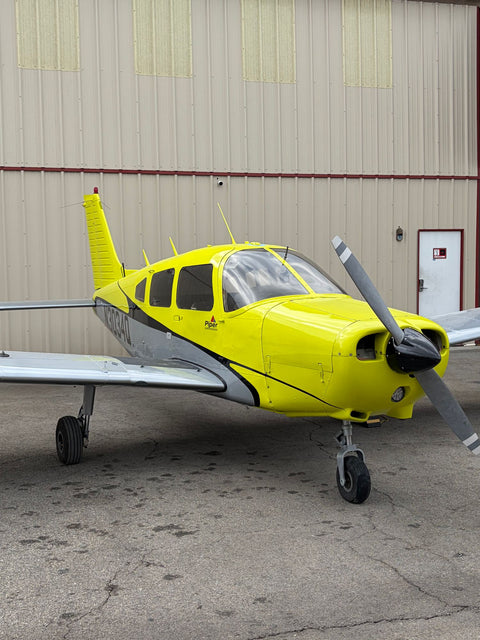
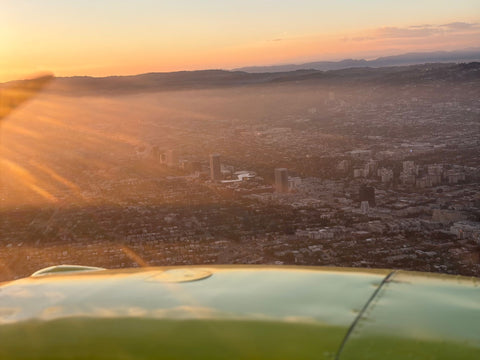
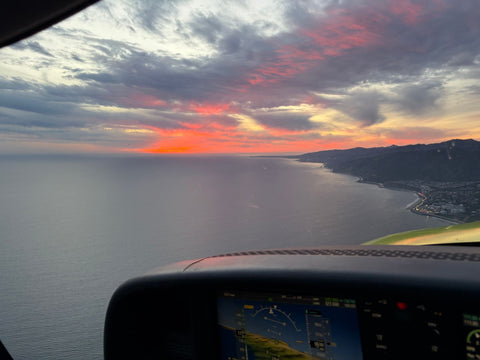
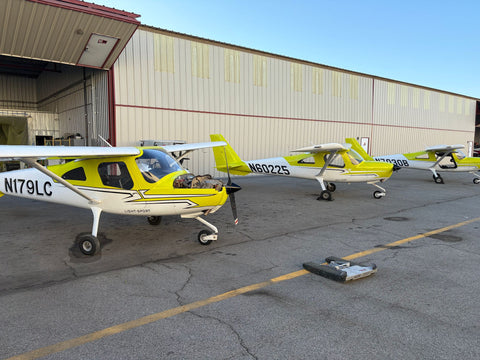
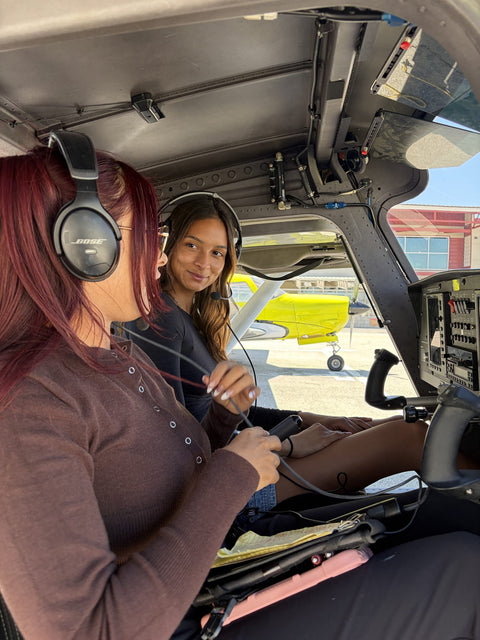
Training airplanes. Even our trainers have more automation than people expect: the Cirrus SR22 has an integrated autopilot with a level button that returns the airplane to wings-level flight, and a whole-airframe parachute. Students still learn to fly by hand first, because automation you do not understand is a hazard, not a help. We explain the difference between panels on glass cockpit versus steam gauges.
What Still Needs A Pilot
Responsibility. 14 CFR 91.3(a) makes the pilot in command "directly responsible for, and ... the final authority as to, the operation of that aircraft." The FAA's Roadmap for Artificial Intelligence Safety Assurance, Version I, takes the same view of software: AI "may have a degree of control authority over specific flight functions but is not accountable for anything; the designer and maintainer of the AI are accountable." One of its guiding principles is to treat AI "as an algorithm or computer, not as a human."
The two-pilot rule. For airlines, 14 CFR 121.385(c) says "the minimum pilot crew is two pilots." Every transport airplane is also certified with a minimum flight crew, which 14 CFR 25.1523 requires to be "sufficient for safe operation." Changing either would take new certification standards and a federal rulemaking, which is public and slow, before any airline could fly a revenue flight with fewer people up front.
The unexpected. Automation is excellent at the cases it was designed for and has nothing to offer in the cases it was not. Multiple failures, conflicting sensor data, a runway change on short final, a medical emergency in the cabin, a fire warning over the ocean: these are the minutes pilots are paid for, and they are why airline training spends so much time on abnormal procedures.
Book A Free Consultation Book A Discovery Flight · $229
Automation Vs Pilot, Task By Task
| Task | Automation Today | Still The Pilots |
|---|---|---|
| Holding altitude, heading and speed | Routinely, for most of the cruise | Selecting the targets and monitoring |
| Following the route | Flies the programmed flight plan | Loading it, checking it, changing it for ATC and weather |
| Low-visibility landing | Autoland, with approved equipment, runway and crew | Deciding whether to continue, and taking over if it misbehaves |
| Takeoff | Thrust management and guidance cues | Flown by hand, including the decision to reject |
| Taxiing | Moving maps and alerts | Steering, clearances, traffic on the ground |
| Go or no-go on weather | Data and forecasts | The decision, and responsibility for it |
| An engine failure | Alerts, checklists, some thrust compensation | Flying the airplane, choosing the airport, running the checklist |
| A sick passenger or a cabin fire | Nothing | Everything |
What It Means For Someone Starting Now
The federal outlook is positive. The US Bureau of Labor Statistics projects employment of airline and commercial pilots to grow 7 percent from 2025 to 2035, much faster than the average for all occupations, with about 16,400 openings a year on average. No one may fly as a Part 121 pilot after reaching 65 (14 CFR 121.383(d)), so retirements are built in. The May 2025 median wage for airline pilots, copilots and flight engineers was $232,140. We look at the hiring picture in more depth, including its risks, on the pilot shortage and hiring outlook and is becoming a pilot worth it.
Timing favors people who start soon. Our Airline Pilot Career Program takes a student from no experience through every rating to flight instructor in about nine months, for a fixed $84,000, with a guaranteed paid instructor job at $48,000 a year while you build toward the 1,500 hours an airline seat requires. That puts a new pilot in an airline cockpit within a few years, long before any change to the two-pilot rule could work its way through certification and rulemaking. The full sequence is on how to become an airline pilot, and career changers should read career change to pilot.
Frequently Asked Questions
Will Airliners Ever Fly With One Pilot?
Not under today's US rules: 121.385(c) sets a two-pilot minimum for Part 121. Regulators and manufacturers have studied reduced-crew cruise operations, but no US rule allows a single-pilot airline flight, and changing that would require new certification standards and a public rulemaking first.
Will Cargo Planes Go Pilotless First?
That is the usual prediction, because there are no passengers aboard. But large cargo airlines fly under the same Part 121 certificate and crew rules as passenger airlines, including two pilots and airline transport pilot certificates in both seats, so the same rule changes would be needed.
Are Drones Taking Pilot Jobs?
Drones mostly do work that was never done by crewed airplanes, such as inspections and mapping. Small drones fly under 14 CFR Part 107, which requires a person with a remote pilot certificate in charge of the flight, so even there a pilot is responsible.
Does Automation Make Pilots Worse At Flying?
It can, if pilots let their hand-flying lapse. That is why training starts with stick-and-rudder skills and why airline and FAA guidance keep pushing manual flying and a solid understanding of the automation's modes. Pilots who can fly well without it are the ones who manage it best.
Is It Still Worth Becoming A Pilot?
For someone who wants the job, the federal numbers support it: faster-than-average projected growth, steady retirements and a high median wage. The cost and the years of hour-building are the real hurdles, not AI. A free consultation is the quickest way to price your own path.
Could AI Replace Flight Instructors?
Simulators and software already help students study and practice, and our full-motion simulator hours count toward ratings. But the regulations reserve training, solo sign-offs and checkride endorsements to certificated instructors, and nobody has found a substitute for an instructor beside you on your first landing.
Book A Free Consultation Book A Discovery Flight · $229
Sources: 14 CFR 91.3 (pilot in command authority); 14 CFR 121.383(d) and 121.385(c); 14 CFR 25.1523 (minimum flight crew); 14 CFR Part 107 and 107.12 (small unmanned aircraft); 14 CFR 61.3(d) (instructor privileges); FAA Roadmap For Artificial Intelligence Safety Assurance, Version I; FAA Advisory Circular 120-118, Criteria For Approval/Authorization Of All Weather Operations For Takeoff, Landing, And Rollout; US Bureau of Labor Statistics, Occupational Outlook Handbook, Airline and Commercial Pilots (May 2025 wages, 2025–2035 projections).