



















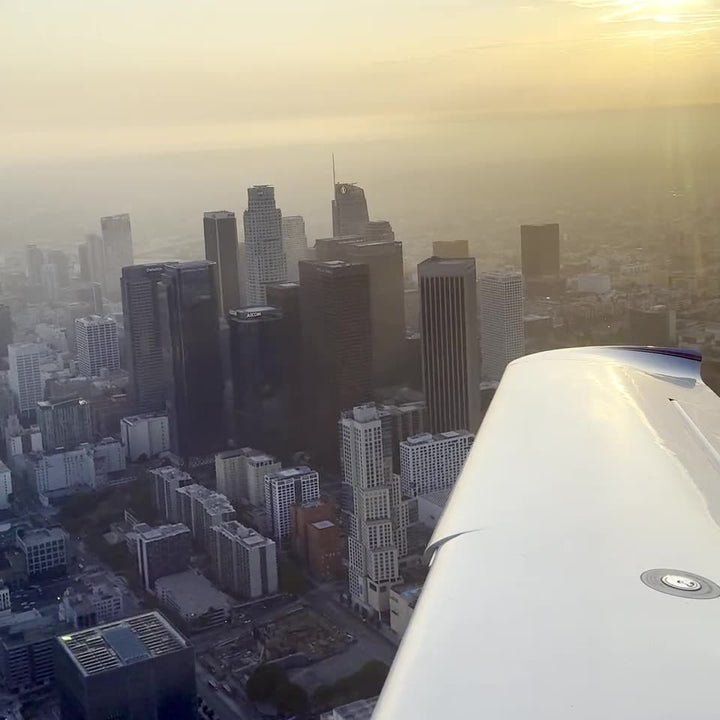
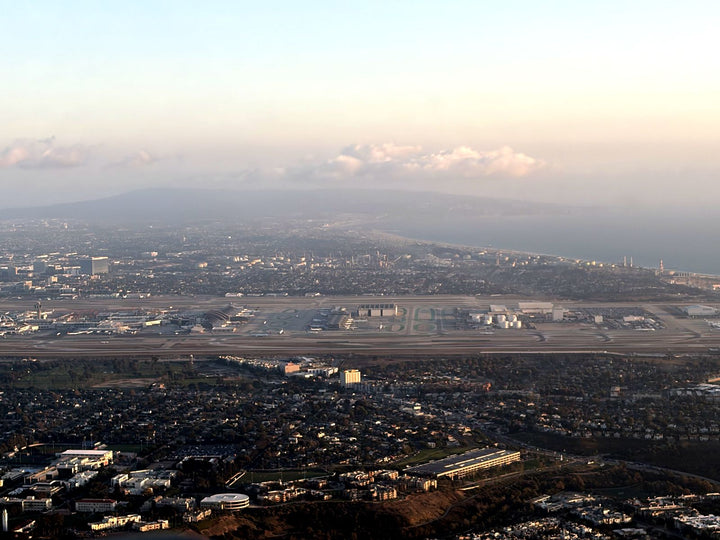
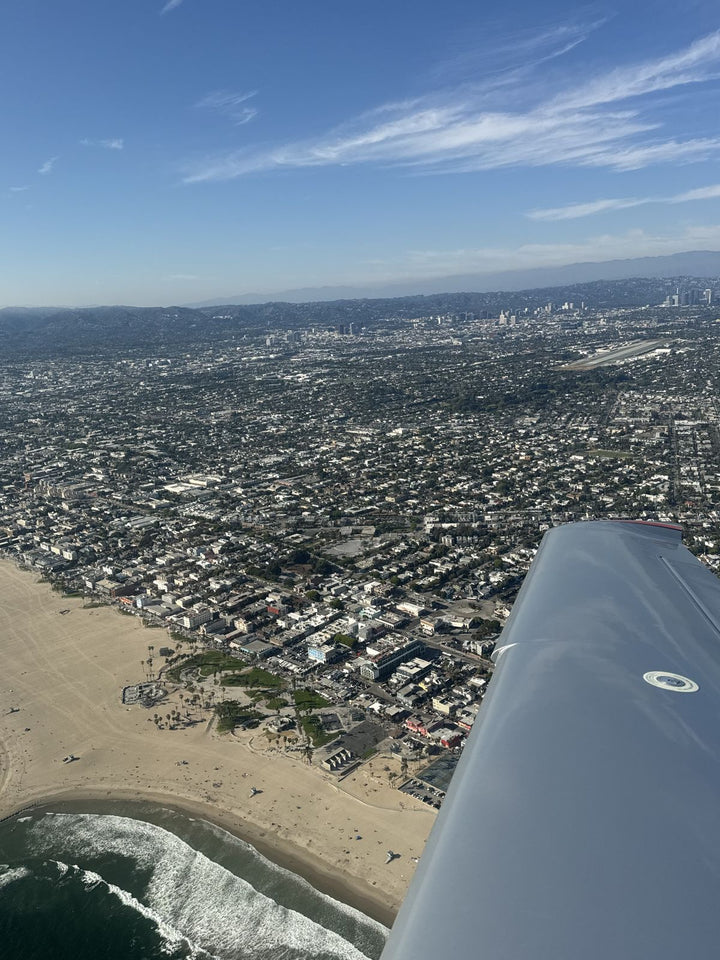
Choosing a flight school? Torrance has its own airport, so the real question is whether the drive north is worth it. You Fly LA trains at Van Nuys Airport, 7900 Balboa Blvd, Main Terminal Unit 108, which is about 34 miles north of Torrance City Hall and about 36 miles north of Torrance Municipal Airport. Off-peak that is a 45-minute drive up the 405; in the wrong hour it is closer to 80 minutes, and this page is about whether that is a sensible thing to do.
The short answer is that it depends on what you want out of the certificate. If you want to fly once a fortnight for pleasure and never leave the South Bay, the honest recommendation is to train at your own field. If you want to fly twice a week, finish in a reasonable number of months, and carry on through instrument, commercial, multi-engine or instructor with the same school and the same airplanes, the drive starts paying for itself quickly. Our overview of how to choose a flight school in Los Angeles sets out the criteria; this page applies them from the South Bay.
Quick Answer: Torrance has its own airport and flight schools, so train there if you want to fly once a fortnight close to home. Van Nuys is about 34 miles north, 45 minutes off-peak against the commute, and suits students who fly two three- to four-hour blocks a week and want every rating through flight instructor on one ramp. Private pilot packages start at $10,400, and a $229 discovery flight is the way to test the drive.
Book A Discovery Flight · $229 Book A Free Consultation

Getting Here From Torrance: The 405 North Run
There is one sensible route and a handful of variations on it. From almost anywhere in Torrance you join the 405 north at Crenshaw Boulevard, Hawthorne Boulevard or Western Avenue, run north past the 110, the 105 and LAX, climb the Sepulveda Pass between the 101 and the Getty, drop into the San Fernando Valley, and exit at Roscoe Boulevard. Turn west on Roscoe, then south on Balboa Boulevard, and 7900 Balboa is on your left on the west side of Van Nuys Airport. The last mile has no traffic in it at any hour.
Distances below are measured to 7900 Balboa Blvd and are approximate because Torrance is a large city; check your own postcode before you plan around them.
| Starting Point | Route | Approximate Distance | Drive Time Range |
|---|---|---|---|
| North Torrance, 90504 | Crenshaw Blvd to 405 N, exit Roscoe | About 32 miles | 40 to 70 minutes |
| Torrance City Hall, 90503 | Hawthorne Blvd to 405 N, exit Roscoe | About 34 miles | 45 to 75 minutes |
| Old Torrance and Downtown, 90501 | Western Ave to 405 N, exit Roscoe | About 34 miles | 45 to 75 minutes |
| South Torrance and Torrance Municipal, 90505 | Hawthorne Blvd N to 405 N, exit Roscoe | About 36 miles | 50 to 80 minutes |
| Harbor Gateway and Carson side, 90502 | 405 N from the 110 interchange | About 31 miles | 40 to 70 minutes |
The Honest Version Of That Drive
Two stretches decide your journey and neither of them is near Torrance. The first is the 405 alongside LAX, which congests whenever the airport does, which is most of the day. The second is the Sepulveda Pass, which is the worst piece of freeway in Southern California in both directions at the wrong hour: northbound roughly from three in the afternoon to seven in the evening, southbound roughly from seven to ten in the morning.
For a South Bay student that geometry is unusually kind. You are driving north in the morning against the commute and south in the afternoon against the commute, so the two directions that ruin everybody else are the two you are not in. A student who takes a nine or ten o'clock slot on a weekday drives up in about 45 minutes and home in about 45 minutes. A student who insists on a five o'clock weekday slot will sit in the pass on the way home and will eventually stop coming. We would rather tell you that now than take your deposit and watch it happen.
Sepulveda Boulevard runs parallel through the pass and is a genuine alternative when the freeway locks up, but it is not fast, only predictable. Treat it as a release valve, not a plan.
Three And Four Hour Blocks, Not One-Hour Lessons
The single change that makes a 34-mile commute work is to stop thinking in one-hour lessons. Book a block of three to four hours and do more than one thing in it.
- Two flights in one visit. A 1.5-hour lesson, a break, then a second 1.2-hour lesson. Your instructor briefs once, debriefs once, and you bank two-thirds of a week's flying in a single drive.
- Flight plus simulator. An hour and a half in the airplane and an hour in the Redbird MCX full-motion simulator. The simulator does not care about wind, traffic or the marine layer, and it is where instrument procedures, emergencies and radio work get cheap.
- Flight plus ground. Fly the lesson, then sit down for an hour of ground instruction on the next one. Ground is where the written exam gets passed and it is the thing students on a short leash always skip.
- Two visits a week, not four. Two three-hour blocks give you four to five flight hours a week. That is a faster pace than most local students manage with a five-minute drive, because they book single hours and cancel them.
We are open 9 AM to 9 PM, seven days a week, which means Saturday and Sunday morning blocks are real options and not an afterthought. If your working week is immovable, read our page on part-time flight training in Los Angeles for how the calendar usually shakes out.
Is The Drive Worth It For You?
- You can protect two blocks of three to four hours a week.
- Your free time is weekday mornings or weekends, not weekday evenings.
- You want instrument, commercial or multi-engine after the private certificate.
- You want simulator time built into the plan.
- Marine-layer cancellations at a coastal field would break your rhythm.
- A 45-minute drive each way does not put you off flying.
Tick what applies above. If the checklist does not load, the rule of thumb is simple: two long blocks a week, driven against the commute, make the trip worthwhile; single one-hour lessons do not.
Book A Free Consultation Call Or Text (818) 330-1318
What A Landing Costs, And Why It Matters More Than The Drive
Torrance Municipal Airport is a real general aviation field with real flight schools on it. If you train there you will be taught properly. But two local facts belong in your arithmetic before you decide the short drive wins.
The first is money per landing. Torrance charges a landing fee of $6. That sounds trivial until you remember what learning to fly actually looks like: a pattern lesson is eight to twelve landings, and you will fly a lot of pattern lessons between your first hour and your first solo. Ten landings a session, twice a week, is $120 a month in fees alone, and it quietly discourages exactly the repetition that makes a good landing.
The second is that the City of Torrance adopted an ordinance in 2024 regulating flight school activity at the airport. Rules of that kind exist because residents under the pattern asked for them, which is legitimate, but they constrain how much training a field can absorb. Before you commit to any airport, ask the school directly what the current local rules mean for touch-and-go work, for early and late slots, and for how many aircraft it may operate. Read the ordinance yourself on the City of Torrance website rather than taking anybody's summary of it, ours included.
Van Nuys has the opposite problem and it works in a student's favor. It is one of the world's busiest general aviation airports, with two parallel runways, 16R/34L at 8,001 feet and 16L/34R at 4,000 feet, and it is built to absorb training traffic. Our package prices are set as course totals rather than as a meter that runs while you taxi; what is and is not inside them is laid out on our rates page.
The Marine Layer Argument

This is the argument nobody makes to South Bay students and it is the strongest one on the page. Coastal fields in Los Angeles County spend a large part of late spring and early summer under a marine layer that arrives overnight and burns off somewhere between mid-morning and early afternoon. A field three miles from the water sits under it longest. A field twenty-odd miles inland, on the far side of the Santa Monica Mountains, generally clears first and often never goes in at all.
The consequence is not a weather inconvenience, it is a calendar. If your nine o'clock lesson is scrubbed one week in three for six weeks of the year, your certificate slides by a month or more, and every scrubbed lesson costs you currency you then have to buy back. Drive time is a cost you pay once per lesson and can predict. Canceled lessons are a cost you cannot predict and cannot recover. Our page on how often you can actually fly at Van Nuys goes through the seasonal pattern properly.
None of this makes coastal training bad. It makes an inland field a better base for a student trying to hold a twice-weekly rhythm, which is the single strongest predictor of how many hours your certificate takes.
What The Drive Buys You
A commute is only justified by things that are not available closer. Here is the honest list.
- One school from first lesson to instructor rating. Private, instrument, commercial, multi-engine, CFI, CFII and MEI all sit on the same ramp. You never re-learn a school's paperwork, and you never chase a new checkout.
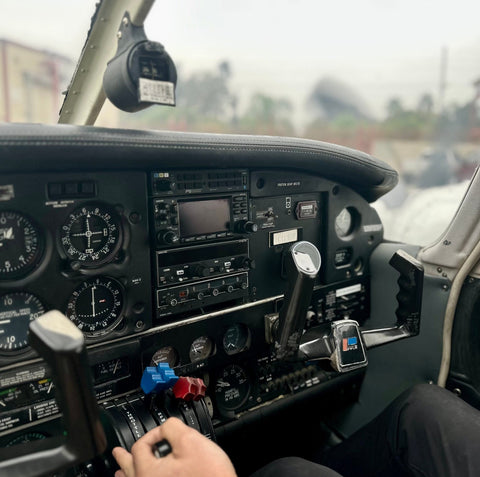
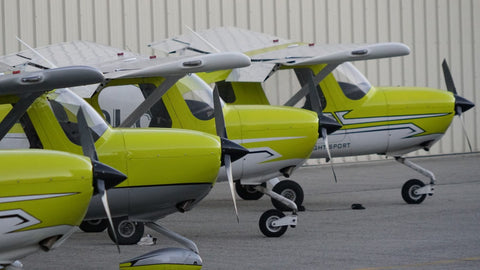
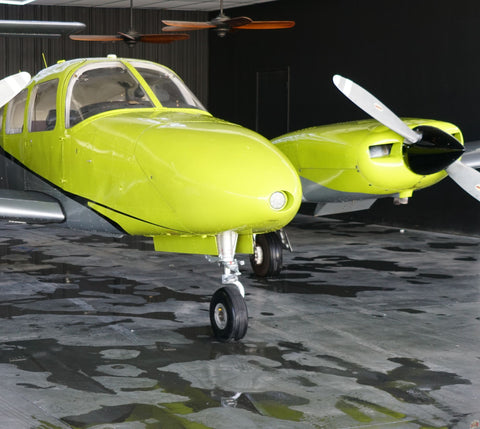
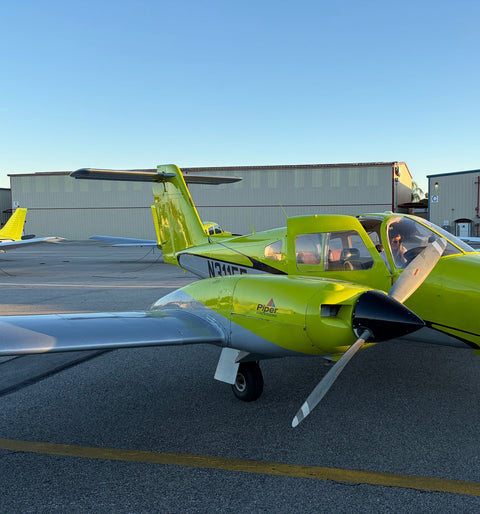
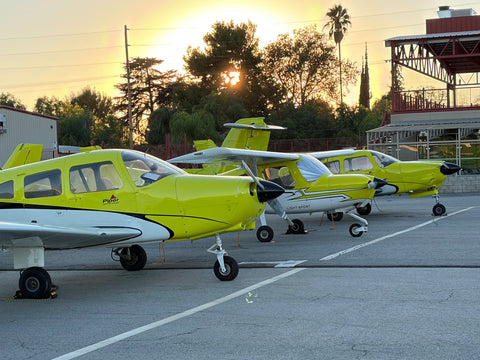
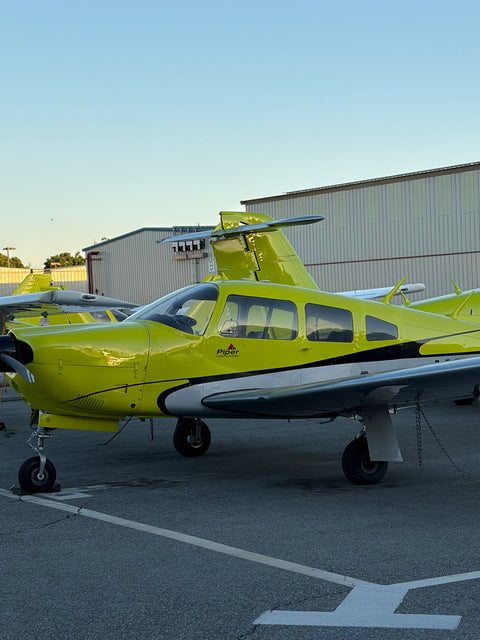
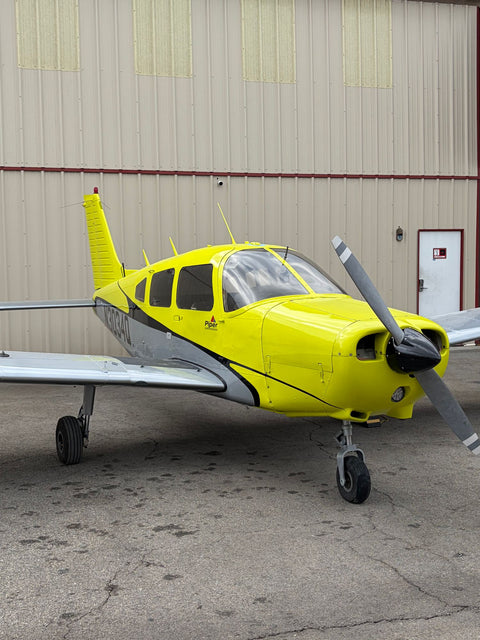
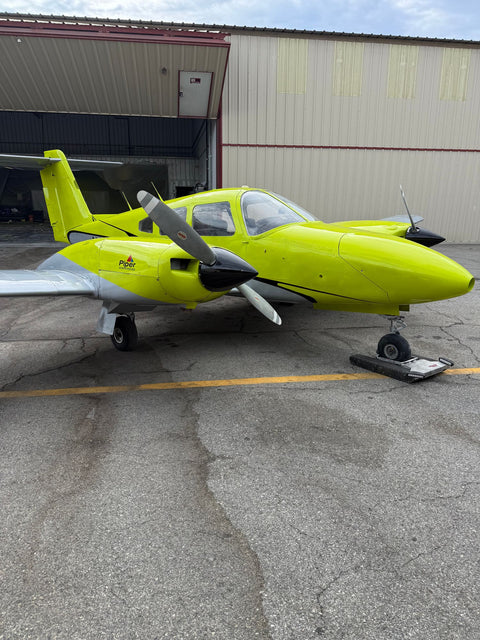
- Six aircraft types. Cessna 162 Skycatchers, Piper Warriors, Diamond DA20-C1s, a Piper Arrow, a Piper Seminole and a Cirrus SR22 Turbo. Fleet depth is what stops a maintenance squawk from becoming a canceled fortnight.
- A full-motion simulator that counts. The Redbird MCX is an FAA-approved advanced aviation training device. Under 14 CFR 61.65 a portion of the instrument dual time may be flown in a qualifying device, and under 14 CFR 61.129 a limited amount of training device time may be credited toward commercial aeronautical experience. Ask us for the exact figures for your course rather than assuming.
- Class D beneath a Class C shelf. Van Nuys is a towered field beneath the Burbank Class C, just north of the Los Angeles Class B. You learn to talk to a busy tower and to work with Class B from your first hours instead of adding it later.
- A twin and a high-performance single on the same ramp. A multi-engine rating or a high-performance endorsement is a phone call, not a move.
What It Costs
| Item | Detail | Price |
|---|---|---|
| Discovery flight | 60 / 90 / 120 minutes, you fly | $229 / $299 / $399 |
| Full-motion simulator session | 60 minutes | $189 |
| Sport Pilot course | 25 hours flight, 3 hours simulator | $8,400 |
| Private Pilot, Standard | 38 hours aircraft, 2 hours simulator | $10,400 |
| Private Pilot, Comprehensive | 55 hours aircraft, 5 hours simulator | $15,400 |
| Instrument Rating | 20 hours aircraft, 20 hours simulator | $11,700 |
| Commercial Pilot | 130 program hours | $15,400 |
| Multi-Engine Rating | Seven-day accelerated course in the Seminole | $5,100 |
| Aircraft, package rate | Cessna 162 or Piper Warrior, per hour | $179 |
| Instructor | Per hour, aircraft or simulator | $110 |
Every rate we publish is a package rate, for training inside a course. Financing runs either as interest-free direct payments over twelve months or through Stratus Financial over a longer term, and our financing page explains both. Training here is under Part 61. We do not hold Part 141, we do not issue I-20s, and we do not accept the GI Bill.
Related Reading
- Where our students come from — the full map of neighborhoods and drive times to Van Nuys.
- Best airport for flight training in Los Angeles — Van Nuys, Santa Monica, Torrance, Long Beach, Whiteman and El Monte compared.
- Flight school rates at Van Nuys — every price we charge on one page.
- Private pilot license in Los Angeles — the 40-hour route, start to checkride.
- Flyable days at Van Nuys — how the marine layer and the seasons shape your calendar.
- Part-time flight training — how to build a schedule around a full-time job.
Frequently Asked Questions
How Far Is Van Nuys Airport From Torrance?
About 34 miles from Torrance City Hall and about 36 miles from Torrance Municipal Airport, almost all of it on the 405. Allow 45 minutes off-peak and up to 80 minutes if you cross the Sepulveda Pass in the evening peak.
Is There A Flight School At Torrance Airport?
Yes. Torrance Municipal Airport has established flight schools on the field. If a five-minute drive matters more than fleet depth or ratings beyond private pilot, training locally is a reasonable choice and we will say so.
Why Would Someone From Torrance Drive To Van Nuys For Flying Lessons?
Four reasons come up repeatedly: one school that covers every certificate through flight instructor, a fleet of six aircraft types including a twin and a Cirrus SR22 Turbo, an FAA-approved full-motion simulator, and an inland field that loses fewer mornings to the marine layer than a coastal one.
Does Torrance Airport Charge A Landing Fee?
Torrance charges a $6 landing fee. Over the many pattern lessons between your first hour and your first solo, that adds up, so ask any school what landings cost at its home field before you compare hourly rates.
What Is The Torrance Flight School Ordinance?
The City of Torrance adopted an ordinance in 2024 regulating flight school operations at Torrance Municipal Airport. Read the current text on the City of Torrance website and ask any airport tenant directly what it means for pattern work and scheduling, because summaries go stale.
When Is The Best Time To Drive Up From The South Bay?
Mid-morning on a weekday, or early on a weekend. You will be traveling north against the morning commute and south against the evening commute, which is the opposite of the pattern that makes this drive painful for everyone else.
How Many Hours A Week Should I Fly To Make The Drive Worthwhile?
Two visits a week of three to four hours each, which is four to five flight hours. That cadence is what keeps a 40-hour minimum from turning into 70 hours, and it is easier to hold with two long drives than with four short ones.
Can I Do A Discovery Flight Before Committing To The Commute?
Yes, and you should. A 60-minute discovery flight is $229, you fly it from the left seat, and it is credited in full toward your training if you enroll within 24 hours. Do the drive once, fly once, then decide.
Is Van Nuys Or Torrance Better For Learning To Fly?
Neither is better for everyone. Torrance is closer and perfectly good for a private certificate flown at your own pace. Van Nuys suits students who can fly two long blocks a week, want every rating through flight instructor with one school, and would rather lose fewer mornings to the marine layer.
What Does A Private Pilot License Cost If I Train From Torrance?
The same as for anyone at Van Nuys: $10,400 for the 40-hour Standard package or $15,400 for the 60-hour Comprehensive package, with books and materials included. The extra cost of living in Torrance is the drive, which is why we suggest two long blocks a week rather than several short lessons.
Drive It Once Before You Decide
The only honest way to test a 34-mile commute is to make it on the day and at the hour you would actually train. Book a discovery flight at $229 for 60 minutes, fly it yourself from the left seat with an instructor beside you, and see how the round trip feels. If you would rather talk first, book a free consultation and we will go through the schedule, the money and whether your own field is the better answer. Call (818) 330-1318 any day between 9 AM and 9 PM. We are at 7900 Balboa Blvd, Main Terminal Unit 108, Van Nuys, CA 91406, on Van Nuys Airport, and there is only ever one location.
Book A Discovery Flight · $229 Book A Free Consultation Call Or Text (818) 330-1318