





















Block time means paying for a quantity of flying in advance in exchange for a lower hourly rate; pay-as-you-go means buying each lesson as you take it at the full posted rate. At You Fly LA the block model is built into our fixed-price courses, and every rate we publish is a package rate: a Cessna 162 or Piper Warrior is $179 an hour inside a package, and a Cirrus SR22 Turbo is $579. The question is not the hourly figure. It is whether your calendar can actually deliver the flying the block assumes.
This page is about choosing between the two purchase models. If you want the rate card itself, every price is listed on flight school rates at Van Nuys, and the per-lesson billing mechanics, including Hobbs versus tach time and wet versus dry rates, are on flight lesson cost per hour in Los Angeles.

What Block Time Means In Flight Training
The traditional form is simple. A school sells you ten or twenty hours of aircraft time up front at a discount, the money sits on your account, and each flight draws it down until the balance runs out. The school gets cash in advance and a student who has a reason to keep coming back. You get a lower rate and a small administrative nuisance in watching the balance.
Underneath the discount is a trade of risk. You are taking on the risk that the school is still operating when you come to use the hours, and the school is taking on the risk that its costs rise before you fly them. That is the whole mechanism, and every decision about block time follows from it.
Our version is the same trade in a more useful shape. Rather than selling raw hours against an account balance, we sell a complete course at a fixed price containing a defined block of aircraft time, dual instruction, ground instruction, simulator time and course materials. The Private Pilot Standard package at $10,400 contains 38 hours of aircraft time, 2 hours of simulator, 30 hours of dual and 3 hours of ground. The Instrument Rating at $11,700 contains 20 hours of aircraft, 20 hours of simulator, 40 hours of dual and 10 hours of ground. Buying the course buys the block.
Our Package Rates, Per Hour
| Aircraft | Package Rate |
|---|---|
| Cessna 162 Skycatcher | $179 |
| Piper Warrior PA-28-161 | $179 |
| Diamond DA20-C1 | $229 |
| Piper Arrow PA-28R | Part of the $15,400 commercial course |
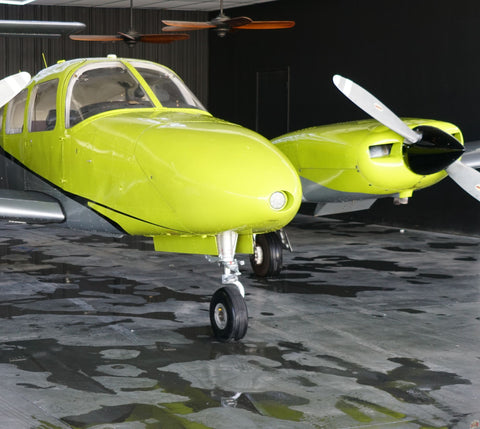
| Piper Seminole PA-44-180 | Part of the $5,100 multi-engine package |
| Cirrus SR22 Turbo | $579 |
| Redbird MCX full-motion simulator | $120 |
| Redbird TD2 desktop trainer | Free with packages |
Instruction is $110 an hour and does not change with the model. Two further things are inside the package that an hourly quote leaves out: ground instruction, and books, charts and course materials. Those are easy to forget when you are comparing hourly numbers, and on a course with 10 hours of ground the ground instruction alone is worth $1,100.
The Arithmetic On A Private Pilot Certificate
Take 38 hours of aircraft time, of which 30 are flown dual and 8 solo, plus 3 hours of ground, which is what the Private Pilot Standard package contains.
Added up hour by hour at our published rates, the aircraft is 38 hours at $179, which is $6,802. The instructor is 30 hours at $110, which is $3,300. Ground instruction is 3 hours at $110, which is $330, and 2 hours in the full-motion simulator at $120 are $240. The total before books, charts and any third-party fee is $10,672.
Bought as the package, the same flying, simulator and ground, plus the course materials, is $10,400. The gap grows on the larger packages: the hours in the Private Pilot Comprehensive package add up to $17,045 against its $15,400 price.
The bigger advantage is that the total is fixed. But it only holds if you fly the hours. The block is priced around a student who trains at a steady rhythm and finishes near the hours in the package. A student who flies once a month will need considerably more than 38 hours to reach the standard, because skill decays between lessons, and the honest answer for that student is a bigger package rather than a smaller one. The Comprehensive package at $15,400 is built around 55 hours precisely because that is what once- or twice-weekly training actually takes.
What You Give Up By Buying The Block
Three real things, and anybody who tells you otherwise is selling.
- Flexibility. You have committed to a course of training at one school. If you move city, change your mind about the certificate, or simply lose interest, you are in a conversation about terms rather than simply stopping.
- Counterparty risk. Money paid in advance sits with the school until you fly it. That risk is real in any industry where customers prepay, and it is the reason to look at how long an operation has been at the field and how many aircraft it owns before you hand over a deposit.
- The illusion of a fixed total. A package fixes the price of the hours inside it. It does not fix the number of hours you will need, and it never covers the FAA medical, the knowledge test or the examiner's fee. What is and is not covered is set out on fixed-price flight training, and the third-party costs are listed on the hidden costs of flight training.
We mitigate the first two the way any student should ask a school to: payment in installments rather than in one lump. Most of our courses start at $2,500 down with the balance in equal monthly payments, interest-free, for up to twelve months, so you are never holding a large balance with us for a long period. The published terms that govern enrollment sit on our refund and enrollment policies, and the payment structures are on flight training financing.
What You Give Up By Paying As You Go
Also three things, and they are less obvious because they do not appear on an invoice.
- The package price. A package is priced below the sum of its hours, by $1,645 on the Private Pilot Comprehensive, and it includes the books.
- The ground instruction. Students paying by the hour skip briefings and debriefs to save $110, which is the single most expensive economy in flight training. An hour on the whiteboard before a lesson routinely saves two in the air.
- Momentum. A course with a payment plan and a syllabus creates a schedule. A pay-as-you-go student books when the month feels affordable, which produces gaps, and gaps produce repeated lessons. This is the mechanism by which paying as you go ends up costing more than the hourly saving ever was.

Who Should Pay As You Go
- You are not sure you want this yet. Fly a few lessons before committing; call or text (818) 330-1318 to talk it through. A discovery flight at $229 and a couple more lessons will tell you more than any amount of reading.
- You already hold the certificate. Flight reviews, currency flights and checkouts are one-off by nature, and there is no course to buy; call or text (818) 330-1318 to talk through checkouts and currency.
- Your availability is genuinely unpredictable. Shift work, deployments, a job with unannounced travel. Buying a block you cannot fly is worse than paying by the hour for the hours you can.
- You are finishing a certificate started elsewhere. Partly complete training rarely maps onto a package cleanly, and the honest arrangement is usually hourly until the remaining work is known.
Who Should Buy The Block
- You have decided on a certificate and a timeline. The package is built for exactly this, and it costs less than the same hours added up.
- You can fly at least twice a week. That rhythm is what keeps the hours near the number in the package.
- You want ground instruction included rather than rationed. This is where packages quietly win.
- You need a fixed number to plan around. A single figure with a payment plan is easier to budget and easier to finance than an open meter.
- You want simulator time. At $120 an hour inside a package, and with up to 50 creditable hours toward the Commercial certificate and 20 of the 40 instrument dual hours, the full-motion simulator is the cheapest genuine training hour available.
Questions To Ask Before Buying Block Time Anywhere
These apply to us as much as to anybody, and a school that answers them uncomfortably has told you something.
- What exactly is inside the block: aircraft only, or instruction, ground and materials as well?
- Does the block expire, and on what date?
- What happens to unused money if I stop, and is that written down?
- Is the rate locked for the life of the block if fuel prices move?
- Can I use the hours in more than one aircraft type, and at what rate?
- How many aircraft of that type does the school operate, and how many students share them?
- Is the aircraft rate wet or dry, and is time billed on the Hobbs meter or the tachometer?
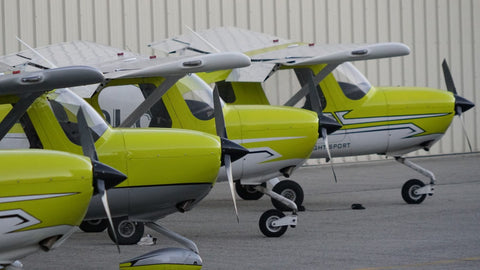
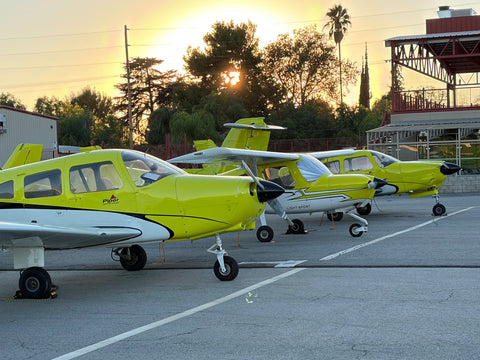
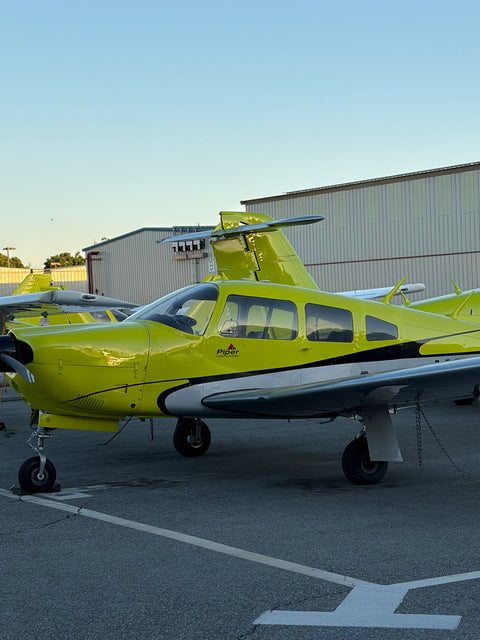
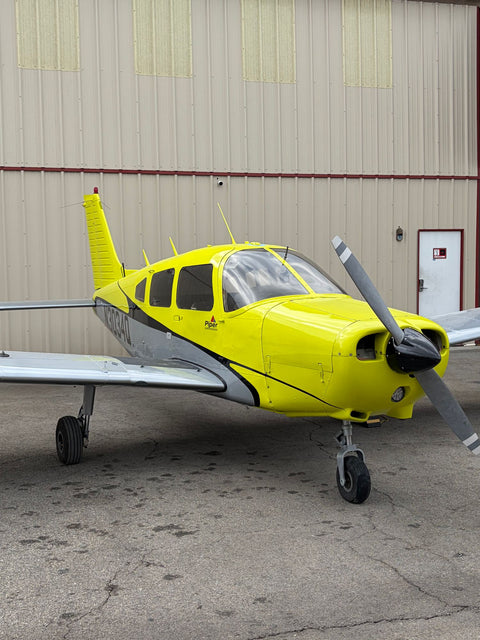
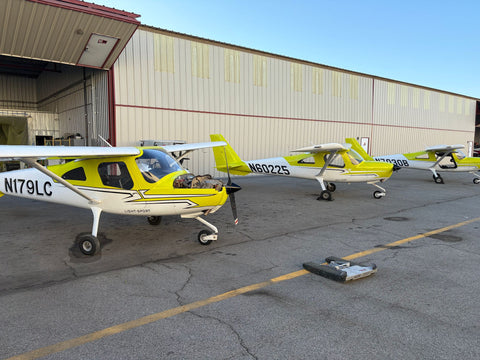
The last two decide whether a quoted rate is comparable at all. Every rate we publish is wet, so fuel is included; confirm the billing meter for your specific aircraft in writing when you enroll, and ask any school you are comparing us against to do the same. The fleet question is the one most people forget: a low block rate at a school with one airplane of the type is worth less than a higher rate at a school with five, because a grounded airplane costs you weeks and weeks cost more than dollars per hour. Our fleet, with quantities and tail numbers, is on the airplanes you will fly.
Related Reading
- Flight school rates at Van Nuys lists every package rate on one page.
- Fixed-price flight training covers what a package includes and what it never includes.
- Flight training financing explains deposits, installments and training loans.
- The hidden costs of flight training lists the fees that sit outside any rate model.
- Flight lesson cost per hour in Los Angeles covers Hobbs, tach, wet and dry billing.
- Refund and enrollment policies sets out our published terms.
Block Time FAQ
What Is Block Time At A Flight School?
Paying for a quantity of flying in advance in return for a lower hourly rate. The money is held against your training and drawn down as you fly. At You Fly LA the block is built into fixed-price course packages rather than sold as a bare hourly balance, so it also includes instruction, ground, simulator time and course materials.
How Much Cheaper Is A Block Rate?
Our published rates are package rates: $179 an hour wet on a Cessna 162 or Piper Warrior, $229 on a Diamond DA20-C1 and $579 on the Cirrus SR22 Turbo, with the Piper Arrow part of the $15,400 commercial course and the Piper Seminole part of the $5,100 multi-engine package. The simulator is $120. The saving is in the package price itself: the hours in the $15,400 Comprehensive package add up to $17,045.
Is Block Time Worth It For A Private Pilot Certificate?
Added up hour by hour at our published rates, the 38 hours of aircraft time, 2 of simulator, 30 of dual and 3 of ground in the Private Pilot Standard package come to $10,672 before books and third-party fees; the package is $10,400 with course materials included and a fixed total. It is worth it if you can fly the hours at a steady rhythm.
Can I Pay As I Go Instead Of Buying A Package?
Our published rates are package rates, with instruction at $110 an hour. If you would rather fly lesson by lesson before committing, call or text (818) 330-1318 to talk it through. Students who pay hourly tend to skip ground instruction, which usually costs more again in repeated flying.
Does Block Time Expire?
That varies between operators and it is the first question to ask anywhere. Ask for the expiry date in writing before you pay, along with what happens to unused money if you stop training. Our own position: package purchases are final and we do not refund them, and unused credit transfers to another student or to a discovery flight. The full wording is on our refund and enrollment policies page.
Is The Instructor Included In A Block Rate?
Not in the hourly aircraft figure. Instruction is $110 per hour and ground instruction is the same. Inside our course packages both are included in the fixed price, along with simulator time and course materials, which is a real difference from a bare aircraft block sold by the hour.
What Happens If I Need More Hours Than The Package Contains?
You continue at the published hourly rates for the extra time. That is why choosing the package sized to your real availability matters more than the hourly rate. A student who can only fly once a week should buy the larger package rather than the smallest one and pay by the hour for the overrun.
Work Out Which Model Fits You
The honest way to decide is to look at your diary for the next three months rather than at a rate card. If you can find two slots a week, the package is the better product. If you cannot, say so and we will talk it through rather than sell you a block you will not fly. Book a free consultation, or start with a discovery flight at $229 for 60 minutes, flown from the left seat and credited in full toward your training if you enroll within 24 hours. Call (818) 330-1318, 9 AM to 9 PM, seven days a week, at 7900 Balboa Blvd, Main Terminal Unit 108, Van Nuys, CA 91406.